
Shimano Spinning Reels: Inshore and Offshore Review
Research checked: October 4, 2026. Ten selected Shimano spinning reel families: five for inshore applications and five for offshore applications, including premium, everyday and budget choices. These are recommendations for different jobs rather than a single numerical performance ranking.
Review method: Manufacturer specifications and release announcements support the factual details. The buying assessments are editorial analysis, not hands-on testing. Maximum drag is not a recommended working setting. Specifications below describe one example per family; check the exact model before purchase.
Company overview · Compare ten reels · 2025–2026 updates · Inshore reviews · Offshore reviews · Sources
Affiliate disclosure: As an Amazon Associate, I earn from qualifying purchases.
Ten Shimano spinning reel selections
The inshore/offshore grouping describes the applications discussed here. Several families cross those boundaries depending on size and workload. Recovery is published line pickup per handle turn. On a narrow screen, scroll the table sideways.
| Reel family | Group | Example model code | Ratio | Weight | Max drag | Recovery | Buying role |
|---|---|---|---|---|---|---|---|
| Stella FK | Inshore | STL4000XGFK | 6.2:1 | 9.2 oz | 24 lb | 40 in | Premium general-purpose lure outfit |
| TwinPower XD FB | Inshore | TPXD4000XGFB | 6.2:1 | 8.6 oz | 24 lb | 40 in | Technical lure work; verified 2025 generation |
| TwinPower FE | Inshore | TP4000XGFE | 6.2:1 | 9.2 oz | 24 lb | 40 in | Premium everyday coastal outfit |
| Stradic FM | Inshore | ST4000XGFM | 6.2:1 | 9.7 oz | 24 lb | 40 in | Everyday inshore value reference |
| Vanford A | Inshore | VF4000XGA | 6.2:1 | 7.6 oz | 24 lb | 40 in | Light coastal lure outfit |
| Stella SW D | Offshore | STLSW14000XGD | 6.2:1 | 24.2 oz | 55 lb | 53 in | Premium offshore; 2025 launch and 2026 expansion |
| TwinPower SW C | Offshore | TPSW14000XGC | 6.2:1 | 23.3 oz | 55 lb | 53 in | Premium offshore casting and jigging |
| Saragosa SW A | Offshore | SRG14000SWAXG | 6.2:1 | 24.7 oz | 33 lb | 53 in | Practical offshore working reference |
| Spheros SW A | Offshore | SPSW14000XGA | 6.2:1 | 24 oz | 26 lb | 53 in | Budget-conscious offshore comparison |
| Socorro SW | Offshore | SOC8000SW | 4.9:1 | 22.6 oz | 26 lb | 37 in | Selective moderate saltwater or secondary outfit |
Verified 2025–2026 releases and improvements
- Stella SW D — 2025 generation: announced in Shimano’s January 10, 2025 US product launch. The detailed current product page is used for the configuration-specific features in this review.
- Stella SW D — 2026 range expansion: Shimano’s January 9, 2026 announcement introduces the 25000 size and identifies the added 6000 XG option. An expanded range is distinct from the generation’s original launch.
- TwinPower XD FB — 2025 generation: Shimano’s April 1, 2025 announcement documents the update. Compare regional configurations before buying.
- Other reviewed families: current catalog listings were checked, but they are not relabeled as new 2026 models without a verified release announcement.
Shimano company overview and buying guide
Why Shimano belongs in a saltwater spinning reel directory
Shimano is a Japanese tackle company with an unusually broad spinning reel range, covering delicate lure fishing as well as heavy offshore applications. Its corporate history records the launch of its fishing tackle division in 1970 and the arrival of DUX spinning reels in 1971. That history matters because the present catalog is not built around one isolated saltwater product. Buyers can choose between different reel architectures, levels of refinement and intended workloads while remaining within the same manufacturer. The practical challenge is understanding those differences rather than assuming that a higher price makes a reel universally better.
For an angler building a coastal outfit, Shimano offers several plausible answers to the same question. Someone casting small soft plastics around grass beds may prioritize a light outfit and immediate response. Someone working heavier plugs around bridges may want a different balance of weight, capacity and resistance to load. A boat angler casting to fast pelagic fish faces another set of demands altogether. This review therefore separates five inshore selections from five offshore selections. These are editorial choices for different jobs, not a claim that every reel was tested side by side or that there is only one correct purchase.
How to read this review
The assessments below combine manufacturer specifications with practical buying analysis. They are specification-based reviews, not reports of personal field testing. Published construction details and exact example specifications are identified separately from our recommendations. Where a model spans several sizes, the example is a reference configuration rather than a complete description of every reel in that family. Check the linked manufacturer chart for the exact code you intend to buy. An attractive sale listing is not useful if it refers to another generation, a regional configuration or a different size.
The ten selections cover a range of budgets and purposes. Inshore coverage includes Stella FK, TwinPower XD FB, TwinPower FE, Stradic FM and Vanford A. Offshore coverage includes Stella SW D, TwinPower SW C, Saragosa SW A, Spheros SW A and Socorro SW. The offshore group includes affordable options for moderate applications as well as equipment intended for demanding big-fish work. Inclusion does not mean that the least expensive reel is equivalent to the flagship. It means readers can compare the purchase in the context of their own fishing rather than being directed automatically to the highest price.
Inshore and offshore are applications, not rigid boundaries
An inshore label should describe how a reel fits a particular outfit. It does not mean that a reel will never encounter a powerful fish. Tarpon, large jacks and fish near structure can create serious demands close to shore. Equally, offshore fishing does not always require the largest spinning reel available. Smaller pelagic fish and lighter casting presentations may call for a more manageable outfit. The useful boundary is the combination of line reserve, lure resistance, fighting pressure, exposure and frequency of use. A location label by itself leaves too much unexplained.
Start by describing an ordinary fishing day. Write down the lures or bait rigs you use, the expected casting distance, the likely depth and the largest realistic target. Then consider what happens when the plan changes: a hooked fish runs toward a piling, a school sounds or current carries the boat away from the line. Reserve capacity and a sensible drag setting protect against these situations. Buying solely around the average fish can leave an outfit poorly prepared, but buying solely around an exceptional fish can make every normal cast unnecessarily awkward.
Reel weight and the behavior of the complete outfit
Weight should be judged with the reel mounted on the actual rod. A low published weight can be attractive for continuous casting, but handle shape, reel-seat position and rod balance change the experience. Hold the combination where you naturally grip it and imitate several retrieve movements. For a light-lure outfit, consider how comfortably you can stop winding, twitch the rod and resume. For a heavier outfit, consider whether the handle and grip remain comfortable when you brace the rod and apply controlled pressure. These are fit decisions that a specification table cannot fully settle.
A heavier reel is not automatically unsuitable for inshore work, and a lighter reel is not automatically fragile. The question is whether the design fits the expected workload. If most of your fishing involves repeated short casts with little resistance, comfort may deserve more weight in the decision. If you regularly pull resistant lures through current, examine the manufacturer's intended application and compare more substantial alternatives. Avoid using the maximum drag number as a shortcut to judging the whole reel. That single figure does not describe handling, long-term serviceability or the appropriate working pressure of an outfit.
Capacity, braid and choosing a size
Shimano publishes capacities for specific line references, but actual filling depends on the line used and how it is packed. Treat those values as planning information rather than an exact promise for every braid of the same stated breaking strength. Different lines can differ in diameter and construction. When your fishing requires a particular reserve, check the line maker's information and have the spool filled carefully. Backing, leader length and the amount of line lost through normal retying all affect the usable system. A nominal spool size should never replace this calculation.
Within a family, compare the exact configurations instead of choosing by size name alone. A compact configuration may share parts or proportions with a smaller model while offering a different spool. A larger capacity does not necessarily mean a dramatic increase in fighting capability. Conversely, moving to a different physical platform can create a substantial jump in weight. The objective is to obtain the reserve you need without making the outfit uncomfortable. If your current reel already carries enough line and balances well, a change in family may matter more than a change in nominal size.
Retrieve speed should follow the presentation
Gear ratio and line recovered per turn answer related but different questions. Ratio describes rotations within the mechanism; recovery describes the amount of line picked up at a stated spool condition. For fishing decisions, compare recovery alongside lure behavior. A rapidly retrieved lure, a slack-line presentation and a deep jig do not all call for the same handling. Faster recovery can help catch up to a fish moving toward the boat, but it can also make it easier to overwork a lure if the angler winds at a habitual pace.
Think about how you actually control the lure. If the rod creates the action and the reel mainly retrieves slack, responsive pickup may be especially useful. If the handle drives a sustained presentation against resistance, comfort and cadence become central. Where a family offers different ratios, choose deliberately rather than assuming the fastest option is the premium option. An angler who knows the rhythm of a familiar outfit may need some adjustment after changing recovery. Practicing with the new combination before an expensive trip is more valuable than learning its behavior during the first difficult hookup.
Drag and realistic fighting pressure
A reel's published maximum drag is a ceiling specification, not a recommended everyday setting. Working pressure should reflect the rod, line, leader, knots, hook arrangement and the angler's control. A fish running against a deeply depleted spool changes the situation, and a steep rod angle can load the rod in an undesirable way. Establish a conservative initial setting with the complete outfit and check it with appropriate equipment. The purpose of a powerful drag system is controlled line release within a suitable setup, not an invitation to lock the spool and force every fish.
Consider the environment as well as the fish. Near structure, technique and positioning can be more decisive than another few pounds of advertised drag. Offshore, boat handling and communication with the crew can determine whether sufficient line reserve remains. A premium reel cannot compensate for a damaged leader or a poorly matched rod. Readers comparing two reels should ask what additional capability the more expensive option contributes to their real fishing. If the answer is only a maximum figure they would never use, the upgrade may not be the most effective use of the budget.
Ownership, service and regional buying
Keep the exact model code, purchase receipt and local service information. Shimano operates regional product and service channels, so an imported reel should be evaluated with more than its advertised purchase price. Before ordering, ask who will service that model, whether the relevant parts are supported locally and what terms apply to the transaction. Do not assume that a promotion or service arrangement advertised in another country applies to your purchase. A small saving can become inconvenient if the reel needs attention shortly before a trip and the correct service route is unclear.
Saltwater ownership also requires a routine. Follow the manual for the exact reel, remove visible contamination appropriately and allow equipment to dry before storage. Avoid treating a water-resistance claim as permission to ignore maintenance. Pay attention to changes in the line roller, handle and drag behavior, particularly after unusually heavy exposure. If the reel develops noise or resistance, investigate before continuing to load it heavily. Planned servicing is easier to accommodate than a failure discovered at the launch ramp. Buyers who fish frequently should include maintenance downtime in their overall equipment planning.
What changed in 2025 and 2026
Two updates are especially relevant to this selection. Shimano announced Stella SW D in its January 10, 2025 product launch and announced the addition of Stella 25000 SW D on January 9, 2026. These are distinct events: the latter expands a generation already introduced, rather than making every SW D size a completely new 2026 design. Shimano also published a TwinPower XD FB announcement dated April 1, 2025. The individual reviews distinguish these dated changes from other models that remain current without being relabeled as newly launched.
Recent release dates should inform a purchase without dominating it. An established reel can still be the right match, particularly when its application, support and price make sense. A newer generation deserves attention when the documented changes address an actual need, such as a preferred configuration or a different balance of response and winding behavior. This page does not assign an unverified 2026 replacement to TwinPower SW C, Saragosa SW A or any other established model. Current availability and a current catalog listing are different from evidence of a new release.
Our buying priorities
For most readers, the best process is to narrow the application first, choose a workable size second and compare families third. Inshore anglers should look closely at Stradic FM as an everyday reference, Vanford A for a weight-conscious lure outfit and the premium alternatives where their particular handling priorities justify the expense. Offshore anglers can use Saragosa SW A as a comparison point, consider Spheros SW A when budget matters and examine TwinPower SW C or Stella SW D for a more demanding premium outfit. Socorro SW is included with a deliberate discussion of its limitations.
There is no need to own every tier. A dependable primary outfit, a suitable backup and a clear maintenance routine often provide more practical confidence than a single exceptionally expensive reel with no alternative available. Spend on the whole system, including the line and rod, and leave room for fishing itself. The detailed reviews below explain where each selection fits, where we would be cautious and what to compare before buying. The aim is an informed decision that remains sensible after the excitement of a new purchase has passed.
Five inshore spinning reel reviews
These choices cover premium, everyday and light-lure coastal outfits. Select the size and line reserve around the actual target and fishing position.
1. Stella FK — premium inshore refinement

Read the full Stella FK review
Where it fits
Stella FK is our premium inshore selection for the angler who wants a refined general-purpose spinning outfit and is prepared to pay substantially for it. Its most convincing role is deliberate lure fishing with a well-matched rod, where the reel is handled continuously and small differences in operation matter to the owner. It should be considered a luxury tool with a particular application, rather than the automatic starting point for anyone buying saltwater equipment. The fishing objective still comes first. Someone needing substantial reserve for a difficult offshore target should compare the separate Stella SW family instead.
Verified construction and example specifications
Shimano lists HAGANE gearing and body, MicroModule II, InfinityXross, InfinityDrive, InfinityLoop, DuraCross and X-Protect among the FK's features. Its US 4000XG example, STL4000XGFK, has a 6.2:1 ratio, 40 inches of recovery, 9.2 ounces of weight and 24 pounds of maximum drag. Listed PowerPro capacity includes 180 yards of 30-pound line. These figures describe that exact configuration. They do not apply automatically to the 1000 or compact models. The official chart also shows smaller and larger spool options within the family, so a buyer should choose capacity as deliberately as price.
The premium purchase question
The important question is what you expect the additional spending to accomplish. If fishing is a frequent activity and you appreciate a carefully chosen outfit, the ownership experience may justify the expense. That is a legitimate preference. It is different from claiming that an expensive reel guarantees a larger catch or that an affordable alternative cannot present the same lure effectively. We would evaluate FK after identifying a suitable rod and line system, then compare it with TwinPower FE and Stradic FM. A flagship makes more sense when the rest of the outfit supports its intended use.
An angler using one primary coastal outfit several times a week has a different value calculation from someone fishing occasionally on vacation. In the first case, purchase price is spread across many hours of handling; in the second, it may be more useful to allocate money to a guide trip, spare outfit or travel. Consider this honestly before buying. If the premium price would make you reluctant to take the reel into ordinary fishing conditions, an alternative you use confidently may be the more practical choice. Equipment should encourage time on the water, not become a reason to leave an outfit at home.
Choosing a size for coastal lure work
The smaller choices are worth considering for lighter presentations, but capacity should be evaluated against the location. A light setup can feel pleasant until a strong fish uses most of the available line. Conversely, choosing the largest spool simply because it exists can make a delicate rod feel less purposeful. Use the exact manufacturer chart, account for the braid you intend to spool and consider reserve after regular retying. For mixed coastal lure work, we would begin the comparison with the middle configurations, then move smaller or larger only when the fishing plan gives a clear reason.
Hold the candidate reel on your actual rod if possible. Test where your hand naturally sits, whether the handle knob suits your grip and how the combination feels during a slow retrieve. These observations are not a laboratory test, but they answer personal fit questions that online specifications cannot. Pay particular attention if the rod is unusually light or long. An outfit that feels comfortable while standing in a store may behave differently when you repeatedly cast from a kayak or retrieve from a high seawall, so think through the position from which you usually fish.
Lure control and line handling
For soft plastics, small plugs and other controlled presentations, the reel should support the cadence you create rather than dictate it. A faster configuration can recover slack effectively, but it may require you to slow your handle movements during a steady retrieve. Practice with the lure where you can observe it. The correct retrieve is the one that produces the intended action, not the one that looks fastest on a specifications sheet. With a new premium outfit, a short familiarization session is worthwhile before fishing a difficult location where attention needs to stay on structure and boat traffic.
Line handling remains partly the angler's responsibility. Fill appropriately, avoid winding loose loops onto the spool and examine the line after a troublesome cast. A feature-rich reel should not be expected to solve an overfilled spool, poorly packed braid or a damaged leader knot. If you use different line types seasonally, reconsider filling and leader length each time. A careful initial setup costs little relative to the reel and protects the purpose of the purchase. Keep the rod guides clean and intact as well; the reel is only one part of the route the line follows.
Limits and sensible comparisons
Our reservation is value rather than the existence of a suitable inshore role. FK can be difficult to justify when another reel already performs the actual task comfortably. We would also avoid selecting it merely because the Stella name is associated with offshore fishing. The FK and SW choices have different purposes, and brand familiarity is not a substitute for matching capacity and workload. If your coastal fishing regularly involves heavier resistant lures or powerful fish around structure, compare the relevant SW configurations and assess the complete outfit rather than relying on the flagship label.
For someone comparing FK against TwinPower FE, we would ask whether the premium ownership preference is strong enough to justify the additional cost after both pass the practical fit test. Against Vanford A or TwinPower XD FB, the question also involves the style of handling desired for technical lure work. There is no universal winner based on an empty-spool impression. A personal preference for one feel does not establish greater durability or better performance in every situation. Use the specifications to eliminate unsuitable choices, then use handling and budget to decide among the remaining ones.
Ownership and verdict
Treat the purchase as a long-term outfit decision. Keep the model code and paperwork, check local service arrangements and follow the exact maintenance guidance. Inspect the line roller and drag behavior as part of normal ownership, particularly after exposure or an unusually demanding session. A premium reel still needs attention. We would prefer planned servicing during a quiet fishing period to postponing a developing issue until a trip depends on the reel. A suitable backup also helps preserve confidence when the primary outfit needs work or simply becomes temporarily unavailable.
Our verdict is that Stella FK is a compelling premium inshore option for an owner who values refinement, fishes regularly and has already chosen a suitable rod and line system. It is not the first purchase we would prescribe for every angler, nor a reason to ignore more economical alternatives. Buy it for a clear coastal application and a personal appreciation of the complete outfit. If your main requirement is greater offshore reserve, start with the SW comparison instead. The strongest justification is an outfit you will use extensively and comfortably, rather than a specification or badge you will seldom need.
Manufacturer source: Shimano Stella FK specifications and features
2. TwinPower XD FB — technical inshore lure work
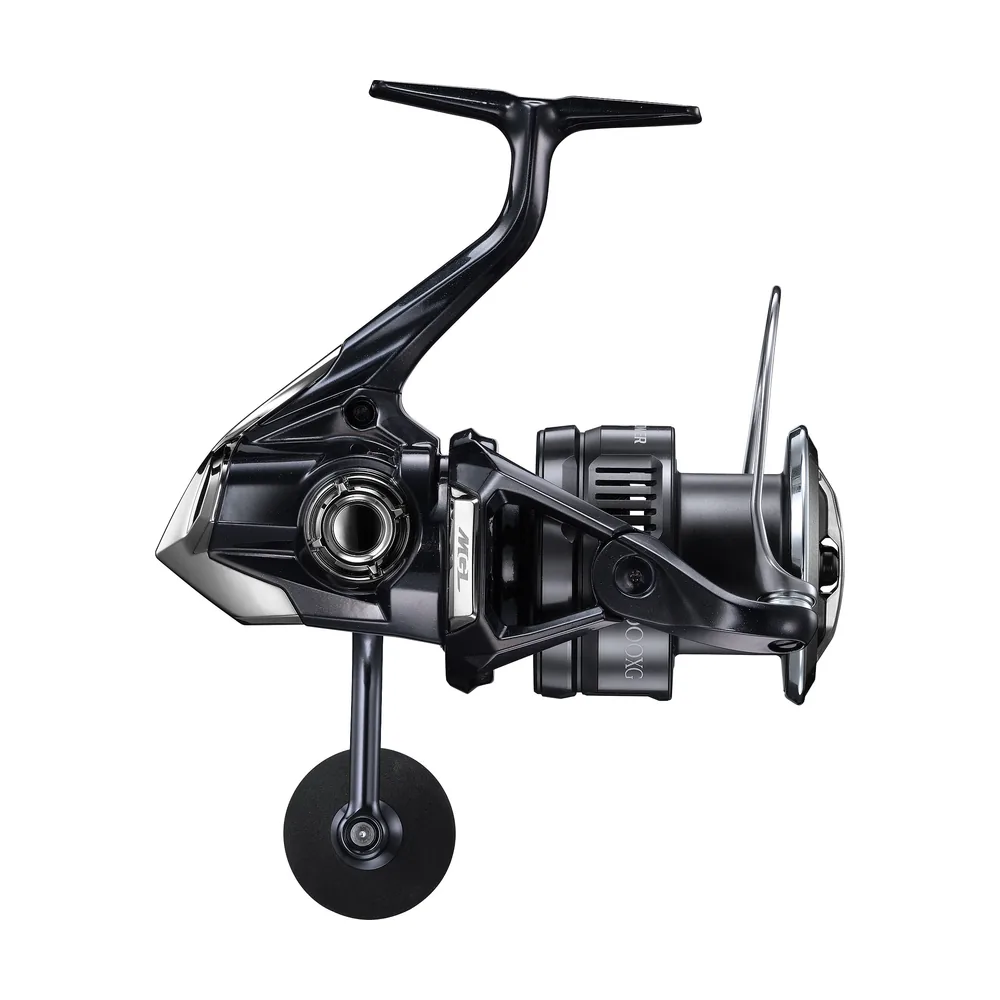
Read the full TwinPower XD FB review
Where it fits
TwinPower XD FB is the selection we would investigate closely for demanding inshore lure fishing when sensitivity and controlled handling are central to the purchase. It occupies a premium position, but its identity is more specific than simply being an expensive general-purpose reel. The intended buyer spends considerable time manipulating presentations and wants an outfit that remains comfortable through frequent casting and changes of retrieve. Fishing around current seams, coastal structure and open bays can all fit that brief, provided the chosen capacity and rod are adequate for the target. It should not be mistaken for TwinPower SW.
Verified update and example specifications
Shimano's April 1, 2025 announcement identifies XD FB as a new generation. The US product page specifies a CI4+ MGL rotor, DuraCross, InfinityDrive, InfinityXross, InfinityLoop and a revised X-Protect arrangement. For TPXD4000XGFB, Shimano lists 6.2:1 gearing, 40 inches of recovery, 8.6 ounces and 24 pounds maximum drag, with PowerPro capacity including 180 yards of 30-pound line. The US chart lists C3000XG, 4000XG and C5000XG configurations. Other regional choices should be checked against their own charts rather than assumed identical to the US range.
Why the application is convincing
The strongest purchasing case is frequent, purposeful lure work. An angler who changes cadence, recovers slack and immediately resumes a presentation can reasonably give handling a high priority. That person should compare XD FB with Vanford A and TwinPower FE rather than viewing the three as successive steps on one ladder. They are alternative solutions to overlapping needs. Our preference would depend on rod balance, lure resistance and the owner's preferred feel. There is little benefit in paying for a particular design direction if the fishing method rarely asks you to notice it.
Consider a day spent covering shoreline with several lure types. The useful outfit is one that remains comfortable when moving from a subtle soft plastic to a plug worked against some resistance, without making ordinary casting a chore. That does not establish that XD FB can replace a heavier offshore outfit. It instead explains why a technical inshore buyer might place it on a short list. We would evaluate the difficult part of your regular fishing rather than an exceptional trip. If the same setup must also support a substantially heavier workload, rethink whether a dedicated second outfit is more sensible.
Selecting between the compact and larger options
The capacity choice should begin with expected runs and line losses. Do not select a compact configuration only because the weight is appealing. A thin-braid coastal setup with adequate room can be excellent for the intended method, but it needs enough reserve when the fish changes direction or current creates distance. Moving to a larger spool can be useful without necessarily requiring a dramatically heavier platform, depending on the exact configuration. Read the code carefully, and do not infer every physical difference from the nominal number. The official table is the starting point for that comparison.
For an angler fishing from a small craft, reserve also relates to positioning. You may be able to follow a fish, but doing so is not always safe or convenient in current or near traffic. From a fixed shore position, the same fish can demand a different capacity margin. We would choose the reel after thinking through the worst plausible run in the normal location. If the chosen braid fills the spool with little reserve for retying, a seemingly attractive compact setup may become inconvenient after a few sessions. Plan for ownership, not only the first filling.
Working lures without overworking them
A quick pickup should support your presentation. When using a lure that needs pauses, make those pauses deliberate and manage slack without immediately pulling the lure out of the strike zone. When fishing a steady retrieve, watch the action and establish a comfortable handle cadence. The same recovery can feel different after changing rods or lure weights, so avoid treating an old rhythm as automatically correct. We would practice with the specific lure package before a trip, especially when transitioning from a slower setup. A technical reel purchase is most useful when the angler also pays attention to technique.
Keep the line path under control while changing cadence. Slack recovered carelessly can create trouble regardless of the reel's line-management features. Close the bail intentionally, maintain enough tension when beginning the retrieve and stop to correct a developing loop. If a lure spins unusually, investigate the lure and rig rather than blaming the reel immediately. For thin braid, attention to knots and leader connections is particularly worthwhile. A fine presentation can be undermined by a connection that repeatedly catches a guide, and that issue remains even after purchasing a more sophisticated reel.
Comparing XD FB with FE and Vanford A
XD FB and FE deserve a direct handling comparison because their names can make buyers assume they are nearly interchangeable. We would mount both on the intended rod and work the handle at the speeds you actually use. Consider what happens when you start, stop and maintain a sustained retrieve. Choose the combination that suits your technique rather than trying to select a winner from the product name. If you are already happy with a similar premium outfit, the reason to change should be specific. A documented new generation is not by itself proof that your existing setup has become inadequate.
Vanford A provides another useful reference when the main objective is a manageable casting outfit. The buying question is whether the additional cost of XD FB fits your priorities after both meet the basic capacity requirement. Stradic FM belongs in the comparison when value matters more than a narrowly defined handling preference. We would be cautious about recommending XD FB to an occasional angler before considering those alternatives. Premium gear can be enjoyable, but the expenditure should reflect actual use. Someone assembling several outfits may obtain more practical benefit from balanced spending across the collection.
Limits, maintenance and verdict
Our principal caution is against stretching the inshore brief into every offshore job. An appropriate larger spool does not convert this reel into a substitute for all SW models. Lure resistance, sustained pressure and necessary reserve should still decide the outfit. Likewise, coastal water resistance should not be treated as a maintenance exemption. Follow the instructions for the exact model and have unusual noise or resistance investigated before continued heavy use. A reel selected for precise handling deserves a careful setup and a sensible service routine so that its role remains dependable.
We regard TwinPower XD FB as a strong premium choice for an angler with a clear technical inshore application, particularly someone comparing handling rather than shopping solely by price. The verified 2025 update makes it relevant to readers seeking recent improvements, but its suitability still depends on size, rod and method. We would choose it when its balance and operation make sense on the intended outfit, not simply because it is newer than an alternative. For a buyer who cannot identify a specific advantage in normal use, Vanford A or Stradic FM may leave more room in the budget for fishing and supporting equipment.
Manufacturer source: Shimano TwinPower XD FB specifications and features
3. TwinPower FE — a premium everyday inshore outfit
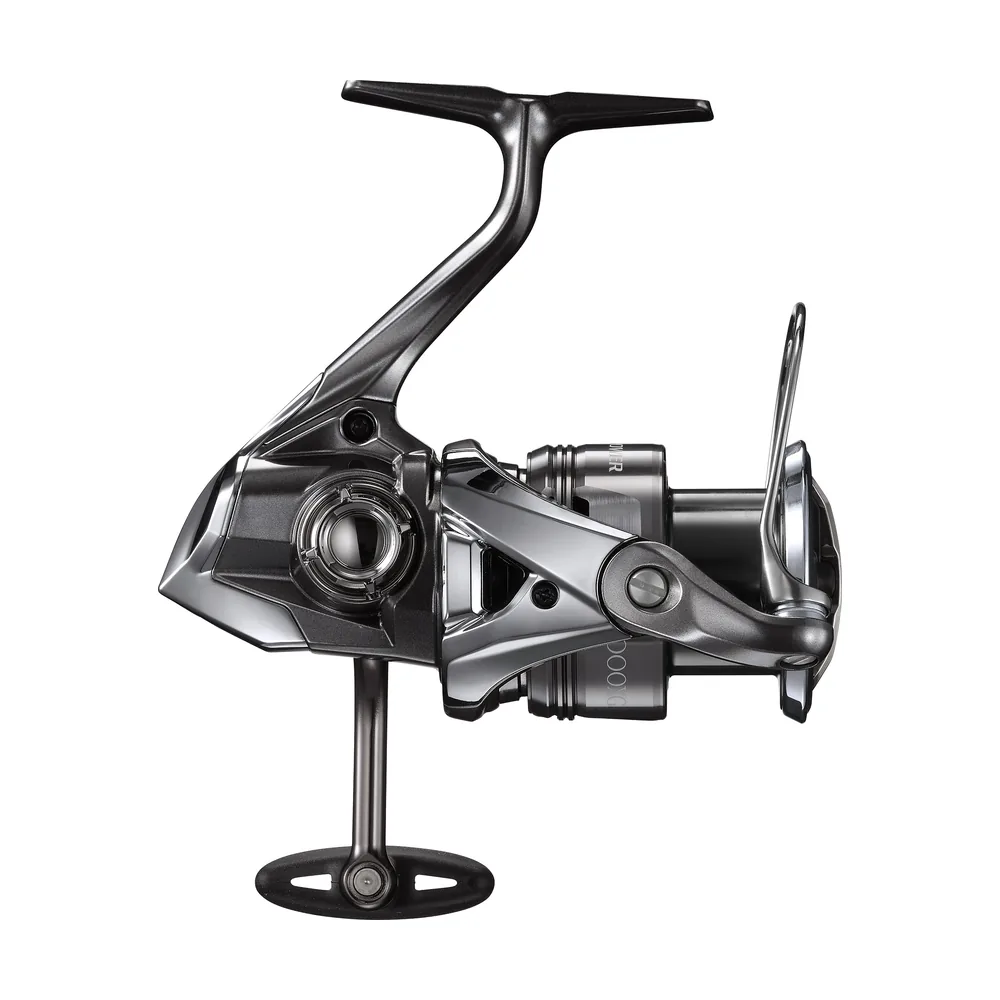
Read the full TwinPower FE review
Where it fits
TwinPower FE is our premium inshore selection for an angler seeking a general-purpose outfit with a deliberate emphasis on sustained, controlled winding. The purchasing case is broad coastal lure work rather than one narrow finesse technique. It can make sense for someone who wants one carefully chosen spinning setup for plugs, soft plastics and a variety of conditions, while accepting that a separate heavier outfit may still be needed. We would assess it against Stella FK and Stradic FM as well as XD FB. The goal is a comfortable working system, not simply a place in a price hierarchy.
Verified construction and reference configuration
Shimano identifies FE as a CoreSolid reel with an aluminum and CI4+ body combination. Its listed features include InfinityDrive, InfinityXross, InfinityLoop and DuraCross. The US TP4000XGFE example uses a 6.2:1 ratio and recovers 40 inches per turn; weight is 9.2 ounces and maximum drag is 24 pounds. The published PowerPro capacity includes 180 yards of 30-pound line. These values are configuration-specific. FE is current in the checked catalog, but we do not describe it as a newly launched 2026 generation without a supporting release announcement.
What makes the buying case different
For a general-purpose inshore outfit, it is easy to overvalue one particular specification. A buyer might focus exclusively on low weight, another on bearing count and another on a maximum drag figure. FE should be considered through the complete fishing routine. If you use a mix of presentations and often keep the handle turning, a comfortable sustained retrieve may matter more than a very particular empty-reel impression. We would include it on the short list when the owner wants a premium everyday tool and can explain what that preference adds to the fishing experience.
The case becomes less convincing when the budget is tight or the reel will be used rarely. A premium general-purpose purchase can absorb money that might otherwise fund a better rod, line or backup setup. Before choosing FE, evaluate those competing needs. An outfit assembled with a carefully selected midpriced reel may be more useful than one built around a premium reel on an unsuitable rod. Conversely, if the supporting equipment is already appropriate and the angler fishes frequently, spending more on a preferred working feel can be a reasonable long-term choice. The owner's actual priorities should determine that decision.
Size selection for a mixed coastal program
For fishing that includes several lure classes, select the spool around the more demanding regular application while checking that the combination remains comfortable for the lighter work. A small configuration can be attractive on a delicate rod but may leave too little reserve for a powerful fish. A larger choice can solve the reserve issue while changing outfit balance. We would handle the candidate sizes in person when possible and compare the exact charts. Size labels alone should not be used to infer weight, capacity or the suitability of a specific regional version.
Line planning should include ordinary wear and retying. A spool filled perfectly for the first trip can become marginal after repeated cut-offs. If you fish structure frequently, account for that practical loss when deciding reserve. Choose braid based on the complete outfit and intended application, then verify capacity with that line rather than assuming every product of the same stated strength fills identically. A leader connection also needs to suit the rod guides and casting style. These decisions make the difference between a reel that looks appropriate in a table and an outfit that remains convenient over a season.
Handling plugs and sustained retrieves
For a presentation driven mainly by the handle, establish a cadence that gives the lure its intended action. A quick configuration does not require a quick retrieve. It provides a recovery characteristic that the angler controls. Watch the lure when possible, then reproduce the useful rhythm rather than winding at the speed that feels natural without observation. When working current, the relationship between the lure, boat and water can change substantially. An outfit that feels easy in calm conditions may feel different when the lure is resisting a stronger flow, which should influence your size and family comparison.
If the rod creates the action, use the reel to collect the slack you intend to remove. Avoid turning every twitch into continuous forward movement. That is especially relevant when moving from a familiar slower outfit to a faster one. We would spend time practicing several presentations before making a judgment about suitability. The ideal everyday reel supports more than one retrieve without forcing awkward habits. It should also feel comfortable in the actual fishing position. Standing on a boat, sitting in a kayak and working from a high bank can change wrist position and handle access.
Comparing the premium alternatives
Against Stella FK, the question is whether the additional flagship spending is valuable to you after FE meets the practical brief. Do not assume that the largest budget always produces the best personal fit. An owner who prefers FE on the intended rod has a sound reason to choose it. Against XD FB, evaluate the character of the complete retrieve and the weight of the outfit rather than relying on similar naming. Both should be tried for the methods you actually employ. A comparison that consists only of rapidly spinning an unloaded handle tells little about a full day of fishing.
Stradic FM is an important value reference. We would want a buyer to understand what they are paying for beyond basic suitability before stepping up to FE. If the primary objective is a dependable coastal outfit and there is no strong premium preference, retaining money for a second spool, service or a backup can be worthwhile. That does not diminish FE's role. It puts the purchase in perspective. A reader building a small, high-quality collection may reasonably choose it, while a reader outfitting several rods may distribute the same budget differently and obtain a more useful overall system.
Limits and ownership considerations
FE should not be confused with TwinPower SW C, even when a seller's title abbreviates the family name. Check the generation and complete code before ordering. The offshore requirement may call for a different platform, particularly when line reserve and sustained pressure dominate. Within coastal fishing, be realistic about the resistance of your regular lures and the need to move fish from structure. If the intended job repeatedly pushes beyond the comfortable range of a compact outfit, buying a more suitable second outfit can be preferable to asking one general-purpose reel to do everything.
Our verdict is that TwinPower FE deserves consideration as a premium everyday inshore choice for frequent anglers who appreciate the complete handling of their equipment. We would purchase it after a rod-mounted comparison and a careful capacity check. Maintain it according to the exact instructions, preserve local service information and respond to changes in operation rather than postponing attention. The most satisfactory FE purchase is one tied to a clear routine: a reel that is used often, suits several normal presentations and remains comfortable through them. It is less persuasive as an upgrade made only to own a more expensive model name.
Manufacturer source: Shimano TwinPower FE specifications and features
4. Stradic FM — the everyday inshore value reference
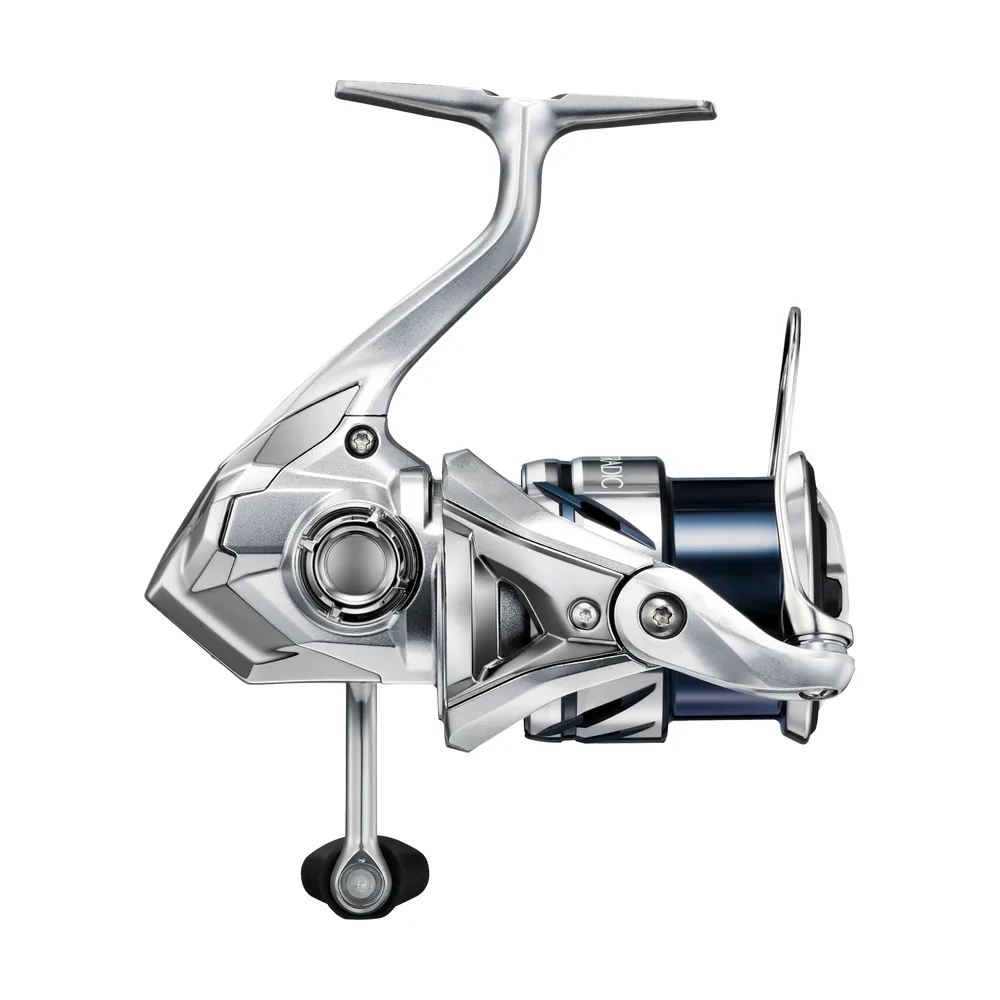
Read the full Stradic FM review
Where it fits
Stradic FM is the first inshore reference we would put in front of many readers building a capable everyday outfit. That is an editorial starting point, not a claim that it is the best reel for every technique. Its appeal is that it allows a buyer to compare a substantial general-purpose option with more specialized or premium alternatives before deciding whether additional spending is necessary. It fits the angler who wants to fish regularly with a sensible system and would rather prioritize the whole outfit than a flagship badge. Size and application remain essential to that recommendation.
Verified features and example specifications
Shimano lists HAGANE gearing, MicroModule II, InfinityXross, InfinityDrive, DuraCross, X-Protect and an Anti-Twist Fin for FM. The US ST4000XGFM reference has a 6.2:1 ratio, 40-inch recovery, 9.7-ounce weight and 24-pound maximum drag. Its PowerPro chart includes 180 yards of 30-pound line. Smaller and compact choices differ, so do not extend those values to the whole range. We treat FM as an established current generation in this review, not as an unverified new 2026 release merely because it remains available in the manufacturer's catalog.
Why value matters beyond purchase price
Value means obtaining an outfit that serves the job at a cost you can sustain. For a coastal angler, that includes a suitable rod, correctly chosen line, leaders, hooks and the ability to maintain the equipment. If purchasing a more expensive reel would compromise those elements, FM deserves serious attention. The relevant comparison is not a bare reel against another bare reel; it is the fishing system each budget produces. An owner who can afford a practical backup and regular upkeep may feel more prepared than one relying on a single premium outfit with no reserve plan.
This is particularly relevant when outfitting more than one rod. A lighter presentation and a heavier coastal presentation may be easier to manage with two correctly matched setups than one expensive compromise. FM can be a useful point of reference in that calculation, but the exact answer depends on the methods. We would not recommend buying several identical sizes simply for convenience unless the applications genuinely match. Think through where each outfit sits in the collection. A second setup should cover a useful task or provide meaningful backup rather than merely repeat the first purchase.
Selecting the configuration
For lighter coastal lures, consider the smaller options only after checking reserve for the likely fish. For mixed presentations and stronger targets, compare the middle and larger choices against the rod's intended role. A nominal compact designation should prompt a closer look at the manufacturer's chart, not an assumption that it shares every capability of another size. Exact model identification is especially important when buying online, where images may be reused across a family. Confirm the code, not just the product title, before relying on published weight or capacity.
We would choose line before finalizing the reel size. Decide what strength and leader arrangement the rod and target call for, then assess how much usable reserve remains. This avoids the common problem of choosing an appealing reel first and forcing the line system to fit it. Include losses from retying around structure and consider whether a fixed shore position limits your ability to follow a fish. If a configuration leaves little margin, move to a suitable alternative rather than treating a full spool at purchase as proof that the outfit will remain adequate throughout the season.
Using FM for common coastal presentations
With soft plastics, establish how much slack you want between rod movements and recover it deliberately. With steady-retrieve plugs, choose a comfortable cadence and observe the lure when possible. With live bait, the system needs to allow the intended presentation without confusing a conventional front-drag outfit with a separate bait-feeding design. Those are technique questions rather than promises supplied by the reel's name. We would judge FM by whether it supports the actual program comfortably. A general-purpose outfit can be versatile while still having situations where a different setup is better.
Correct line filling is worth attention from the beginning. A carefully prepared spool reduces avoidable frustration, especially when using thin braid or casting light lures. Close the bail deliberately, remove loose loops before retrieving and examine the line after a cast that feels unusual. Premium line-management features should be viewed as part of the system, not a substitute for these habits. A guide with damage, an overly bulky connection or a twisting lure can undermine any reel. Diagnose the whole line path before deciding that a difficult session means the reel itself needs replacement.
FM versus Vanford A and the premium choices
Vanford A is the comparison we would make when outfit weight and repeated technical lure work are the priority. Mount both choices on the intended rod rather than drawing a conclusion from their product categories. The difference in handling may be valuable to one angler and irrelevant to another. FM can be the more sensible purchase if the lighter or more specialized alternative does not add a clear benefit to the routine. Conversely, an angler who spends most of the day working subtle presentations may have a reason to choose another family after a proper fit comparison.
Against TwinPower FE, XD FB and Stella FK, we would ask what problem the additional spending solves. A preference for refinement is valid, but it should be recognized as a preference rather than presented as a requirement for ordinary success. If FM meets capacity, comfort and technique needs, there is no obligation to move higher. Spending the difference on time on the water can be an excellent choice. If the angler already has the supporting system and strongly prefers a premium alternative, that choice can also be reasonable. The review should make the decision clearer, not dictate the same answer to every reader.
Limitations and verdict
The main limit is asking a general-purpose inshore selection to substitute for every offshore or heavy-structure task. A model can encounter strong fish near shore without becoming the ideal outfit for repeated demanding offshore work. When the fishing requires substantially more reserve or a different workload, compare the SW group directly. Also be cautious with sale listings for older Stradic generations. An attractive price may be useful, but it is not a reason to assume the reel has every feature described here. The complete code and condition should govern the comparison.
We regard Stradic FM as a persuasive everyday inshore starting point for a buyer seeking a balanced purchase. Choose the right size, pair it with a suitable rod and maintain the reel according to the manufacturer. Check operation before a trip and investigate changes in the line roller, handle or drag rather than using an issue as an excuse for an automatic upgrade. Its strongest role is a dependable part of a thoughtful outfit, with room in the budget for the other things fishing requires. For many readers, that is a more meaningful advantage than owning the highest-priced option in the range.
Manufacturer source: Shimano Stradic FM specifications and features
5. Vanford A — a light coastal lure outfit

Read the full Vanford A review
Where it fits
Vanford A is the inshore selection we would examine first when the owner prioritizes a light, manageable outfit for frequent lure casting. Its most persuasive role is technical fishing where the angler repeatedly starts and stops the retrieve or alternates rod movements with slack recovery. This is a different purchasing emphasis from choosing a large offshore reel for reserve and sustained pressure. We would consider Vanford alongside Stradic FM and TwinPower XD FB, using the intended rod and regular lure package as the basis of the comparison. The purpose is comfortable control, not a claim that lightness improves every fishing situation.
Verified construction and example specifications
Shimano places Vanford A in its MagnumLite lineup and identifies an MGL rotor and CI4+ body, with InfinityXross and InfinityDrive among the listed technologies. For US VF4000XGA, the chart gives a 6.2:1 ratio, 40-inch recovery, 7.6-ounce weight and 24-pound maximum drag. Listed PowerPro capacity includes 180 yards of 30-pound line. A C3000XG reference weighs 6.3 ounces and recovers 37 inches. These examples are not interchangeable specifications. We do not label the current A generation as a newly introduced 2026 reel without a verified dated announcement.
Why low outfit weight can be useful
Repeated casting makes small comfort decisions worth considering, especially when a presentation demands concentration. A reel that suits the rod and hand position can make the routine feel more natural. That benefit is personal and should be tested with the actual outfit. A low weight figure by itself does not tell you whether the balance is comfortable. Long rods, particular reel-seat positions and unusual grip styles can alter the result. We would avoid buying Vanford solely because it has an appealing number in a comparison chart, even when weight is an important part of the brief.
Think about the movements you repeat most often. An angler working short coastal casts from a kayak may handle the outfit differently from someone retrieving a lure steadily along a pier. The best combination should suit those movements rather than a generic idea of finesse. If the fishing mostly involves holding a bait outfit or pulling strongly resistant lures through current, the benefit of choosing a lighter technical setup may be less central. A separate outfit can be sensible when the fishing program contains two substantially different tasks. One reel need not solve every method simply because its capacity appears adequate.
Choosing the spool around the fish
Small and compact configurations can be appealing for delicate presentations, but line reserve needs to remain realistic. Thin braid makes capacity planning especially dependent on the specific line used. Confirm the manufacturer's example and account for the amount you expect to lose through normal fishing. If large fish regularly enter the area, consider whether your chosen outfit can accommodate the plausible run from the actual position. Shore fishing may leave less opportunity to follow a fish than boat fishing, but even a small boat cannot always move immediately or safely when a fish takes line.
The larger options should also be evaluated as complete outfits. A bigger spool may be useful for a stronger target, but check rod compatibility, leader choice and casting behavior together. Do not assume that selecting the highest-capacity version creates the same application as a dedicated SW design. A capacity requirement is one part of the workload, not the full description. We would choose the size that comfortably handles the regular coastal brief and use another family where the ordinary fishing asks for substantially heavier lures, deeper work or a different level of sustained pressure.
Presentations that make the role clearer
For a soft plastic worked with short rod movements, the objective is to recover the intended slack without constantly pulling the lure away. For a small plug, establish the retrieve rhythm by watching its action in suitable water before relying on instinct. For a presentation with pauses, make the pause part of the technique rather than an accidental gap while changing grip. A responsive outfit can support this work, but the angler still controls what happens. Practice is particularly useful when moving from a different recovery rate, because the same handle movement may now move the lure a different distance.
Line handling requires deliberate habits throughout these changes of rhythm. If a cast lands with loose line, collect it carefully instead of immediately winding slack onto the spool. Close the bail intentionally and correct a developing loop before casting again. When a lure spins or an unusual knot causes trouble, investigate the rig and line path as well as the reel. A light-lure outfit is often unforgiving of careless preparation because the presentation provides less tension during retrieval. Proper filling, a suitable leader connection and undamaged guides remain important even with a sophisticated spinning reel.
Comparing Vanford with Stradic and XD FB
Stradic FM is the useful comparison when an angler wants to understand whether a lighter technical emphasis suits the normal routine. Mount both on the rod, imitate the retrieve and consider the whole purchase price. We would choose Vanford when the handling preference is clear and the intended task aligns with it. We would choose an alternative when the owner prefers the other combination or needs a different role. Neither decision requires claiming a universal winner. A product that suits one angler's coastal program can be less compelling for another's, even if both target some of the same species.
TwinPower XD FB deserves attention for a premium technical comparison. Its additional spending should be justified by the owner's particular priorities after basic suitability is established. An angler who mainly wants a comfortable light-lure setup may find that Vanford fits the brief without needing to move further up the range. An angler already committed to premium equipment may prefer XD FB after handling both. Our recommendation is to compare on the rod and with the expected line system, rather than treating a product hierarchy as a substitute for personal fit. More expensive is a different purchase, not automatically a better one for the task.
Cautions, ownership and verdict
The caution is not that a light reel cannot encounter a strong coastal fish. It is that the fishing system should be designed deliberately for the pressure, reserve and control required. Avoid turning a comfort-oriented choice into an excuse to use an undersized spool or an unsuitable rod. If the regular program has moved toward heavier offshore work, compare the relevant SW selections rather than relying on a familiar lightweight outfit. Similarly, do not interpret the current catalog presence as proof of a new annual redesign. Check the exact generation when comparing retailer prices and product descriptions.
We view Vanford A as an attractive inshore choice for the angler whose normal fishing rewards a manageable casting outfit and careful lure control. The purchase is strongest when made after a rod-mounted comparison, a capacity check and an honest description of the workload. Follow the model's maintenance guidance and investigate changes in operation promptly. Keep a suitable backup if a trip depends on one light-lure outfit. Its value comes from fitting the method you use repeatedly, not from trying to cover every possible saltwater scenario. That focused role makes it an important alternative within this five-reel inshore selection.
Manufacturer source: Shimano Vanford A specifications and features
Five offshore spinning reel reviews
The offshore selection covers different workloads and budgets. Socorro is a selective moderate-use option, not an equivalent substitute for the flagship configurations.
6. Stella SW D — the premium offshore flagship
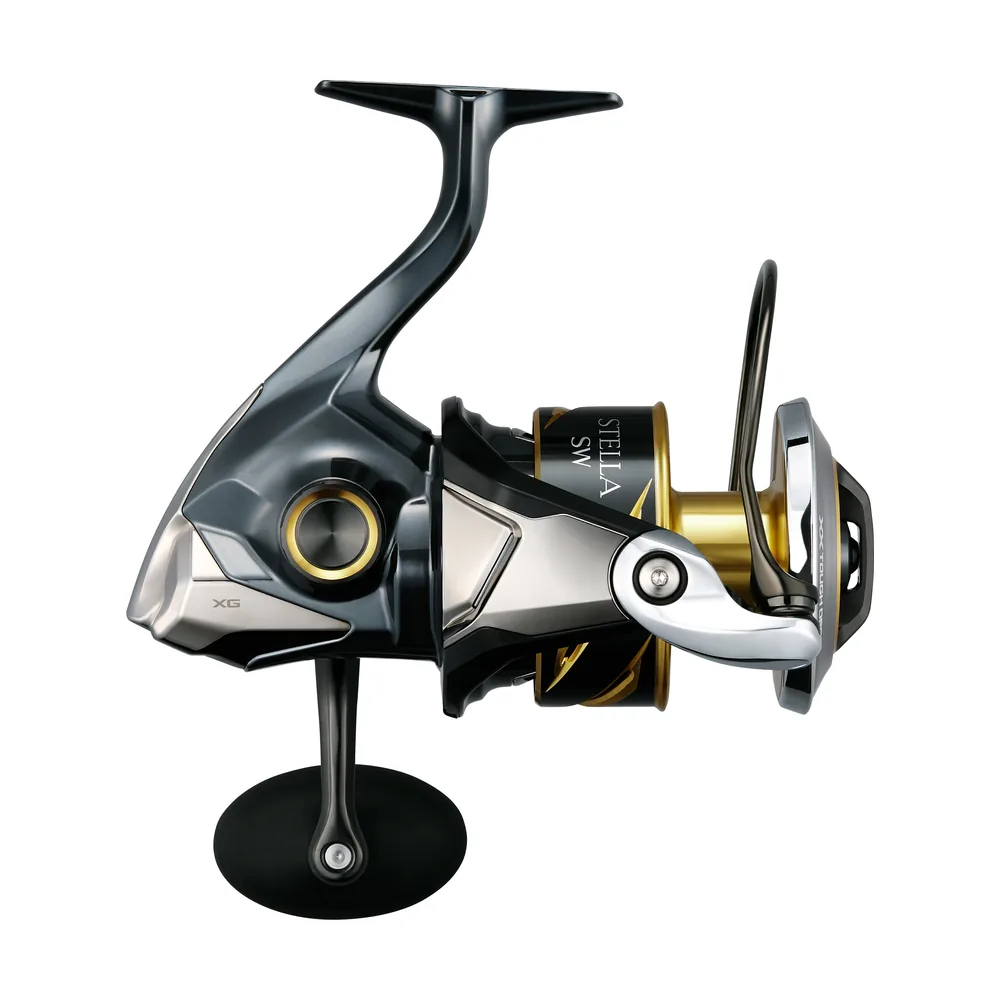
Read the full Stella SW D review
Where it fits
Stella SW D is the premium offshore choice in this selection for anglers building an outfit around demanding casting or jigging rather than ordinary light coastal use. It deserves attention when a trip requires substantial reserve, deliberate pressure management and equipment chosen for a clearly defined target. The price makes it a considered purchase, and the size must be chosen with as much care as the family. A smaller SW D can serve a very different brief from a large one. We would not recommend choosing the largest configuration simply because the flagship range includes it.
Verified 2025–2026 development
Shimano introduced SW D in its January 10, 2025 announcement and added the 25000 size in a January 9, 2026 announcement. The latter also identifies the addition of a 6000 XG option. Documented developments include InfinityXross, InfinityDrive and SilentDrive; sizes 14000 and above combine XX Tough Drag with Heatsink Drag. The manufacturer also lists X-Protect and X-Shield. These are published design claims, not independent results from this review. The size expansion should be distinguished from the generation's initial launch, and dealer availability should be checked for the exact configuration.
For STLSW14000XGD, the current US chart lists a 6.2:1 ratio, 53-inch recovery, 24.2-ounce weight and 55-pound maximum drag. Listed PowerPro capacity includes 315 yards of 65-pound line. These figures describe the example and should not be transferred to another size. The maximum is not our recommended fishing setting. We also do not invent a specification for the new 25000 when comparing a retailer listing; use Shimano's exact chart and dealer confirmation for that purchase.
Making the flagship spending useful
The strongest case begins with an offshore fishing plan, not a desire to own the most expensive reel. Identify the target, normal lure or jig load, expected runs and the crew's approach to fighting fish. Then choose the rod and line system that fit those conditions. A premium reel can be a sensible part of that system when the owner fishes frequently or depends on it for demanding trips. It is less persuasive when the rest of the outfit is a compromise or the application rarely asks for more than a less expensive alternative comfortably supplies.
Consider the full trip budget. Travel, boat time, suitable line, spare leaders and backup equipment all affect whether a trip succeeds. A flagship purchase that consumes the reserve for those essentials may not improve the overall plan. We would rather see an adequately matched outfit and a sound backup strategy than a prestige reel with no contingency. For an angler who already has the supporting system, SW D can be a deliberate premium choice. That judgment should be explained in terms of workload and ownership preferences rather than claims that the reel guarantees a fish will be landed.
Choosing a casting configuration
For offshore casting, handling matters because the outfit may be used repeatedly while watching for surface activity. A large reel carrying useful reserve can also make casting more tiring, depending on the rod and lure. The practical goal is enough line and suitable pressure capability without unnecessary bulk. Handle the assembled outfit, practice with the lure weights you expect to use and check whether your grip remains comfortable. An impressive capacity specification has limited value if the combination is so awkward that accurate casting deteriorates when an opportunity finally appears.
Retrieve choice should follow the presentation. Faster recovery can help collect slack or keep contact as a fish moves toward the boat, but the lure still needs the intended action. A configuration chosen for one casting style may not be your preferred tool for another. Where alternatives exist, consider the amount of line recovered at normal filling and how the handle cadence translates to the lure. Do not choose only from the ratio label. A little practice before the trip can prevent the common mistake of applying an old retrieve rhythm to an outfit that behaves differently.
Choosing a jigging configuration
Jigging adds a different capacity calculation because fishing depth consumes reserve before a fish begins its run. Account for current, boat movement and the line required to reach the working depth. A spool adequate for surface casting may leave less margin for a deep presentation. The rod and jig technique also shape the reel choice. If the method asks the angler to retrieve significant resistance repeatedly, the combination should be comfortable for that actual work. Our selection should not be interpreted as a claim that any size of SW D suits every depth or jig weight.
Plan how you will manage the fight. The angler, rod, line, leader and boat form the system that controls pressure. A maximum drag rating should not encourage an excessive initial setting. Use appropriate measuring equipment, choose a conservative starting point for the complete outfit and understand how the situation changes as line leaves the spool. A strong fish near the boat can create a different challenge from the same fish farther away. Crew communication, safe positioning and a workable landing plan are part of choosing a heavy offshore outfit, not details to consider only after hooking a fish.
Comparing SW D with TwinPower and Saragosa
TwinPower SW C is the direct premium alternative we would put beside SW D when the required sizes overlap. First establish that both candidate configurations meet reserve and handling needs. Then decide whether the flagship purchase adds enough to your particular ownership priorities to justify the cost. Saragosa SW A is another important reference because many offshore anglers need a practical working outfit rather than the most elaborate purchase. A lower-priced alternative should not be assumed inadequate solely because a flagship exists. Equally, common capacity figures do not prove that two reels are mechanically equivalent.
An owner upgrading from Stella SW C should compare the documented changes with the existing reel's condition and application. A newer generation does not make a maintained older outfit unusable. The additional 2026 size may matter if it fills a specific reserve requirement, but it does not mean every owner needs to replace an existing reel. We would inspect the present outfit, understand service needs and identify the actual limitation before upgrading. Buying because a configuration solves a real problem is a stronger decision than buying because a date on a product announcement is newer.
Ownership and verdict
Protect the investment through the manufacturer's maintenance and service route for your region. Keep the exact code and purchase records, and inspect the outfit before a trip. Unusual resistance, changes in drag behavior or a noisy line roller deserve attention before demanding use. Water-protection features do not make upkeep optional. Regional promotions also need local confirmation; a service arrangement advertised in another market should not be assumed to apply automatically. Schedule maintenance during a quiet period when possible, and maintain a suitable backup if the trip would otherwise depend on a single reel.
Our verdict is that Stella SW D is a compelling premium offshore selection when its exact configuration matches a demanding, well-planned outfit. Its documented 2025 launch and 2026 expansion make it especially relevant to readers examining recent developments. We would choose it for a clear job and a sustained ownership commitment, not as a universal replacement for every saltwater reel. Correct size, line reserve, rod compatibility and pressure management remain decisive. The flagship is most convincing as one carefully chosen component of a capable system, with the owner understanding both its published specifications and the practical demands of the fishing.
Manufacturer source: Shimano Stella SW D specifications and features
7. TwinPower SW C — premium offshore capability below Stella
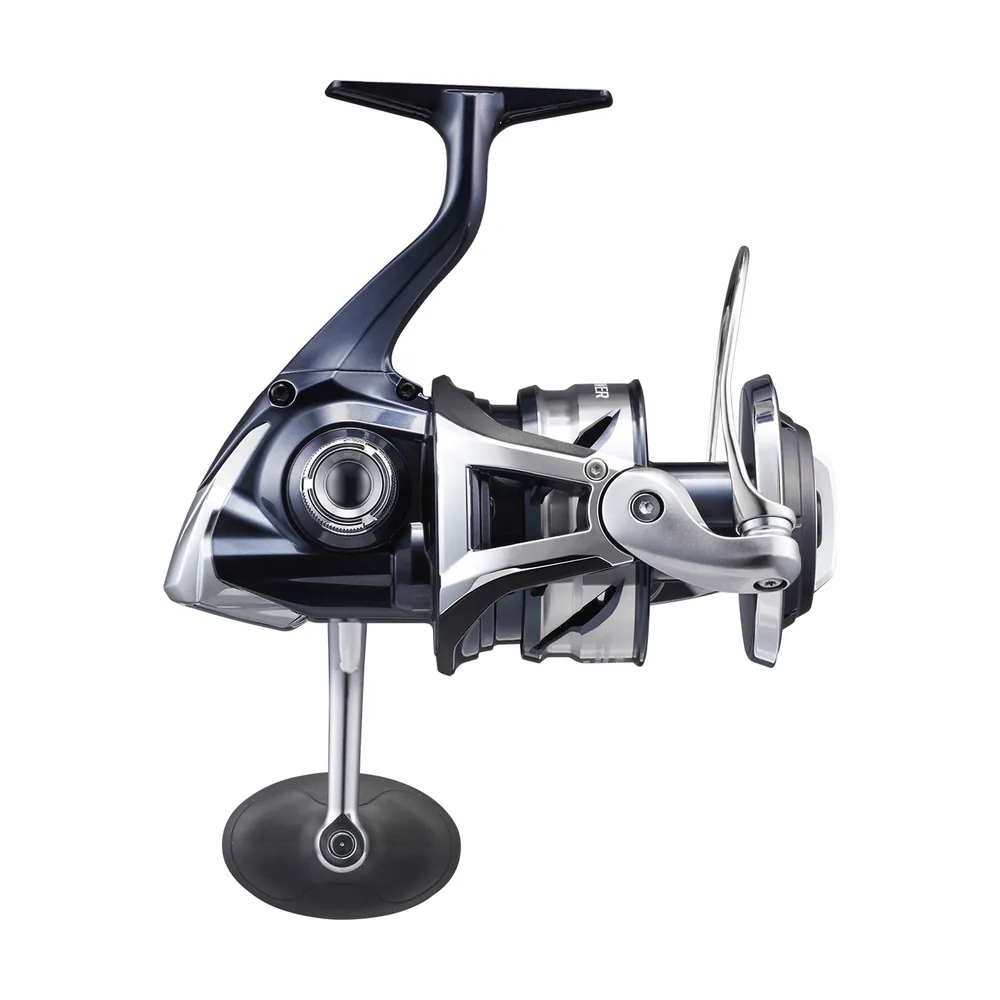
Read the full TwinPower SW C review
Where it fits
TwinPower SW C is the premium offshore option we would consider when an angler wants a substantial saltwater outfit without automatically moving to Stella SW D. Its role is not defined only by the price difference. The exact sizes available, the intended presentation and the complete outfit must first be suitable. For a casting or jigging program within that range, it provides an important reference against the flagship and against Saragosa SW A. We would start the comparison with the actual fishing requirement and then decide which level of purchase fits the owner's use and budget.
Verified construction and example specifications
Shimano lists InfinityDrive and describes Heatsink Drag on the 10000 and 14000 configurations. Its product information also identifies X-Protect in the line roller. The US TPSW14000XGC chart gives a 6.2:1 ratio, 53-inch recovery, 23.3-ounce weight and 55-pound maximum drag, with PowerPro capacity including 315 yards of 65-pound line. These figures belong to that reference model. We treat SW C as an established current option and do not claim a verified 2025 or 2026 replacement. A current listing is not evidence of a new annual redesign.
The practical premium buying case
An angler can reasonably prefer a premium offshore outfit without needing the highest-priced option. The useful question is whether the intended configuration fits the trips you regularly take. If capacity and handling are appropriate, a purchase below the flagship may leave more room for backup equipment, line and planned servicing. That allocation can be particularly sensible when the owner maintains more than one offshore setup. We would not describe SW C as automatically equivalent to SW D, but we would also not assume that a larger expenditure is essential when the fishing brief is already met.
Frequency matters. A reel used on demanding trips throughout the year has a different ownership calculation from one bought for a single occasional outing. Consider not only the purchase but also how confidently you can support the outfit. A useful backup, spare leaders and a clear service route contribute to reliability. If the premium purchase forces you to compromise those elements, compare alternatives before committing. Conversely, if the complete system is already in place and SW C feels right on the rod, there is a sound reason to choose it rather than pursuing a flagship for its name alone.
Selecting between coastal and larger offshore sizes
The smaller SW configurations deserve a different assessment from the larger examples. Someone fishing strong coastal targets may value a manageable outfit with suitable reserve, while a larger offshore program can require more capacity and a different rod. Do not infer all these roles from the word TwinPower. In particular, distinguish SW C from the separate FE and XD FB inshore choices. A retailer shortening the name can make an unsuitable comparison look plausible. Verify the complete code and use the matching specification chart before considering prices, handling or line filling.
For an offshore size decision, consider the distance a fish can run before the boat can respond. Add the line already used for the presentation, whether that is a long cast or a deeper jig. Current and drift may make the reserve calculation less generous than it appears at the dock. We would also allow for ordinary retying and potential loss during a trip. An outfit that needs a completely full spool to be barely adequate is not a comfortable ownership plan. Choose reserve realistically, then make sure the resulting outfit remains manageable for its casting or jigging role.
Casting and retrieval decisions
For surface presentations, aim for a combination that lets you place the lure and control its action without fighting the equipment. A powerful outfit that becomes tiring too quickly can reduce useful casts. Mount the reel on the intended rod, check grip and handle access, and practice with the planned lure range. Recovery should be selected around the action and the need to collect slack. A fast configuration may be appropriate for one method but require slower handle movements for another. The angler should set the cadence deliberately instead of assuming one ratio choice is ideal for every offshore lure.
Boat position affects the retrieve as well. A lure retrieved toward a moving boat can behave differently from the same lure fished from a fixed position. Similarly, a fish that changes direction may require rapid recovery without an increase in fighting pressure. Thinking through these situations before purchase helps decide whether a configuration suits the program. We would prefer an outfit chosen for the regular presentation over one selected around a vague promise of speed or power. Published figures are useful, but their value lies in how they support the actual task.
Jigging and drag planning
For jigging, include fishing depth and current in the reserve calculation. The outfit needs line beyond what reaches the working zone, and the angler must manage the lure or jig comfortably through repeated cycles. Do not choose a reel only because it carries a particular amount of braid. Consider the rod action and the resistance encountered during the retrieve. If the planned method becomes awkward on the assembled outfit, a different size or configuration can be preferable even when the original choice meets the capacity requirement on paper.
Set working drag according to the complete system. The published maximum is not a target for ordinary use. Line, leader, knots, hooks and rod all influence appropriate pressure, as does the angler's ability to hold the outfit safely. Check the starting setting and understand the role of boat handling when a fish takes substantial line. Near structure, positioning can matter more than an incremental difference in a maximum specification. Offshore, patience and a sensible landing plan remain important even with a premium reel. Avoid treating equipment capability as permission to ignore how the system is being used.
Comparisons that matter
Against Stella SW D, compare the exact size options and documented developments, then assess what they add to your fishing. A preference for flagship ownership is valid, but it should not be disguised as a universal requirement. Against Saragosa SW A, consider the total outfit budget and whether the premium choice is valuable in the normal routine. We would not claim that matching recovery or capacity makes two reels identical. Equally, we would not infer that the less expensive reel cannot serve an application simply because another product is positioned above it. The comparison should stay tied to the job.
Current-generation language also deserves care. If a seller advertises a new date, confirm whether it describes a release, an additional size or simply new stock. We have not assigned SW C an unsupported 2026 redesign. An established configuration may still be a sensible purchase, particularly when local support and the exact application are clear. Compare condition and service needs if buying used, and do not treat a cosmetic improvement as evidence that internal maintenance has been performed. A carefully checked purchase is more valuable than an attractive headline that leaves the actual reel uncertain.
Ownership and verdict
Follow the maintenance guidance for the exact model, keep records and arrange service through a suitable local route. Give unusual operation attention before the next demanding trip. A line roller issue or change in drag behavior should not be ignored because the reel belongs to a premium range. If the outfit is crucial to travel or charter fishing, build a contingency plan. A maintained second setup can preserve a trip while the primary reel is serviced. Include that practical consideration when deciding whether the budget is better spent on one premium purchase or a more balanced equipment collection.
Our verdict is that TwinPower SW C is an important premium offshore choice for readers whose size and presentation requirements fit its range. We would buy it after comparing the assembled outfit with suitable Saragosa and Stella configurations, not merely from its position between them in price. Its strongest case is a frequent angler with a clear program, realistic reserve and an appreciation of the complete system. There is no need to relabel it as a new 2026 reel to explain that role. A well-chosen established option can remain a thoughtful purchase when the fishing and ownership plan are sound.
Manufacturer source: Shimano TwinPower SW C specifications and features
8. Saragosa SW A — the offshore working reference
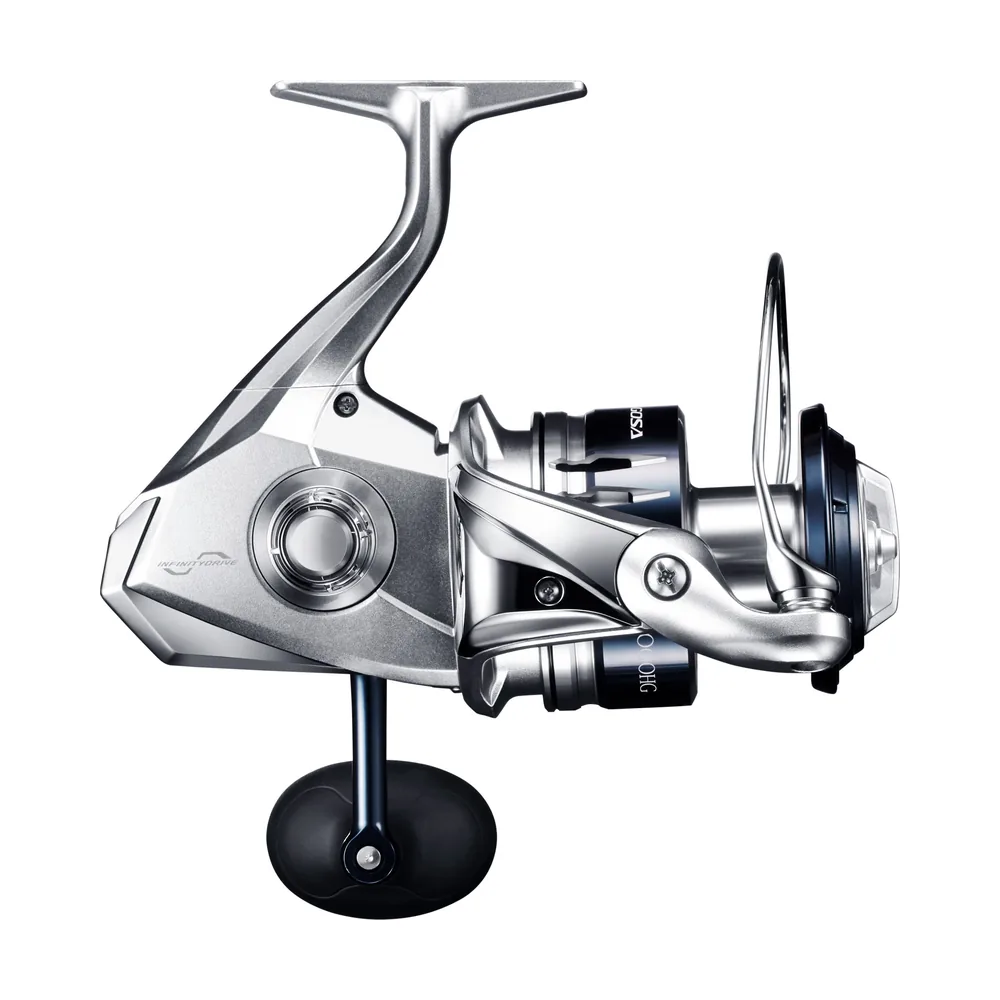
Read the full Saragosa SW A review
Where it fits
Saragosa SW A is the offshore reference we would use for many readers comparing a practical working outfit against more expensive alternatives. Its place in this selection is broad saltwater casting and jigging, with the exact role determined by size and rod. The family should not be reduced to one generic recommendation because a smaller coastal setup and a large offshore outfit face different requirements. We would investigate it when the angler wants a purposeful purchase with room in the budget for the rest of the system, rather than treating a flagship as the default answer to every demanding fishing plan.
Verified construction and reference specifications
Shimano lists InfinityDrive, HAGANE body and gearing, a waterproof Cross Carbon drag, X-Protect and an IPX8-rated body. For US SRG14000SWAXG, the chart lists 6.2:1 gearing, 53 inches of recovery, 24.7 ounces and 33 pounds maximum drag. PowerPro capacity includes 315 yards of 65-pound line. That is a reference configuration, not a specification for every Saragosa. SW A remains the generation reviewed here; we have not confirmed a new 2025–2026 successor. Manufacturer water-resistance information should not be interpreted as a reason to disregard the exact maintenance instructions.
Why it is a useful comparison point
For an offshore owner, value often involves dependable access to more than one outfit. A practical primary setup and a useful spare may be more valuable than a single premium reel that consumes the entire budget. Saragosa belongs in that calculation because it can be compared directly with the premium group on the actual requirements. That does not establish identical construction or performance. It establishes a sensible purchasing question: does the more expensive option provide something your normal fishing and ownership priorities justify, after the candidate outfit already fits capacity, comfort and technique?
This question is especially relevant to travel and charter fishing. A reel is only one expense among suitable line, leaders, lures, spare terminal tackle and time on the boat. We would make the outfit plan before choosing the most prestigious component. If Saragosa fits the job and leaves room for a contingency, that can be a stronger overall purchase. If a premium alternative adds a feature or configuration genuinely important to the program, the additional spending can also be justified. Neither conclusion should be reached from marketing position alone. Compare the actual codes and supporting equipment.
Selecting a size without oversizing
Begin with the line system and realistic reserve. Surface casting, deeper jigging and stronger coastal fishing consume line in different ways. Include the line already deployed before a fish runs, boat drift and potential retying during the trip. A smaller option may handle a particular coastal role comfortably, while a larger option can be more appropriate offshore. The correct choice is not necessarily the largest that fits the rod. Too much bulk can make repeated casting awkward and reduce the angler's control. We would choose the smallest configuration that meets the full practical brief with a sensible margin.
Compare the family carefully when moving between sizes. Physical handling can change substantially, so a successful smaller outfit does not prove that the larger one will feel equally comfortable on a different rod. Test the actual combination, particularly handle clearance and your natural grip. For a longer casting rod, check the balance during a sequence of casts rather than one static hold. For a shorter jigging rod, consider the retrieve posture and how you will brace during a fish. These details matter because the outfit must remain usable after the initial excitement of a new purchase.
Surface lure work
For offshore casting, recovery should support the lure action and the ability to collect slack when required. A fast configuration still needs a deliberate cadence. Watch the lure in suitable conditions before relying on a familiar rhythm from another outfit. The presentation can change when the boat moves or the lure travels across current. We would choose the setup around the method most often used, then understand how to adapt it for secondary methods. A versatile reel does not eliminate the need to pay attention to the presentation or to the effort of repeated casts.
Line preparation is particularly important when casting a heavier outfit. Fill according to the manufacturer's guidance, use a suitable connection and inspect the guides and leader. A troublesome knot or poor line packing can interrupt a valuable surface opportunity. Close the bail deliberately and avoid retrieving obvious slack into loose loops. If a cast behaves unexpectedly, stop to inspect rather than immediately repeating it. Good habits protect the purpose of a practical offshore purchase: an outfit ready to work when the fish appear. They also make it easier to distinguish a setup issue from a genuine mechanical concern.
Jigging and pressure management
For jigging, the reserve calculation needs depth and current as well as the target's run. The line used to reach the working depth is already unavailable as reserve. Choose the rod and jig method together, then assess whether the reel and handle remain comfortable through the normal retrieve. A capacity table should not be the only test. If the setup feels awkward when imitating the regular method, consider a different configuration. We would not turn a broad manufacturer description into a claim that every Saragosa size suits every jig weight or fishing depth.
Use a working drag chosen for the complete outfit and the angler, not the published ceiling. A stronger maximum in another product does not automatically provide a useful benefit if your rod, line or method calls for much less. Establish an initial setting and understand how the fight changes as line is lost or recovered. Communication with the skipper and crew can preserve reserve and prevent unsafe positioning. Near the boat, leader management and landing technique become central. A reel with the right specification is useful, but success still depends on how the entire system is handled.
Comparing alternatives
Spheros SW A is the comparison we would make when budget is the deciding concern. Evaluate the exact configurations and the owner's priorities rather than assuming shared capacity makes the products interchangeable. TwinPower SW C and Stella SW D are the premium comparisons when the angler wants to spend more. We would ask what the additional purchase delivers in the normal routine. If the answer is a clear preference or an application-specific advantage, it may be reasonable. If the answer is only prestige, recognize that honestly and do not present it as a requirement for a capable outfit.
Be careful with abbreviated retailer names and older stock. This review concerns SW A, not every reel ever sold under Saragosa branding. A discount can be attractive, but check the exact generation, condition and available service support. If buying used, inspect operation and ask about maintenance rather than judging only cosmetic appearance. An established design in sound condition can be useful, but an uncertain purchase may consume the savings in inconvenience. We would favor a clear, supported configuration over a low price that leaves the buyer unsure what equipment is actually being offered.
Ownership and verdict
Use the model's maintenance instructions, inspect the outfit before demanding trips and investigate changes in operation. Body sealing is a published feature, not a promise that the entire fishing system is immune to contamination, wear or careless storage. Keep the reel dry in storage after appropriate cleaning and arrange service through a suitable route. A backup is worthwhile if an offshore trip depends heavily on one outfit. Planning service and reserve equipment also lets the owner respond to a developing concern without feeling forced to use the reel until it fails or until an expensive trip is compromised.
Our verdict is that Saragosa SW A is a persuasive working reference for an offshore angler who wants a balanced equipment purchase. We would choose it when the exact size, rod and line system fit the job and when the budget benefits from sensible allocation across the whole outfit. It is neither automatically equivalent to a flagship nor automatically inadequate because it costs less. The practical recommendation is to compare it seriously before spending more, while remaining realistic about the fishing brief. A well-matched Saragosa setup can be a thoughtful choice without assigning it an unsupported new release year.
Manufacturer source: Shimano Saragosa SW A specifications and features
9. Spheros SW A — offshore budgeting with clear priorities
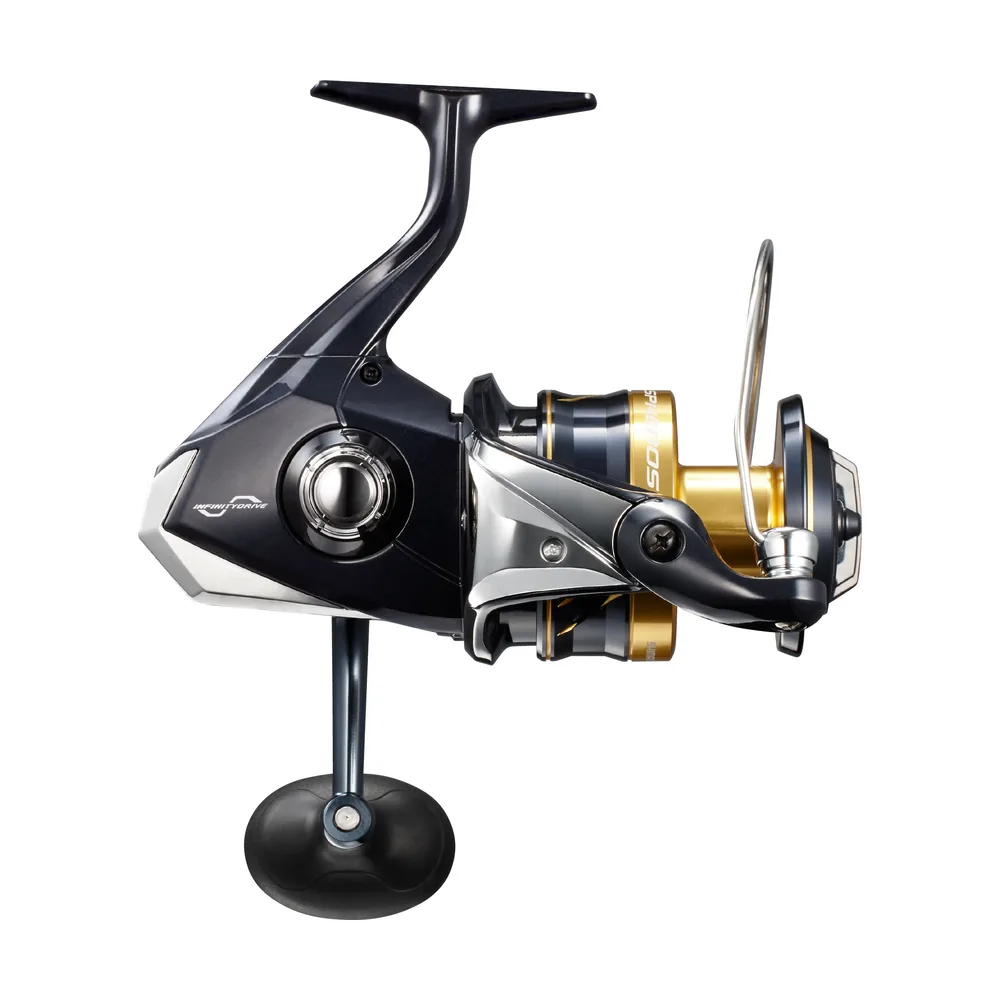
Read the full Spheros SW A review
Where it fits
Spheros SW A is the offshore selection we would examine when an angler needs a purposeful saltwater outfit while keeping a firm budget. Its role is not to promise flagship equivalence at a lower price. It is to provide a candidate worth comparing for the actual casting, bait or jigging task. Within its size range, different configurations can serve substantially different programs. We would begin with the required line reserve and rod, then compare the specific Spheros with Saragosa SW A. The useful question is whether the complete affordable outfit meets the planned fishing brief comfortably.
Verified features and example specifications
Shimano lists InfinityDrive, X-Protect, X-Shield and an IPX8 water-resistant-rated body for this SW A range, and identifies cold-forged HAGANE gearing. For SPSW14000XGA, the US chart gives 6.2:1 gearing, 53-inch recovery, 24 ounces and 26 pounds maximum drag. PowerPro capacity includes 315 yards of 65-pound line. These are reference specifications for that code. The separate smaller Spheros 3000/4000 listing should not be assumed to share every detail. We do not describe SW A as a confirmed new 2026 redesign; the current product listing establishes availability information, not an annual launch date.
Building the whole outfit within a budget
An affordable reel purchase is useful only when the rest of the setup is appropriate. Allocate money to a rod that matches the method, suitable line, leader material and the terminal tackle the fishing requires. Keep room for maintenance and ordinary replacement items. If a higher-priced reel would force compromises in those areas, Spheros deserves consideration before the budget is stretched. We would prefer a coherent system to a more expensive reel selected in isolation. The objective is a purchase the owner can support through real fishing, not a reel that leaves no margin once it has been bought.
Budget also shapes backup planning. An angler relying on one outfit for travel should consider what happens if it needs attention. A practical spare or a clear borrowing option can preserve a trip. That does not mean buying the cheapest equipment available; it means understanding the total plan. If Spheros meets the ordinary brief, savings may contribute to a more useful collection. If the fishing asks for another platform or a specific configuration, price should not override suitability. A lower purchase cost is not value when the resulting outfit is uncomfortable or cannot provide the reserve you actually need.
Size and reserve for offshore use
Capacity should be planned around the presentation plus a plausible run. For casting, account for distance and the ability of the boat to respond. For jigging, include the line already deployed to reach the working zone, as well as current and drift. Leave margin for retying and cut-offs rather than planning around a spool that must remain perfectly full. We would compare the exact capacity with the line you intend to use and avoid assuming every braid of the same stated strength occupies the same space. A sensible reserve makes an affordable outfit more dependable in practice.
The bigger options need a handling check. A large spool can look attractive in a table but make continuous casting tiring on the wrong rod. Consider the assembled balance, your grip and the handle position during normal use. For an outfit mostly used with bait, priorities may differ from those of a lure setup worked continually. For jigging, imitate the retrieve posture rather than only holding the rod upright. We would choose the configuration after these practical checks. The cheapest suitable size is not always the smallest, and the largest available is not automatically the safest overall choice.
Surface casting and mixed presentations
For an offshore lure outfit, select recovery around the presentation you expect to use most often. Fast pickup can help in some situations, but the angler still controls lure cadence. A slower handle rhythm may be appropriate even with a quick configuration. Watch the lure in suitable water and adjust after changing equipment. A new reel can alter your familiar timing enough to affect the presentation. We would rather spend a little time practicing than use a demanding trip to discover that the outfit encourages an unhelpful retrieve. Technique remains part of making an economical purchase successful.
For mixed bait and lure use, understand the system you are buying. A conventional front-drag spinning outfit is not automatically a bait-feeding design. The rig and method should suit that operation. When changing techniques, check the leader, hooks and initial drag as well as the lure or bait. A reel that serves several jobs still needs the outfit adjusted deliberately between them. Budget-conscious ownership benefits from these small habits because they reduce avoidable trouble without requiring an upgrade. They also help the angler identify when a second specialized setup would genuinely be useful rather than merely desirable.
Jigging and realistic pressure
A deeper jigging program places importance on reserve and repeated retrieve comfort. Assess the rod, jig style and current before deciding that the capacity alone makes a configuration appropriate. When the method asks for frequent retrieval against resistance, the assembled outfit should feel manageable to the angler doing the work. We would not infer that the widest capacity chart means every configuration suits the same workload. Choose according to the regular task, then recognize when the program changes enough that another outfit deserves consideration. An affordable selection should be made as deliberately as a premium one.
Working drag should reflect the whole system and the angler's control. The published maximum is not the pressure we prescribe. Measure the initial setting appropriately and consider the leader, connections and rod. When a fish runs deeply into the reserve, communication with the skipper can matter greatly. Safe boat handling may help preserve line without forcing the angler to apply excessive pressure. Near the boat, the landing plan should already be understood. Equipment specifications can support the fight, but they cannot replace judgment about positioning, changing line angles or the point at which another crew member needs to help.
Spheros versus Saragosa and Socorro
Saragosa SW A is the next comparison when a buyer is considering spending more. Look at the exact configurations and the expected use rather than assuming equal recovery or capacity proves equal design. We would pay more where the owner's priorities and intended workload justify it, not merely because the higher-priced family exists. Socorro SW is another comparison where the price and available configuration appear attractive. In that case, examine recovery and the documented protection features especially carefully. A small saving is less compelling when the alternate setup changes the handling or ownership plan in a way the angler does not want.
Current catalog language should also be checked before buying. This review describes the identified SW A range. Smaller models or older Spheros generations can have different details even when retailer titles look similar. Confirm the code, condition and local support. If buying used, a careful operation check and maintenance history are more useful than a glossy appearance. We would avoid stretching a budget to buy uncertain equipment merely because a seller presents it as a bargain. The affordable purchase should make the fishing plan simpler, not introduce a problem that requires more spending shortly after arrival.
Ownership and verdict
Follow the exact maintenance guidance after saltwater use and pay attention to the line roller, handle and drag behavior. A water-resistant body is not a maintenance exemption. Plan service around your fishing schedule and keep the paperwork and model identification. If the reel begins behaving differently, investigate before applying demanding loads again. This is particularly important when the outfit is the only one available for a trip. A budget-conscious owner benefits from prevention because a small concern addressed early can be easier to manage than an interruption discovered after the boat has already left the dock.
Our verdict is that Spheros SW A deserves a serious place in an affordable offshore comparison, provided the exact configuration fits the job. We would choose it as part of a balanced rod, line and maintenance plan, and compare Saragosa where the budget permits. The recommendation is not that price alone makes it better or that it replaces every premium setup. It is that a coherent, supported outfit can be a sensible purchase without reaching the top of the catalog. Define the task, choose the size carefully and keep realistic reserve and pressure margins throughout ownership.
Manufacturer source: Shimano Spheros SW A specifications and features
10. Socorro SW — a selective budget saltwater option
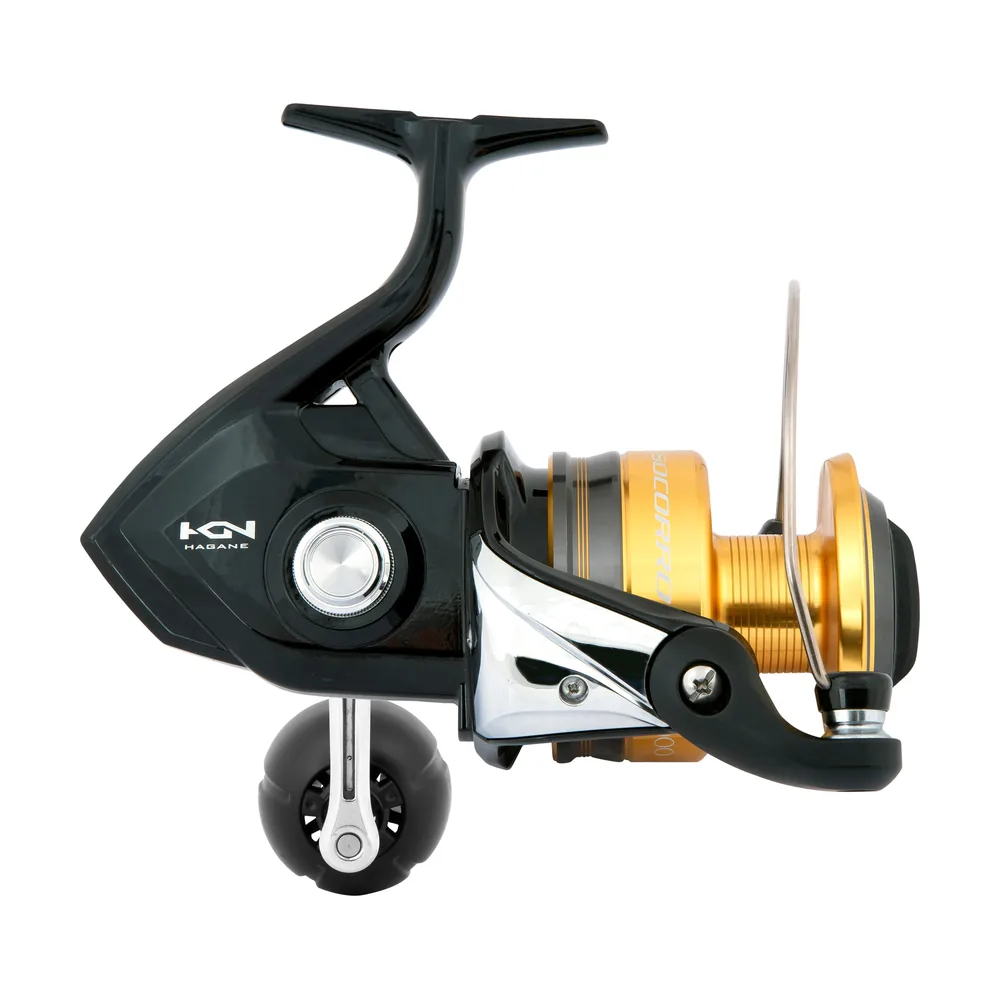
Read the full Socorro SW review
Where it fits
Socorro SW is included as a selective budget choice for moderate saltwater applications, with deliberate caution about treating it as equivalent to the heavier premium selections. It is the fifth offshore option because the directory covers more than trophy-oriented equipment, not because every offshore job is suitable for it. An occasional boat angler, an owner assembling a secondary outfit or someone comparing economical spinning choices may reasonably investigate it. The purchase needs a clear presentation and realistic expectations. We would compare it closely with Spheros SW A before deciding that a lower advertised price is the most useful saving.
Verified construction and reference specifications
Shimano lists HAGANE gearing, X-Ship, Cross Carbon Drag and S A-RB bearings. The US SOC8000SW example has a 4.9:1 ratio, 37 inches of recovery, 22.6-ounce weight and 26 pounds maximum drag, with PowerPro capacity including 265 yards of 50-pound line. The page does not establish the same IPX8 body claim documented for the reviewed Spheros and Saragosa ranges, so we do not transfer that rating to Socorro. This is an established catalog option, not a confirmed new 2025–2026 generation. Check the exact model code and availability before purchasing.
The value question is more demanding here
At the budget end, small differences in the complete purchase can change the recommendation. A sale price may be attractive, but compare it with the nearest suitable alternative and ask what is being traded away or changed. That includes the configuration, retrieve behavior, documented protection and local support. We would not recommend Socorro solely because it costs less than a flagship; almost every other reel in this selection does. The relevant comparison is with the affordable setup that also fits the fishing brief. If the price gap is modest, taking a more suitable alternative can be the better long-term decision.
For a secondary outfit, clarity about the role is essential. A backup should be ready to perform a useful task, not simply exist on the boat. If the primary outfit becomes unavailable, will the spare carry appropriate reserve and work the intended lure or bait? If it will instead support a less demanding activity, explain that in the equipment plan. We would avoid buying a reel as a supposed emergency replacement for a much heavier program when the configuration does not actually fit. A selective budget purchase can be sensible, but its purpose should be written down before money is spent.
Matching capacity to a moderate application
Choose reserve for the actual location and target, not for a vague offshore label. The distance between angler and fish, current, boat drift and the deployed presentation all consume line. A capacity suitable for a moderate surface or bait application may leave less room for a deeper method. We would assess the specific line you plan to use, account for retying and avoid treating nominal breaking strength as an exact diameter. If the configuration barely meets the requirement when newly filled, consider a more appropriate option rather than relying on perfect conditions throughout ownership.
Size should also be checked against handling. A heavier budget setup may not be the best choice for long periods of lure casting merely because it carries the desired braid. Mount it on the intended rod and consider your posture, wrist comfort and the handle position. For an outfit used occasionally with bait, those priorities can differ. The purchase should reflect the normal method. We would not use a capacity figure to justify a combination that feels awkward from the start, nor expect a larger spool to solve every concern about workload. The whole outfit needs to make practical sense.
Recovery and presentation choices
The reference configuration's recovery should prompt a deliberate comparison with the alternatives, particularly for lure methods. Do not assume that every similar-size spinning reel will recover slack or work a presentation in the same way. A configuration can be comfortable for a steady or moderate retrieve while being less attractive for another technique. Match the cadence to the lure rather than demanding that the lure accommodate the purchase. We would practice the intended method before using Socorro as part of a trip that depends on fast opportunities or rapid changes of direction from the fish.
For bait fishing, understand how the front-drag system fits the rig and presentation. Do not confuse the reel with a separate free-spool or bait-feeding design. The rod, hooks and initial pressure need to suit the method you plan to use. When a fish takes the bait, manage the situation through the complete outfit and boat position. A budget choice does not require careless technique, and careful technique does not turn unsuitable equipment into the right tool. The sensible approach is to pair a moderate application with an outfit selected for it and recognize when another setup would be preferable.
Pressure, structure and workload limits
We would be particularly cautious about choosing Socorro for a demanding trophy program simply because the listed maximum drag or capacity looks adequate. Those figures do not establish equivalence with the premium group or describe every aspect of repeated heavy use. Match the ordinary workload, not only an isolated specification. If the planned trips involve strong fish, substantial lure resistance or little opportunity to give line, compare the other SW choices carefully. A selective budget option should not be stretched beyond the brief used to justify it. Spending less is useful only when the result remains appropriate for the fishing.
Set working pressure for the rod, line, leader and connections rather than aiming at the reel's maximum. Use a conservative initial setting and check it before fishing. Positioning and a clear crew plan are especially important when structure or current complicates a fight. If the only way to make an outfit seem adequate is to rely on unusually high pressure, reconsider the equipment. The goal is controlled line release and a manageable fight within the system's intended role. A more suitable purchase can be less expensive than dealing with a failed or uncomfortable compromise after the trip begins.
Socorro versus Spheros
Spheros SW A is the comparison we would insist on making before buying. Check the actual local prices and configurations, not only old advertised values or an undated review. If the difference is small, the alternative may align better with the buyer's priorities, particularly where documented water protection or a different recovery is important. We do not make that decision automatically for every owner, but the comparison should be explicit. A sale on Socorro may be worth considering when the exact moderate role is clear and support is available. It is less persuasive when the buyer has not defined the task.
Inspect older or used stock carefully. Confirm the code, operation, condition and service route. Cosmetic cleanliness does not prove that the line roller, drag and internal maintenance are satisfactory. A budget reel purchased cheaply can still create inconvenient costs if its condition is uncertain. We would prefer a transparent transaction and a realistic role over a bargain that depends on optimistic assumptions. Likewise, a seller's current-year label should not be mistaken for a new design announcement. This review has not verified a 2025 or 2026 successor, and we avoid using a recent date to inflate the purchasing case.
Ownership and verdict
Follow the manufacturer's care instructions, pay attention after saltwater exposure and investigate changes in operation before the next session. Protection information should come from the exact model, not from another Shimano family. Keep the reel appropriately stored and maintain the line system as carefully as the reel itself. If it serves as a backup, inspect it before travel rather than assuming that little use guarantees readiness. An outfit left untouched can still need attention. Planning the role and upkeep makes a budget purchase more dependable than simply keeping it aboard as an unexamined spare.
Our verdict is selective: Socorro SW can be considered for a clearly defined moderate saltwater application or an appropriate secondary outfit, particularly when the purchase terms are favorable. It is not our automatic first choice for serious demanding offshore work, and Spheros SW A should be compared before committing. Choose it only when reserve, handling, method and ownership support fit the job. That honest boundary is more useful than promoting every item in a ten-reel list as equally capable. A modest reel can have a sensible role, provided the buyer understands what that role is and does not ask the purchase to become something else.
Manufacturer source: Shimano Socorro SW specifications and features
Manufacturer sources and purchasing information
Use the links below to verify exact configurations, current availability and local buying information. These are manufacturer links, not Amazon affiliate links. If affiliate buttons are added later, they should identify the exact reviewed model and include an appropriate disclosure.
- Shimano Stella FK product page
- Shimano TwinPower XD FB product page
- Shimano TwinPower FE product page
- Shimano Stradic FM product page
- Shimano Vanford A product page
- Shimano Stella SW D product page
- Shimano TwinPower SW C product page
- Shimano Saragosa SW A product page
- Shimano Spheros SW A product page
- Shimano Socorro SW product page
- Shimano corporate history
- Shimano January 10, 2025 product announcement
- Shimano January 9, 2026 Stella SW D expansion
- Shimano April 1, 2025 TwinPower XD FB announcement
- Shimano current US spinning reel catalog