
Company: Avet Reels · Country: USA · Category: offshore trolling reels
Avet machines its lever-drag reels in the USA from marine-grade aluminum and stainless components. The brand is known for compact frames, dry carbon Avedrag systems, true left-hand availability on many models and strong drag output for reel size.
Top 5 Avet trolling reels
1. HXW 5/2 Raptor
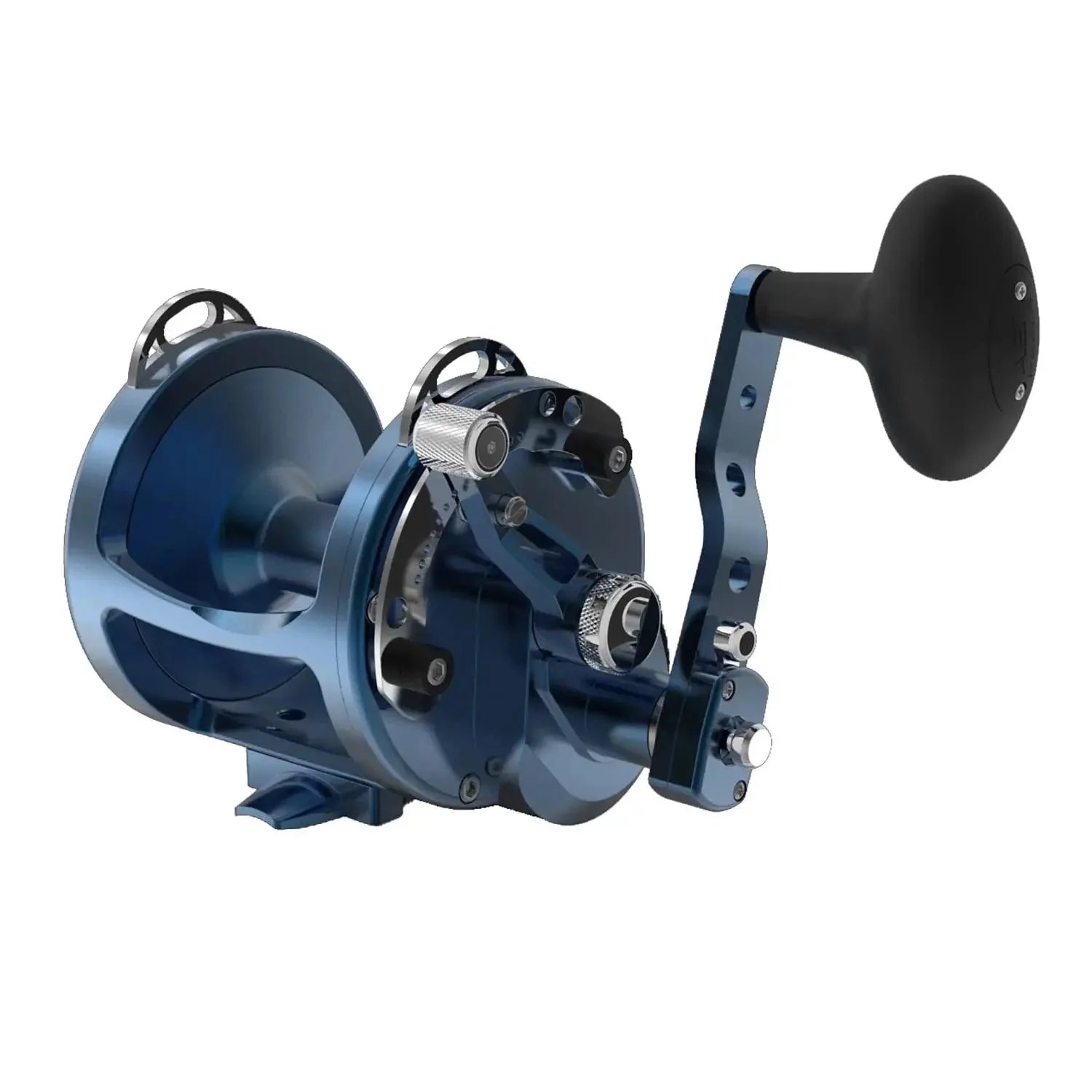
The HXW Raptor is the compact power option: about 32 oz, 5.4:1 / 1.9:1 gearing, roughly 620 yd of 100 lb braid and up to 50 lb max drag. Its dual carbon drag and wide spool make it a strong braid-era reel for tuna and wahoo without moving to an old-school 50-size frame.
2. EXW 30/2
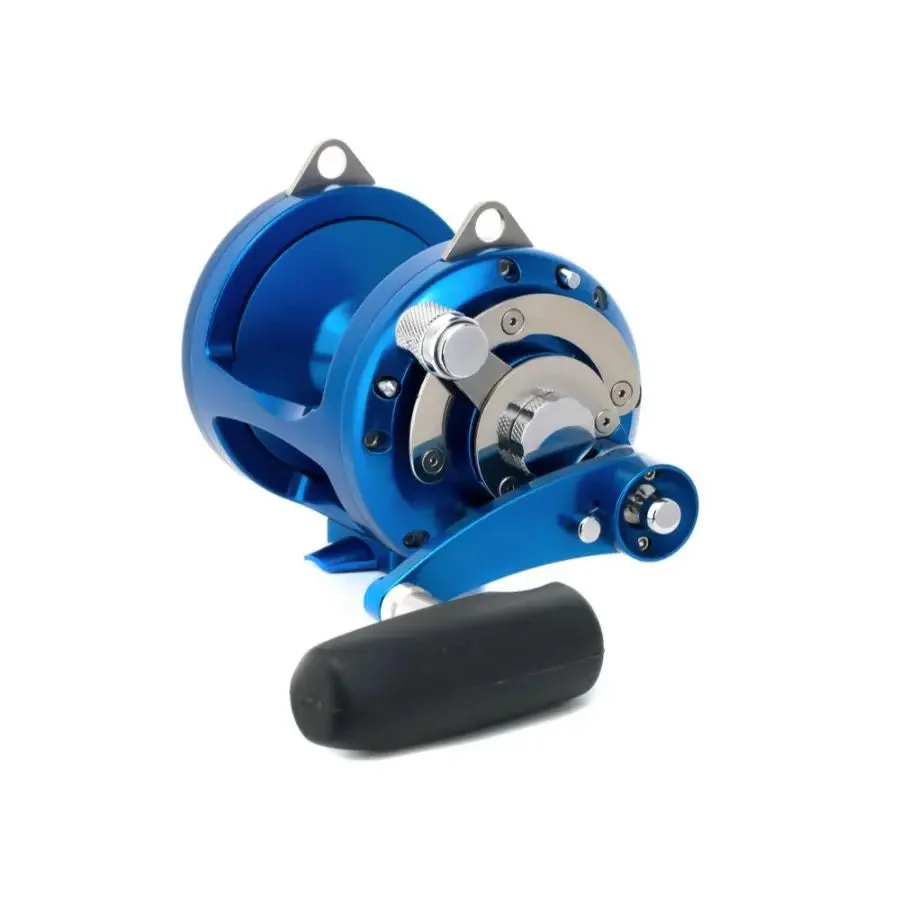
The EXW 30/2 is a traditional heavy offshore two-speed. It holds about 850 yd of 100 lb braid, weighs 49 oz, uses 3.8:1 / 2.0:1 gearing and develops about 40 lb max drag. It is a straightforward trolling reel for tuna, swordfish and billfish.
3. EXW 50/2
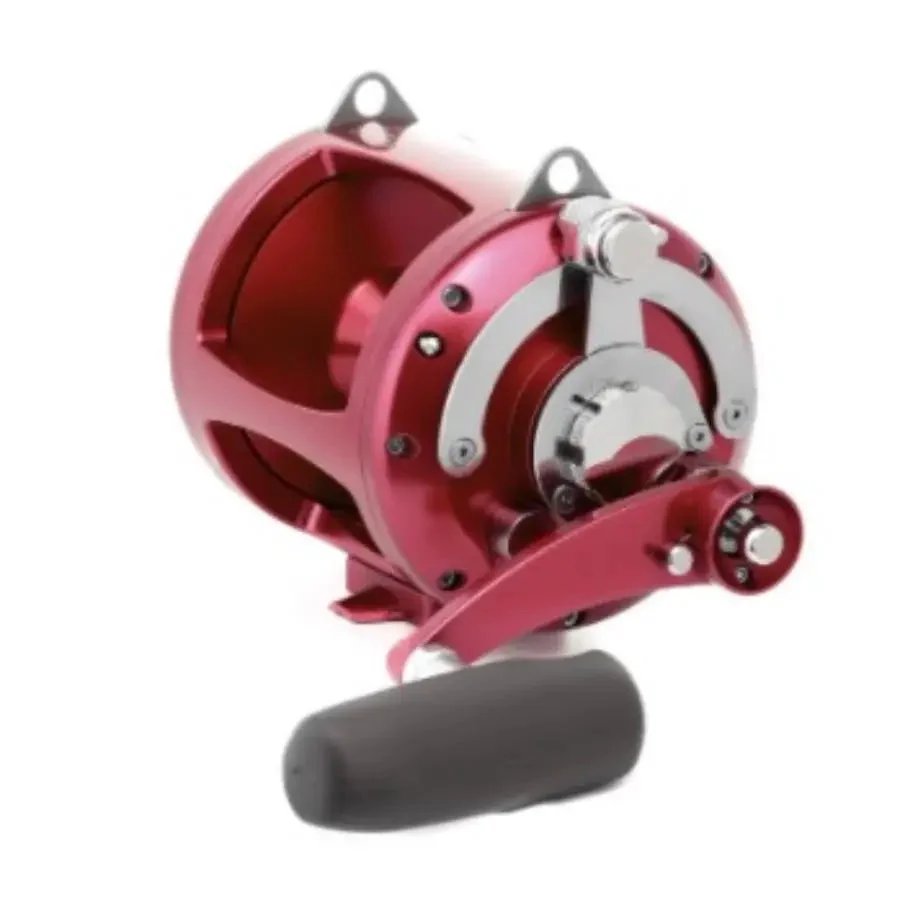
The wider EXW 50/2 carries about 950 yd of 130 lb braid and raises maximum drag to roughly 57 lb. Ratios are 3.2:1 / 1.3:1. This is the Avet model to look at for larger tuna and marlin where capacity and low-gear leverage matter.
4. EXW 80/2
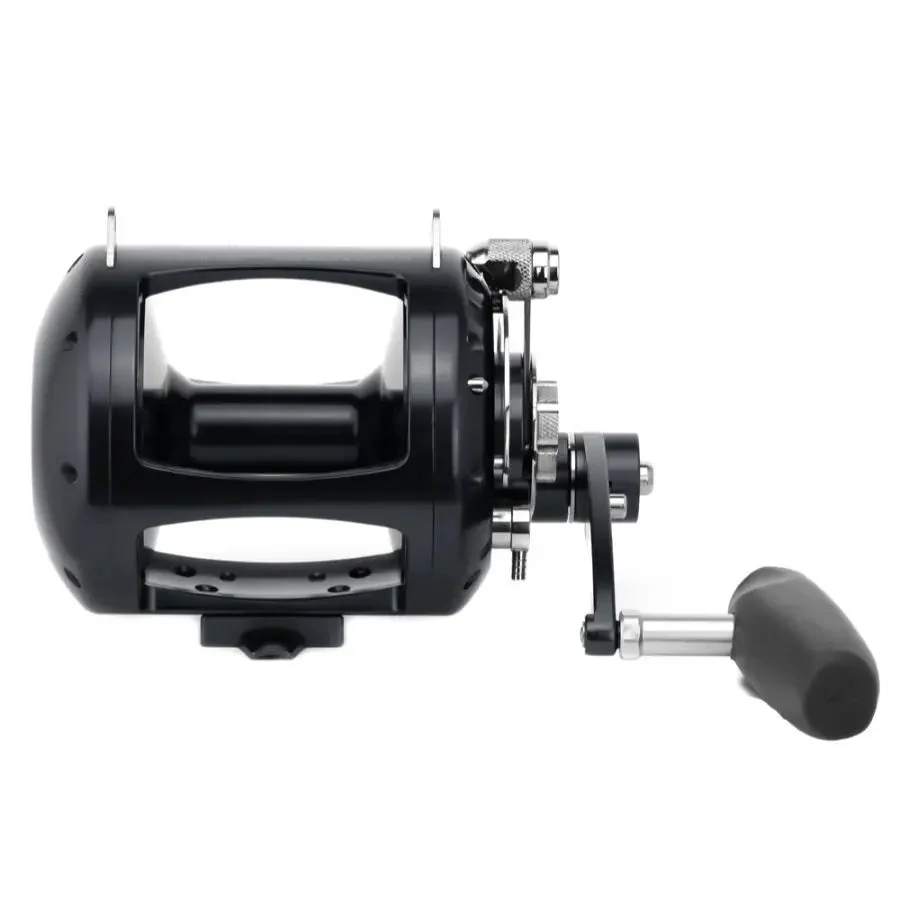
The EXW 80/2 moves into very heavy tackle: approximately 1,300 yd of 200 lb braid, 2.7:1 / 1.3:1 gearing and about 57 lb max drag. It is intended for chair or bent-butt duty and long fights rather than stand-up trolling.
5. T-RX 50
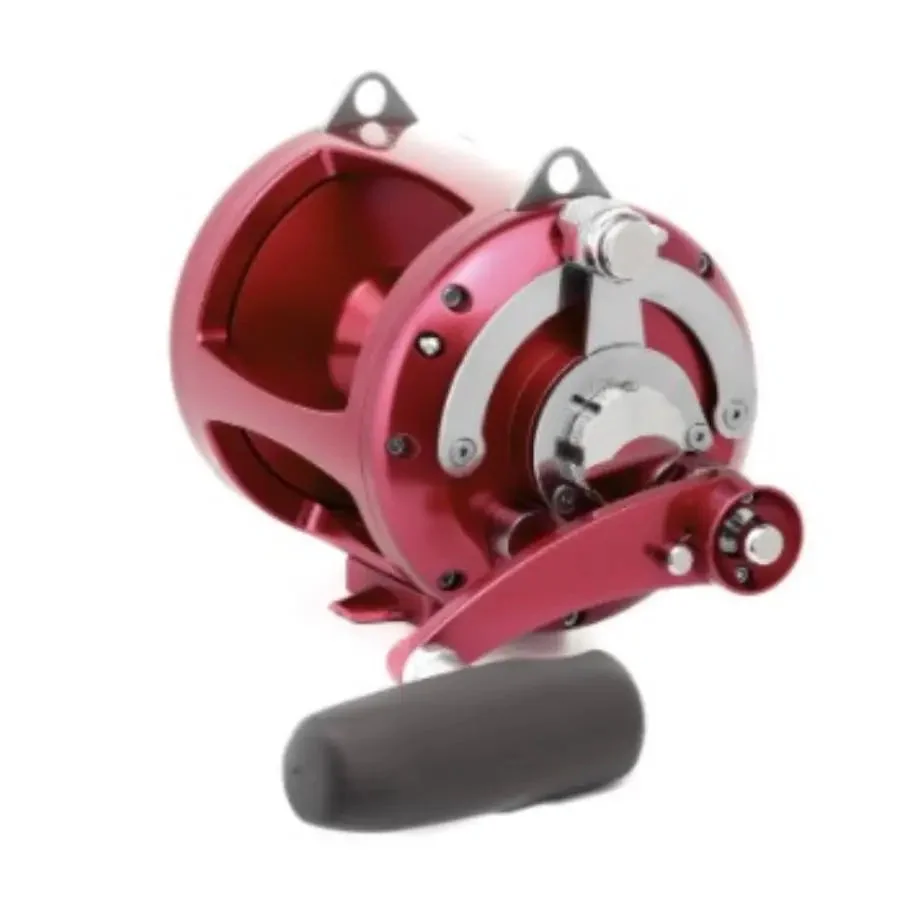
The T-RX family is Avet’s high-drag big-game platform. The T-RX 50 is listed around 74 oz with 3.2:1 / 1.3:1 gearing, about 1,240 yd of 100 lb braid and drag capability well beyond typical 50-class reels. It is built for anglers intentionally fishing extreme pressure.
What stands out
- CNC-machined aluminum construction.
- Dry carbon Avedrag systems and fast two-speed shifting.
- Many models are available in multiple colors and left-hand configurations.
Pros and cons
Pros: made in USA, strong drag-to-size ratio, true left-hand choices, broad price range.
Cons: model naming is dense; extreme-drag T-RX models require matching rods, harnesses and technique.
Verdict
The HXW Raptor is the most interesting compact trolling option. For more conventional big-game work, the EXW 30/2 and 50/2 are easier to match to standard offshore outfits.
Understanding the Avet lineup
Avet’s catalog can look confusing because a few letters describe major changes in spool width, drag system and frame size. HX and HXW are heavy compact reels, with W indicating a wider spool. EX and EXW move into traditional big-game sizes. T-RX is the extreme-drag platform. Many models are available in two-speed versions, and Raptor versions increase drag capability with a dual-drag design.
Avet machines frames and spools from 6061-T6 aluminum and uses stainless-steel gears and internal components. The company’s Avedrag system uses dry carbon-fiber drag material. EX and EXW reels use double drag plates, while T-RX/T-RXW models use a quad-drag arrangement to increase surface area and reduce heat transfer into the spool.
Five Avet trolling reels compared
| Model | Role | Approx. gearing | Representative braid capacity | Why choose it |
|---|---|---|---|---|
| HXW 5/2 Raptor | Compact heavy stand-up | 5.4:1 / 1.9:1 | 620 yd / 100 lb | High drag in a manageable frame |
| EXW 30/2 | Traditional 30-class trolling | 3.8:1 / 2.0:1 | 850 yd / 100 lb | Capacity without huge weight |
| EXW 50/2 | Tuna and marlin | 3.2:1 / 1.3:1 | 950 yd / 130 lb | Strong low gear and wide spool |
| EXW 80/2 | Heavy chair/bent-butt work | 2.7:1 / 1.3:1 | 1,300 yd / 200 lb | Large capacity |
| T-RX 50 | Extreme-drag big game | 3.2:1 / 1.3:1 | About 1,240 yd / 100 lb | Quad-drag pressure and heavy drivetrain |
HXW Raptor: braid-era power
The HXW Raptor is one of the most interesting Avets for modern trolling because it provides high drag and substantial capacity without moving to a full 50-class frame. It weighs roughly 32 oz, offers 5.4:1 high and 1.9:1 low gears, carries around 620 yd of 100 lb braid and can produce roughly 50 lb maximum drag.
That combination works well for wahoo and tuna because the reel is quick enough to recover line yet still has enough low-gear leverage to finish a stubborn fish. The Raptor dual-drag configuration also provides more drag surface than the standard single-drag HX.
EXW 30/2: the practical traditional reel
The EXW 30/2 is a straightforward choice for crews that want a traditional wide big-game reel without carrying a 50 or 80. At about 49 oz, it is still manageable in a harness. Approximately 850 yd of 100 lb braid gives enough reserve for most tuna, swordfish and billfish situations.
The 3.8:1 high gear is fast enough for line recovery, while 2.0:1 low gear is relatively quick compared with many larger two-speeds. That makes the EXW 30/2 feel responsive rather than winch-like. Maximum drag around 40 lb is appropriate for the line classes normally used on this reel.
EXW 50/2: the all-around big-game Avet
The EXW 50/2 is where the range becomes a true marlin and large-tuna system. Capacity rises to roughly 950 yd of 130 lb braid, maximum drag is around 57 lb and low gear drops to approximately 1.3:1. This is a much more powerful cranking configuration than the EXW 30.
For a boat that wants one conventional big-game size to cover large yellowfin, marlin and heavy swordfish use, the EXW 50/2 is easier to justify than an 80. It gives serious reserve capacity without requiring the largest rods and butts.
EXW 80/2: when capacity is the priority
The EXW 80/2 is designed for very heavy line classes, with roughly 1,300 yd of 200 lb braid capacity. Ratios around 2.7:1 high and 1.3:1 low show the intended role: less emphasis on speed, more on torque and controlled pressure.
This reel is best paired with a bent butt, heavy harness or chair system. It is excessive for sailfish, wahoo and ordinary tuna. The advantage appears only when a fish can make extremely long runs or when very heavy topshots and leaders consume a large amount of spool volume.
T-RX 50 and quad drag
The T-RX platform is built for anglers who want drag figures beyond the normal expectations of 50-class reels. Avet’s own manual explains that T-RX and T-RXW reels use quad drag plates. More drag surface helps distribute friction and reduce heat transfer into the spool during prolonged high-pressure fights.
The T-RX 50 is not the logical choice simply because it produces more drag. A rod, harness and angler have to be capable of using that pressure safely. If the intended strike setting is 25–35 lb, an EXW may be simpler, lighter and less expensive. T-RX makes sense when the entire system is deliberately built for extreme pressure.
Avedrag dry carbon system
Avet uses a dry carbon-fiber drag rather than a heavily greased system. The company emphasizes contamination resistance and durability. The double-drag EX/EXW and quad-drag T-RX platforms increase the available surface area, which helps distribute heat during long runs.
Dry drags have a different maintenance philosophy from greased drags. Keep salt, oil and cleaning chemicals away from the drag surfaces. If the reel begins to show inconsistent startup or pressure, service it properly rather than spraying lubricant inside the frame.
Preset and lever operation
The preset knob establishes the drag range for the line class. Once it is correctly adjusted with a scale, the lever gives the angler repeatable movement between free spool, strike and higher pressure. Avet Pro-model levers include a reference button intended to reduce accidental movement into free or full positions.
Set the drag with the reel on the actual rod and line system. Spool diameter changes as line leaves the reel, which changes effective drag and retrieve rate. A setting that feels correct on a full spool will not feel identical after a fish has removed hundreds of yards.
Two-speed technique
Avet’s two-speeds are most useful when the angler shifts before becoming exhausted. High gear works while the fish is moving fast or when clearing slack. Low gear should be selected when handle load rises sharply. The lower ratio increases mechanical advantage and makes it easier to gain line without aggressive rod pumping.
On smaller reels such as the HXW Raptor, low gear remains relatively fast. On the 50 and 80 classes, low gear becomes slower and more torque-oriented. Match that feel to the fishery: wahoo anglers appreciate speed, while giant-tuna crews care more about leverage.
Why true left-hand models matter
Avet is notable for offering genuine left-hand configurations across many reel families. This is different from simply moving a handle on a spinning reel. The drivetrain is built for the retrieve side. Left-handed anglers who spend hours fighting fish can benefit from using their dominant hand on the rod and the preferred hand on the crank.
Florida model selection
Sailfish and smaller wahoo: the HXW Raptor is already more than enough reel; smaller Avets may be even better.
High-speed wahoo and tuna: HXW Raptor. Fast high gear and compact weight are useful when multiple lines need to be cleared quickly.
Yellowfin, swordfish and mixed heavy trolling: EXW 30/2. It offers traditional capacity while remaining harness-friendly.
Large tuna and marlin: EXW 50/2. It has the best balance of capacity and low-gear torque.
Giant game or very heavy shark fishing: EXW 80/2 or T-RX, provided the rest of the system is built for it.
Avet versus Accurate
Both brands machine reels in the USA and appeal to anglers who want domestic CNC construction. Accurate differentiates itself with TwinDrag and a more premium ATD platform. Avet offers a broader ladder of models and often delivers very strong performance for less money. Avet also has an advantage for buyers seeking true left-hand big-game reels.
Accurate’s ATD is the more specialized flagship. Avet is often easier to configure into a complete spread because the same design language extends through many frame widths and drag systems.
Line setup
Braid backing is ideal for the HXW and EXW because it lets smaller frames carry line amounts once associated with much larger reels. A mono topshot can add stretch and simplify trolling clip use. Heavy wind-on leaders make boat-side work safer and reduce the need for long leader wraps.
Do not fill a narrow spool so aggressively that line can touch the frame if it packs unevenly. Leave margin for wet line expansion and imperfect line lay during a fight.
Maintenance and service
Avet’s aluminum frames and stainless internals are saltwater-oriented, but corrosion can still develop where dissimilar metals meet. Rinse gently, wipe dry and inspect screws, reel feet and clamps. Back off the drag preset for long-term storage.
On EX and T-RX reels, service intervals should reflect drag pressure and use. A reel fished near its limits on large tuna deserves more frequent inspection than a reel used a few times a year for wahoo.
Buying guidance
Affiliate disclosure: Amazon buttons are affiliate links. We may earn a commission if you buy through them, at no extra cost to you.
Avet model names can be easy to misread. Confirm whether the reel is narrow or wide, single- or two-speed, standard or Raptor, and right- or left-hand. A visually similar HX and HXW can differ substantially in capacity. The same is true for EX and EXW.
Color is secondary. Avet offers many anodized finishes, but performance depends on the internal configuration, not the color chosen.
Frequently asked questions
What does Raptor mean?
Raptor versions use a more powerful dual-drag configuration and are designed for higher drag output than standard versions.
What is the difference between EX and T-RX?
EX/EXW reels use double drag plates; T-RX/T-RXW use quad drag plates for much higher drag capability.
Which Avet is best for general heavy trolling?
The EXW 30/2 is a strong all-around choice. Move to the EXW 50/2 when large tuna and marlin are regular targets.
Are Avet reels made in the USA?
Avet states that its reels are designed, machined and assembled in the USA.