
Company: Daiwa · Country: Japan · Series: Saltiga Lever Drag · Category: offshore trolling reels
Daiwa’s redesigned Saltiga Lever Drag family uses one-piece machined aluminum frames, oversized stainless-steel gearing, CRBB bearings and ATD carbon drag. The range includes single-speed, two-speed and tournament sailfish models.
NEW for 2026: Saltiga LD80-2SPD
This is the major new trolling reel in Daiwa’s 2026 lineup. After more than six years of development, Daiwa released the largest Saltiga Lever Drag yet. The LD80-2SPD has a one-piece milled aluminum frame, oversized stainless gears, 59.5 lb maximum ATD drag and approximately 700 yd of 120 lb braid capacity. It is aimed at giant bluefin, yellowfin and marlin.
Top 5 Daiwa trolling reels
1. Saltiga LD80-2SPD — NEW 2026
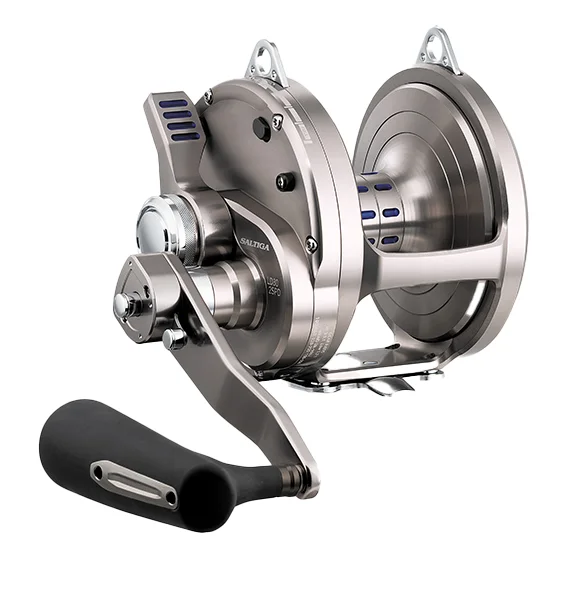
The new heavy-game flagship. It brings Saltiga construction into true 80-class territory while staying focused on braid-era capacity and two-speed fighting power.
2. Saltiga LD60 2-Speed
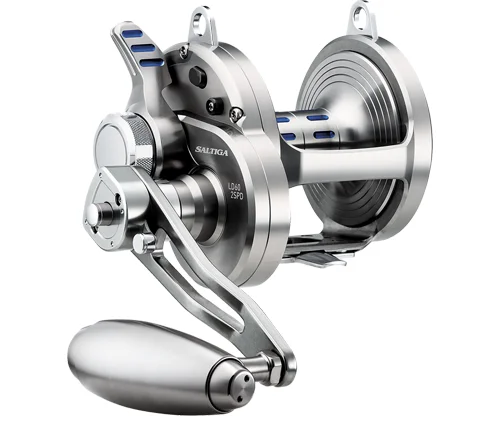
The LD60 2-Speed is the logical choice for anglers who need heavy tuna and marlin capability but do not need the new 80-size spool. Larger 50/55/60 two-speed Saltigas use a long offset aluminum T-handle for leverage.
3. Saltiga LD55 2-Speed
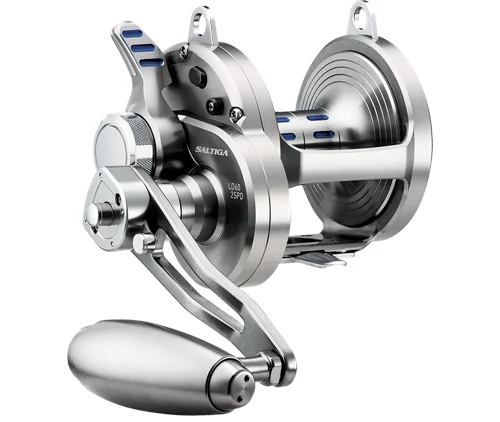
A wide-capacity two-speed option for trolling heavy braid, pulling larger lures and fighting fish from a harness. It shares the rigid machined frame, stainless gearing and ATD system of the family.
4. Saltiga LD50 2-Speed
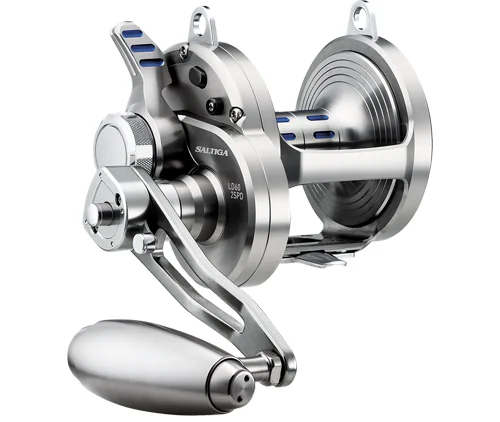
The 50-size two-speed is the most natural crossover for traditional offshore trolling crews. It is easier to handle than an 80 while offering low gear for tuna and billfish that settle deep late in the fight.
5. Saltiga LD35 2-Speed
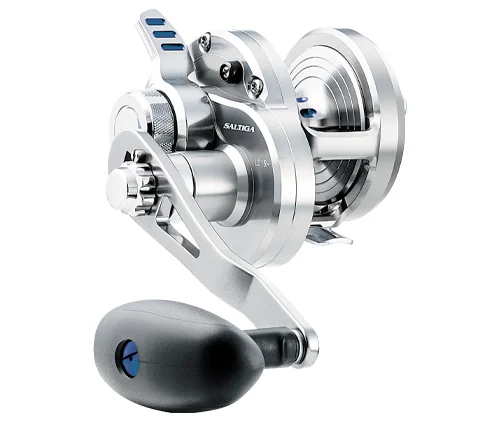
A compact two-speed for sailfish, wahoo, mahi and lighter tuna work. It benefits from the same one-piece frame architecture and ATD drag without the bulk of the 50–80 class reels.
Why Saltiga LD is different
- One-piece machined aluminum frame and side plate keep gears aligned under load.
- ATD carbon drag is designed for consistent pressure as heat builds.
- Current Saltiga reels receive Daiwa’s Executive five-year warranty and free five-year clean-and-service program for the original owner with proof of purchase.
Pros and cons
Pros: modern construction, excellent warranty/service program, broad size range, genuinely new 80-class model for 2026.
Cons: premium pricing; the LD80-2SPD is overkill for normal sailfish and mahi trolling.
Verdict
The LD80-2SPD is the most important new heavy trolling reel of 2026. For everyday offshore trolling, the LD35 and LD50 two-speeds are easier all-around choices.
Saltiga Lever Drag family in 2026
The Saltiga Lever Drag range now spans compact inshore and offshore reels, larger two-speeds and tournament sailfish models. Daiwa says the redesigned family includes six single-speeds, seven two-speeds and two purpose-built high-speed sailfish reels. All use a one-piece machined aluminum frame and side plate, oversized stainless-steel main and pinion gears, CRBB corrosion-resistant bearings and Daiwa’s Advanced Tournament Drag system.
The key change for 2026 is the Saltiga LD80-2SPD. This is not a cosmetic extension of the existing line. Daiwa says it spent more than six years designing, engineering and testing the reel. It is the largest and most powerful Saltiga lever drag to date and finally puts the family into a true heavy-trolling class for giant tuna and marlin.
2026 Saltiga LD80-2SPD in detail
The LD80-2SPD starts with a one-piece frame milled from solid aluminum. The goal is structural rigidity: under heavy drag, flex can move gears and bearings out of alignment, increasing friction and making the reel harder to crank. A rigid frame keeps those components in position even when the drag is approaching 60 lb.
Daiwa uses oversized stainless-steel drive and pinion gears rather than lightweight alloy gears. Stainless is heavier, but in this application durability and tooth strength matter more. The reel’s ATD carbon drag develops up to 59.5 lb of pressure. Daiwa also publishes approximately 700 yd of 120 lb braid capacity. MSRP is $1,499.99.
Those numbers place the LD80 in direct competition with traditional 50W and 80-class trolling reels. The important point is not simply the maximum drag. The new reel gives Saltiga buyers a platform with enough spool volume, gear size and frame stiffness for fish that previously pushed them toward another brand’s big-game family.
Saltiga LD model-selection table
| Model class | Best role | Why choose it | Who should skip it |
|---|---|---|---|
| LD35 2-Speed | Sailfish, wahoo, mahi, smaller tuna | Compact two-speed, easy stand-up handling | Crews needing 50/80-class capacity |
| LD50 2-Speed | General heavy offshore trolling | Traditional big-game size without 80-class weight | Light-tackle sailfish crews |
| LD55 2-Speed | Heavy braid, tuna and marlin | More spool volume than 50-size frame | Anglers who do not need extra capacity |
| LD60 2-Speed | Heavy tuna and billfish | Large spool and long power handle | Most mixed-species trolling |
| LD80-2SPD | Giant tuna, marlin | 59.5 lb drag, 700 yd / 120 lb braid | Anyone whose fishery does not justify the bulk |
Why the one-piece frame matters
A trolling reel under 40–60 lb of drag is not a static object. The line pulls on the spool, the spool pulls on bearings, and the drivetrain tries to twist inside the frame as the angler cranks. Even small movement changes gear alignment. That can make a reel feel rough exactly when maximum power is needed.
By machining the Saltiga frame and sideplate as a rigid structure, Daiwa reduces the number of joints that can flex. This design also lets the company maintain tighter tolerances around gears and bearings. The result should not be judged by how freely the handle spins in a tackle shop; the real benefit appears when the reel is under sustained load.
ATD drag behavior
Daiwa’s Advanced Tournament Drag is built around carbon drag material and thermal consistency. Trolling fights generate heat because line can leave the reel for long periods at significant pressure. Heat changes friction. A drag that feels smooth at the dock can become jerky after a long run if the system cannot manage temperature.
ATD is designed to provide strong initial control while allowing smooth payout instead of a harsh breakaway. With braid, that smoothness is especially important because braid contributes almost no stretch. Sudden drag spikes go directly into the hook, leader and rod.
The 59.5 lb figure on the LD80 is maximum capability. It should not be treated as a default strike setting. Match drag to the actual line class and leader system and measure it with a scale. The extra capacity gives thermal and structural reserve, which is valuable even if the reel is normally fished at much lower pressure.
Two-speed gearing and handle design
Smaller Saltiga two-speeds use comfortable soft-touch handles, while larger 50, 55 and 60 two-speeds use a long offset aluminum T-handle to increase leverage. The LD80 follows the heavy-duty philosophy rather than the compact-reel ergonomics. A larger handle arm matters because low gear is only useful if the angler can apply force comfortably.
High gear is for recovering slack and clearing line. Low gear is for fish that stop running and begin circling below the boat. The strongest anglers still benefit from low gear because the mechanical advantage reduces fatigue and allows steady line gain without excessive rod pumping.
LD35 versus LD50: the practical decision
For many Florida boats, the most meaningful choice is not LD50 versus LD80; it is LD35 versus LD50. The LD35 class fits sailfish, wahoo, mahi and smaller tuna well. It is easier to carry, balances with lighter rods and allows anglers to fight fish actively.
The LD50 class makes sense when larger tuna and marlin are part of the normal program. It provides more line and a more powerful drivetrain while still avoiding the weight of a true 80. If most trips target sailfish and mahi, the 50 can be unnecessarily large. If most trips target 150–300 lb tuna, the 35 can be unnecessarily small.
Where the LD80 fits
The LD80 is for anglers who previously had to leave the Saltiga family when they moved into giant-fish territory. The target is not a 30 lb mahi or a 50 lb wahoo. It is large bluefin, large yellowfin and marlin where long runs and high sustained drag are realistic.
Its 700 yd of 120 lb braid is substantial, but capacity still needs to be evaluated as part of the entire line system. A long mono topshot consumes much more spool volume than braid. If the fishery requires a very long heavy mono section, calculate actual capacity rather than assuming the braid number tells the whole story.
Saltiga for South Florida
Sailfish: smaller Saltiga LD and tournament variants make more sense than the LD80. Fast pickup and manageable weight matter more than maximum drag.
Wahoo: LD35 or LD50 two-speeds are strong choices. Wahoo strikes happen at speed, so smooth startup and quick line recovery are valuable.
Blackfin and yellowfin tuna: LD35 for lighter fish; LD50–60 for larger yellowfin and longer-range trips.
Blue marlin: LD50–60 for modern braid-backed stand-up systems; LD80 when the crew deliberately wants heavier line class and reserve capacity.
Giant bluefin: LD80-2SPD is the obvious Saltiga choice and the reason the new reel exists.
Saltiga versus Tiagra, International and Makaira
Daiwa’s argument is modern construction and a very strong service package. Shimano Tiagra and PENN International have longer histories as traditional trolling standards. Okuma Makaira often delivers more drag and capacity per dollar. The Saltiga line counters with refined machining, corrosion-resistant bearings, ATD and a five-year warranty/service program.
The LD80 at $1,499.99 is expensive, but it is priced in the same general world as other flagship 80/130-class reels. Buyers should compare not just purchase price but also warranty, service access and whether the reel’s size matches the rods already on the boat.
Executive Saltiga five-year service
Daiwa currently offers an Executive Saltiga program for original owners with proof of purchase. It includes a five-year limited warranty against manufacturing defects and a free five-year clean-and-service program on current Saltiga reels. Repairs receive expedited service subject to parts availability.
That program is meaningful on a premium trolling reel. Saltwater reels benefit from preventive service even when they are functioning normally, and the cost of repeated professional cleaning can be significant over five years.
Line and leader setup
Braid backing is the logical foundation for most Saltiga LD setups because it maximizes capacity. A mono topshot adds stretch and can be easier to handle at the boat. Heavy fluorocarbon is usually best reserved for the final leader rather than filling a large portion of the spool.
For wahoo, wire or cable may be required at the terminal end because fluorocarbon alone is vulnerable to teeth. For marlin and tuna, wind-on leaders simplify transitions through the guides and allow the mate to control the fish close to the boat.
Maintenance
CRBB bearings improve corrosion resistance, but no bearing is immune to neglect. Rinse the reel gently, wipe it dry and inspect around the lever, handle and frame joints. Do not store the reel with heavy drag pressure applied. Periodically check line for trapped salt and moisture against the spool.
If the reel sees heavy tournament or charter use, take advantage of Daiwa’s clean-and-service program rather than waiting for roughness to appear. A reel that is smooth while unloaded can still have contaminated bearings or worn drag components that become obvious only under pressure.
Buying guidance
Make sure the model designation includes the correct speed configuration. Daiwa sells single-speed, two-speed and special-purpose Saltiga LD variants. For heavy trolling, the two-speed version is generally the safer choice because low gear becomes important late in the fight.
The new LD80-2SPD carries a published MSRP of $1,499.99. Other Saltiga Lever Drag models start much lower, with current US listings beginning around $529.99 and rising with size and configuration. Buy from an authorized dealer if the five-year service program is part of the value calculation.
Frequently asked questions
What is new for 2026?
The major release is the Saltiga LD80-2SPD, Daiwa’s largest and most powerful Saltiga lever drag.
How much drag does the LD80 produce?
Daiwa lists a maximum of 59.5 lb through the ATD carbon drag system.
How much line does the LD80 hold?
Daiwa publishes approximately 700 yd of 120 lb braid capacity.
Is the LD80 the best Saltiga for all trolling?
No. It is the best Saltiga for giant tuna and marlin. Smaller LD35–60 models are more practical for most everyday offshore trolling.