
Company: PENN · Country: USA · Category: offshore trolling reels
PENN’s International VI family remains one of the most recognizable big-game trolling platforms. The current range uses machined anodized aluminum frames and sideplates, stainless-steel main and pinion gears, Quick-Shift II two-speed gearing and PENN’s Dura-Drag system. Most models are built in the USA from domestic and imported components.
Top 5 PENN trolling reels
1. International 16VISX
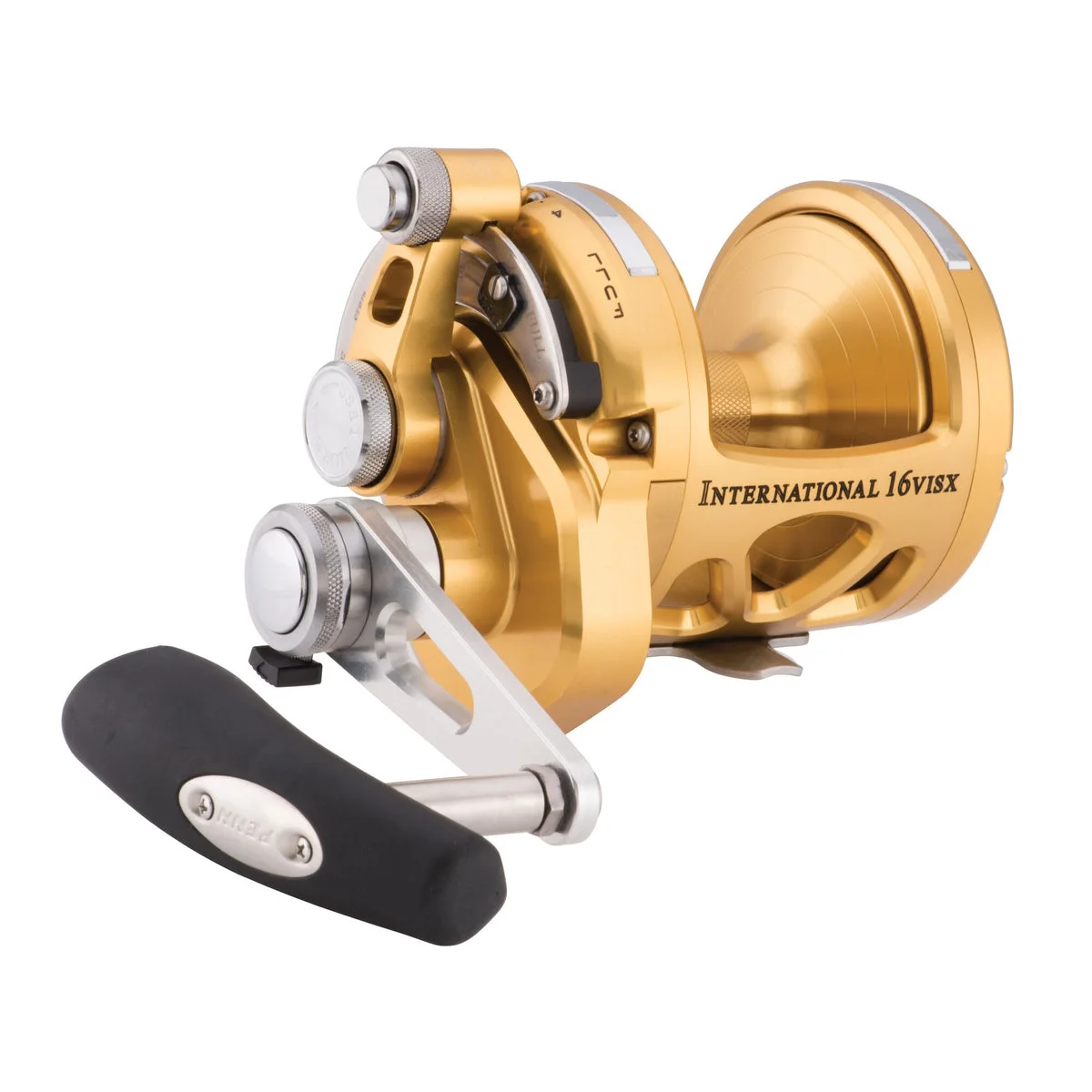
A compact two-speed reel for sailfish, wahoo, smaller tuna and stand-up fishing. It carries about 765 yd of 80 lb braid, makes up to 45 lb of drag and runs 4.6:1 high / 1.6:1 low gearing. The 16VISX is a strong choice when you want serious drag pressure without moving to a heavy 30- or 50-size frame.
2. International 30VISX
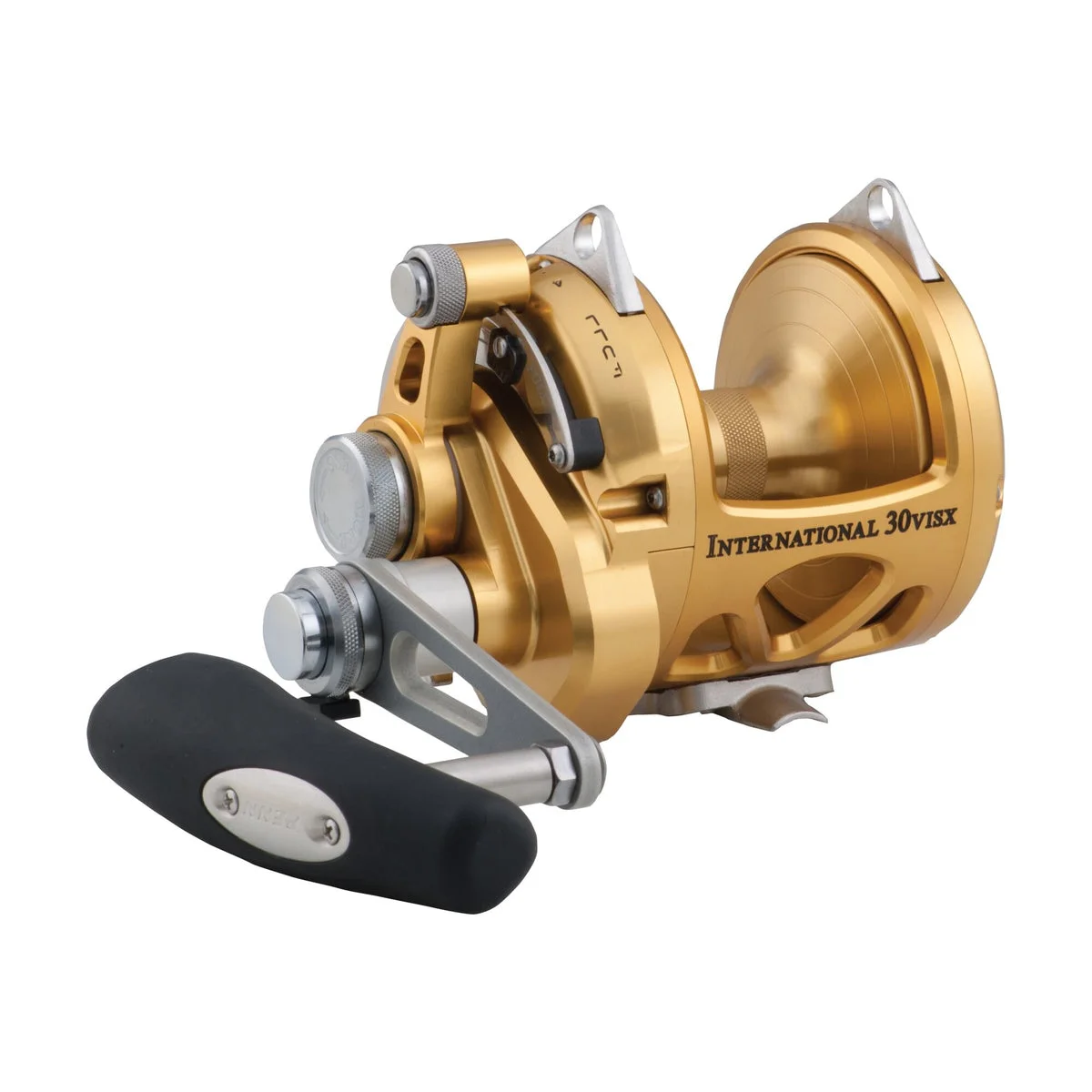
The 30VISX is one of the most versatile heavy stand-up reels in the line. PENN rates it to 55 lb max drag, with 4.1:1 / 1.4:1 gearing and roughly 750 yd of 130 lb braid. It suits large tuna, wahoo, daytime swordfish backup duty and compact marlin outfits.
3. International 50VISX
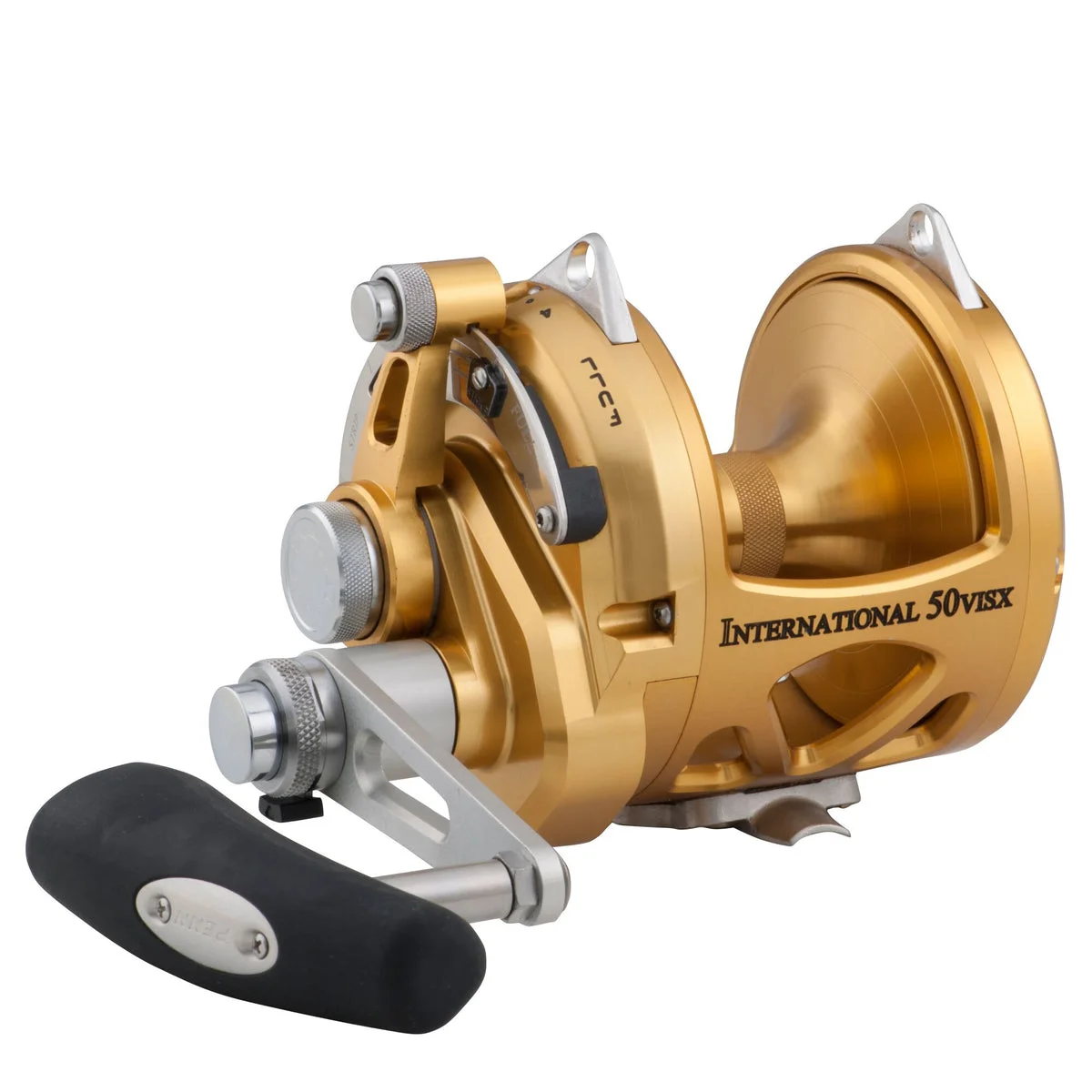
The 50VISX steps up to 60 lb max drag and about 1,105 yd of 130 lb braid. Its 3.5:1 / 1.3:1 gearing gives a useful balance between clearing trolling spread line quickly and grinding in low gear. For South Florida, this is a practical all-around reel for big tuna, swordfish and marlin.
4. International 80VISW
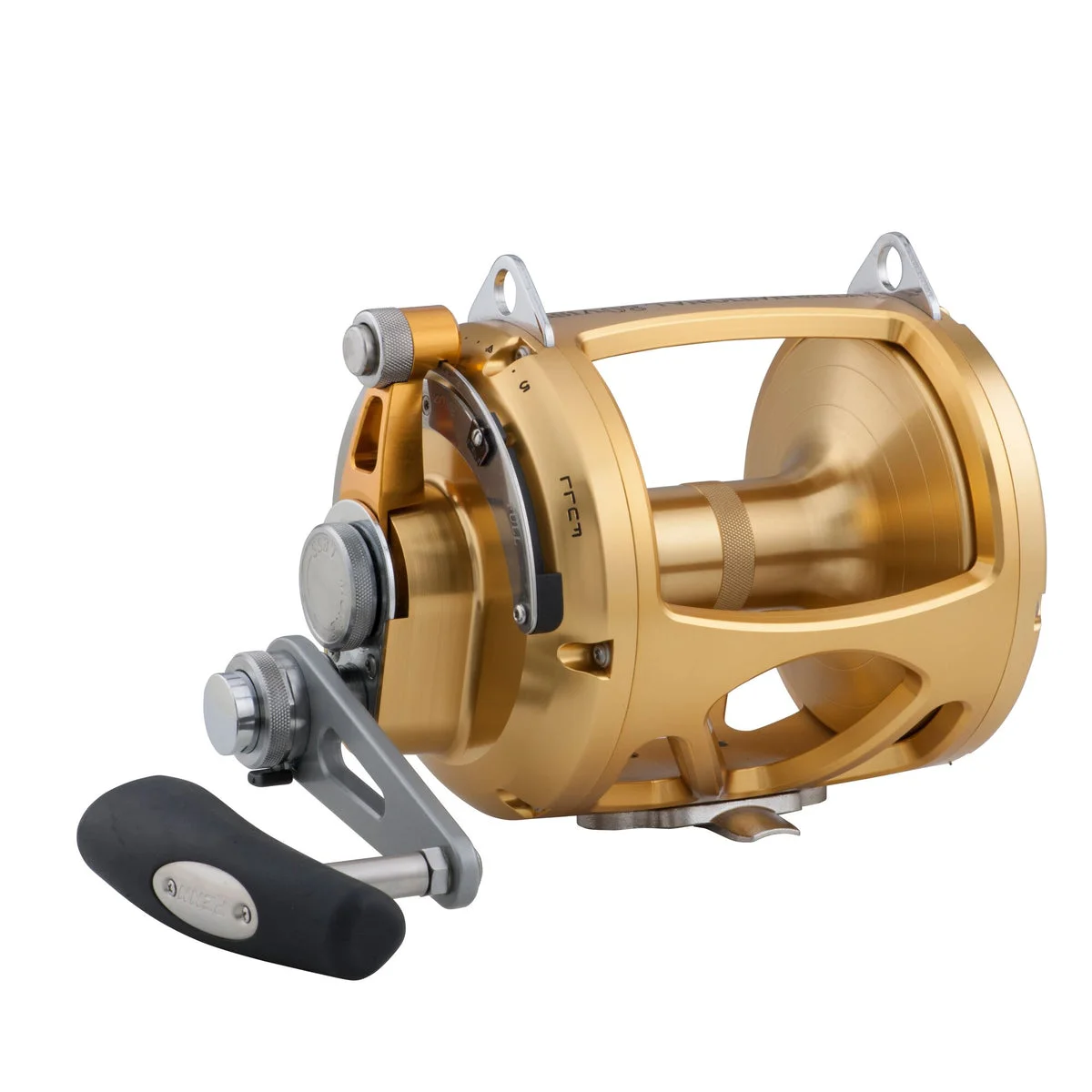
The wide 80VISW prioritizes capacity: about 3,025 yd of 130 lb braid, 65 lb max drag and 3.1:1 / 1.5:1 two-speed gearing. It is heavier than the VISX stand-up reels but better suited to chair fishing, very long runs and heavy line classes.
5. International 130VIS
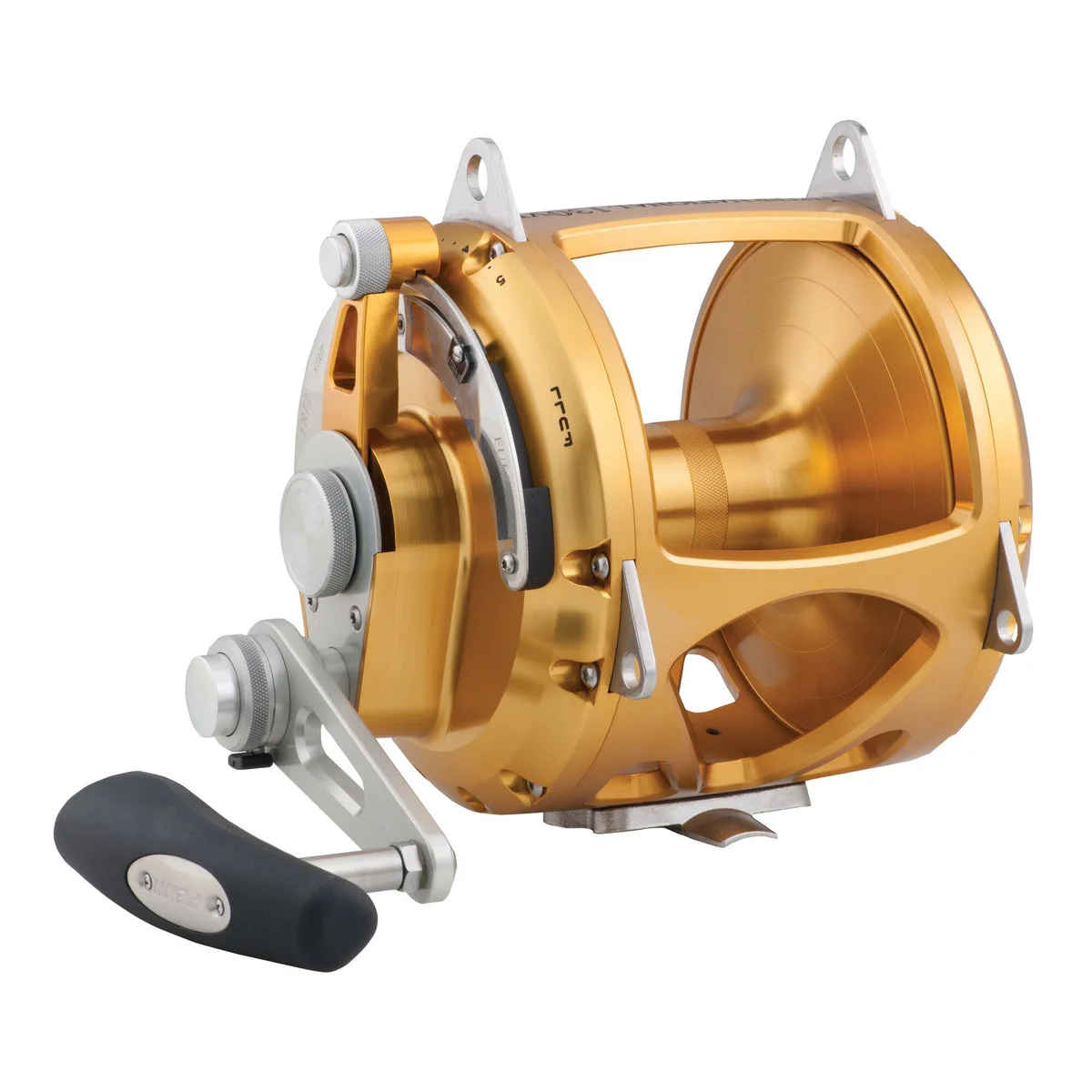
The 130VIS is the full big-game option. PENN lists 100 lb maximum drag and roughly 4,175 yd of 130 lb braid, with 2.3:1 / 1.1:1 gearing. This is a chair reel for giant bluefin, large marlin and other fisheries where capacity, harness use and sustained drag matter more than portability.
What stands out
- Dura-Drag: designed to reduce hesitation at high drag settings.
- Serviceability: PENN has broad US dealer and service support.
- Model depth: the International VI family covers compact stand-up through 130-class chair reels.
Pros and cons
Pros: proven design, broad size range, strong parts/service network, high-capacity wide models.
Cons: large models are heavy; the core platform is evolutionary rather than a brand-new 2026 design.
Verdict
For most offshore trolling crews, the 30VISX and 50VISX are the sweet spots. The 80VISW and 130VIS make sense when line capacity and giant-game capability take priority.
International VI family explained
The current International VI family is easier to understand when you separate it into three jobs. VISX reels are the compact, high-drag “Extreme” models for anglers who want braid capacity and stand-up power without carrying a traditional wide reel. VISW models use a wider spool when sheer line capacity matters. The standard VIS family fills the traditional big-game role, including the 70 and 130 sizes. Across the family, PENN uses machined and anodized aluminum frames and sideplates, stainless-steel main and pinion gears, Quick-Shift II two-speed gearing, Dura-Drag and double-dog anti-reverse.
That distinction matters because trolling reels are not simply “bigger is better.” A 16VISX can put out 45 lb of maximum drag while holding 765 yd of 80 lb braid, which is more than enough for many South Florida tuna, sailfish and wahoo situations. Moving to a 50VISW or 80VISW adds a great deal of line, but also adds width, weight and inertia. The right reel is the smallest one that safely covers the line class, expected run length and fighting style.
Detailed model comparison
| Model | Gearing | Max drag | Representative braid capacity | Best use |
|---|---|---|---|---|
| 16VISX | 4.6:1 / 1.6:1 | 45 lb | 765 yd / 80 lb | Sailfish, wahoo, stand-up tuna |
| 30VISX | 4.1:1 / 1.4:1 | 55 lb | 750 yd / 130 lb | Large tuna, compact marlin setup |
| 50VISX | 3.5:1 / 1.3:1 | 60 lb | 1,105 yd / 130 lb | Big tuna, swordfish, marlin |
| 80VISW | 3.1:1 / 1.5:1 | 65 lb | 3,025 yd / 130 lb | Chair fishing, very long runs |
| 130VIS | 2.3:1 / 1.1:1 | 100 lb | 4,175 yd / 130 lb | Giant tuna and marlin |
The numbers show why the VISX line has become so useful in braid-era offshore fishing. The 30VISX has substantially more drag than the wide 30VISW while using the same 4.1:1 / 1.4:1 ratios. The trade-off is capacity: the 30VISW holds more line. That makes the VISX better for stand-up pressure and the VISW better when a fish may run a very long distance or when thick mono topshots are part of the system.
Dura-Drag and drag behavior
For trolling, smooth startup matters as much as maximum drag. A lure strike can happen at boat speed with a fish already accelerating in the opposite direction. If the drag hesitates and then breaks free abruptly, the shock load goes directly into the leader, hook and rod. PENN’s Dura-Drag system is designed to reduce that hesitation under high settings. In practice, this is most valuable on heavier line classes where strike drag is already substantial.
Do not choose an International only by its maximum-drag number. A reel capable of 60 or 100 lb of drag does not mean that pressure should be used with every rod and line class. Set strike drag around the actual breaking strength of the complete system, accounting for knots, leader, rod, harness and angler. The extra drag capacity is useful because it gives the reel thermal and structural headroom, not because every fight should be conducted at the published maximum.
Two-speed gearing: when low gear matters
High gear is for clearing line after a fish turns toward the boat, resetting a bait quickly, or retrieving an empty line after a missed strike. Low gear is for the hard part of the fight: a tuna circling deep, a marlin that has settled below the boat, or a fish being lifted against current. On the 50VISX, the drop from 3.5:1 to 1.3:1 dramatically increases mechanical advantage. On the 130VIS, low gear is 1.1:1, essentially turning the reel into a winch that trades speed for torque.
PENN’s Quick-Shift II system allows the angler to change gears while keeping a fighting grip on the handle. Good crews use the gearbox actively rather than leaving the reel in one speed for the entire fight. High gear is not “better,” and low gear is not only for weak anglers; each is a tool for a different stage of the fight.
Choosing between 16, 30, 50, 80 and 130 class
16 class: choose the 16VISX when portability and stand-up handling matter. It is a very capable sailfish, wahoo and tuna reel and can be used on lighter marlin outfits with braid backing. It is also easier to fish all day than a traditional 50.
30 class: the 30VISX is the most versatile heavy stand-up size in the range. It combines 55 lb maximum drag with enough 130 lb braid for many offshore applications. The wide 30VISW makes more sense when capacity is more important than maximum drag.
50 class: the 50VISX is the classic “one reel for serious offshore work” choice. With 60 lb maximum drag and more than 1,100 yd of 130 lb braid, it covers big tuna, swordfish and marlin without jumping to the bulk of an 80.
80 class: the 80VISW is for crews that deliberately fish heavy line and expect very long runs. It is more at home in a rod holder, bent butt, fighting chair or heavy harness system than in light stand-up fishing.
130 class: the 130VIS is specialist equipment. Its 100 lb maximum drag and massive capacity are relevant for giant tuna and large marlin, but unnecessary for normal Florida sailfish, wahoo or mahi trolling.
Florida trolling setups
For South Florida kite and sailfish programs, the 16VISX is usually more reel than necessary from a drag standpoint but offers excellent control and durability. For wahoo trolling with high-speed lures, the 16VISX or 30VISX gives fast line pickup and enough drag to deal with a fish that strikes at speed. For yellowfin or bluefin trips, the 30VISX and 50VISX are the more logical choices. For large blue marlin, the 50VISX can be used in modern braid-heavy systems, while traditional crews may still prefer the 80VISW or 130VIS for capacity and chair-fishing ergonomics.
Daytime swordfish is a special case. The reel spends much of its time retrieving a heavy terminal rig from deep water. Many crews use electric assistance for this reason, and PENN also sells International VI electric and autostop variants. If the goal here is conventional trolling and manual fighting, however, the standard VISX/VISW/VIS reels remain the cleaner choice.
Line choice and spool strategy
Modern trolling reels are often filled with braid backing and a mono or fluorocarbon topshot. Braid greatly increases capacity, but it also has almost no stretch. That means the drag and rod have to absorb more of the shock from a violent strike. Mono topshots can add useful stretch and abrasion resistance around the boat, while fluorocarbon is generally used as leader rather than as the entire topshot on large trolling reels.
Do not automatically fill a 50 or 80 with the heaviest braid that fits. Heavier line reduces capacity and creates more water drag. Match line diameter to the realistic target. A 50VISX with 130 lb braid is a very different tool from the same reel with 80 or 100 lb braid and a long mono topshot.
Maintenance and service
International reels are durable, but saltwater trolling is hard on any reel. After fishing, wipe the exterior with a damp cloth rather than blasting high-pressure water into bearings and seals. Check the line roller path, reel seat, harness lugs and drag lever for salt buildup. Periodically inspect braid for flattening or corrosion underneath wet mono backing. Heavy-use charter reels should receive regular professional service even if they still feel smooth.
One of PENN’s biggest practical advantages is the depth of its US service network and the long history of the International platform. For a reel expected to stay on the boat for ten or twenty years, parts and technician familiarity are meaningful ownership advantages.
Where to buy and what to check
Affiliate disclosure: Amazon buttons are affiliate links. We may earn a commission if you buy through them, at no extra cost to you.
PENN sells through a large dealer network, so availability is usually better than with boutique brands. Before buying, confirm the exact suffix because VISX, VISW and VIS models with similar numbers are not interchangeable. Check retrieve side, spool width, line capacity, harness-lug configuration and whether the reel is the standard manual model rather than an electric International variant.
Current factory pricing places the manual International line roughly from the low-$600 range for compact models to around $1,470 for the 130VIS, with wide and Extreme models in between. Dealer pricing can vary, but a suspiciously cheap used International should be evaluated for corrosion, drag condition, gear-shift function and spool-bearing health before purchase.
Frequently asked questions
Is VISX better than VISW?
Not universally. VISX prioritizes high drag and compact power; VISW prioritizes spool width and capacity. Choose based on how much line you actually need.
What PENN International is best for tuna?
The 30VISX and 50VISX cover the widest range of modern tuna trolling. The 80VISW and 130VIS are for truly heavy line classes and giant fish.
Can a 16VISX catch marlin?
Yes, when matched to appropriate line, rod and technique, but it is not a substitute for an 80 or 130 when maximum capacity and chair-fishing power are required.
Are PENN Internationals made in the USA?
PENN states that the current International VI reels are made in the USA of domestic and imported components.