
Company: Shimano · Country: Japan · Series: Tiagra · Category: offshore trolling reels
Shimano Tiagra remains a benchmark big-game trolling reel family. The platform combines a rigid HAGANE metal body, corrosion-resistant A-RB bearings, two-speed gearing and classic lever-drag control. The range spans compact 20-class trolling through 130-class chair fishing.
Top 5 Shimano Tiagra reels
1. Tiagra 20A
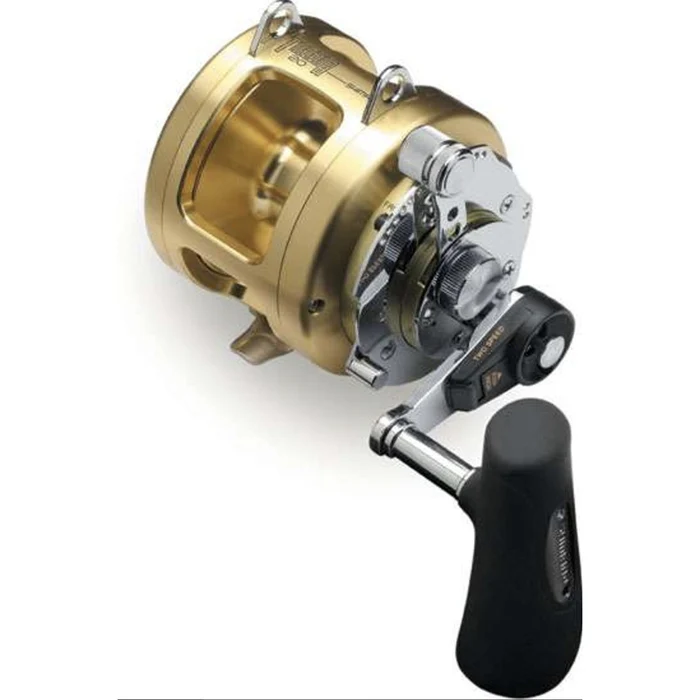
The 20A weighs 49.7 oz, runs 3.9:1 high / 1.7:1 low gearing and holds about 720 yd of 65 lb PowerPro. Shimano lists 26 lb maximum drag. It is a clean match for sailfish, mahi, kingfish, wahoo and lighter tuna trolling where a full-size 50 is unnecessary.
2. Tiagra 30A
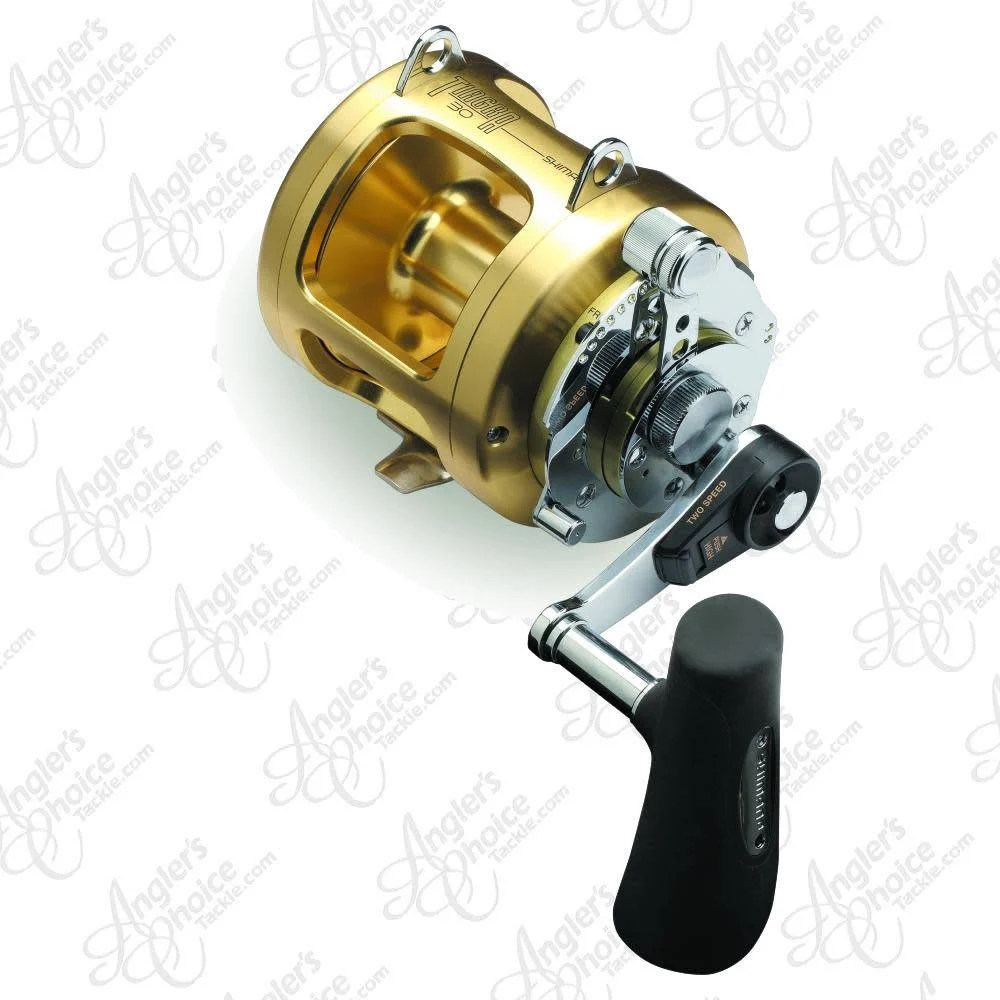
The 30A keeps the same 3.9:1 / 1.7:1 gearing but increases max drag to 35 lb and braid capacity to roughly 1,065 yd of 65 lb. It is one of the most flexible Tiagras for South Florida mixed trolling and medium tuna.
3. Tiagra 50WLRSA
The long-range 50WLRSA is the standout 50-size option. It carries about 1,235 yd of 100 lb PowerPro and is rated to 40 lb max drag. Gearing is 3.1:1 high / 1.3:1 low. For marlin, big wahoo and tuna, it delivers classic 50-wide capacity with useful low-gear torque.
4. Tiagra 80WA
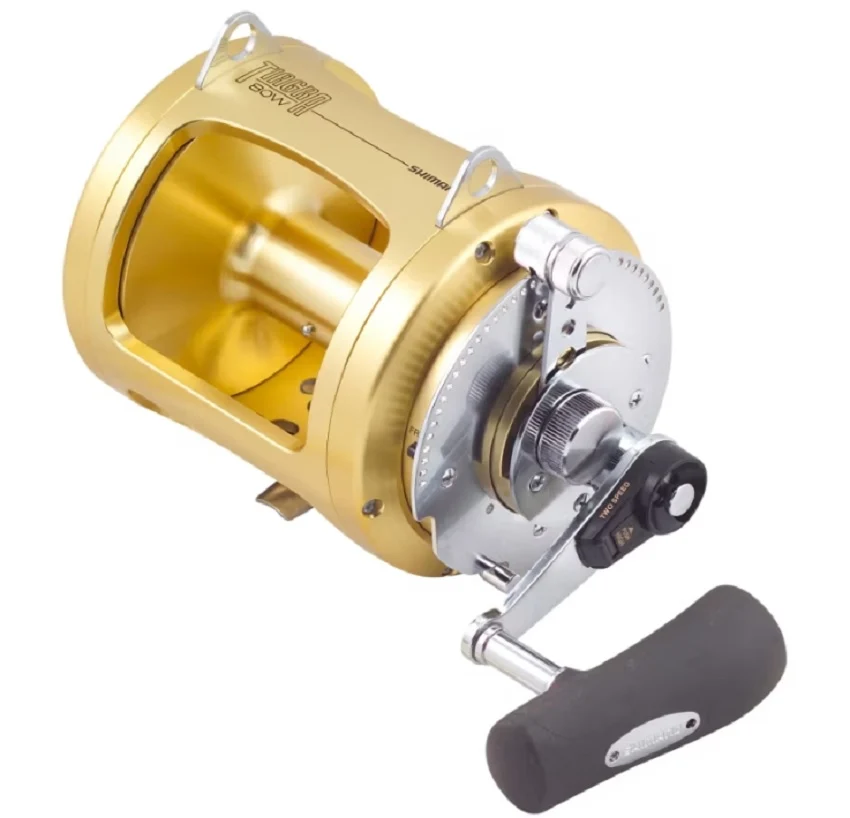
The 80WA weighs 115.2 oz and holds about 2,365 yd of 150 lb PowerPro. Its 2.5:1 / 1.3:1 ratios are deliberately lower, trading speed for cranking power. Shimano lists 40 lb max drag. This is a heavy chair or bent-butt reel for large pelagics and long fights.
5. Tiagra 130A
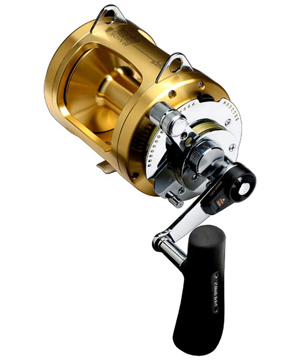
The 130A is the flagship. It weighs 174.1 oz, carries about 2,770 yd of 200 lb PowerPro and develops up to 88 lb of drag. Ratios are 2.1:1 / 1.2:1. It is built for giant marlin and tuna where line capacity and torque dominate every other consideration.
What stands out
- Tiagra sizing is easy to understand from 20 to 130 class.
- The rigid body and conservative gearing suit sustained trolling loads.
- US MSRP runs roughly $699.99 for the 20A to $1,519.99 for the 130A.
Pros and cons
Pros: proven global platform, smooth two-speed system, excellent capacity choices, strong resale value.
Cons: heavier than newer compact lever drags; few major 2026 design changes.
Verdict
The Tiagra 30A is the versatile pick, the 50WLRSA is the serious offshore workhorse, and the 130A remains a purpose-built giant-game reel.
Why Tiagra is still a benchmark
The Tiagra has lasted because Shimano has not tried to turn a trolling reel into a fashion product. The core job remains the same: hold a large amount of line, deliver predictable lever-drag pressure, shift into low gear under load and stay aligned during long fights. The current range covers nearly every traditional offshore line class, from the compact 20A to the enormous 130A.
Shimano’s published specifications also make the lineup unusually easy to compare. The 20A weighs 49.7 oz and produces 26 lb of maximum drag; the 30A weighs 52.4 oz and reaches 35 lb; the 50WLRSA weighs 86.2 oz and reaches 40 lb; the 80WA weighs 115.2 oz and reaches 40 lb; and the 130A weighs 174.1 oz and reaches 88 lb. Capacity rises dramatically as the frame size grows.
Tiagra comparison table
| Model | High / low | Max drag | Weight | Representative PowerPro capacity |
|---|---|---|---|---|
| 20A | 3.9:1 / 1.7:1 | 26 lb | 49.7 oz | 720 yd / 65 lb |
| 30A | 3.9:1 / 1.7:1 | 35 lb | 52.4 oz | 1,065 yd / 65 lb |
| 50WLRSA | 3.1:1 / 1.3:1 | 40 lb | 86.2 oz | 1,235 yd / 100 lb |
| 80WA | 2.5:1 / 1.3:1 | 40 lb | 115.2 oz | 2,365 yd / 150 lb |
| 130A | 2.1:1 / 1.2:1 | 88 lb | 174.1 oz | 2,770 yd / 200 lb |
20A: compact traditional trolling
The 20A makes sense when you want a conventional big-game lever drag but do not need a 30 or 50. Its 3.9:1 high gear retrieves 41 inches of line per crank, while 1.7:1 low gear retrieves about 18 inches. That combination is useful for sailfish, wahoo, mahi and smaller tuna because the reel can clear line quickly after a fish changes direction, yet still has a true low gear for the end of the fight.
The 26 lb maximum drag is modest compared with some modern compact lever drags, but that is not a weakness when the reel is used within its line class. Tiagra has always emphasized controllable, durable pressure rather than headline numbers. The 20A is particularly attractive to crews that use mono topshots because its spool geometry and lever-drag ergonomics feel familiar and predictable.
30A: the versatile all-rounder
The 30A is only a few ounces heavier than the 20A but adds significant capacity and raises maximum drag to 35 lb. It keeps the same 3.9:1 / 1.7:1 ratios and 41/18-inch line recovery. That makes it one of the easiest Tiagras to recommend for a mixed offshore program.
For South Florida, a pair or quartet of 30A reels can handle sailfish, wahoo, blackfin tuna, mahi and many yellowfin applications while still being manageable in a harness. The 30WLRSA adds width and capacity for crews that prefer more backing or heavier topshots, but the standard 30A is easier to carry and balance on stand-up rods.
50WLRSA: the classic big-game sweet spot
The 50WLRSA combines a wide spool with the higher-drag long-range configuration. Shimano rates it to 40 lb max drag, with 3.1:1 high and 1.3:1 low gears. It holds about 1,235 yd of 100 lb PowerPro or 1,180 yd of 150 lb PowerPro. Those numbers explain why the 50-wide remains so popular: it carries enough line for serious tuna and marlin without becoming as cumbersome as an 80 or 130.
The lower 3.1:1 high gear may look slow compared with smaller reels, but the larger spool diameter still retrieves around 37 inches per crank. Low gear retrieves about 15 inches. In practice, this is a strong balance between line recovery and cranking torque.
80WA and 130A: when size is justified
The 80WA and 130A are not simply larger versions of the 30. They change the entire fighting system. Rods are heavier, harness loads rise, and a fighting chair or bent-butt setup becomes more common. The 80WA’s 2.5:1 / 1.3:1 gearing and huge 150–200 lb braid capacity are designed for sustained pressure and long runs. The 130A goes further, with 88 lb maximum drag and 2.1:1 / 1.2:1 gearing.
Use these reels when the target justifies them: giant bluefin, very large marlin, heavy tournament tackle or fisheries where a fish can remove hundreds of yards before the boat can respond. They are poor choices for ordinary sailfish or mahi trolling because the weight and inertia add fatigue without meaningful benefit.
Drag lever and strike setting
A Tiagra’s lever drag allows repeatable movement from free spool through strike and toward full drag. The correct strike setting should be determined with a scale, not guessed by feel. Once set, the angler can return to the same pressure repeatedly. This is especially important on a trolling spread where multiple rods need to behave similarly when a fish strikes.
Do not set a 130A at 88 lb simply because the reel can produce it. That figure represents maximum capability. Actual fishing pressure must match the line, leader, hook, rod and fighting method. Excessive drag can break rods, pull hooks or injure an angler even when the reel itself remains comfortable.
Two-speed technique
The two-speed gearbox is most valuable when used before the angler is exhausted. Stay in high gear while gaining line easily. Shift to low gear when the handle begins to stall, the fish circles deep or the rod is loaded heavily. Low gear reduces the effort required per crank and helps maintain steady line gain without pumping the rod excessively.
On the 130A, low gear retrieves about 22 inches per crank despite the 1.2:1 ratio because the spool is so large. That means the reel can still gain meaningful line while providing substantial torque.
Line systems for modern Tiagras
Traditional Tiagra setups often used straight mono, but braid backing has changed the capacity equation. A 30A can now hold enough braid for fisheries that once required a 50, and a 50WLRSA can hold extraordinary backing capacity. Many crews still add a mono topshot for stretch and easier handling around the boat. Others use heavy braid with a short wind-on leader.
The best system depends on the fishery. Wahoo trolling benefits from capacity and fast recovery; billfish crews may value stretch and predictable breakaway behavior; tuna anglers often prioritize maximum usable drag and abrasion-resistant leaders. Build the line system around the target rather than around the largest number printed in the catalog.
Florida applications
Sailfish and mahi: 20A or 30A. Both are more than capable and keep the outfit reasonable to handle.
Wahoo: 30A for general trolling; 50WLRSA when using heavier tackle or very long high-speed runs.
Yellowfin and medium bluefin: 30A or 50WLRSA depending on fish size, line class and boat maneuverability.
Large marlin: 50WLRSA for modern stand-up/harness systems, 80WA or 130A for traditional heavy tackle.
Giant tuna: 80WA or 130A when capacity, heat management and maximum leverage matter more than reel weight.
Maintenance and ownership
Tiagras have a strong reputation for longevity, but that reputation assumes maintenance. Salt dries inside crevices, line can trap moisture against the spool, and drag performance can change if a reel is stored wet. Rinse gently, wipe dry, back the drag lever off after use and service the reel on a schedule appropriate to hours fished rather than calendar years alone.
Before a major trip, test both gears under load. A reel that shifts perfectly on the bench can still reveal a problem only when the drivetrain is loaded. Check harness lugs, reel clamps and rod hardware at the same time; the reel is only one component of the fighting system.
Price and buying guidance
Current Shimano US MSRP ranges from about $699.99 for the 20A to $1,519.99 for the 130A, with the 30A at $719.99, the 50WLRSA at $839.99 and the 80WA at $1,049.99. Because Tiagras hold value well, used reels are common. On a used reel, inspect corrosion around screws and lugs, verify smooth free spool, test both gears, check the drag lever for consistent travel and listen for bearing noise.
Frequently asked questions
Which Tiagra is best for general offshore trolling?
The 30A is the best all-around size for many boats because it balances capacity, drag, weight and two-speed gearing.
Why choose the 50WLRSA instead of the 50WA?
The WLRSA version is configured for higher drag while retaining the wide spool, making it better suited to heavier long-range applications.
Is the 130A necessary for marlin?
No. Many marlin are caught on 50- and 80-class tackle. The 130A is for crews that intentionally fish very heavy line classes and want maximum capacity and drag headroom.
Are Tiagras outdated because they are heavy?
No. They are heavier than many modern compact lever drags, but that mass comes with very large gears, frames and spools designed for sustained big-game loads. Whether that is desirable depends on the fishery.