
What are Slow Pitch Jigging Methods?
Slow pitch jigging is a vertical fishing technique in which a centre-weighted metal jig is worked off the bottom on long, slow sweeps of a soft parabolic rod and allowed to fall back down on a nearly free spool. Most strikes arrive on that fall rather than on the sweep. If you have asked what is slow pitch jigging and been handed a paragraph of adjectives, this guide is the plain answer: it is a controlled drop, fished on specialised tackle, over structure that holds fish.
The method travelled to the United States from Japan, where deep-water anglers refined it over rock and coral in several hundred feet of water. It has since spread across the Gulf, the Atlantic shelf edge and the deep reefs off Florida. What separates it from bait fishing is not the depth; it is the fact that the angler almost never stops the jig.
What Is Slow Pitch Jigging, in Plain Terms
The pitch describes the length and pace of the rod sweep, not the speed of the jig. The angler lifts the rod once in a long, slow arc, then lets the jig fall freely for several seconds before lifting again. That rhythm is the whole technique. There is no constant winding, no ripping a lure through the water column, and no bait on the hook.
The fall is the whole technique
A centre-weighted jig sinks nose-down, then rocks and flutters as the line goes light above it. That flutter is what a fish sees: a wounded, descending baitfish. Because the jig is falling away from the angler rather than being pulled toward them, a fish can take it without feeling tension, and a deep fish that refuses a dragged lure will often eat a falling one.
Why “slow” describes the rod, not the jig
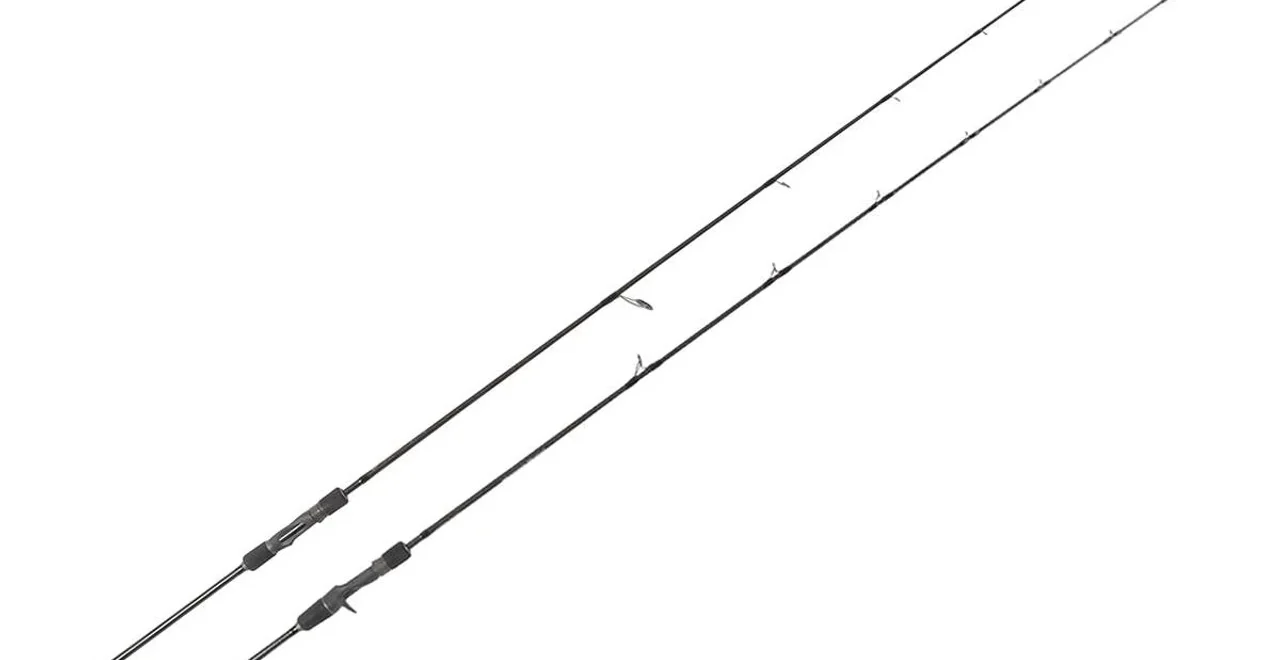
A true slow pitch rod bends deep into the butt under very little load and springs back slowly. That softness does two jobs: it launches the jig without a violent snap, and it stops a hooked fish from tearing off on the first run. The jig itself may fall quickly in deep water; the slowness belongs to the sweep and the blank.
Where Slow Pitch Jigging Came From
Japanese anglers needed a way to fish metal vertically over deep structure without dragging it along the bottom, and the gear grew around that need. Rod builders produced blanks with the soft, continuous curve the method requires, and jig makers produced centre-weighted shapes that flutter rather than tumble.
Norihiro Sato and the Japanese origin
Norihiro Sato is the angler most often named as the developer of the modern slow pitch method, and the tackle that followed — narrow high-gear reels, long soft rods, centre-weighted jigs — is built around his description of the fall. Whether one person invented it matters less than the fact that the technique was codified in Japan long before it reached American tackle shops.
How the technique reached US anglers
The method crossed over through a small group of anglers and writers who fished it seriously and described it plainly. Benny Ortiz, Kazutomo (Kaz) Nakamura, Eric Bunz, Jimmy Fee, Montague Lee, Ali Hussainy and Rush Maltz are among the names most associated with that early American push across Gulf and Atlantic deep structure, adapting Japanese tackle to heavier rods and snappier currents.
What Slow Pitch Jigging Is Used For
It is a bottom-oriented technique for deep, hard structure: ledges, wrecks, rock piles and reef edge, where fish hold tight to the bottom and where a bait dragged along the seafloor is either snagged or ignored. It works best when the boat can hold a slow drift over the mark.
Species you can target
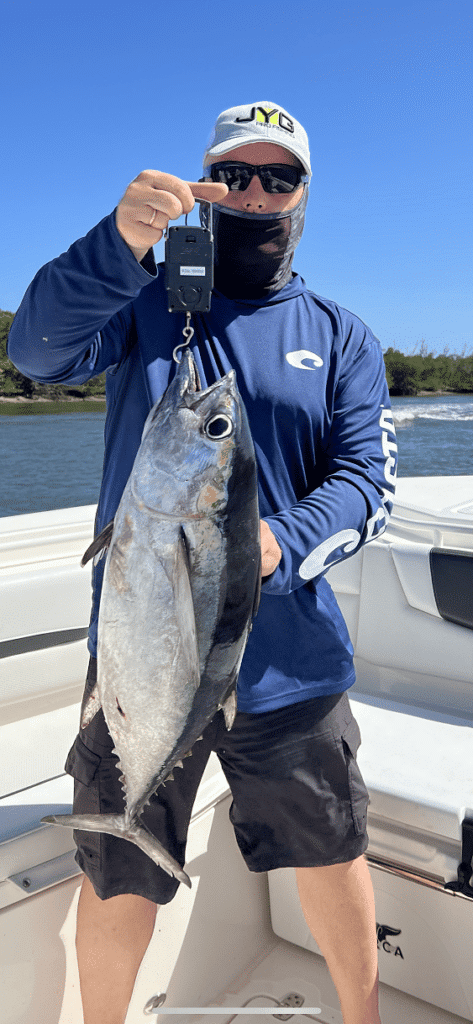
Amberjack, almaco jack, kingfish and tuna take slow pitch jigs in the mid-column. Snapper, grouper, tilefish, blackbelly rosefish and queen snapper take them near the bottom. On deep-dropping trips, the same tackle and cadence reach species well below 600 feet.
Depth ranges where it works
The practical band runs from roughly 150 feet to about 1,200 feet. From 150 to 400 feet, a 100- to 150-gram jig on PE 2 braid does the work. Past 800 feet, jig weight and braid class climb sharply, and the drift becomes the limiting factor more often than the tackle does.
What Slow Pitch Jigging Gear Is Made Of
A slow pitch outfit is a matched system, not a rod with a reel bolted on. Change one part — a stiffer blank, a heavier jig, a faster reel — and the fall stops behaving the way the technique needs.
The rod
These rods are long by offshore standards, usually 6'6" to 7'2", with a soft parabolic curve and a light tip. Shimano, AFTCO and Tsunami Tackle all build blanks in that shape. The rod should bend well past its midpoint under a jig's weight; one that flexes only at the tip will not load the jig. Compare blanks from 23 makers in our slow pitch rods directory.
The reel
The reel is narrow and light, with a high gear ratio for picking up line quickly and a drag smooth enough to protect light leader. Shimano's Ocea Jigger and Daiwa's Saltiga and Saltist slow pitch models are the common choices. Penn's Fathom lever drags are a heavier, more affordable option for the deepest drops. Our slow pitch reels directory reviews each brand in detail.
The jig
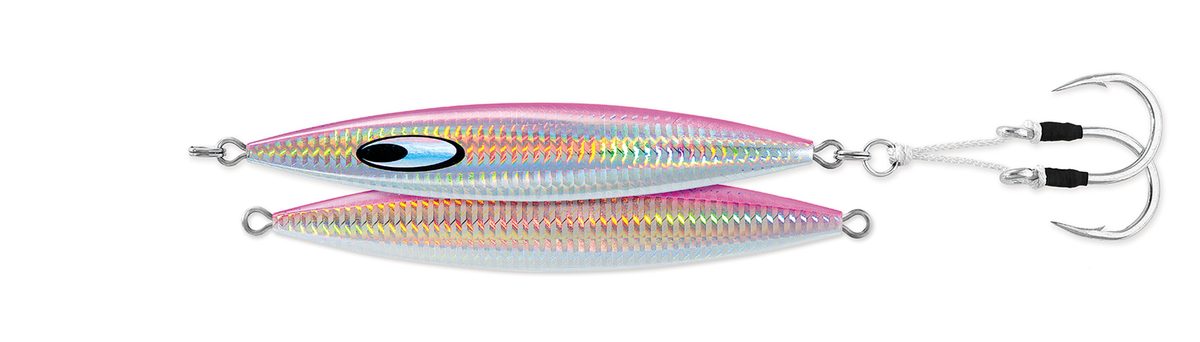
Centre-weighted jigs are the heart of the technique. Sea Falcon, SPRO and Williamson Kensaki all make centre-weighted and semi-long shapes, and Shimano's Butterfly line is among the most widely stocked. Shape matters more than paint: a jig that flutters and settles outperforms a heavier one that sinks like a stone. See every brand, including tungsten models, in our slow pitch jigs directory.
Line, leader and the PE rating system
PE is a Japanese braid rating based on line diameter rather than breaking strength, and it is the number that matters when matching braid to jig weight. PE 1 is roughly 10-pound-class diameter; PE 4 is closer to 40-pound-class. PowerPro Maxcuatro is a common US substitute, and Seaguar Threadlock braid with Gold Label fluorocarbon leader is a standard pairing.
Depth, Jig Weight and Braid Class: One Selection Matrix
Most guides treat depth, jig weight and braid class as three separate decisions. They are one decision. The table below puts all three together, with leader added because it changes with the class of fish you expect to meet.
| Depth band | Jig weight | Braid (PE) | Leader |
|---|---|---|---|
| 150-250 ft | 60-100 g | PE 1.5-2 | 30-40 lb fluoro |
| 250-400 ft | 100-150 g | PE 2-3 | 40-50 lb fluoro |
| 400-600 ft | 150-220 g | PE 3-4 | 50-60 lb fluoro |
| 600-900 ft | 220-320 g | PE 4-5 | 60-80 lb fluoro |
| 900-1,200 ft | 320-450 g | PE 5-6 | 80-100 lb fluoro |
Reading the matrix
Start with the depth you actually fish, not the depth you hope to fish, and let the weight follow. A jig that is too light never reaches bottom in the drift; one that is too heavy falls too fast to flutter. The braid class then follows the jig, because light braid cuts the water better but snaps where heavy braid drags a jig to the surface.
Why over-weighting kills the fall
Every extra gram of jig weight is a gram of fall speed. Once the jig outruns the flutter its shape was designed for, it stops looking alive and starts looking like a piece of metal sinking. Anglers who bring speed jigging habits to deep water tend to over-weight, then conclude the technique does not work when it is really the fall that has stopped working.
Slow Pitch Jigging Technique: Building a Cadence
A cadence is the fixed rhythm of sweep, pause, fall and reset. Beginners copy a cadence; good anglers change it until the fish answer. The sequence below is the one to learn first, because most variations only adjust it.
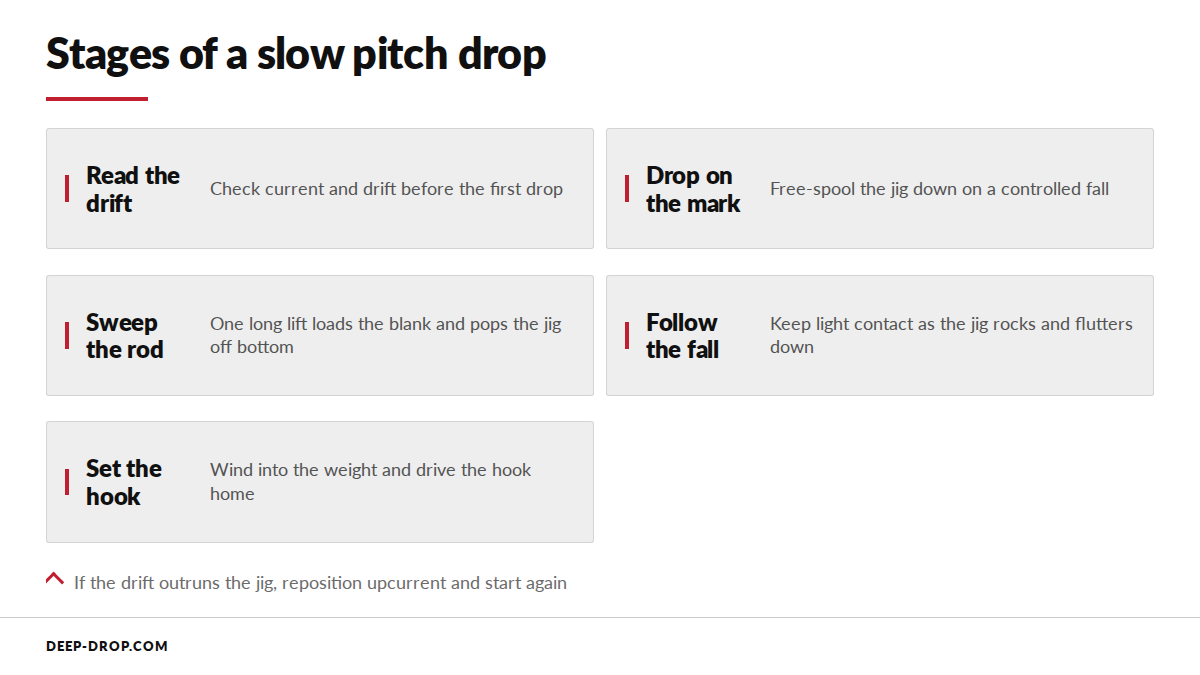
Setting the drift
Position the boat upcurrent of the mark and let it slide back over the structure. The drift angle — the angle between your line and the vertical — is the most important number in the technique, and it is the one nobody sells. Above roughly two knots of current the jig never falls vertically, and the method stops working.
The drop
Open the spool and let the jig fall on a light thumb, keeping just enough contact to feel it. Count the fall. The jig should reach bottom before the boat drifts off the mark; if it does not, the current is running and you need more weight or a fresh drift.
The jig catches the fish on the way down. Everything the angler does at the rod is only there to buy the jig another fall.
The sweep and the fall
One long, slow lift of the rod, from about the eight o'clock position to eleven, then let the rod drop back toward the water as the jig falls. That is one pitch. The rod does the work and the reel only takes up slack. Two or three pitches off the bottom, then a longer pause, suits snapper and grouper.
The hookset
When the jig stops falling early, or the line goes heavy, wind down until the rod loads, then drive the hook home with a short, hard sweep rather than a long one. The soft blank that launches the jig will also absorb a slow hookset, and a deep fish hooked that way usually comes unpinned halfway up.
Reading the Bite
Most bites in this technique are felt as an absence rather than a hit. The jig is falling, the line is light, and then the fall simply stops, or the line goes slack for a beat and tightens again. Learning to recognise that change separates a good hookup rate from a frustrating one.
Bites on the fall
When a fish takes on the fall, you will feel the jig stop a metre or two off the bottom, or the line will go suddenly heavy as the fish swims off with it. Wind into it before you set. If you feel a tap and nothing else, drop the jig back on a slack line and let it fall again; that second fall takes a lot of fish.
Current, bottom and depth
Current changes everything. Slack water lets you fish light jigs vertically; a fast drift forces heavier jigs and steeper angles. Soft bottom swallows jigs and kills the flutter; hard bottom and reef edge keep the jig bouncing. Depth changes weight and hookset size, not the shape of the technique.
Troubleshooting: Common Failure Modes
Almost every slow pitch problem comes back to one of five things. Work down the list before you change tackle.
- Line belly: too much angle between line and vertical, usually from drift or current. Move upcurrent, add jig weight or use thinner braid.
- Wind knots: loose line going onto a nearly empty spool. Keep the spool full and wind under tension.
- Missed fall bites: too heavy a hookset or too much thumb on the drop. Wait for the weight, then wind.
- Snapped rods: a high-stick, where the tip passes vertical under load. Keep the rod below forty-five degrees.
- Lost jigs: jigs that fall nose-up and hold bottom. Check the assist hooks and the jig’s balance.
When Slow Pitch Jigging Is Not Worth It
The technique is not a universal tool, and the honest advice is to leave the slow pitch rod in its tube under these conditions.
- Current running harder than about two knots, where the jig never falls vertically.
- Snaggy, broken bottom, where you will lose a jig per drop.
- Depths past roughly 1,500 feet, where drift and drop time make bait or electric deep dropping more efficient.
- Fish pinned to heavy structure in a fast drift, where a baited heavy leader simply gets down faster.
In those conditions, bait fishing or electric deep dropping does the job more cheaply. The slow pitch rod earns its place when the bottom is hard and the drift is slow.
What It Costs to Start
A matched entry-level outfit is not cheap, but it is not exotic. The figures below are typical street ranges rather than fixed prices, and they move with the season and the exchange rate on Japanese tackle.
- Rod: roughly $150 to $350 for a production slow pitch blank.
- Reel: roughly $180 to $450 for a narrow, high-gear star or lever drag.
- Braid: roughly $40 to $80 for a filled spool of PE 2-4 eight-carrier line.
- Leaders and terminal: roughly $25 to $50 for fluorocarbon, assist hooks and solid rings.
- Jigs: roughly $12 to $30 each, and you will want at least four weights.
A usable setup lands between $450 and $900, and a mid-range production rod or a second-hand outfit cuts that noticeably without hurting the fall.
Colour and Finish at Depth
Colour is the last thing to worry about and the first thing tackle shops argue about. Below about 100 feet, red light is gone and everything reads as grey and blue, so contrast matters more than exact hue. Carry two or three finishes rather than a dozen: a bright chartreuse or pink, a natural baitfish pattern, and a glow finish for deep, dim water.
Maintenance and Servicing
Slow pitch tackle works hard and wears in specific places. A short routine keeps a good outfit fishing for years.
- Rinse rods, reels and jigs in fresh water after every trip, and dry the guides.
- Check the top third of the braid for abrasion every few trips, and cut back anything that feels rough.
- Strip and re-grease the drag washers annually, or sooner after salt spray.
- Replace assist hooks and split rings each season, or after any fish that bent one.
Braid does not last forever in salt and sun. Re-spool the top 150 feet when it fades or feels brittle, which on a working reel is usually every season or two.
Handling, Release and Regulations
Deep-water fish come up with expanded swim bladders, and how you handle them decides whether they survive release. Venting or descending devices are the norm for released reef fish in federal waters, and several deep-water species are closed to retention entirely, so check the current rules before the trip. Keep what you will eat and unhook the rest quickly at the rail.
Slow Pitch Versus Bait and Speed Jigging
None of the three is better in the abstract; they succeed in different conditions. The table below is the honest comparison rather than the tackle-shop one.
| Bait | Speed jigging | Slow pitch | |
|---|---|---|---|
| Where the strike comes | On the settle | On the retrieve | On the fall |
| Rod action | Moderate | Fast, stiff tip | Deep, parabolic |
| Weight for the depth | Heavy lead to hold | Heavy, fast-sinking | As light as the drift allows |
| Best conditions | Slow drift, any depth | Fast retrieve in mid-water | Hard bottom, slow drift |
| Learning curve | Low | Moderate | Moderate to steep |
The practical rule is to fish the technique the conditions allow. A fast drift and a heavy sea favour bait. Mid-water fish on a slow drift favour speed jigging. Hard bottom, deep water and a boat that can hold a line favour slow pitch, and on those days it will out-fish the other two on the same mark.
Frequently Asked Questions
Is slow pitch jigging only for deep water?
No. It works from about 60 feet down, and plenty of anglers fish it in 150 to 300 feet for snapper and amberjack. It is at its best in deep water over hard bottom, but depth is a preference rather than a requirement.
Do you need a boat?
Yes, in practice. The technique depends on a controlled vertical drop and a managed drift, which means positioning a boat over a mark. Shore and pier anglers do fish light jigs vertically, but that is a different technique with different tackle.
How long does it take to learn?
Most anglers can fish a workable cadence on the first trip. The hard part is reading the fall and the drift, and that takes a season of fishing the same structure repeatedly.
Can you slow pitch jig with a normal spinning outfit?
You can drop a jig vertically with a heavy spinning rod and catch fish, but the blank will not load and release the way the technique needs. The fall will be shorter and snappier, and the flutter that draws the strike will be missing.
Setting Up Your First Outfit
Start with the depth you fish most, buy one rod, one reel and two or three jig weights that suit it, then fish the same mark until you can feel the fall change. That is a faster route to catching than a case of jigs in every colour. When you are ready, browse the tackle shop for slow pitch rods, reels, braid and jigs matched to your depths.