
PENN Spinning Reels: Inshore, Offshore and Specialist Reviews
Research checked: October 4, 2026. Ten selections across eight principal families: five inshore choices, three offshore comparisons and two specialist Spinfisher variants. The specialists are identified by function rather than forced into an offshore category.
Review method: Official PENN sources support documented features and example specifications. Buying assessments are editorial analysis, not hands-on testing. Exact sizes and regional configurations vary. Maximum drag is not a recommended working setting. No Amazon affiliate URLs have been invented.
Feature comparison · Example specifications · 2025–2026 updates · Company overview · Inshore · Offshore · Specialists · Sources
Affiliate disclosure: As an Amazon Associate, I earn from qualifying purchases.
Compare ten PENN selections
Features appear in separate columns. Scroll the tables sideways on smaller screens. These are selections for different jobs, not a numerical performance ranking. A missing claimed rating or technology is not filled by borrowing one from another family.
| Reel / variant | Group | Body construction | Gear technology | Drag design | Documented protection | Distinctive feature |
|---|---|---|---|---|---|---|
| Clash II | Inshore | Metal body and sideplate | CNC Gear | HT-100 | Clutch Armor; hydrophobic line-roller bearing | Leveline slow oscillation |
| Battle IV | Inshore | Metal body and sideplate | CNC Gear | HT-100 | Hydro Armor at critical areas | Superline spool; capacity rings |
| Fierce V | Inshore | Metal body and sideplate | CNC Gear | HT-100 | Four sealed stainless ball bearings | Verified in AFTA 2026 releases |
| Pursuit V | Inshore | Graphite body | No premium gear construction added here | HT-100 | Four sealed stainless ball bearings | Braid-ready spool; universal line clip |
| Wrath II | Inshore | Graphite body | Basic construction; no CNC claim | No HT-100 claim in checked feature list | No whole-reel rating claimed | Aluminum spool; capacity rings |
| Authority | Offshore | Metal body, sideplate and rotor | CNC; stainless main and pinion gears | Sealed Slammer system; Dura-Drag | IPX8 body and spool | Leveline slow oscillation |
| Slammer IV | Offshore | Metal body and sideplate | CNC brass main gear | Dura-Drag 3500–10500; HT-100 2500 | IPX6 body and spool | Hydrophobic line-roller bearing |
| Spinfisher VII | Offshore | Metal body and sideplate | CNC brass main gear | HT-100 | IPX5 body and spool | Superline spool; standard configuration |
| Spinfisher VII Long Cast | Specialist coastal | Metal body and sideplate | CNC brass main gear | HT-100 | IPX5 body and spool | Leveline oscillation; long-cast variant |
| Spinfisher VII Live Liner | Specialist coastal | Metal body and sideplate | CNC brass main gear | HT-100 | IPX5 body and spool | Live Liner controlled-release function |
Exact example configurations: published specifications
Each row describes only the named model code. Capacity pairs mean yards / pound-test, as published in PENN’s US charts. Bearing arrangements include the anti-reverse bearing. Weight and pickup require exact-code verification where not provided in the checked chart; no values are inferred.
| Reel / variant | Example model code | Gear ratio | Maximum drag | Bearings | Mono capacity (yd / lb) | Braid capacity (yd / lb) |
|---|---|---|---|---|---|---|
| Clash II | CLAII4000 | 6.2:1 | 15 lb | 8+1 | 270/8; 220/10; 165/12 | 360/15; 260/20; 185/30 |
| Battle IV | BTLIV4000 | 6.2:1 | 15 lb | 5+1 | 270/8; 220/10; 165/12 | 360/15; 260/20; 185/30 |
| Fierce V | FRCV4000 | 6.2:1 | 15 lb | 4+1 | 220/10 | 260/20 |
| Pursuit V | PURV4000 | 6.2:1 | 15 lb | 4+1 | 270/8; 220/10; 165/12 | 360/15; 260/20; 185/30 |
| Wrath II | WRTHII4000C | 6.2:1 | 15 lb | 2+1 | 270/8; 220/10; 165/12 | 360/15; 260/20; 185/30 |
| Authority | ATH6500 | 5.2:1 | 40 lb | 12+1 | 390/12; 345/15; 205/20 | 485/30; 410/40; 335/50 |
| Slammer IV | SLAIV6500 | 5.6:1 | 40 lb | 8+1 | 390/12; 345/15; 205/20 | 485/30; 410/40; 335/50 |
| Spinfisher VII | SSVII6500 | 5.6:1 | 30 lb | 5+1 | 390/12; 345/15; 205/20 | 485/30; 410/40; 335/50 |
| Spinfisher VII Long Cast | SSVII6500LC | 4.8:1 | 20 lb | 5+1 | 495/10; 365/12; 330/15 | 620/20; 430/30; 355/40 |
| Spinfisher VII Live Liner | SSVII6500LL | 5.6:1 | 30 lb | 5+1 | 390/12; 345/15; 205/20 | 485/30; 410/40; 335/50 |
Verified 2025–2026 releases and current-generation distinctions
- Pursuit V — AFTA 2025: the official Australian new-release program includes this graphite-bodied generation with HT-100 and sealed ball bearings. Confirm the V designation when older IV stock is offered.
- Fierce V — AFTA 2026: the official regional announcement identifies CNC gearing in the current metal-bodied family. Older Fierce-versus-Battle comparisons should be updated to the actual present products.
- Current established families: Clash II, Battle IV, Wrath II, Authority, Slammer IV and Spinfisher VII remain in the reviewed catalog. They are not relabeled as new 2026 redesigns without a verified announcement.
- Regional scope: AFTA dates establish the Australian release context, not a universal worldwide launch day or identical size assortment.
PENN company overview and buying guide
A saltwater company with a long history
PENN’s official history dates the company’s founding to 1932, when Otto Henze established his reel business. That historical starting point helps explain the brand’s identity, but it does not make every current reel equivalent. Today’s spinning selection runs from affordable coastal outfits to sophisticated heavy saltwater designs. It also contains specialist versions intended for particular techniques. A useful PENN buying guide therefore needs to do more than repeat the brand’s reputation for toughness. It should distinguish construction, protection, application and ownership cost, then help the reader identify the correct model for the fishing actually being done.
This directory covers ten selections across eight main families. The five inshore selections are Clash II, Battle IV, Fierce V, Pursuit V and Wrath II. The dedicated offshore comparisons are Authority, Slammer IV and standard Spinfisher VII in suitable larger configurations. Spinfisher VII Long Cast and Spinfisher VII Live Liner are reviewed separately because their functions deserve their own explanation. They are variants of Spinfisher, not two additional independent families. Long Cast is primarily a shore-casting specialist; Live Liner is a bait-oriented choice. Neither is called a dedicated offshore reel simply to produce an artificial five-and-five split.
Choosing by work rather than reputation
A small coastal lure setup and a large offshore outfit have different jobs. The coastal angler may spend hours making short casts, controlling slack and adjusting a presentation. The offshore angler may work substantial lures or jigs while retaining enough line for depth and strong runs. Both fish in salt water, but that common setting does not remove the difference. Before browsing the table, define the normal technique, realistic fish, heaviest regularly used lure and fishing position. An outfit should account for challenging conditions without being built entirely around the most extreme fish that might conceivably appear.
The fishing position is especially important. A boat may be able to follow a fish, while a jetty, beach or rock ledge imposes other constraints. Structure can turn an otherwise manageable fight into a problem requiring prompt directional control. Open water may allow a more patient approach. The reel has to fit that plan alongside the rod, line and landing method. Buying more maximum drag cannot create a safe landing area or replace a compatible rod. The practical system is more informative than the highest number printed on a product page.
Reading PENN’s design language
PENN uses several technology names throughout the range, including CNC Gear Technology, HT-100, Dura-Drag and Leveline. Each should be read in the context of the specific product. A shared drag material does not establish an identical drag assembly, and a shared gear label does not establish identical gear metals in every family. The factual summaries in the reviews identify what the official page documents. The assessments that follow explain purchasing implications without pretending to have measured torque, thermal performance or long-term wear in independent tests.
Body construction also deserves precise reading. Full-metal descriptions should not automatically be expanded to include a metal rotor where the product page does not state that. Graphite-bodied entry options should not be dismissed solely because a more expensive reel uses metal. The useful question is whether the complete design and selected size suit the task. A modest outfit for occasional coastal fishing has a different purchase case from a frequently used offshore setup. Materials form part of that comparison; they do not settle it alone.
Protection is a model-specific feature
The current product descriptions distinguish Authority’s IPX8 body-and-spool design, Slammer IV’s IPX6 designation and Spinfisher VII’s IPX5 designation. Battle IV instead identifies Hydro Armor protection of critical areas. Clash II documents protection features at particular components. These descriptions should not be treated as interchangeable. A reel with protected bearings is not automatically equivalent to a body-and-spool design with a published ingress designation. Likewise, a product page without a listed rating should not be assigned one because a related family has it.
For a buyer, this means exposure should be considered explicitly. Fishing from a dry boat deck, handling a reel in ordinary spray and regularly placing an outfit near breaking surf are different circumstances. A protection feature can be a reason to compare models, but it does not eliminate maintenance. The reviews avoid describing a reel as maintenance-free or recommending deliberate immersion as ordinary practice. Follow the model’s manual, keep abrasive grit away from the outfit and arrange appropriate service after an incident. Protection is useful when it supports sensible ownership, rather than becoming an excuse for careless handling.
The inshore range has several sensible price points
Clash II is the technique-oriented premium inshore reference in this selection. Battle IV is the broader everyday metal-bodied comparison. Fierce V provides a current value-oriented metal-bodied option. Pursuit V and Wrath II offer affordable routes for buyers who need to keep the complete outfit budget modest. This is not a fixed ladder in which spending more always produces a larger increase in fishing success. The appropriate purchase depends on frequency, exposure, preferred outfit feel and the actual application.
For a first coastal outfit, leave money for a suitable rod, line and leaders. A premium reel cannot compensate for a rod that does not cast the chosen lures well. Conversely, an experienced angler who already owns appropriate rods may reasonably spend more to refine a frequently used setup. If comparing two reels, identify the reason one is preferred. It might be a particular protection feature, a configuration that better fits the rod or a more suitable ownership arrangement. An identifiable benefit is a stronger purchase case than choosing whichever family sounds most prestigious.
Offshore choices require a capacity plan
Authority, Slammer IV and Spinfisher VII deserve comparison for dedicated offshore work in suitable sizes. Their product identities alone do not select the right configuration. Establish the normal method, depth and intended line first. A substantial jig, a large casting lure and a bait fished from a holder impose different requirements. An outfit intended for repeated casting must remain manageable, while a deeper application may require more reserve than the shopper initially expects. Choose around that combination rather than treating the largest reel as the safest universal answer.
Capacity descriptions depend on specified line. Braids with the same labeled breaking strain may have different diameters, and real spool packing varies. The numerical table below therefore retains the manufacturer’s units and attaches the figures to exact example codes. It does not promise that every brand of line will reproduce the listed capacity. Depth, current, a fish’s first run and line removed after damage all affect the useful margin. If the normal plan requires virtually all the available spool capacity, reconsider the outfit before fishing rather than relying on optimistic packing.
Specialist Spinfishers are worth separate attention
Long Cast and Live Liner are useful examples of why function matters. A shore angler trying to reach productive water has a different problem from a bait angler managing controlled line release. The two variants should not be chosen as if they were merely cosmetic versions of standard Spinfisher. Long Cast deserves discussion around the complete casting system, including rod, line, rig and technique. Live Liner deserves discussion around bait presentation, pressure settings and the transition into the fight. The reviews address those techniques separately while preserving their shared family identity.
The existence of a specialist model does not mean every angler needs it. An ordinary coastal lure outfit may be better served by a standard reel. A long-cast design cannot guarantee distance independently of the rod and casting method. A controlled-release bait mechanism cannot guarantee a hook-up independently of the rig and fishing situation. Buy a specialist because its function addresses a recurring problem. If the technique is only an occasional possibility, compare whether a simpler outfit can cover it adequately before adding complexity to the purchase.
What is actually new in 2025 and 2026
The official Australian AFTA 2025 announcement includes Pursuit V, and the AFTA 2026 announcement includes Fierce V. The United States catalog checked for this guide also lists those current generations. These are the verified updates emphasized here. Existing Clash II, Battle IV, Wrath II, Authority, Slammer IV and Spinfisher VII products remain relevant, but this guide does not label them newly redesigned for 2026 without supporting evidence. Current stock, a revised promotion and a new generation are different things.
Regional timing and assortment may differ. A model announced through an Australian release program is not automatically proof of the same launch date or size range in every country. Before ordering, verify the exact regional product code, warranty and seller’s description. Previous-generation reels may still be offered at appealing prices, and they can be deliberate purchases if their identity and support are clear. The problem is buying an older model while believing it contains the newer generation’s documented features. Always compare the full product identity rather than the family name alone.
Interpreting the numerical comparison
The example specification table lists ratio, maximum drag, bearing count and line capacities for one configuration per selection. These examples are reference points, not instructions that every reader should buy those sizes. Maximum drag is a manufacturer specification, not a universal fishing setting. Working pressure depends on the rod, line, knots, leader and situation. Ratio likewise needs context: the useful retrieve for a particular lure is not established by the highest ratio alone. Consult the exact model chart for the complete specification and consider how the outfit will be used.
Weight and pickup are not inserted where the checked comparison chart did not provide them. A missing field is better left for exact-code verification than filled with a number from another size or retailer. This keeps the table accurate and the buying discussion honest. When two configurations become finalists, obtain the complete local specification for both. Then compare the assembled outfits, not just the rows of figures. Hand position, grip clearance and comfortable balance can reveal an unsuitable match that an attractive specification sheet conceals.
Ownership and the final decision
Check service access before importing a reel or committing to an expensive outfit. Ask whether the regional warranty applies, how routine maintenance is handled and which replacement parts are available. A lower purchase price can be less useful if ordinary service becomes difficult. For important trips, downtime and a suitable spare outfit may matter more than a small initial saving. Ownership value includes the practical ability to keep the reel in use over time.
The best final shortlist contains a few appropriately configured reels, each with a clear reason to be there. Handle them on the intended rod if possible. Verify the generation, line plan and local support, then select the option whose advantages address the normal fishing most directly. The reviews below support that process with documented feature summaries and detailed editorial analysis. They do not invent personal testing, measured superiority or Amazon affiliate listings. Their purpose is to help the reader make a specific, defensible purchase rather than treat the PENN badge as a substitute for selection.
Five inshore spinning reel reviews
Clash II
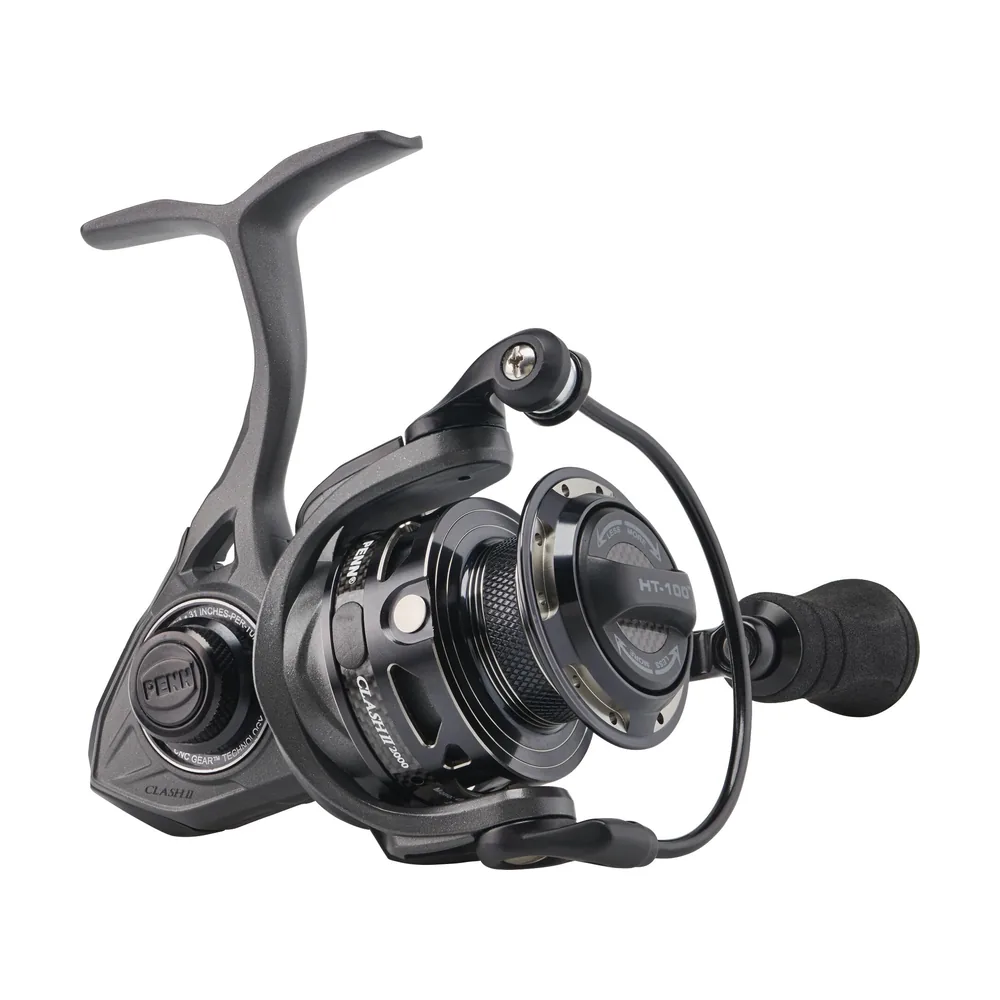
Buying role: Premium coastal lure fishing.
Read the full Clash II review
Documented design and place in the range
Clash II is PENN’s purposefully inshore-oriented premium choice in this guide. Its official page identifies a metal body and sideplate, CNC Gear Technology, HT-100 carbon drag, an 8+1 bearing system, Clutch Armor, a hydrophobic line-roller bearing and Leveline slow oscillation. Those protection features should not be converted into an undocumented whole-reel ingress rating. This is a current established generation, not a verified new 2026 redesign. Its strongest purchase argument is an appropriately configured coastal lure outfit.
The lure angler’s purchasing case
A typical Clash II buyer may spend much of a session actively casting and retrieving rather than waiting beside a rod holder. In that setting, the reel contributes to slack control, cadence and the comfort of repeated movements. The purchase should therefore be judged on the complete outfit. Put the selected configuration on the intended rod, hold it in the normal grip and consider how it will feel through a long session. A premium inshore reel has the strongest justification when that interaction matters regularly to the owner.
For an angler fishing estuary edges, protected bays or shallow coastal ground, the appropriate spool class can be selected around presentation and realistic reserve. Avoid increasing size purely to prepare for an improbable exceptional fish. An oversized outfit can compromise the normal technique on every cast. Equally, do not select an especially compact reel if ordinary targets and shore position require more margin. The right configuration is a deliberate compromise between the lure work and the fight, rather than a contest to make the outfit as small as possible.
Line management and retrieve choice
The documented oscillation system is a reason to examine Clash II closely, but it is not a guarantee of perfect casting with any line and fill level. Spool the selected braid carefully and follow the manufacturer’s setup guidance. Thin line can make slack management especially important when working a lure through repeated pauses. The owner’s technique remains part of the system. A reel feature cannot compensate for winding loose loops onto the spool or ignoring a visible tangle before the next cast.
Where multiple retrieve configurations are available, connect the choice to the normal lure. Fast pickup may help recover slack after a movement or regain contact with a fish coming toward the angler. A more measured retrieve may be comfortable for another presentation. Compare exact published pickup as well as ratio before ordering; this review does not substitute a neighboring model’s figures. The best option is the one that supports the desired cadence without forcing the angler to compensate constantly with an unnatural hand speed.
Protection in the actual environment
Clutch Armor and the line-roller feature address documented aspects of the design. They should be considered alongside expected exposure rather than treated as a license for neglect. An outfit used from a kayak or an exposed shoreline may face spray and awkward handling that a sheltered estuary bank does not. If repeated immersion is part of the intended use, examine an explicitly appropriate design instead of assuming all saltwater reels solve that problem. Clash II’s inshore identity does not remove the need to evaluate the particular environment.
The practical ownership routine should include careful exterior cleaning, drying and storage according to the manual. Avoid high-pressure washing and unsupported internal work. The line roller deserves observation because line repeatedly passes across it, but the review does not claim a specific failure rate or service interval. If operation changes noticeably, seek appropriate support rather than dismissing it because the reel is premium. Good care preserves an investment; it does not prove the reel was fragile.
Alternatives and value
Battle IV is the broad everyday comparison where the owner wants a metal-bodied reel and a different price point. Spinfisher VII deserves attention if its documented body-and-spool protection better addresses the fishing exposure. These are useful comparisons because they identify real priorities. Authority or a large Slammer IV is not automatically the next step for a light-lure outfit. A heavier saltwater design can be appropriate for a different job without being a better fit for this one.
The flagship temptation should therefore be resisted unless the workload changes. If most of the fishing involves moderate coastal lures, money may be more useful in a dedicated rod, better line selection or a second outfit. If the owner fishes frequently and prefers the assembled Clash II outfit, the premium may be entirely reasonable. The decision should name that preference clearly, rather than implying that paying more independently increases catch rate.
Editorial verdict
Shortlist Clash II for deliberate coastal lure fishing where outfit feel, line control and frequent use justify the premium. Verify the exact model, compare it on the actual rod and keep its documented component protection distinct from whole-reel sealing claims. Its place in this directory is a focused inshore recommendation, with heavier offshore requirements assigned to a properly matched separate setup.
A practical buying checklist for this application
Consider an angler casting soft plastics and hard baits along estuary margins through repeated short retrieves and pauses. Write down the normal rod, line, terminal tackle, fishing position and realistic target. Use that description to select the relevant Clash II configuration. The example code in the table is a reference point, not a universal size recommendation. Before ordering, ask the seller to confirm the full code, generation, supplied configuration and applicable regional warranty. A listing photograph or abbreviated family name is insufficient if the seller has several variants or generations under one description.
Check the complete exact-code specification, including weight and line pickup if those fields matter to the comparison. Those values have not been filled from another reel where the checked chart did not provide them. Read the capacity units correctly: the table retains yards and pound-test pairs from the United States chart. Consider actual braid diameter, reserve after the presentation and the rod’s intended pressure. Maximum drag is a published limit, not the automatic working setting for the assembled outfit.
Place the selected reel on the intended rod if possible. Check balance in the normal grip, handle clearance and access to the controls. Compare Battle IV for an everyday value comparison and Spinfisher VII when exposure makes its published body-and-spool protection relevant. Keep the comparison attached to the same fishing problem so that different size labels or feature names do not disguise an application mismatch. If the more expensive option is preferred, identify the particular benefit that matters during a normal session rather than assuming price alone establishes suitability.
The official links below are manufacturer references, not Amazon affiliate buttons. When a purchase link is added later, match it to the exact model and variant being recommended. If a listing offers an older generation or another size, label that difference clearly rather than silently substituting it. This keeps the review’s purchasing guidance accurate and gives the reader a reasonable basis for checking the retailer’s offer before buying.
Official product reference: PENN Clash II features and exact model chart
Battle IV
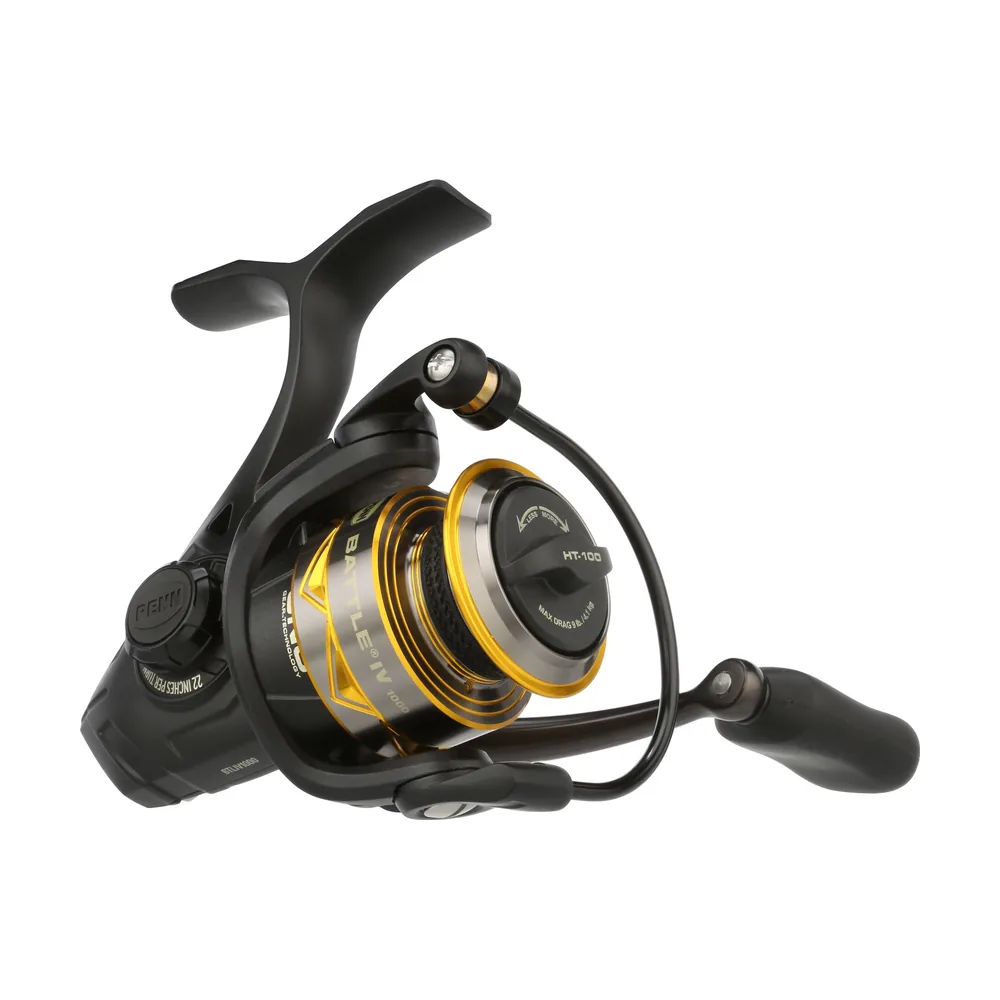
Buying role: Broad everyday coastal outfit.
Read the full Battle IV review
Documented design and place in the range
Battle IV is the everyday metal-bodied reference in this inshore selection. PENN documents CNC Gear Technology, HT-100 drag, Hydro Armor protection of critical areas, a 5+1 sealed-bearing system, capacity rings and a Superline spool. The product page does not supply the same whole-reel ingress designation used for Spinfisher or Slammer. Do not invent one. Its broad range includes configurations beyond ordinary inshore use, but the recommendation here emphasizes a purposeful coastal outfit rather than assuming every size has the same application.
What makes it an everyday comparison
An owner may need one reel for several normal coastal sessions: soft plastics in an estuary, modest hard baits beside harbor structure and occasional bait fishing from a jetty. Battle IV belongs on that shortlist because the purchase can be framed around practical coverage rather than a highly specialized technique. The reel still needs an appropriate size, but it can be assessed as part of a useful general outfit. Its strongest argument is not that it beats every premium model; it is that a suitable configuration may cover the owner’s normal fishing at a manageable total cost.
Start by separating regular work from occasional possibilities. If the rod is mostly used for moderate lures, do not build the outfit around the largest bait that might be carried once a year. If structure fishing is routine, do not choose line solely for casting distance over open ground. Battle’s wide family identity makes this planning necessary. A buyer who selects by brand familiarity alone may end up with the wrong configuration despite choosing a sensible family.
Hydro Armor without exaggerated promises
Hydro Armor is a documented distinction worth considering when comparing the current reel with an older Battle listing. However, protection of critical areas is not the same claim as every possible sealing designation. A retailer’s simplified description may blur that distinction, so retain the manufacturer’s wording at its actual scope. This guide does not claim that Battle IV is immersion-proof or that it has the same protection as Authority. Accurate description makes the value comparison more useful, not less favorable.
The buyer should also confirm whether the seller is offering Battle IV specifically. A discounted earlier Battle may still be a deliberate purchase if its identity is clear, but it should not be bought under the assumption that it includes all current documented features. Ask for the complete code and match the listing to the manufacturer reference. Photographs, abbreviations and promotional labels can be insufficient when retailers carry several generations. A clear model identity is more important than an attractive headline discount.
Configuration and the complete rod
For a coastal lure outfit, practical balance and casting range should guide the selection. Place the intended reel on the rod where possible and check the grip used during the retrieve. A configuration with ample reserve may still be awkward if it overbalances a light rod. Conversely, a compact size can feel comfortable at the counter while leaving too little margin for the real fishing. The appropriate choice accounts for both daily handling and a realistic fight from the intended position.
Retrieve options deserve the same context. A faster model can be useful for slack pickup or a particular lure, but a high ratio is not a universal upgrade. Compare exact pickup and ratio, then think through the method. The table’s example provides one code for orientation; it is not a recommendation that everyone should order it. If another configuration better suits the rod and technique, use the exact official chart for that configuration rather than transferring the example’s capacities or drag figure.
Battle versus Fierce and Spinfisher
The new Fierce V makes the current value comparison more interesting because it now documents CNC gearing. Do not rely on an outdated buying guide that treats CNC as an automatic distinction between every Battle and Fierce generation. Compare the actual present feature packages and local prices. If a Battle feature addresses the owner’s exposure or preference, its premium may be sensible. If the two suitable outfits satisfy the same modest need, the choice may instead depend on fit and total cost.
Spinfisher VII enters the discussion where its published body-and-spool protection is a more relevant priority. That does not make Battle a poor everyday choice. It identifies a reason to spend more for a different requirement. Clash II is useful when the owner is building a more focused coastal lure outfit. These comparisons turn a broad price ladder into a set of concrete choices tied to the fishing.
Editorial verdict
Battle IV is a sound shortlist starting point for a versatile coastal setup, provided its exact configuration fits the rod, line and environment. Compare current Fierce V and Spinfisher VII rather than applying old generation-based assumptions. Its value is clearest when it helps produce a complete, comfortable outfit with the required reserve, while the Hydro Armor description remains accurate and model-specific.
A practical buying checklist for this application
Consider an angler using one coastal rod for estuary lures, harbor-edge fishing and occasional modest jetty baits. Write down the normal rod, line, terminal tackle, fishing position and realistic target. Use that description to select the relevant Battle IV configuration. The example code in the table is a reference point, not a universal size recommendation. Before ordering, ask the seller to confirm the full code, generation, supplied configuration and applicable regional warranty. A listing photograph or abbreviated family name is insufficient if the seller has several variants or generations under one description.
Check the complete exact-code specification, including weight and line pickup if those fields matter to the comparison. Those values have not been filled from another reel where the checked chart did not provide them. Read the capacity units correctly: the table retains yards and pound-test pairs from the United States chart. Consider actual braid diameter, reserve after the presentation and the rod’s intended pressure. Maximum drag is a published limit, not the automatic working setting for the assembled outfit.
Place the selected reel on the intended rod if possible. Check balance in the normal grip, handle clearance and access to the controls. Compare current Fierce V for value, Clash II for a more focused lure setup and Spinfisher VII for its documented body-and-spool protection. Keep the comparison attached to the same fishing problem so that different size labels or feature names do not disguise an application mismatch. If the more expensive option is preferred, identify the particular benefit that matters during a normal session rather than assuming price alone establishes suitability.
The official links below are manufacturer references, not Amazon affiliate buttons. When a purchase link is added later, match it to the exact model and variant being recommended. If a listing offers an older generation or another size, label that difference clearly rather than silently substituting it. This keeps the review’s purchasing guidance accurate and gives the reader a reasonable basis for checking the retailer’s offer before buying.
Official product reference: PENN Battle IV features and exact model chart
Fierce V
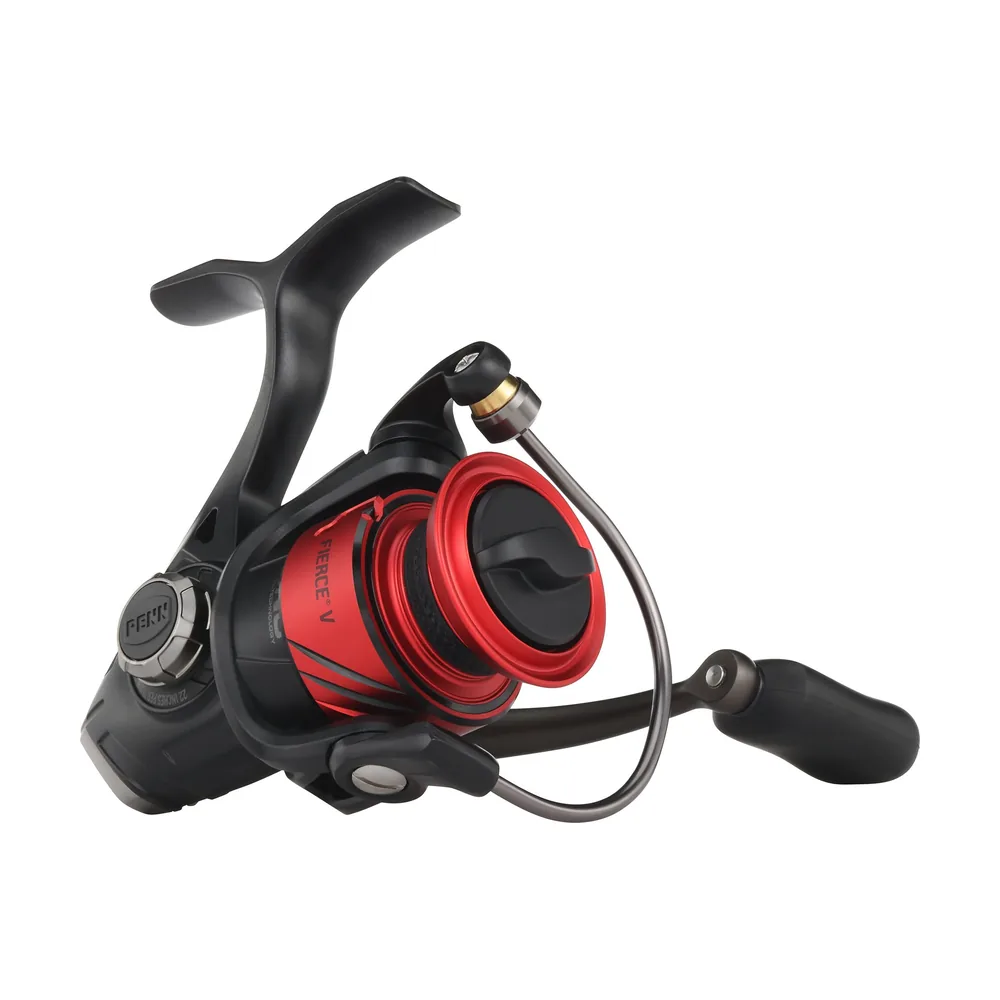
Buying role: Current value-oriented metal-bodied coastal outfit.
Read the full Fierce V review
Documented design and verified update
Fierce V is a verified 2026 update in the official Australian release program and a current United States catalog product. PENN documents a metal body and sideplate, CNC Gear Technology, HT-100 carbon drag and four sealed stainless ball bearings. The comparison chart includes the additional anti-reverse bearing in its total. CNC gearing is an important current distinction to examine against older Fierce listings. This review does not add Battle’s Hydro Armor or a Spinfisher-style ingress designation to the Fierce feature package.
Why the new generation changes the shortlist
Fierce V makes sense for an angler who wants a purposeful metal-bodied coastal outfit while retaining money for the rest of the equipment. A previous buying comparison may have dismissed Fierce because it lacked a feature now documented on the current generation. That comparison needs to be revisited with the exact products in front of the buyer. New does not automatically mean best, but a real documented change deserves attention. Evaluate the current reel against current Battle rather than repeating a rule derived from older generations.
The most persuasive buyer has ordinary inshore or nearshore needs and a clear budget. If the normal work involves modest lures, occasional bait fishing and realistic coastal fish, a correctly sized Fierce V may deserve a close look before spending more. The complete outfit remains the focus. Suitable line, a rod that casts the intended lure range and reliable leaders are essential. Buying a more expensive reel while compromising those parts may produce a less useful system than buying a well-matched value reel.
Where CNC matters, and what it does not prove
CNC Gear Technology is documented, but this review does not claim a measured improvement in cranking torque or a specific increase in service life. Those conclusions require appropriate evidence. For shopping purposes, the useful point is that the present Fierce package includes a feature that should be compared directly with other current families. A familiar technology label does not establish identical internals across every PENN reel. Gear materials and construction details should not be borrowed from Authority or Slammer merely because those families also use CNC descriptions.
Similarly, a metal body and sideplate should be described precisely. The statement does not automatically include a metal rotor or a whole-reel sealing rating. A buyer who needs a particular construction should verify it for the exact regional model. Keeping the scope accurate helps identify what additional expenditure might actually buy. It also prevents Fierce V from being praised for features that belong elsewhere in the lineup.
Choosing the size for normal fishing
The example specification is a coastal reference, not a universal recommendation. Select the size around the intended line, lure range and rod. Shore fishing can require a different reserve plan from a boat, even when the target species are similar. If the buyer regularly fishes near rough structure, the leader and pressure plan also need attention. Reel size should be one result of that planning, rather than the starting assumption around which all other choices are forced.
For an outfit that will be cast frequently, try the selected configuration on the rod. Check comfortable grip, balance and handle clearance. Do not choose a larger model purely for a reassuring maximum figure if it compromises the normal lure work. Conversely, do not select an undersized configuration because it looks tidy. The owner should be able to explain both why the outfit is comfortable for an ordinary session and why the line reserve is reasonable for an ordinary fight.
Standard versus Live Liner
Fierce V also exists in a Live Liner version. That variant should be selected for a bait-oriented reason rather than assumed to be an improved standard reel. Additional function is only useful if the fishing employs it. An angler primarily working lures may prefer a simpler standard setup. A bait angler who wants controlled release should compare the appropriate Live Liner configuration with Spinfisher’s version and read the supplied operating instructions. Family and function must both match the job.
Regional assortments can differ, so confirm the exact code and warranty before ordering. The official Australian 2026 announcement establishes that regional release context; it does not independently establish the same launch day in every market. Current catalog presence likewise does not promise every retailer has every size in stock. These distinctions matter when buying a newly introduced generation whose listings may coexist with discounted earlier products.
Editorial verdict
Fierce V deserves fresh consideration as a current value-oriented metal-bodied coastal reel. Its documented CNC update gives the buyer a concrete reason to revisit older comparisons, while its protection claims should remain limited to what PENN actually specifies. Choose the exact size around the complete outfit, compare present Battle IV and reserve the specialist Live Liner function for a fishing method that will use it.
A practical buying checklist for this application
Consider an angler building a budget-conscious metal-bodied coastal outfit for ordinary lures and occasional bait fishing. Write down the normal rod, line, terminal tackle, fishing position and realistic target. Use that description to select the relevant Fierce V configuration. The example code in the table is a reference point, not a universal size recommendation. Before ordering, ask the seller to confirm the full code, generation, supplied configuration and applicable regional warranty. A listing photograph or abbreviated family name is insufficient if the seller has several variants or generations under one description.
Check the complete exact-code specification, including weight and line pickup if those fields matter to the comparison. Those values have not been filled from another reel where the checked chart did not provide them. Read the capacity units correctly: the table retains yards and pound-test pairs from the United States chart. Consider actual braid diameter, reserve after the presentation and the rod’s intended pressure. Maximum drag is a published limit, not the automatic working setting for the assembled outfit.
Place the selected reel on the intended rod if possible. Check balance in the normal grip, handle clearance and access to the controls. Compare Battle IV using current-generation features rather than an older CNC-versus-non-CNC rule, and Pursuit V when total cost is the main constraint. Keep the comparison attached to the same fishing problem so that different size labels or feature names do not disguise an application mismatch. If the more expensive option is preferred, identify the particular benefit that matters during a normal session rather than assuming price alone establishes suitability.
The official links below are manufacturer references, not Amazon affiliate buttons. When a purchase link is added later, match it to the exact model and variant being recommended. If a listing offers an older generation or another size, label that difference clearly rather than silently substituting it. This keeps the review’s purchasing guidance accurate and gives the reader a reasonable basis for checking the retailer’s offer before buying.
Official product reference: PENN Fierce V features and exact model chart
Pursuit V
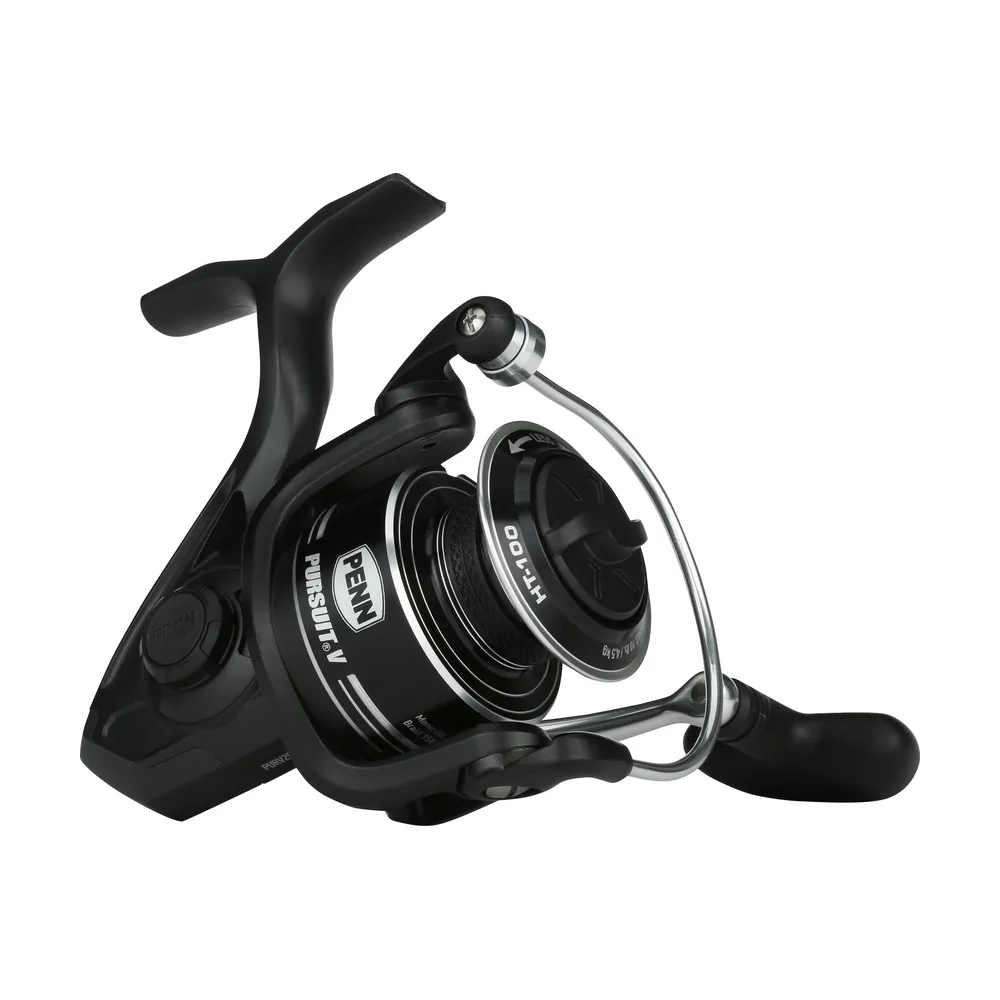
Buying role: Affordable coastal and occasional-use outfit.
Read the full Pursuit V review
Documented design and verified update
Pursuit V appears in PENN’s official Australian AFTA 2025 releases and in the current United States spinning catalog. The product description identifies a graphite body, HT-100 drag, four sealed stainless ball bearings plus anti-reverse bearing, an aluminum Superline spool, capacity rings and a universal line clip. This is distinct from Pursuit IV still offered through some reel or combo listings. No full-metal body, CNC gear package or whole-reel ingress rating is invented for this review.
A useful role at an accessible price point
Pursuit V is worth examining for an occasional coastal angler, a sensible spare outfit or a buyer who needs to equip more than one person. A modest budget should not be treated as an obligation to choose unsuitable equipment. It should encourage a clearly defined application and realistic expectations. If the normal fishing involves manageable coastal targets and moderate presentations, a correctly configured Pursuit may be a better complete-outfit decision than putting most of the budget into a premium reel and leaving too little for rod and line.
The graphite body is a documented construction choice, not a reason to assign either guaranteed weakness or guaranteed immunity to saltwater wear. The rest of the reel still contains moving and exposed components. Evaluate the whole design against the intended use. A buyer planning repeated demanding offshore work should compare an appropriate higher-tier saltwater family. A buyer planning ordinary coastal sessions should avoid evaluating the reel solely against a workload it was not selected to address.
How to make an affordable outfit purposeful
Begin with the actual lure or bait range and a suitable rod. Then establish the line reserve required from the normal fishing position. A small configuration may be practical for modest lure work but a poor choice where fish routinely make longer shore-based runs. A larger configuration may provide useful capacity but be uncomfortable on a light rod. The correct selection is the smallest suitable system with a sensible margin, not automatically the smallest reel or the largest spool available.
If choosing a ready-made combo, read both the rod and reel specification. The combo name alone does not establish that it fits the intended technique. A bait-oriented rod can be awkward for repeatedly casting smaller lures, even when the included reel is appropriate in size. Conversely, a lure-oriented setup may not be the right choice for substantial sinkers. The convenience of a combo should be accepted after confirming its purpose, rather than treated as a guarantee that all matching has been solved for every buyer.
Spooling and line management
The documented braid-ready spool is useful, but it does not remove the need to choose and fit line carefully. Follow the manufacturer’s instructions for attachment and fill. Capacity numbers apply to the listed reference line; the same breaking strain from another brand may have a different diameter. For a modest outfit, avoid wasting the reel’s usefulness through overfilling, loose winding or an unsuitable leader. Correct setup is especially valuable when the budget does not permit buying another reel to cover a mistake in the original plan.
The universal line clip should be viewed as a practical management detail. Read the intended operating guidance and avoid assuming that any clip arrangement is automatically suitable for every heavy casting or fighting situation. This guide does not claim a measured increase in casting distance from the spool or clip. The purchase case remains clear without that claim: documented line-management features in an affordable current generation that should be configured carefully for its normal work.
Pursuit versus Wrath and Fierce
Wrath II is the lower-cost comparison where basic occasional use and total budget dominate. Pursuit’s documented HT-100 system and sealed bearings provide concrete points to examine when deciding whether the local price difference is worthwhile. Current Fierce V adds a different metal-bodied and CNC-geared proposition. Whether that warrants spending more depends on workload and frequency, rather than a rule that every new angler must begin at a particular family.
For someone expecting to fish frequently, compare the higher option before assuming the initial saving is the entire value calculation. Service access, a comfortable outfit and the intended exposure matter over time. For someone fishing modest sessions only occasionally, retaining money for good line or a suitable rod can remain the better decision. Price should be connected to the owner’s use, not used as a proxy for seriousness about fishing.
Editorial verdict
Pursuit V is a reasonable affordable shortlist candidate for a deliberately matched coastal outfit or practical spare. Confirm the V generation, plan the line and rod properly and keep expectations tied to the actual workload. Its documented 2025 regional introduction and current feature package deserve attention, while metal-body, premium-gearing and immersion claims should be left to products that explicitly support them.
A practical buying checklist for this application
Consider an angler equipping occasional coastal sessions or a useful spare rod without sacrificing suitable line and leaders. Write down the normal rod, line, terminal tackle, fishing position and realistic target. Use that description to select the relevant Pursuit V configuration. The example code in the table is a reference point, not a universal size recommendation. Before ordering, ask the seller to confirm the full code, generation, supplied configuration and applicable regional warranty. A listing photograph or abbreviated family name is insufficient if the seller has several variants or generations under one description.
Check the complete exact-code specification, including weight and line pickup if those fields matter to the comparison. Those values have not been filled from another reel where the checked chart did not provide them. Read the capacity units correctly: the table retains yards and pound-test pairs from the United States chart. Consider actual braid diameter, reserve after the presentation and the rod’s intended pressure. Maximum drag is a published limit, not the automatic working setting for the assembled outfit.
Place the selected reel on the intended rod if possible. Check balance in the normal grip, handle clearance and access to the controls. Compare Wrath II for basic budget use and Fierce V when frequent fishing justifies its metal-bodied, CNC-geared proposition. Keep the comparison attached to the same fishing problem so that different size labels or feature names do not disguise an application mismatch. If the more expensive option is preferred, identify the particular benefit that matters during a normal session rather than assuming price alone establishes suitability.
The official links below are manufacturer references, not Amazon affiliate buttons. When a purchase link is added later, match it to the exact model and variant being recommended. If a listing offers an older generation or another size, label that difference clearly rather than silently substituting it. This keeps the review’s purchasing guidance accurate and gives the reader a reasonable basis for checking the retailer’s offer before buying.
Official product reference: PENN Pursuit V features and exact model chart
Wrath II
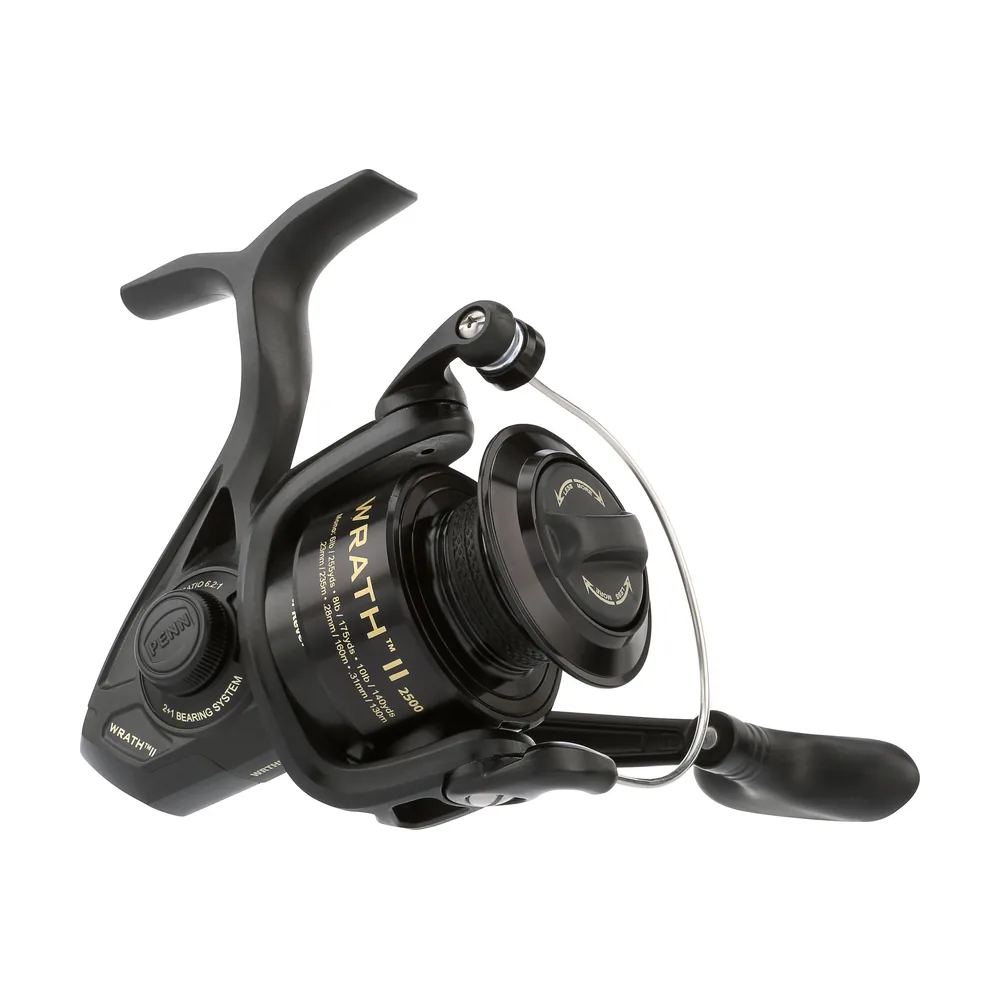
Buying role: Entry-level and modest occasional coastal use.
Read the full Wrath II review
Documented design and place in the range
Wrath II is the basic entry-level selection in this guide. PENN lists a graphite body, two stainless ball bearings, an anti-reverse bearing, a machined anodized aluminum spool and capacity rings. The stated range spans 2500–8000 configurations. The checked feature list does not justify assigning HT-100, CNC gearing or a whole-reel ingress rating. This review keeps those omissions explicit rather than borrowing specifications from Pursuit or Fierce. It is an existing current family, not a verified new 2026 redesign.
When the entry choice is reasonable
Wrath II can be worth considering for modest occasional fishing where the buyer needs to keep spending controlled. Examples include a spare coastal outfit, a setup for a family member or a first rod used for relatively manageable targets. The case is strongest when the application is honestly defined. An entry reel should not be promoted as a flagship replacement merely because both are spinning reels. It can still be useful if its configuration, line and rod match a modest job.
A limited budget makes the complete system particularly important. There is little benefit in buying a slightly more expensive reel if doing so leaves no money for suitable line or an appropriate leader. There is also little benefit in choosing the cheapest reel if the normal workload is well beyond the intended purchase case. Balance both considerations. A modest outfit assembled deliberately can be more satisfactory than a loosely planned collection of inexpensive parts or one expensive component attached to unsuitable equipment.
Setting realistic expectations
The product’s basic bearing arrangement should not be used alone to infer either poor operation or premium refinement. Bearing count is a specification, not a complete performance score. What matters is whether the assembled outfit is comfortable and appropriate for the planned fishing. Handle the selected reel on the rod where possible, inspect normal operation and verify the exact capacity. The review does not invent hands-on observations, so the buyer’s direct fit check is particularly valuable for deciding whether the basic option feels acceptable.
Similarly, a graphite body does not mean the entire reel is unaffected by salt water. It contains other components that require care. The absence of a listed whole-reel rating should discourage unsupported claims that Wrath II is equivalent to Spinfisher in exposure management. If the normal environment involves substantial spray, gritty handling or frequent use, compare the alternatives explicitly. A modest price should not obscure the actual conditions in which the owner expects the outfit to work.
Selecting around the normal session
For a smaller coastal application, choose line and capacity around realistic fish and the fishing position. Avoid selecting a large configuration simply because it is available at a small additional cost. Extra size can make a light rod awkward without providing a useful benefit. Conversely, an undersized reel can create a reserve problem from shore even when the target is not especially large. Identify the line plan first, then choose a configuration with enough margin rather than relying on the family’s broad size range.
If the intended technique uses sinkers or substantial bait, the rod’s casting rating matters. A reel with adequate capacity does not make a light rod suitable for heavy casting. If the intended technique involves repeated lure work, balance and comfortable retrieve become more important. The same Wrath family can enter several modest applications, but one configuration should not be expected to cover all of them. A clear purpose prevents an affordable purchase from becoming an uncomfortable compromise.
The upgrade decision
Pursuit V is the first meaningful comparison because its current feature description explicitly identifies HT-100 and sealed bearings. Fierce V is the next different proposition where a metal-bodied current design and CNC gearing fit the owner’s priorities. Compare actual local prices rather than assuming the gaps are always small or always large. A sale on another suitable family may change the practical value calculation, but verify generation and condition before treating it as an automatic bargain.
If fishing is expected to become frequent, it is sensible to consider the higher options at the outset. That can reduce the chance of replacing a basic reel soon after purchase because the application has become more demanding. If the owner’s use will remain occasional and modest, spending more may address no recognizable need. The decision should be based on the expected ownership pattern, not on a claim that an inexpensive reel is inherently suitable or unsuitable for everyone.
Care and editorial verdict
Use the supplied manual for cleaning and storage, keep the outfit clear of sand and avoid forceful washing. Check for changes in operation rather than ignoring them because replacement would be inexpensive. Good care is still worthwhile when the budget is modest. Wrath II is a reasonable entry shortlist option for clearly limited coastal use, but it should be described accurately. Choose it for a manageable job and compare Pursuit V before buying if the additional documented features would be useful in the actual fishing.
A practical buying checklist for this application
Consider an angler assembling an entry outfit for manageable occasional coastal fishing or an inexpensive spare. Write down the normal rod, line, terminal tackle, fishing position and realistic target. Use that description to select the relevant Wrath II configuration. The example code in the table is a reference point, not a universal size recommendation. Before ordering, ask the seller to confirm the full code, generation, supplied configuration and applicable regional warranty. A listing photograph or abbreviated family name is insufficient if the seller has several variants or generations under one description.
Check the complete exact-code specification, including weight and line pickup if those fields matter to the comparison. Those values have not been filled from another reel where the checked chart did not provide them. Read the capacity units correctly: the table retains yards and pound-test pairs from the United States chart. Consider actual braid diameter, reserve after the presentation and the rod’s intended pressure. Maximum drag is a published limit, not the automatic working setting for the assembled outfit.
Place the selected reel on the intended rod if possible. Check balance in the normal grip, handle clearance and access to the controls. Compare Pursuit V for its documented drag and sealed-bearing package, and Fierce V when a different construction and more frequent use justify the cost. Keep the comparison attached to the same fishing problem so that different size labels or feature names do not disguise an application mismatch. If the more expensive option is preferred, identify the particular benefit that matters during a normal session rather than assuming price alone establishes suitability.
The official links below are manufacturer references, not Amazon affiliate buttons. When a purchase link is added later, match it to the exact model and variant being recommended. If a listing offers an older generation or another size, label that difference clearly rather than silently substituting it. This keeps the review’s purchasing guidance accurate and gives the reader a reasonable basis for checking the retailer’s offer before buying.
Official product reference: PENN Wrath II features and exact model chart
Three offshore spinning reel reviews
Authority
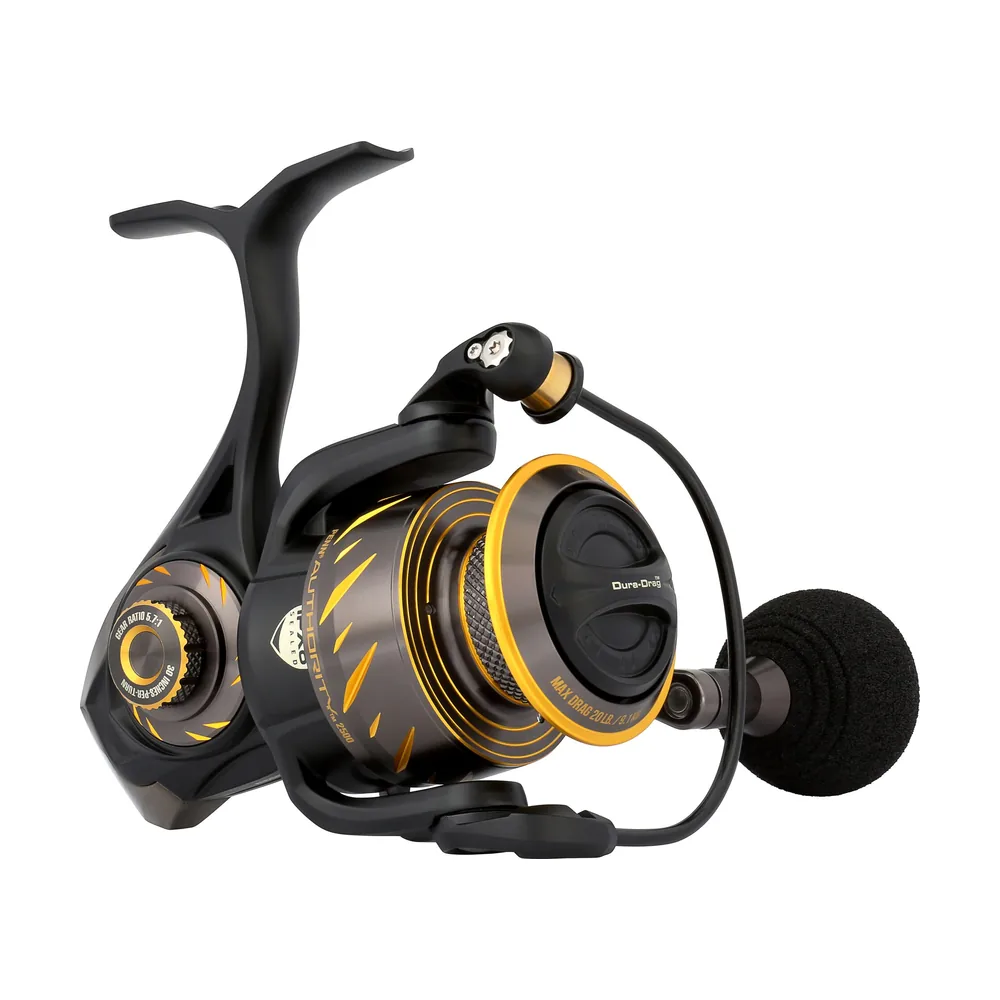
Buying role: Premium demanding saltwater outfit in suitable sizes.
Read the full Authority review
Documented design and place in the range
Authority is PENN’s premium saltwater reference in this selection. The official feature list identifies an IPX8 body-and-spool design, metal body, sideplate and rotor, CNC stainless main and pinion gears, a sealed Slammer drag system with Dura-Drag, 12+1 bearings and Leveline slow oscillation. The family includes configurations for different applications; this review emphasizes the larger dedicated saltwater choices. It is a current established product, not a verified newly redesigned 2026 generation. Exact size and retrieve remain essential to the buying decision.
What makes the premium rational
Authority has the strongest purchase case when the angler has a genuinely demanding, frequently used saltwater outfit in mind. The premium should connect to construction, documented protection and the selected configuration’s fit. It should not be justified by assuming the most expensive reel is best for every coastal technique. Someone repeatedly casting substantial offshore lures or preparing a serious boat outfit has a different requirement from someone working modest estuary presentations. The family-level reputation cannot erase that distinction.
Before investing, define the rod, line and technique. A flagship reel cannot correct a rod that is unsuitable for the lure or a line reserve that is insufficient at depth. It also cannot replace a workable landing plan for a strong fish. The owner should be able to explain the reel’s job within the complete setup. If that explanation is clear and the outfit will be used often, a premium purchase can make sense. If the explanation remains vague, compare suitable Slammer and Spinfisher options before committing the budget.
Reading the protection claim carefully
The published IPX8 body-and-spool design is a meaningful distinction from lower-tier product descriptions. This guide does not invent additional test conditions, depths or exposure durations beyond the manufacturer’s documentation. Consult the manual and PENN support if a specific immersion scenario is part of the intended use. Even a documented submersible design should not be treated as permission to ignore saltwater care, grit or accidental damage. Protection and maintenance are complementary parts of ownership.
For an exposed fishing environment, compare how the rating addresses the actual concern. Incidental spray, an accidental dunking and routine placement in turbulent water are not identical scenarios. A premium reel may offer a stronger documented purchase case, but safe handling still matters. Keep the reel away from abrasive sand where possible and seek appropriate service after a significant incident. This review does not claim that the design prevents every possible form of water-related or mechanical damage.
Offshore configuration and retrieve
Authority offers different retrieve choices in some sizes. The buyer should connect the choice to the primary technique. Faster pickup can be useful for certain casting lures or regaining contact with a moving fish. A more measured configuration may be preferred for another repeated workload. Examine both ratio and exact line pickup, then consider how the outfit will be held and worked during a session. The highest ratio is not automatically the best offshore choice, just as the highest maximum drag is not automatically the best working setting.
Capacity planning needs the same care. Depth, current and a fish’s first run can consume the line reserve quickly. Nominal braid strength does not determine diameter consistently across every line brand. Use the manufacturer’s reference capacity as a starting point and verify the intended braid combination with a knowledgeable seller. A sufficiently large spool is a requirement; a larger-than-needed outfit can still be an uncomfortable compromise. Choose a configuration that leaves useful reserve without making the normal technique unnecessarily tiring.
Comparing Authority with Slammer IV
Slammer IV is the most important practical comparison. Its documented protection, gear and drag package gives a buyer a meaningful alternative rather than a merely cheaper name. Compare the exact sizes around the same intended job, then decide whether Authority’s specific features warrant the premium. If the fishing and exposure do not address those differences, spending more may produce no proportionate practical benefit. The saved budget could provide a dedicated second outfit or a reliable spare for important trips.
Conversely, an angler whose normal fishing is demanding and whose ownership priorities align with Authority may consider the premium worthwhile. That decision is strongest when supported by local service access and a planned maintenance routine. Ask who will service the exact regional model, which warranty terms apply and how turnaround is handled. For a frequently used premium reel, keeping it available through the main fishing season belongs in the value calculation.
Editorial verdict
Shortlist Authority for a deliberately demanding saltwater setup where its documented construction and protection address specific needs. Select the exact size and retrieve around technique, reserve and the rod. Compare Slammer IV before deciding the premium is necessary. The recommendation rests on purposeful fit and ownership planning, not an invented claim that a flagship guarantees better fishing results or eliminates care.
A practical buying checklist for this application
Consider an angler planning a frequently used premium offshore casting or boat outfit with substantial reserve and explicit exposure requirements. Write down the normal rod, line, terminal tackle, fishing position and realistic target. Use that description to select the relevant Authority configuration. The example code in the table is a reference point, not a universal size recommendation. Before ordering, ask the seller to confirm the full code, generation, supplied configuration and applicable regional warranty. A listing photograph or abbreviated family name is insufficient if the seller has several variants or generations under one description.
Check the complete exact-code specification, including weight and line pickup if those fields matter to the comparison. Those values have not been filled from another reel where the checked chart did not provide them. Read the capacity units correctly: the table retains yards and pound-test pairs from the United States chart. Consider actual braid diameter, reserve after the presentation and the rod’s intended pressure. Maximum drag is a published limit, not the automatic working setting for the assembled outfit.
Place the selected reel on the intended rod if possible. Check balance in the normal grip, handle clearance and access to the controls. Compare Slammer IV in an equivalent application to decide whether Authority’s documented construction and protection justify the premium. Keep the comparison attached to the same fishing problem so that different size labels or feature names do not disguise an application mismatch. If the more expensive option is preferred, identify the particular benefit that matters during a normal session rather than assuming price alone establishes suitability.
The official links below are manufacturer references, not Amazon affiliate buttons. When a purchase link is added later, match it to the exact model and variant being recommended. If a listing offers an older generation or another size, label that difference clearly rather than silently substituting it. This keeps the review’s purchasing guidance accurate and gives the reader a reasonable basis for checking the retailer’s offer before buying.
Official product reference: PENN Authority features and exact model chart
Slammer IV
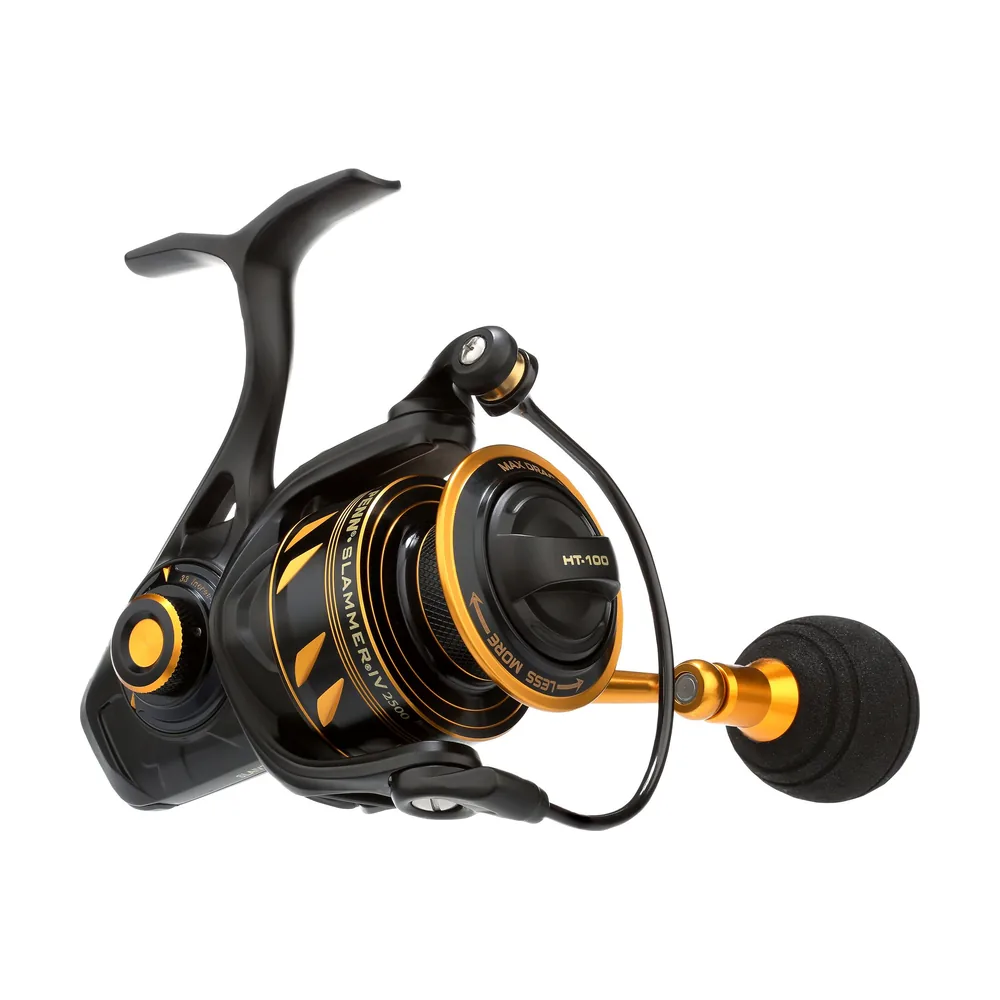
Buying role: Dedicated working saltwater outfit in larger configurations.
Read the full Slammer IV review
Documented design and crucial size exceptions
Slammer IV is the working heavy-saltwater comparison in this guide. PENN lists a metal body and sideplate, CNC brass main gear, IPX6 body-and-spool design, 8+1 bearings and a hydrophobic line-roller bearing. Dura-Drag applies to sizes 3500–10500; the 2500 uses HT-100. The page also distinguishes automatic bail trip at 2500–5500 from manual bail trip at 6500–10500. These exceptions should remain attached to the correct configurations. This review does not describe an independently verified new 2026 Slammer generation.
A practical alternative to the flagship
Slammer IV deserves a close comparison when the buyer needs a serious saltwater outfit and wants to establish whether Authority’s additional expenditure is necessary. A suitably configured Slammer can be assessed for larger coastal or offshore methods without treating it as a vague all-purpose reel. The purchasing case should identify the actual lure, bait or jig workload. That approach is more useful than saying the family is a workhorse and assuming the word resolves every size and technique choice.
For an angler working substantial casting lures or assembling a boat outfit, the reel’s dimensions and retrieve need to fit the rod and method. A large spool may provide useful reserve but become awkward on a lighter rod. An outfit selected only for maximum pressure may also be tiring during repeated casting. Examine the complete system, including how it will be held and how fish will be landed. Serious saltwater capability does not remove the need for a comfortable, usable setup.
Why the 2500 cannot represent the entire family
The small 2500 has documented differences that make family-wide shortcuts misleading. A shopper comparing that configuration for coastal use should not assign it the larger models’ Dura-Drag simply because the same Slammer IV name appears on the box. Likewise, a review of a larger offshore example should not imply that the small model’s characteristics describe the whole range. Keep exact code, drag design and operation together. This is particularly important when a retailer’s abbreviated feature list omits the exceptions.
The bail-trip distinction also deserves practical attention. An angler accustomed to one operating pattern should read the instructions for the selected size and practice the intended operation before fishing. Do not choose an unsuitable size solely to obtain a preferred bail behavior; the configuration still has to fit line, rod and workload. The distinction is useful for planning ownership, but it does not independently determine which reel is the correct purchase.
Casting versus deeper work
For casting, compare pickup, lure resistance and comfortable balance. A high-speed version may fit a particular presentation or help recover slack, while another configuration may better suit a more measured technique. For deeper work, capacity after allowing for depth and current can become the decisive factor. Those uses may lead to different selections within the same family. The example in the table provides orientation, not a universal answer for every offshore angler.
Maximum drag should be interpreted within the complete system. The rod, knots, leader and line establish practical limits, and the fishing position affects how pressure can be applied. A substantial manufacturer figure is not an instruction to begin a fight at that pressure. Set up the outfit deliberately and use suitable measuring and adjustment methods where needed. This review does not claim measured thermal endurance or pressure stability; the editorial assessment follows the documented design and intended application.
Slammer, Spinfisher and Authority
Spinfisher VII is the useful lower-cost comparison where its exact configuration meets the normal need. Authority is the premium comparison where the owner values its documented construction and protection enough to pay more. Read the specific gear and drag packages rather than assuming the differences are only price and bearing count. A price ladder becomes useful when it explains which features address the buyer’s actual conditions. It becomes less useful when it merely ranks names.
Local service access can change the decision. An authorized regional configuration with straightforward support may represent better ownership value than a discounted import that is difficult to service. Ask about parts, warranty coverage and turnaround before buying. For a reel intended to work regularly, downtime matters. A practical spare outfit can also be worthwhile for important trips regardless of whether the primary reel is Slammer or a flagship.
Care and editorial verdict
Follow the manual for gentle exterior cleaning, drying and storage, and avoid treating the published protection as a maintenance exemption. Keep sand away from moving components and use appropriate service for internal work. Slammer IV is a strong shortlist candidate for a purposeful working saltwater setup in the appropriate size. Confirm its size-dependent drag and bail operation, compare the alternatives around the same task and buy the configuration that fits the complete outfit rather than relying on the family name alone.
A practical buying checklist for this application
Consider an angler assembling a regular working boat or offshore lure outfit that needs reserve, suitable retrieve and realistic pressure control. Write down the normal rod, line, terminal tackle, fishing position and realistic target. Use that description to select the relevant Slammer IV configuration. The example code in the table is a reference point, not a universal size recommendation. Before ordering, ask the seller to confirm the full code, generation, supplied configuration and applicable regional warranty. A listing photograph or abbreviated family name is insufficient if the seller has several variants or generations under one description.
Check the complete exact-code specification, including weight and line pickup if those fields matter to the comparison. Those values have not been filled from another reel where the checked chart did not provide them. Read the capacity units correctly: the table retains yards and pound-test pairs from the United States chart. Consider actual braid diameter, reserve after the presentation and the rod’s intended pressure. Maximum drag is a published limit, not the automatic working setting for the assembled outfit.
Place the selected reel on the intended rod if possible. Check balance in the normal grip, handle clearance and access to the controls. Compare Spinfisher VII for a practical lower-cost option and Authority where its specific premium features address the actual exposure and workload. Keep the comparison attached to the same fishing problem so that different size labels or feature names do not disguise an application mismatch. If the more expensive option is preferred, identify the particular benefit that matters during a normal session rather than assuming price alone establishes suitability.
The official links below are manufacturer references, not Amazon affiliate buttons. When a purchase link is added later, match it to the exact model and variant being recommended. If a listing offers an older generation or another size, label that difference clearly rather than silently substituting it. This keeps the review’s purchasing guidance accurate and gives the reader a reasonable basis for checking the retailer’s offer before buying.
Official product reference: PENN Slammer IV features and exact model chart
Spinfisher VII
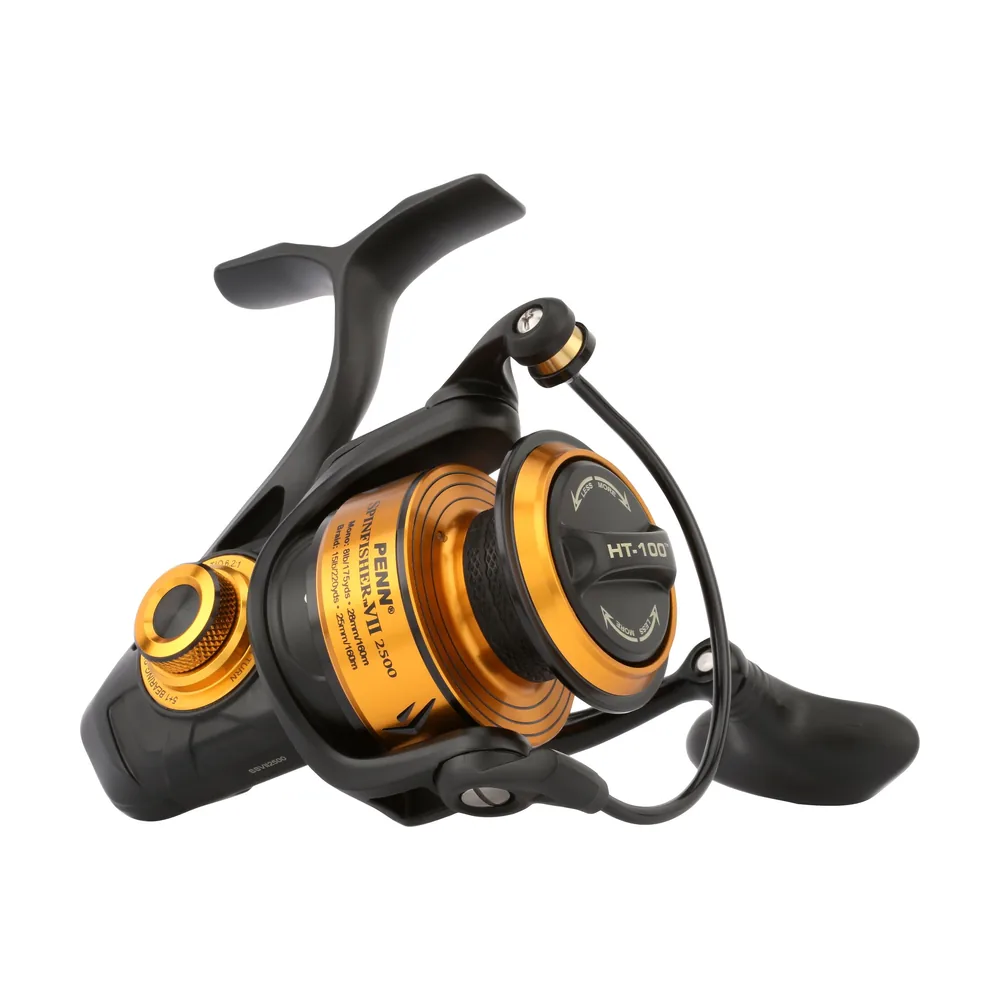
Buying role: General coastal and offshore working option in suitable sizes.
Read the full Spinfisher VII review
Documented design and place in the range
Standard Spinfisher VII is the practical protected-body saltwater reference here. PENN documents an IPX5 body-and-spool design, CNC brass main gear, HT-100 drag, a 5+1 sealed-bearing system, metal body and sideplate, and a Superline spool. The family also has specialist variants, reviewed separately below. This section concerns the standard configuration. It is an existing current generation, not a newly verified 2026 redesign, and its appropriate application depends strongly on size.
A broad working purchase case
Spinfisher VII belongs on the shortlist when the owner wants a general saltwater reel with documented body-and-spool protection and a manageable purchase cost. In larger suitable configurations, it deserves comparison for ordinary offshore or boat work. Smaller configurations can instead serve coastal applications. Those are distinct purchasing cases. The offshore placement here does not imply that every Spinfisher size is suitable for the same fish, depth or pressure, or that one large model should be bought for every coastal rod.
The useful buyer begins with the normal technique and expected exposure. A boat outfit for moderate bait or lure work may have a different priority from a frequently cast shore outfit. The exact spool capacity and retrieve must fit that job. A familiar saltwater reputation is a reason to investigate the family, not a substitute for choosing the configuration. Write down the intended line, rod and realistic target before evaluating the table’s example.
Protection without a maintenance shortcut
The published IPX5 designation is a concrete comparison point against Battle IV’s differently described protection. It should not be silently upgraded to Slammer’s or Authority’s designation. Read the manufacturer’s operating and care instructions for the actual conditions. Ordinary spray, contact with gritty sand and deliberate immersion are different exposure problems. This review does not claim that the reel is designed to tolerate every one of them equally or that protection makes internal service unnecessary.
For a frequently used saltwater outfit, a consistent exterior cleaning and drying routine is worthwhile. Avoid forceful washing, keep the reel clear of abrasive contamination and seek appropriate support after a significant incident or noticeable change in operation. A reel with documented protection can still suffer wear or damage. That does not make the protection unimportant; it means protection works within a sensible ownership plan instead of replacing one.
Choosing the exact working configuration
The line plan should account for fishing depth, current and the run reserve needed from the intended position. A boat that can follow a fish and a fixed shore position impose different constraints. Braids also vary in diameter at the same labeled strength, so the official capacity should be treated as a reference tied to specified line. Ask the seller to verify the intended combination if capacity is close to the margin. An outfit that relies on optimistic packing may become unsuitable before a fish is even hooked.
Retrieve selection should follow the primary technique. Working a substantial lure repeatedly is different from recovering a bait rig at the end of a drift. Ratio alone does not determine the practical experience, so obtain exact pickup and consider the assembled rod. The table’s example is useful for comparison with the neighboring families, but it is not a recommendation to use the same size for all offshore tasks. If another configuration better fits, verify that model independently.
Standard versus the specialist variants
Long Cast and Live Liner should be purchased for their distinct purposes. The standard version remains the sensible starting point when neither function is needed. A lure angler should not assume Live Liner is a superior standard reel because it adds a mechanism. A boat angler should not assume Long Cast is an offshore upgrade because it has a specialized spool and oscillation proposition. Additional function has value only when it addresses the actual fishing method.
This distinction also matters for numerical comparisons. A specialist configuration may have different ratio, capacity or maximum drag from a standard reel carrying a similar nominal size. The full suffix belongs in the model identity. Match an eventual retailer or Amazon listing to that exact identity rather than linking any result containing Spinfisher VII. A useful buying guide should make the variant clear before the reader reaches a purchase button.
Alternatives and editorial verdict
Compare Battle IV when the planned use does not justify the additional Spinfisher feature package. Compare Slammer IV when its documented construction, protection or drag package is more relevant to a demanding setup. Authority is the premium reference. These comparisons should use appropriate configurations for the same job and include service access as well as price. Standard Spinfisher VII is a worthwhile working saltwater shortlist candidate where the exact model fits. Its strength is a clear, practical role, rather than being promoted as a universal substitute for every heavier or specialist reel.
A practical buying checklist for this application
Consider an angler planning a general boat or coastal saltwater outfit with a defined exposure level and enough reserve for its normal technique. Write down the normal rod, line, terminal tackle, fishing position and realistic target. Use that description to select the relevant Spinfisher VII configuration. The example code in the table is a reference point, not a universal size recommendation. Before ordering, ask the seller to confirm the full code, generation, supplied configuration and applicable regional warranty. A listing photograph or abbreviated family name is insufficient if the seller has several variants or generations under one description.
Check the complete exact-code specification, including weight and line pickup if those fields matter to the comparison. Those values have not been filled from another reel where the checked chart did not provide them. Read the capacity units correctly: the table retains yards and pound-test pairs from the United States chart. Consider actual braid diameter, reserve after the presentation and the rod’s intended pressure. Maximum drag is a published limit, not the automatic working setting for the assembled outfit.
Place the selected reel on the intended rod if possible. Check balance in the normal grip, handle clearance and access to the controls. Compare Battle IV for a lower-cost everyday comparison and Slammer IV where its documented offshore feature package better matches repeated demanding work. Keep the comparison attached to the same fishing problem so that different size labels or feature names do not disguise an application mismatch. If the more expensive option is preferred, identify the particular benefit that matters during a normal session rather than assuming price alone establishes suitability.
The official links below are manufacturer references, not Amazon affiliate buttons. When a purchase link is added later, match it to the exact model and variant being recommended. If a listing offers an older generation or another size, label that difference clearly rather than silently substituting it. This keeps the review’s purchasing guidance accurate and gives the reader a reasonable basis for checking the retailer’s offer before buying.
Official product reference: PENN Spinfisher VII features and exact model chart
Two specialist coastal and bait reel reviews
These are distinct Spinfisher VII variants. Long Cast is a shore-distance specialist; Live Liner is bait-oriented. They are not counted as independent families or dedicated offshore choices.
Spinfisher VII Long Cast
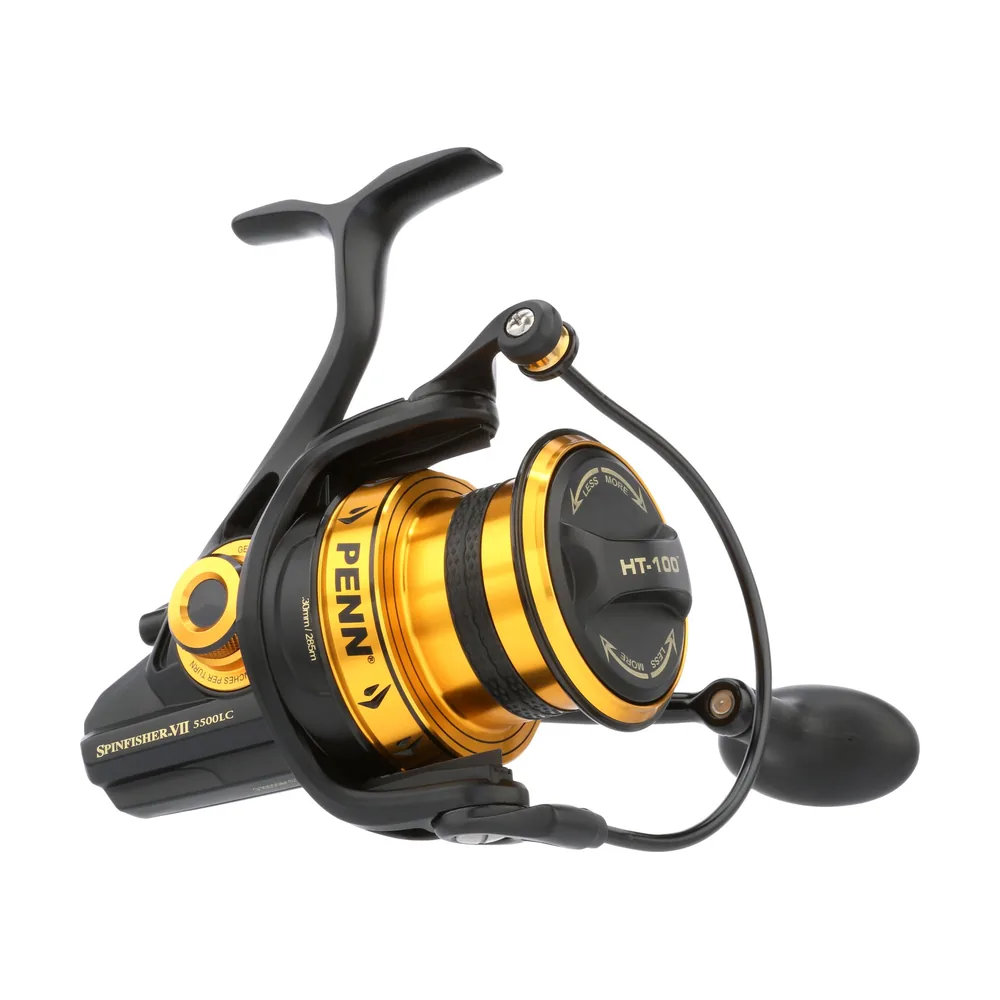
Buying role: Surf and shore distance-oriented setup.
Read the full Spinfisher VII Long Cast review
Documented design and specialist identity
Spinfisher VII Long Cast is a shore-casting specialist, not an additional independent PENN family or a dedicated offshore recommendation. The official page identifies IPX5 body-and-spool protection, CNC brass main gear, HT-100 drag, a 5+1 sealed-bearing system, metal body and Leveline oscillation. The comparison chart lists distinct LC configurations. This guide does not claim a measured casting-distance increase. The purpose of the review is to explain when the specialist version fits the complete shore outfit better than a standard spinning choice.
Begin with a real distance problem
A Long Cast purchase is most convincing when the angler can identify productive water that the ordinary setup struggles to reach consistently. That may be a channel edge, a particular surf feature or a recurring shore-fishing position. The solution still depends on the rod, line, rig and casting method. Buying a specialist reel without examining those parts may leave the original problem unchanged. It is better to describe the required cast and the limitations of the existing outfit before deciding what equipment change would address them.
Distance also needs context. Casting farther is not always more useful if the fish are feeding closer, the rig is poorly presented or the angler cannot retrieve and land fish safely from the position. A sensible shore setup aims to reach the right water under the expected conditions. The reel’s specialist identity can contribute to that aim, but it does not establish where the right water is. Choose around a repeatable fishing requirement rather than buying distance for its own sake.
The rod and rig remain central
A surf rod must suit the actual casting weight, including bait and terminal tackle. The reel does not make an unsuitable rod safe for a heavier rig. If the cast uses a shock leader or a particular leader arrangement, plan that system according to the rod, rig and line guidance relevant to the technique. This review does not prescribe a universal leader length or strength, because the fishing and equipment vary. A knowledgeable local seller or instructor can help identify the specific system where the buyer needs that guidance.
The rig’s resistance in flight and water also matters. A distance-oriented reel cannot compensate for an unnecessarily bulky presentation or a casting method that is inconsistent. Before spending heavily, examine whether line selection, rig preparation or technique is the main limitation. If the existing system is otherwise appropriate and a specialist reel addresses an identifiable remaining requirement, the buying case becomes stronger. This avoids treating a single component as a guaranteed solution to a multi-part problem.
Capacity and exact-code differences
The LC suffix belongs to the complete model identity. Do not transfer the standard Spinfisher’s figures to an LC configuration with a similar nominal size. The official chart shows that the specialist’s ratio, capacity and drag can differ. Retain those figures together when comparing an exact outfit. This is one reason the specification table separates model code from family name: a superficially similar label can conceal an important purchasing difference.
For shore fishing, reserve has to cover the cast and a realistic run while accounting for current, line wear and the actual braid diameter. A large nominal capacity is not permission to fill the spool carelessly. Follow the setup instructions and confirm the intended line combination rather than assuming all braids of the same strength pack alike. Line control on the spool matters during repeated casting; an oscillation feature cannot correct every spooling or handling mistake.
Exposure and repeated handling
Surf and beach fishing expose equipment to abrasive sand as well as water. Keep the reel out of wet sand and use a sensible support or handling routine. The IPX5 description should not be interpreted as an invitation to repeatedly submerge the reel in breaking water. Read the exact care instructions and arrange appropriate service after contamination or a significant incident. Shore exposure is a purchasing consideration, but responsible ownership remains part of the solution.
A large shore outfit also needs to remain comfortable. Check the reel on the intended rod, consider how it will be carried and cast, and verify that handle clearance suits the normal grip. A configuration that looks impressive on a chart can still be awkward over a long session. If the fishing mostly involves modest lures at ordinary distances, a standard coastal outfit may be the more natural choice. Specialist capability has little value when its compromises affect every session and its function is rarely used.
Alternatives and editorial verdict
Compare standard Spinfisher VII if the distance requirement is not central. Compare an appropriate ordinary coastal reel if the rod is primarily a lure outfit. Long Cast is worthwhile when it belongs to a deliberately planned shore-distance system, with a compatible rod, suitable line and a repeatable technique. Verify the LC code and its own specifications. Recommend it as a surf and shore specialist, while leaving dedicated offshore workloads to configurations selected for those different jobs.
A practical buying checklist for this application
Consider an angler trying to reach a recurring productive surf or shore feature with a rod and rig deliberately selected for that cast. Write down the normal rod, line, terminal tackle, fishing position and realistic target. Use that description to select the relevant Spinfisher VII Long Cast configuration. The example code in the table is a reference point, not a universal size recommendation. Before ordering, ask the seller to confirm the full code, generation, supplied configuration and applicable regional warranty. A listing photograph or abbreviated family name is insufficient if the seller has several variants or generations under one description.
Check the complete exact-code specification, including weight and line pickup if those fields matter to the comparison. Those values have not been filled from another reel where the checked chart did not provide them. Read the capacity units correctly: the table retains yards and pound-test pairs from the United States chart. Consider actual braid diameter, reserve after the presentation and the rod’s intended pressure. Maximum drag is a published limit, not the automatic working setting for the assembled outfit.
Place the selected reel on the intended rod if possible. Check balance in the normal grip, handle clearance and access to the controls. Compare standard Spinfisher VII when ordinary casting is sufficient, and a lighter coastal outfit when repeated modest lure work is the real priority. Keep the comparison attached to the same fishing problem so that different size labels or feature names do not disguise an application mismatch. If the more expensive option is preferred, identify the particular benefit that matters during a normal session rather than assuming price alone establishes suitability.
The official links below are manufacturer references, not Amazon affiliate buttons. When a purchase link is added later, match it to the exact model and variant being recommended. If a listing offers an older generation or another size, label that difference clearly rather than silently substituting it. This keeps the review’s purchasing guidance accurate and gives the reader a reasonable basis for checking the retailer’s offer before buying.
Official product reference: PENN Spinfisher VII Long Cast features and exact model chart
Spinfisher VII Live Liner
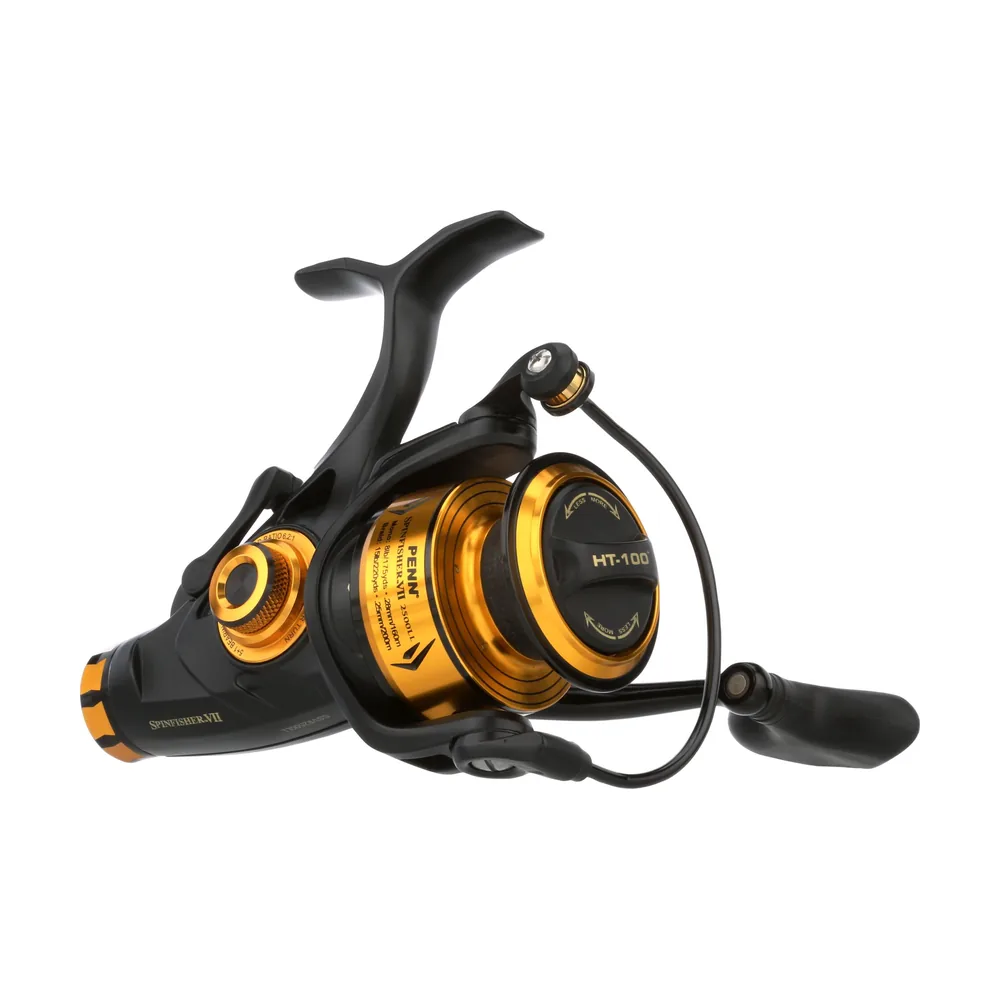
Buying role: Bait-oriented coastal and boat applications.
Read the full Spinfisher VII Live Liner review
Documented design and specialist identity
Spinfisher VII Live Liner is a bait-oriented variant, not a new independent family or an automatic upgrade for lure anglers. PENN documents the Live Liner function with IPX5 body-and-spool protection, CNC brass main gear, HT-100 drag, a 5+1 sealed-bearing system and metal body. Exact LL configurations should be checked separately from standard Spinfisher. The specialist function deserves its own review because bait presentation and the transition into the fight create different selection questions from ordinary active lure work.
What problem the function addresses
A bait angler may want controlled line release before applying the primary fighting pressure. The useful amount of release depends on bait, current, rig and target behavior. Live Liner is worth comparing when that management is a recurring part of the method. It should not be described as a guarantee that a fish will take a bait, remain attached or avoid feeling resistance. The complete presentation still determines what happens. A reel function can support a deliberate approach without making the rest of the rig irrelevant.
The owner should define whether the bait will be held in a current, allowed to move or presented from a relatively fixed position. Those differences affect how release is managed and how quickly pressure should be applied. Local fishing methods may also differ according to the target and hook arrangement. This review does not prescribe a universal delay before engaging pressure. The important purchasing question is whether the mechanism suits the method the angler actually intends to use, rather than whether it adds a feature to the reel.
Learn operation before fishing
Read the supplied instructions for the exact model and practice its operating sequence in a controlled setting. Distinguish the release setting from the primary drag used during the fight. Confirm how the selected configuration transitions between them, rather than assuming it behaves identically to another brand or an older reel. Familiarity matters because a bait take can occur while the angler’s attention is elsewhere. A mechanism that is useful in theory can become confusing if its operation has not been practiced.
Set the primary drag around the complete rod, line, knots and leader. The release function does not replace that preparation. If using a rod holder, make sure it is appropriate for the outfit and the fishing situation; controlled release is not a reason to leave equipment unsecured. Keep the setup under suitable observation. These considerations are part of practical bait fishing, not claims that the reviewed reel was personally tested in a specific arrangement.
Size and reserve for the actual bait method
Live Liner is available in configurations that can serve different coastal or boat applications. A small estuary bait setup and a larger boat outfit require different capacity plans. Choose around the target, depth, current and fishing position. A larger spool may be necessary for the job, but it can also make a lighter rod awkward. A smaller configuration may be pleasant to handle while leaving insufficient margin from a fixed shore position. Treat the exact LL code as the basis of the selection.
Do not borrow a standard Spinfisher’s figures merely because its nominal size looks similar. Verify the complete configuration and intended braid diameter. A useful reserve must remain after allowing for the normal presentation, a realistic run and line removed after abrasion. Manufacturer capacity is tied to reference line, and real packing can vary. If the plan depends on nearly all available capacity, revisit the selection before fishing instead of hoping the bait method will limit every fish’s run.
Where a standard reel is simpler
An angler primarily casting and actively retrieving lures may have little reason to buy Live Liner. The additional function should not be selected solely because it sounds more capable. A standard reel can be the clearer purchase when controlled bait release is not part of the normal technique. This is an application distinction, not a claim that the specialist is inferior. Specialized equipment is most valuable when its function addresses a recurring need.
Fierce V Live Liner is the relevant value-oriented comparison for a buyer who wants that function and is assessing current PENN alternatives. Compare exact feature packages, sizes and local prices; do not assume every Live Liner version has the same protection or internal construction. Standard Spinfisher remains the comparison if the method can be handled satisfactorily without the specialist feature. Those options help the buyer decide how much value the mechanism actually adds to the fishing.
Exposure, service and editorial verdict
Follow the manual for cleaning, drying and internal service. Bait fishing can involve spray, residue and incidental grit, so careful handling is still worthwhile with documented protection. Establish regional service and warranty arrangements before importing, especially if the reel will be used regularly. Spinfisher VII Live Liner is a worthwhile shortlist choice when controlled release belongs to a well-understood bait method. Choose the exact LL configuration and learn its operation. Recommend it for that function, without presenting it as a universal replacement for standard coastal or dedicated offshore setups.
A practical buying checklist for this application
Consider an angler managing a deliberate bait presentation where controlled release before the fight is a recurring part of the method. Write down the normal rod, line, terminal tackle, fishing position and realistic target. Use that description to select the relevant Spinfisher VII Live Liner configuration. The example code in the table is a reference point, not a universal size recommendation. Before ordering, ask the seller to confirm the full code, generation, supplied configuration and applicable regional warranty. A listing photograph or abbreviated family name is insufficient if the seller has several variants or generations under one description.
Check the complete exact-code specification, including weight and line pickup if those fields matter to the comparison. Those values have not been filled from another reel where the checked chart did not provide them. Read the capacity units correctly: the table retains yards and pound-test pairs from the United States chart. Consider actual braid diameter, reserve after the presentation and the rod’s intended pressure. Maximum drag is a published limit, not the automatic working setting for the assembled outfit.
Place the selected reel on the intended rod if possible. Check balance in the normal grip, handle clearance and access to the controls. Compare Fierce V Live Liner for a current value-oriented functional comparison and standard Spinfisher VII when the release mechanism is unnecessary. Keep the comparison attached to the same fishing problem so that different size labels or feature names do not disguise an application mismatch. If the more expensive option is preferred, identify the particular benefit that matters during a normal session rather than assuming price alone establishes suitability.
The official links below are manufacturer references, not Amazon affiliate buttons. When a purchase link is added later, match it to the exact model and variant being recommended. If a listing offers an older generation or another size, label that difference clearly rather than silently substituting it. This keeps the review’s purchasing guidance accurate and gives the reader a reasonable basis for checking the retailer’s offer before buying.
Official product reference: PENN Spinfisher VII Live Liner features and exact model chart
Official PENN sources
Manufacturer sources support feature summaries and exact example specifications. Consult the applicable regional page for current availability, complete specifications and support.
- Clash II official product reference
- Battle IV official product reference
- Fierce V official product reference
- Pursuit V official product reference
- Wrath II official product reference
- Authority official product reference
- Slammer IV official product reference
- Spinfisher VII official product reference
- Spinfisher VII Long Cast official product reference
- Spinfisher VII Live Liner official product reference
- PENN official history
- PENN current US spinning reel catalog
- PENN Australia AFTA 2025 releases
- PENN Australia AFTA 2026 releases
← Back to Spinning Reels · Shimano reviews · Daiwa reviews · Deep Drop Directory