
Tsunami Spinning Reels: Inshore, Surf and Offshore Buying Guide
Review method: This is a researched editorial guide using official product descriptions, not hands-on testing. Model-year claims are made only where verified. Exact size, local availability, warranty and specifications require confirmation. No Amazon offers or affiliate links have been invented.
← Spinning Reels Directory · Compare features · Brand overview · Coastal reviews · Premium saltwater reviews · Forged preview
Affiliate disclosure: As an Amazon Associate, I earn from qualifying purchases.
Browse Tsunami spinning reels — features in separate columns
These seven selections include the ArmourTech version and one announced preview. Coastal and offshore use depends on the exact size; no artificial five-plus-five split is imposed. ARMR is listed in the official collection but is excluded because its detailed source could not be reliably retrieved.
| Model / version | Application | Body / rotor | Gearing | Drag | Protection | Bearings | Other features |
|---|---|---|---|---|---|---|---|
| Barrier II | Value coastal and general saltwater comparison | Material not specified in checked description | Not specified | Sealed hybrid drag | 7 seals; no verified IPX designation | 3+1 shielded bearings | Screw-in aluminum handle |
| Guard | Value inshore, bait and coastal comparison | Aluminum body; nylon rotor | Not specified | Exact drag construction: confirm | 13 seals; no verified IPX designation | 3+1 shielded bearings | Braid-ready spool; size-specific knobs |
| Shield II | Inshore and larger coastal/nearshore configurations | Metal body; rotor varies by configuration | A-Drive aluminum 2500–4000; B-Drive brass 5000–8000 | Sealed CF3 drag | IPX6; 12 seals | Source conflict: 5+1 versus 9+1 | Manual bail; sealed bail spring |
| Evict II | Inshore and nearshore; high- and low-gear choices | Full metal body and sideplate | S-Drive stainless drive and pinion | Sealed CF3 carbon drag | IPX6; 12 seals | 9+1 dual-sealed bearings | Titanium spool lip; high/low gearing |
| SaltX II | Premium surf and saltwater; assess larger sizes for offshore | CNC-machined A6061 aluminum body | Stainless gearing | Confirm exact drag specification by size | IPX8; source conflict: 20 versus 19 seals | 3000 example: 7+1 | Titanium lip, main shaft and bail wire |
| SaltX II ArmourTech | Premium coated surf and saltwater version | A6061 aluminum body and rotor | S-Drive stainless main and pinion | Sealed Hammer Drag | IPX8; 20 seals | 7+1 dual-sealed bearings | ArmourTech coating; no bail-less kit compatibility |
| Forged — announced design preview | Announced coastal, surf and nearshore comparison | Aluminum construction; machined and die-cast parts | B-Drive brass main and pinion | Sealed Hammer Drag | IPX7; source conflict: 16 versus 15 seals | 4+1 sealed bearings | 3500 / 4500 / 6500; Coming Soon in checked listing |
Selected numerical examples — not family-wide specifications
Each row applies only to the labeled size. Capacity and weight are omitted where the checked text did not establish clear, consistent units or a verified value. Shield II bearings and SaltX II / Forged seal counts require clarification.
| Model | Example size | Ratio | Recovery (in/turn) | Maximum drag (lb) | Bearings |
|---|---|---|---|---|---|
| Barrier II | 8000 | 4.9:1 | 44 | 25 | 3+1 |
| Shield II | 2500 | 6.2:1 | 35 | 12 | Conflicting: verify |
| Evict II | 2500 standard | 6.2:1 | 35 | 12 | 9+1 |
| SaltX II | 3000 | 5.2:1 | 30 | 20 | 7+1 |
| SaltX II ArmourTech | 3000 | 5.2:1 | 30 | 20 | 7+1 |
| Forged — announced | 3500 | 6.2:1 | 36 | 20 | 4+1 |
Current 2025–2026 coverage and announced changes
The current official catalog includes second-generation designs and ArmourTech. “II” is a generation label, not proof of a 2026 launch. Forged is promoted as new and its checked listing shows Coming Soon; no exact release date is asserted. The product-specific design differences are explained below rather than presented as invented annual upgrades.
Tsunami company and range overview
Tsunami’s place in a spinning-reel shortlist
Tsunami Fishing Tackle offers a saltwater-oriented spinning range that deserves consideration alongside the larger manufacturers in this directory. Its catalog contains accessible coastal choices, more deliberately protected metal-body designs, and premium SaltX II versions aimed at demanding saltwater use. The useful starting point is that these products have different jobs. They should not be treated as interchangeable reels with progressively larger model numbers. This guide examines seven models or versions with sufficiently clear official information, including an announced Forged preview. It is a selected buying guide rather than a claim that Tsunami has only seven products.
Barrier II and Guard are practical starting points for anglers comparing value and protection. Shield II and Evict II introduce more specific construction, gearing and sealing choices. SaltX II and SaltX II ArmourTech move into premium saltwater comparisons, while Forged introduces a separate announced design with brass gearing and an IPX7 description. ArmourTech is a version of SaltX II, not an unrelated eighth manufacturer or a wholly separate reel family. The distinctions matter when comparing prices, stock, spare parts and individual configurations. A more expensive version needs a concrete reason to belong in an angler’s outfit.
Choose the fishing job before the product badge
Inshore fishing can mean walking a beach with small lures, working a tidal channel from a kayak, casting beside mangroves or presenting bait around pilings. These situations place different demands on capacity, retrieve, handling and exposure. Offshore fishing also covers very different workloads: casting to a surface school is not the same as repeatedly lifting a heavy jig through deep current. This page groups coastal and premium saltwater choices for navigation, but the final recommendation depends on the exact reel size and technique. A family name alone does not establish suitability for large offshore fish.
Write down the usual lure or bait, the rod’s intended line class, the depth, the current and the most difficult realistic landing position. Those details give the specification table a purpose. If a reel is too large for the normal session, the outfit can become cumbersome even though its headline specifications appear impressive. If it is too small for the reserve required, attractive construction cannot replace missing line. Match the ordinary fishing first, then allow a sensible margin for the conditions that occasionally make that fishing more demanding.
Body, sideplate and rotor are separate components
Tsunami’s current pages provide meaningful construction distinctions. Guard has an aluminum body and a nylon rotor. Shield II specifies a metal body, while its rotor description varies within the family. Evict II specifies a full metal body and sideplate. SaltX II ArmourTech specifically identifies A6061 aluminum for both body and rotor. These descriptions should remain attached to the correct model. Calling every reel an all-metal construction would erase information a buyer may care about, and transferring a premium model’s materials into a cheaper reel would create an inaccurate comparison.
Material information helps explain the design, but it does not independently establish how much a complete reel deflects under load or how long it will last. Shaft support, gearing, assembly and maintenance all participate in the result. This guide therefore gives construction facts and then discusses their purchasing implications. It does not assign laboratory strength rankings to metal and composite parts. Where the official page omits the exact material or configuration, the table says so. A clear gap is more useful than a confident specification borrowed from a related product.
A-Drive, B-Drive and S-Drive are different choices
Shield II is particularly important to read by size. Its official description assigns A-Drive aluminum main gearing to the 2500–4000 group and B-Drive brass gearing to the 5000–8000 group. Evict II identifies S-Drive stainless steel drive and pinion gears. ArmourTech also identifies stainless main and pinion gearing, while the Forged announcement identifies brass B-Drive gearing. These are documented design differences, not independent evidence that a named system wins every comparison. Size, retrieve and the intended fishing method still determine which configuration deserves closer examination.
A fast retrieve can help recover slack or maintain contact with a moving presentation. A lower gearing choice can be attractive for controlled presentations around structure. Evict II explicitly offers high- and low-gear variants, which is more useful to a technique-focused buyer than a generic promise of power. Gear ratio must also be read alongside published line recovery. Spool dimensions influence pickup, so identical ratios do not imply identical inches recovered per handle turn. The numerical examples below retain their exact size labels and should not be extrapolated to other variants.
Water resistance needs a precise description
Barrier II and Guard list internal seals and protective construction without a verified IPX designation in the source material used here. Shield II and Evict II identify IPX6 systems. Standard SaltX II and ArmourTech identify IPX8 systems. Forged is described as IPX7 in its announced specification. Those distinctions belong in the comparison table. A seal count alone does not establish the same protection as another reel, and a protected drag is not automatically a claim about the entire body. Avoid converting general water-resistance language into an unsupported immersion promise.
This guide reports the manufacturer’s ratings; it does not independently certify those reels or assign universal immersion depths and times to a marketing description. Check the supplied manual for the intended use and care instructions of the exact product. Even a protected reel needs sensible treatment after saltwater exposure. Sand can reach external moving interfaces, line can carry contamination toward the roller, and rough handling can damage a part that otherwise functions correctly. Protection is valuable because exposure happens, not because the owner should deliberately create unnecessary contamination.
Surf, inshore and offshore overlap without becoming identical
SaltX II deserves attention from buyers considering demanding shore and surf work, and appropriately selected larger configurations can enter an offshore comparison. That does not mean a small SaltX II should replace a dedicated heavy offshore outfit. ArmourTech offers an additional coating proposition for buyers who expect repeated handling in a harsh environment. Shield II and Evict II can serve coastal and nearshore comparisons without being presented as universal bluewater solutions. Barrier II and Guard should be selected around their actual size and reserve rather than a general saltwater label.
For offshore use, estimate how much line is consumed by the fishing depth before a fish runs. Allow for current, the angle of the line, abrasion trimming and a practical reserve. Braids with the same printed breaking strain can differ in diameter, which makes capacity labels a starting point rather than a guaranteed fill result. Some official pages display abbreviated capacity figures without consistently stating the order and units in the extracted text. This guide deliberately omits those ambiguous numbers. Consult the full specification chart and the chosen line’s diameter before filling the spool.
Drag should be matched to the whole outfit
The current range uses several named drag descriptions: Barrier II identifies a sealed hybrid drag, Shield II and Evict II identify CF3 systems, and ArmourTech and Forged identify Hammer Drag. These names help distinguish products, but they should not be converted into invented measurements of startup friction, sustained heat performance or service life. Maximum drag is a published ceiling, not a universal fishing setting. The rod, line, knots, hooks and angler’s position can limit the usable pressure well before that ceiling becomes relevant.
Build the complete outfit and choose an appropriate working pressure deliberately. A high maximum number cannot make a light rod suitable for heavy pressure or guarantee that an angler can stop a fish beside sharp structure. During selection, ask whether the reel fits the line and pressure plan rather than simply seeking the biggest figure. This also makes comparisons fairer. A small coastal example and a large saltwater example can have different maximum outputs because they serve different jobs. Both may be sensible when used in a compatible system.
What the 2025–2026 coverage actually means
The lineup and source pages were checked on 4 October 2026. Shield II, Evict II, SaltX II and ArmourTech are current second-generation or current-version listings; the presence of “II” does not prove that they launched in 2026. The official site also promotes Forged as a new reel, and its product listing shows a Coming Soon purchase status in the checked material. It is included as an announced design preview. No exact launch date is asserted where the official material consulted did not establish one.
The catalog also lists ARMR, but its detailed product page could not be reliably retrieved for this edition. It is not given a speculative long review merely to reach ten entries. Older first-generation Barrier, Shield, Evict and SaltX listings should likewise be checked carefully when comparing retailers. Similar names can conceal different internals or features. Ask for the exact generation and size, and keep the current official product page with the purchase record. A retailer’s title, photograph and stock code should all refer to the same configuration.
Resolve discrepancies before paying
Three source conflicts deserve visibility. Shield II’s feature list states 5+1 bearings while the displayed 2500 specification states 9+1. SaltX II’s general description mentions twenty seals while the selected 3000 chart displays nineteen. Forged’s family description mentions sixteen seals while its selected 3500 chart displays fifteen. These discrepancies may reflect size differences or website errors, but the source does not settle that question. This page preserves the conflict and recommends written confirmation for the exact configuration instead of choosing whichever number looks more attractive.
Availability also needs its own check. An official collection, a product selector and a retailer can have different stock states, and generic notification text can appear alongside a purchase button. This guide does not promise that every listed size is immediately available in every region. Check local delivery, warranty eligibility, the return policy and access to the parts most likely to need attention. A reel that suits the fishing but cannot be serviced conveniently may be a poor ownership choice for someone who uses the outfit frequently.
A practical way to compare Tsunami with other brands
Use the manufacturer pages elsewhere in this directory to compare equivalent jobs. A compact Evict II belongs beside other compact coastal configurations with compatible line and retrieve requirements. A larger SaltX II belongs beside reels intended for the same demanding saltwater task. Compare the complete specification, local price and service arrangement rather than a brand-wide reputation. The strongest purchasing argument identifies what a particular reel adds to a specific outfit. A feature that never addresses the angler’s conditions should carry less weight than one that solves a recurring problem.
This page is a researched editorial buying guide, not a report of hands-on testing. The reviews combine official design information with clearly reasoned selection advice. They contain no invented catch results, teardown findings, measured drag curves or affiliate offers. Use the tables to shorten the shortlist, read the individual reviews for the relevant tradeoffs, then confirm the exact product with the supplier. That sequence makes the guide useful whether the angler is replacing a worn coastal reel, building a surf outfit or comparing a premium saltwater purchase.
Inshore, coastal and nearshore comparisons
Barrier II — detailed review
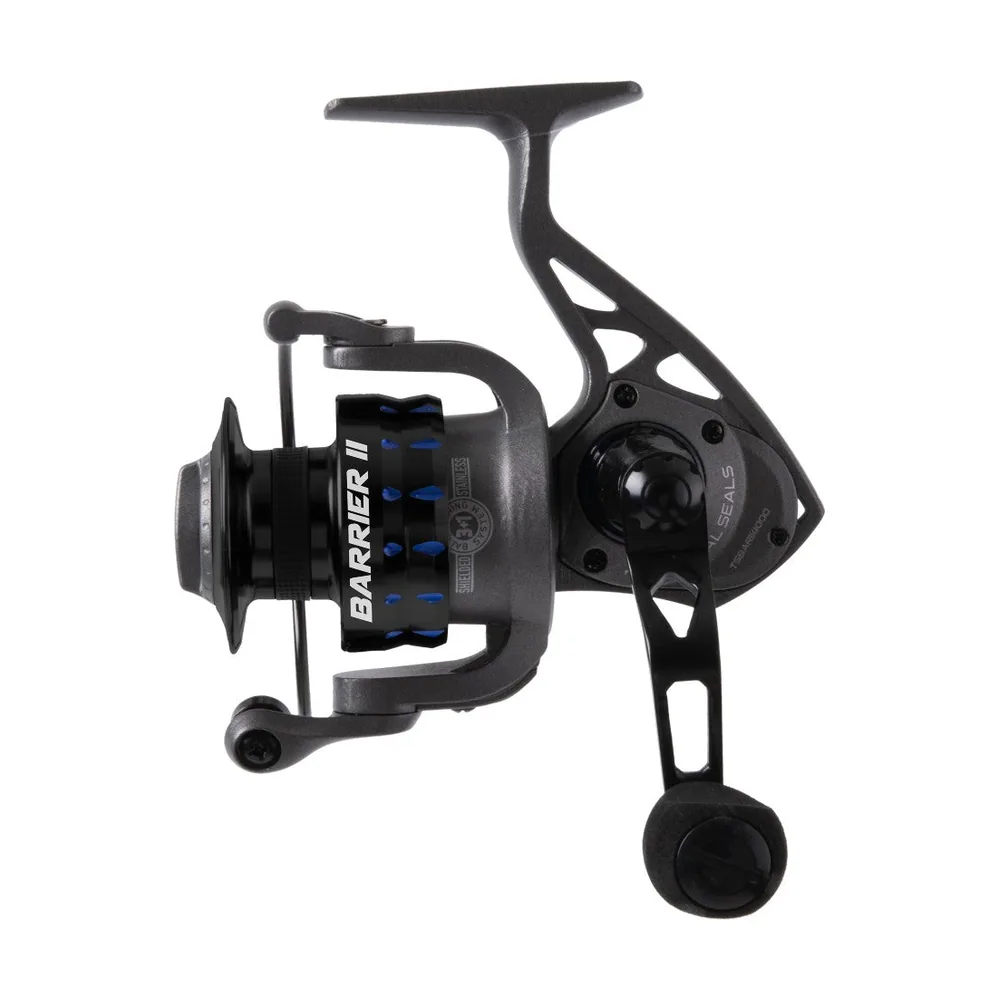
Buying role: Value coastal and general saltwater comparison.
Read the full Barrier II review (1,277 words)
A sensible starting point for a coastal outfit
Barrier II belongs on the shortlist of someone who wants a practical saltwater spinning reel without automatically moving into Tsunami’s premium range. Its official page identifies seven internal seals, shielded stainless bearings, a sealed hybrid drag and an aluminum screw-in handle. Those features establish the basic proposition: a coastal reel with deliberate protective details. They do not establish that it has the same body materials, gearing or exposure rating as SaltX II. The buying decision should begin with whether the chosen size suits the rod and normal fishing, then consider whether the protection and ownership arrangements justify the local price.
For a general bait or lure outfit, the attraction is straightforward. The reel can be evaluated as part of a complete system rather than as an expensive specialist purchase. An angler who fishes occasionally may prefer to preserve budget for a suitable rod, dependable line and replacement leaders. Someone who fishes frequently in abrasive surf conditions may instead want a different protection proposition. Neither decision requires dismissing Barrier II. The useful question is whether its documented design addresses the exposure and workload of the actual sessions it will serve.
Read the protection claim without enlarging it
Seven seals are a specific manufacturer claim, but the checked page does not establish an IPX rating. The distinction matters when the reel is compared with Shield II or SaltX II. Water resistance should remain the description here; it should not become a claim that the reel can be submerged to a particular depth or used indefinitely without service. The sealed drag and shielded bearings are relevant components, but component-level protection does not by itself define an independently verified whole-reel exposure limit.
A practical coastal owner should think about where the outfit will be placed between casts. A reel kept clear of sand and handled carefully has a different exposure history from one repeatedly laid on a wet beach. If the planned fishing routinely involves breaking waves striking the reel, reassess the protection requirement before choosing primarily on price. Follow the supplied cleaning instructions after use. If the reel experiences significant contamination or develops a change in operation, seek appropriate service instead of treating the presence of seals as proof that nothing can be wrong inside.
Construction details that are actually documented
The official description identifies a light, corrosion-resistant body and rotor, but the source material used for this guide does not give a precise material for each. It also identifies a ported, double-anodized aluminum spool and an aluminum screw-in handle. That is useful information for comparing the assembled reel. It would be inaccurate to replace the unspecified body material with graphite simply because a similar-priced reel elsewhere uses that material, or to describe the entire reel as aluminum because the spool and handle are aluminum.
When inspecting a purchase candidate, evaluate the handle connection, spool fit and general handling on the intended rod. Those observations help determine whether the configuration is comfortable; they are not a substitute for a long-term durability test. This review makes no claim about measured flex, internal machining or wear after a season. Buyers with a firm material preference should ask Tsunami or the seller for written clarification on the exact variant. An unanswered specification question is a reason to compare carefully, not an invitation to fill the gap with an attractive assumption.
The 8000 example needs its own context
The displayed 8000 chart gives a 4.9:1 ratio, forty-four inches of recovery per turn and a twenty-five-pound maximum drag. Those are size-specific figures, not values to apply to the entire Barrier II family. The relatively substantial recovery example shows why ratio alone can be misleading: spool dimensions participate in pickup. A buyer seeking a compact estuary reel should not choose the 8000 merely because its drag number is larger. Capacity, balance and the normal lure or bait need to determine whether a large configuration belongs in the outfit.
For a larger coastal setup, use the chart as a starting point and verify the full capacity information with the selected line. The extracted source uses an abbreviated capacity presentation that this guide does not reproduce without clear units. Reserve matters where current, depth and a running fish can consume line quickly. At the same time, unnecessary size can make repeated casting less pleasant. The best configuration carries an appropriate margin for the fishing without forcing the angler to handle excess bulk throughout every ordinary session.
What the hybrid drag description does and does not tell you
Barrier II’s drag is described as a fully sealed hybrid system. The checked information does not justify relabeling it as the CF3 or Hammer Drag used elsewhere in the range. Keep the correct name attached to the product. A sealed design is a relevant buying detail, but this review does not claim measured startup smoothness or prolonged thermal performance. Those conclusions would require testing that has not been performed for this directory. Judge the published maximum in relation to the line, knots and rod rather than treating it as the normal pressure setting.
An angler building a bait outfit may value predictable working pressure more than reaching the ceiling on the specification sheet. An angler casting light lures may place greater emphasis on balance and managing slack. Both should set up the complete outfit deliberately. If the fishing requires sustained heavy pressure near abrasive structure, compare the configuration with more purpose-specific alternatives. A strong headline figure cannot resolve a poor landing position or make a lightly rated rod suitable for a heavy fight.
Compare it with Guard and Shield II for the right reasons
Guard adds an explicitly documented aluminum body and nylon rotor, along with a different seal count. Shield II adds an IPX6 description and size-dependent named gearing. Those differences create meaningful comparison questions, but the larger number of seals should not be treated as a simple durability score. Ask what exposure is anticipated, which size is available, and how much the local price changes. Barrier II may remain a reasonable choice when its specification fits the ordinary coastal job and the alternatives add cost without solving an identified need.
Conversely, a buyer who wants a documented body material or a stated exposure rating has a concrete reason to move up the shortlist. That is a better explanation than assuming every newer-sounding name is automatically superior. Compare exact sizes on the same rod where possible. Obtain the local warranty and service terms before purchasing. If the price gap is small and the more suitable alternative is readily serviceable, the complete ownership proposition may matter more than saving a modest amount on the initial reel.
Buying verdict and final checks
Barrier II is a value coastal comparison with several useful documented protection details. It is most persuasive when the chosen configuration fits ordinary saltwater fishing and the buyer understands the limits of the available specification. It is less persuasive when the selection depends on an assumed body material, an unverified immersion promise or a large drag number detached from the outfit. Keep the exact generation on the invoice, check the included handle arrangement and confirm the supplier’s return policy before filling the spool.
Before the first session, make sure the selected braid and leader fit the rod and technique, establish a practical drag setting and inspect the outfit for obvious assembly or line-management problems. After use, follow the manual and store the reel clean and dry. The decision should leave enough budget for those supporting components and sensible care. This is a researched recommendation framework, not a claim that Barrier II has been independently field-tested against every competing coastal reel.
View official Barrier II specifications · Back to comparison
Guard — detailed review
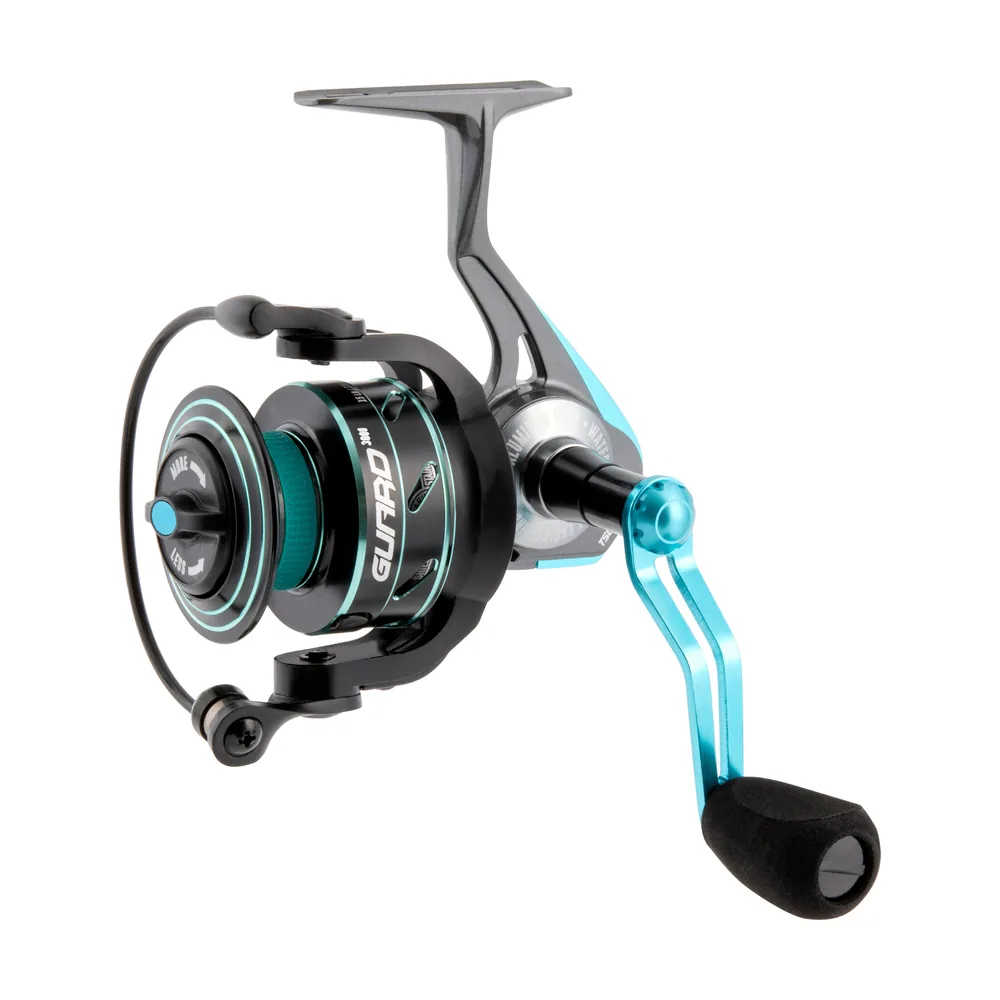
Buying role: Value inshore, bait and coastal comparison.
Read the full Guard review (1,301 words)
Why Guard belongs in an inshore comparison
Guard is useful to examine when an angler wants an explicitly documented aluminum body in a value-oriented coastal reel. Its official description pairs that body with a nylon rotor, thirteen internal seals and shielded stainless bearings. This is a distinct construction proposition within Tsunami’s range. It should be evaluated as a whole outfit component, with the exact size chosen for the rod and fishing method. An aluminum body is meaningful information, but it is not sufficient on its own to establish that the reel is suitable for every demanding saltwater job.
An inshore buyer might be assembling a bait outfit, replacing a worn general-purpose reel or choosing a coastal setup that will not receive daily specialist use. Those buyers can reasonably compare Guard with Barrier II and Shield II. The choice should turn on the required fit, the documented protection and the local ownership cost. A reel used mainly around an estuary may not need the same exposure proposition as one regularly handled in heavy surf. Defining that difference first makes the comparison clearer and reduces the temptation to pay for features without a specific purpose.
Aluminum body does not mean an all-metal reel
Guard’s nylon rotor is an important part of the description. The official page also identifies machined aluminum parts including the spool, sideplate covers and handle arm, together with a stainless main shaft. None of that erases the stated rotor material. Buyers who strongly prefer a metal rotor should compare products that actually document one. Buyers without that preference should consider the assembled feel and fit rather than treating a single material as a complete performance verdict. There is no independently measured rigidity comparison in this review.
The body supports the operating mechanism, while the rotor participates in retrieving line around the spool. Their materials describe different parts of the system and can reflect different design priorities. Evaluate the exact Guard on the intended rod if a local shop allows it. Check the comfortable hand position, the handle’s reach and the way the outfit balances during a normal retrieve. Those practical observations can inform selection without pretending to reveal long-term internal wear or the limits of the construction under every possible load.
Thirteen seals need careful interpretation
The official description gives thirteen seals and water-resistant construction, but the checked material does not establish an IPX rating for Guard. This guide therefore does not present it as equivalent to an IPX6, IPX7 or IPX8 system. Counting seals across different architectures is not a reliable way to rank complete exposure protection. A higher count may describe a different arrangement rather than a straightforward improvement in every circumstance. Keep the manufacturer’s actual claim intact and ask for the relevant care instructions if immersion is part of the intended use.
For ordinary coastal ownership, the useful habit is to reduce contamination wherever practical. Do not rest the reel in wet sand while changing a leader. Keep the outfit supported when moving around a boat or rocks. Inspect external moving areas after a dirty session and follow the manual’s cleaning procedure. If water or grit exposure becomes a recurring feature of the fishing, consider whether a reel with a clearly stated protection proposition would be a more appropriate purchase. The seals are a design feature, not a reason to deliberately expose the reel to preventable damage.
Handle knobs and size selection
Tsunami specifies rubber power knobs for the 5000–6000 group and EVA knobs for the 2000–4000 group in the feature description. The current selector retrieved for this guide lists 3000, 4000, 5000 and 6000. That mismatch means a buyer should not assume the 2000 is currently offered simply because it appears in a general feature statement. Check the actual stock code and included knob for the selected configuration. A different size can change both the fishing role and the handling arrangement, so the family name is insufficient for a precise purchase.
A compact coastal outfit should be assessed with its normal lure and line requirements in mind. A larger bait-oriented outfit can have a different reserve and grip priority. The larger knob may be attractive to one buyer and unnecessary for another. Neither determines the quality of the entire family. Try the handle position and retrieve movement with the rod you expect to use. If an online purchase prevents that inspection, obtain clear photographs and the seller’s exact-size description, then retain a practical return option until the outfit has been checked without use.
Bearings and spool information
Guard identifies three shielded stainless ball bearings plus a roller bearing in the familiar 3+1 notation. Bearing count should not become a simple score for smoothness or service life. Placement, support, exposure and condition matter alongside the number. This review does not claim a measured comparison with a reel carrying more bearings. The braid-ready spool is another useful documented feature, but the owner still needs an appropriate filling procedure and a sensible amount of reserve. Consult the supplied instructions rather than assuming the braid can be loaded carelessly because of the spool label.
The retrieved official text did not provide a sufficiently clear complete numerical chart for Guard’s ratio, recovery, maximum drag and weight. Those values are deliberately not invented in the table. This makes an exact-size confirmation especially important. Ask the supplier for the current chart before choosing a configuration for a technique that depends on a particular pickup or line capacity. A shopping comparison that needs those numbers should pause at the missing information rather than borrowing specifications from Barrier II or another similarly sized reel.
A practical bait-fishing selection exercise
Imagine the ordinary session involves presenting bait from a sheltered shoreline. Start with the rig weight, the casting requirement and the rod’s intended line range. Then establish the fish and structure that create the most realistic pressure and reserve demands. Guard becomes a candidate if the available size satisfies those requirements and its ownership terms fit the budget. The material and seal descriptions support the comparison, but they do not replace the line and rod plan. The outfit also needs a landing method that does not depend on lifting a fish with the reel.
Now change the scenario to a long session casting artificial lures. Comfort and repeated handling may become more prominent. A configuration that is sensible for stationary bait work might feel unnecessarily substantial for that different task. The correct response is to reassess size and outfit balance, not to conclude that Guard is universally unsuitable or universally versatile. Where the current chart lacks a needed detail, obtain it before buying. A clear fishing scenario turns the missing specification into a focused question for the seller instead of leaving the buyer to compare vague advertising language.
Compare the full cost of ownership
Guard’s appeal can be undermined if service, returns or replacement parts are awkward in the buyer’s region. Check who handles a warranty claim, whether the purchase channel is eligible and how routine service is arranged. A modest difference in reel price may matter less than the ability to resolve an issue without losing several fishing sessions. Someone who fishes infrequently may judge that tradeoff differently from a guide or regular coastal angler. The decision should account for frequency of use rather than treating purchase price as the only cost.
The final verdict is that Guard deserves a measured value-inshore comparison, particularly for buyers who want its documented body construction. Its weaknesses as a purchasing proposition are the information gaps and the risk of enlarging its protection claims beyond the source. Confirm exact-size specifications, choose compatible line and follow the care instructions. With those questions resolved, the buyer can assess whether Guard meets the actual job or whether Shield II, Evict II or another brand provides a more complete fit.
Shield II — detailed review
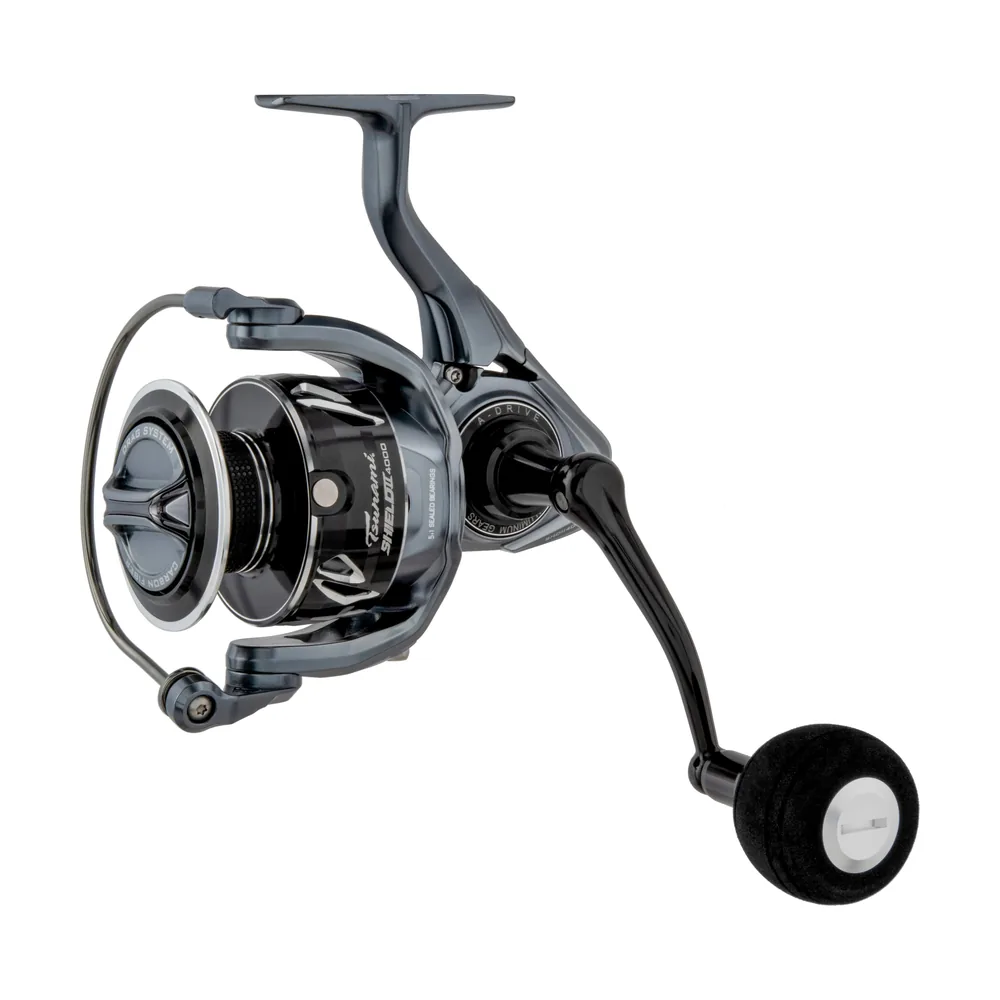
Buying role: Inshore and larger coastal/nearshore configurations.
Read the full Shield II review (1,259 words)
A family that must be reviewed by size
Shield II offers a more specific saltwater design proposition than a generic water-resistant coastal reel. Its official description identifies a metal body, an IPX6 sealed system, a sealed CF3 drag and size-dependent gearing. That last detail is central to a useful review. The smaller and larger groups do not simply share identical internals in different dimensions. A buyer choosing between a compact inshore setup and a larger coastal outfit needs to retain the gearing distinction and then compare the exact configuration against the rod, line and normal workload.
This makes Shield II a practical bridge in Tsunami’s lineup. It can enter a compact lure comparison while larger configurations can be examined for coastal and nearshore work. It should not be promoted as a universal offshore reel merely because the family includes large sizes. The role depends on capacity, usable pressure, retrieve and the conditions. For demanding bluewater fishing, define those requirements explicitly and compare purpose-suited alternatives. A broad family can cover several jobs without every member becoming appropriate for the most demanding one.
The A-Drive and B-Drive distinction
The official page assigns aluminum A-Drive main gearing to sizes 2500–4000 and brass B-Drive gearing to sizes 5000–8000. That information belongs near the beginning of selection rather than hidden in a general feature list. It describes a deliberate difference across the family. This review does not claim independently measured strength advantages for either system. Gear material should be considered with the intended retrieve, the complete mechanism and the workload, not converted into a universal ranking detached from size and technique.
When checking a retailer, make sure the selected size and generation match the current source. A description copied across every variant can lose the size-dependent gearing detail. Ask for clarification if the listing contradicts the official chart. The buyer should be able to explain why the selected configuration fits the normal job: perhaps repeated coastal casting, a larger bait presentation or a nearshore reserve requirement. That reason is more useful than selecting the largest gear label or assuming a heavier construction always produces a better everyday outfit.
Metal body and a rotor description that varies
Shield II documents a metal body, while the family’s rotor language includes graphite and aluminum rather than establishing the same rotor material for every size. This guide does not invent a size-by-size material mapping that the retrieved source did not settle. A buyer whose decision depends on rotor material should obtain confirmation for the exact code. The phrase metal body should not become all-metal reel. Spool, handle, rotor and body are different components, and careful description keeps their properties from being transferred incorrectly.
The practical assessment is the assembled fit on the intended rod. Consider how the outfit feels during the normal retrieve and whether the selected size suits the casting range. A sturdy-looking body does not compensate for excess bulk in a light lure setup. Equally, a compact, comfortable outfit must still contain the reserve required for the fishing position. The review does not report measured body flex or teardown findings. It uses the documented construction to identify purchase questions that can be answered before the reel is committed to use.
IPX6 and the sealed drag
The official page identifies twelve seals and an IPX6 system, together with a sealed CF3 drag. Those are relevant protective features for a saltwater comparison. The rating should be reported accurately rather than rewritten as an unlimited immersion guarantee. Consult the actual manual for exposure and cleaning instructions. The presence of a protected drag does not remove the need to care for external moving components, and a body rating is not a promise that sand cannot affect every interface on the reel.
A coastal owner should keep the reel away from abrasive ground, handle it carefully around rocks and follow the recommended post-session procedure. If an incident produces roughness, an unusual sound or a change in operation, respond to the symptom. Do not continue a demanding session solely because a rating is printed in the product description. For buyers who expect repeated immersion as part of their normal method, compare the exact stated protection proposition with the premium options and confirm permitted use. The important outcome is a reel suited to the exposure, not a rating used as a reason to create more of it.
Manual bail operation deserves attention
Shield II specifies a manually operated bail with a sealed spring. That is a real handling choice and should be visible to buyers accustomed to closing a bail by turning the handle. Confirm the operation before purchase and include it in the normal casting routine. Manual closure can fit a deliberate line-management habit, but it is not automatically preferable for every angler. The reel should support the owner’s technique, and an unexpected operating detail can create frustration even when the construction otherwise meets the intended role.
The braid-ready spool, machined handle and round non-slip knob are additional documented features. They help describe the configuration without establishing casting-distance gains or measured grip performance. Check line lay and spool filling according to the instructions, using a compatible braid and leader. A spool label cannot correct poor filling or eliminate the need to control slack. After a cast, sensible line management remains part of the outfit’s operation. The reel’s design and the angler’s routine should work together rather than placing every responsibility on a technology name.
The 2500 example and the bearing discrepancy
The displayed 2500 chart gives a 6.2:1 ratio, thirty-five inches of pickup and a twelve-pound maximum drag. These figures provide a precise example for comparison, but they do not describe the larger sizes. The same chart states 9+1 bearings while the family feature list states 5+1. This source conflict remains unresolved in the checked material. The guide does not select one count as the definitive truth or assume an explanation. Obtain written confirmation if the bearing specification is material to the purchase.
The numerical example also illustrates why maximum drag should be treated as a ceiling rather than a normal setting. A light coastal rod, its knots and the chosen hooks may call for a much lower working pressure. Similarly, published pickup helps compare retrieve options but cannot guarantee how a specific lure will behave in current. Build the complete configuration and assess it around the technique. For a larger Shield II, obtain that size’s chart instead of scaling up the 2500 example mathematically or assuming the same ratio and recovery.
Where Shield II earns its place
Shield II is compelling when the buyer wants the documented IPX6 proposition, a metal body and a configuration whose gearing fits the intended job. It deserves comparison with Evict II where stainless gearing or low-gear variants become relevant, and with Guard or Barrier II where value is the main concern. It should also be compared with equivalent configurations from other brands using the same line and rod requirements. The best choice can change with local price, service and stock rather than following a fixed brand-wide ranking.
Before paying, resolve the rotor and bearing questions for the selected size, confirm generation and warranty eligibility, and inspect the handle and bail operation. Keep a copy of the seller’s specification if clarification was needed. The final verdict is a useful, versatile saltwater family with meaningful size-dependent distinctions and a source discrepancy that buyers should address. This is a researched purchasing assessment; it does not claim personal surf testing, long-term wear measurements or independently verified performance beyond the manufacturer’s documented design information.
Evict II — detailed review
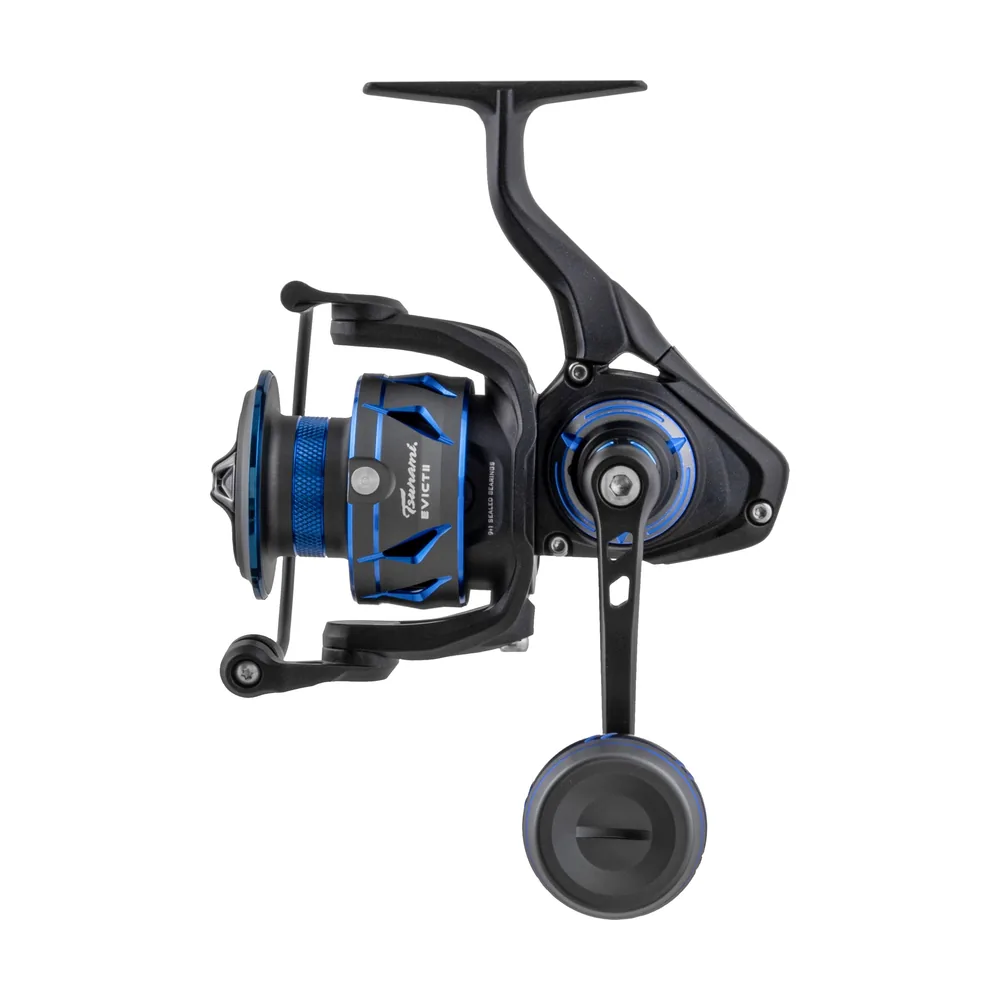
Buying role: Inshore and nearshore; high- and low-gear choices.
Read the full Evict II review (1,317 words)
A technique-focused coastal proposition
Evict II deserves particular attention from an angler who wants to choose gearing around the fishing method. Its official page explicitly describes both high- and low-gear options for inshore and nearshore use. That is more useful than a general promise that one reel does everything. The documented construction includes a full metal body and sideplate, stainless drive and pinion gearing, an IPX6 system and a sealed CF3 carbon drag. Those details establish a substantial coastal comparison, while the exact variant determines how the reel fits the technique.
The most persuasive purchasing case is specific: a buyer wants a compatible coastal size and either a faster recovery or a more deliberate low-gear option for the usual presentation. A less persuasive case is simply that Evict II sounds tougher than another name in the catalog. Build the comparison around the lure or bait, rod, line and structure. Evict II is presented by the manufacturer for inshore and nearshore species, and this guide retains that emphasis rather than expanding it into a universal heavy-offshore recommendation.
High and low gear are separate decisions
The checked selector includes 2500, 3000, 4000, 2500 LG, 3000 LG, 5000 and 6000. The manufacturer explains the low-gear application around controlled fishing for species such as sheepshead and blackfish on nearshore structure, while faster configurations can suit other coastal presentations. That explanation helps define a shortlist, but it does not eliminate the need for exact specifications. The displayed standard 2500 ratio is not the ratio of the 2500 LG. Obtain the current LG chart before making a numerical comparison.
For a controlled structure presentation, the buyer should think about how the reel participates in maintaining contact and recovering line during the normal sequence. For an active lure presentation, slack pickup may carry a different priority. Neither makes the faster or lower ratio intrinsically better. The correct choice changes with the task. Recovery in inches per turn matters alongside ratio because spool dimensions influence pickup. Comparing two configurations by ratio alone can hide a practical difference in line recovery that affects the angler’s routine.
Stainless gearing and metal construction
Evict II identifies digitally optimized S-Drive stainless steel drive and pinion gears, supported by a full metal body and sideplate. These are meaningful product-specific facts. The guide does not convert them into measured torque, deflection or wear advantages over Shield II’s alternative gearing. An accurate comparison can say that the designs differ and ask whether the Evict configuration addresses the planned workload. It cannot claim independent engineering results from an inspection or teardown that has not taken place for this directory.
The complete outfit remains important. A metal-body reel can be a sensible choice for a demanding coastal setup, but a buyer casting light lures repeatedly still needs manageable size and balance. Inspect the handle position and normal grip with the chosen rod. If possible, compare equivalent sizes rather than handling a compact Evict beside a much larger alternative. That makes the observation relevant to the purchase. A family-level construction advantage, even where documented, does not rescue a configuration that is awkward or incorrectly matched to the normal fishing.
IPX6 protection and exposed interfaces
The source identifies twelve internal seals and an IPX6 system, together with sealed anti-reverse and bail-spring details. Those are useful elements for an inshore and nearshore owner to compare. Keep the protection language within the manufacturer’s claim and consult the manual for care and exposure limits. This review does not promise unlimited immersion or a maintenance-free life. External moving areas, line contamination and accidental abrasion still deserve attention even when the body includes substantial protective design features.
Consider the exposure of a structure-fishing outfit. The reel may encounter spray, dirty hands, bait residue and contact with the boat or shore. Good handling can reduce several of those risks without changing the fishing method. Keep it clear of abrasive surfaces, clean according to the instructions and respond to a change in operation. If immersion is a frequent part of the planned session, compare the premium saltwater protection proposition and obtain explicit guidance from the supplier. The rating should inform equipment choice, not replace sensible ownership habits.
CF3 carbon drag and working pressure
The official description identifies a sealed CF3 carbon drag. That is the correct design name for Evict II and should not be replaced with Hammer Drag from another Tsunami model. It gives the buyer a documented feature to compare but does not establish a measured startup curve or a specific endurance result. The displayed standard 2500 maximum is twelve pounds. That ceiling should be evaluated in relation to the rod, line, knots and hooks, rather than applied automatically as the pressure for every nearshore structure situation.
Fishing around hard cover makes the complete pressure plan especially important. The reel cannot compensate for a poor leader choice, an inappropriate rod or a landing position that offers no workable margin. Decide what pressure the outfit can use and how the fish will be landed before treating a drag figure as the solution. A larger Evict configuration requires its own chart. Do not assume that the small-model example represents every size or that a larger maximum guarantees success when other parts of the system are unsuitable.
The spool, handle and bearing package
Evict II lists a braid-ready spool with a titanium lip, a one-piece machined aluminum handle with an oversized power knob and 9+1 dual-sealed stainless bearings. These details form a coherent specification, but none should be enlarged into an invented field result. The spool lip does not establish a measured casting-distance gain, the knob does not guarantee a particular grip in every condition, and bearing count does not independently rank overall smoothness or durability. They are factual design details to examine in the assembled reel.
Check how the handle fits the angler’s hand, particularly where repeated retrieve movements dominate the session. Confirm bail operation and the included arrangement before use. Fill the spool appropriately with the chosen line and leave practical reserve for the fishing. The source’s abbreviated capacity presentation is not reproduced here because clear units and order were not consistently established in the extracted material. Obtain the complete chart rather than guessing. That is particularly important when nearshore depth and current consume a meaningful part of the spool before a fish is hooked.
Numerical example and comparison boundaries
The standard 2500 example lists 6.2:1 gearing, thirty-five inches of pickup and twelve pounds maximum drag. Keep those values attached to that specific configuration. They can help compare a compact coastal outfit with a competitor’s exact small-model chart. They do not define the low-gear options, and they should not be scaled into a large-size recommendation. A precise buying comparison uses the same fishing role, compatible capacity and relevant recovery rather than lining up different sizes only because their names share a number.
Within Tsunami’s range, compare Evict II with Shield II when the decision involves gearing, variant selection and local cost. Compare it with SaltX II when the exposure proposition becomes the main issue. Compare it with less expensive options when the ordinary session does not justify the additional design package. These comparisons can lead to different conclusions for different anglers. There is no requirement that the same model win a light lure, structure bait and premium surf comparison simply because it performs a useful role in one of them.
Buying verdict
Evict II is one of the most purposeful coastal comparisons in this selection because the high- and low-gear variants connect directly to technique. Its documented stainless gearing, metal body and sideplate, protection and drag package give buyers concrete details to evaluate. Confirm the exact standard or LG code, obtain its full chart and check local service terms. The recommendation remains conditional on outfit fit and ownership support. This review supplies a researched framework for that decision without claiming personal catches, independent load testing or long-term reliability results.
Premium surf, saltwater and appropriately sized offshore comparisons
SaltX II — detailed review

Buying role: Premium surf and saltwater; assess larger sizes for offshore.
Read the full SaltX II review (1,248 words)
The premium saltwater reference in this selection
SaltX II is the central premium saltwater comparison in Tsunami’s reviewed range. Its official description identifies a CNC-machined A6061 aluminum body, stainless gearing, an IPX8 sealed system and titanium components. Those features make it relevant to buyers assessing demanding shore, surf and saltwater work. The final role still depends on the chosen size. A compact SaltX II and a larger configuration can serve different outfits, so the family should not be described as uniformly offshore simply because some members deserve an offshore comparison.
The strongest reason to shortlist SaltX II is a defined exposure and equipment requirement. An angler working frequently in a harsh coastal environment may reasonably give greater weight to the documented protection proposition. Someone fishing sheltered water occasionally may find a less expensive reel more appropriate. The purchase should solve a real problem in the existing or planned outfit. Premium construction becomes meaningful when it addresses that problem; it is less useful when chosen mainly as reassurance without matching capacity, handling and the usual technique.
What the construction description establishes
The source identifies A6061 aluminum for the CNC-machined body and stainless gearing. It also lists titanium for the spool lip, main shaft and bail wire. These are specific components, not a claim that every part of the reel is titanium or that every aluminum part uses the same manufacturing process. Accurate component descriptions help distinguish SaltX II from the lower coastal range and from ArmourTech. This review does not claim independently measured stiffness, machining tolerances or wear behavior. Those would require evidence beyond the published product description.
For the buyer, the practical question is how the complete configuration fits the normal method. A substantial saltwater construction can be attractive while still being unnecessarily cumbersome for a light-lure outfit in the wrong size. Mount the candidate on the intended rod if possible. Consider repeated casting, retrieve movements and the grip used during a fight. An appropriate setup needs both useful reserve and manageable handling. Neither a premium material label nor a high maximum drag figure can establish that balance without reference to the outfit.
IPX8 should remain a precise manufacturer claim
SaltX II’s official page states an IPX8 system. This guide reports that claim without inventing a universal depth, duration or permission for careless treatment. The manual and supplier should establish the relevant operating and care guidance for the exact product. An exposure rating can be an important reason to prefer one reel, but it does not eliminate abrasion, impact or contamination at every external interface. The owner should still keep the outfit out of sand where possible and inspect moving components after a demanding session.
The seal count also needs care. The general family description mentions twenty seals while the selected 3000 chart displays nineteen. The source does not clearly settle whether this reflects a size-dependent difference or a page error. This review preserves the discrepancy rather than selecting the larger number. If the count affects the purchasing decision, request confirmation for the exact code. More importantly, assess the complete protection proposition instead of assuming that a one-seal difference determines practical resistance across unlike designs or sizes.
Compact sizes and the 3000 example
The displayed 3000 example gives a 5.2:1 ratio, thirty inches of recovery, a twenty-pound maximum drag and 7+1 bearings. Those numbers describe that example and should not be transferred to the entire lineup. The current product selector includes several sizes, while descriptive text does not always list the range identically. Verify the available variant with the seller. A buyer assembling a compact coastal outfit should compare the actual 3000 chart with the chosen rod and line rather than assuming that a premium family is automatically the correct size.
The ratio and pickup are useful to an angler evaluating a normal lure presentation, but they do not establish how every lure will behave in current. A technique requiring faster slack recovery may lead to a different configuration or competitor. A technique emphasizing controlled presentation may value a different balance. Check the exact reel against the ordinary retrieve routine. The twenty-pound maximum is a ceiling, not an instruction to apply that pressure to a light rod. Working pressure must be determined from the complete system and the fishing position.
Larger sizes and the offshore question
Larger SaltX II configurations can be considered for appropriate saltwater and offshore jobs, but the analysis needs more than the series name. Determine the depth, current, expected line consumption and the reserve required for a run. Then assess the exact size’s retrieve, drag and outfit fit. A casting setup used repeatedly from a boat may prioritize handling differently from a heavier bait or jig setup. This review does not claim the family can replace every dedicated offshore reel or cover extreme workloads merely because its protection description is premium.
Capacity information should be obtained from a clear chart with units and the selected line’s diameter. The abbreviated presentation in the retrieved source is not sufficiently consistent to reproduce as a universal capacity statement. Leave room in the plan for line removed after abrasion and for the way the fishing depth consumes reserve. If the ordinary method uses almost all the spool before the fight begins, reconsider the configuration. Premium internals cannot restore line that was never on the spool or overcome an unsuitable rod-and-line relationship.
Drag, anti-reverse and evidence limits
The official material includes sealed anti-reverse and a saltwater protection proposition, but this guide does not transfer Hammer Drag wording from ArmourTech into standard SaltX II without a verified exact specification. Buyers should confirm the drag arrangement for their chosen code if it matters to the comparison. This distinction is preferable to making the standard and coated versions appear identical in every internal detail merely because their names overlap. Each specification should remain attached to the product page that actually establishes it.
No measured startup friction, sustained drag heating or internal endurance result is claimed here. Those are attractive review topics but require testing. Instead, compare the published maximum with the practical pressure plan and ask whether the exact configuration meets the workload. Set the outfit up deliberately and avoid using the reel to compensate for unsuitable knots, hooks or a poor landing method. The anti-reverse and drag descriptions are useful parts of the design, not a guarantee that every other component of the fishing system can tolerate the same maximum load.
SaltX II versus ArmourTech
ArmourTech adds a coating proposition and has its own explicit feature description. Compare the local price difference with the exposure and handling the reel will actually experience. Someone who regularly works around abrasive surfaces may give coating protection greater weight; someone whose sessions involve less harsh handling may prefer the standard model if its exact specification fits the job. The coating claim does not establish an independently measured service-life advantage for this review. Neither version should be selected solely on appearance or assumed to have identical availability and compatibility.
Before choosing either version, obtain warranty terms and a realistic service route. Check generation, size, included handle arrangement and any accessory compatibility the purchase depends on. Resolve the standard model’s seal-count discrepancy if necessary. The final verdict is that SaltX II deserves a premium saltwater shortlist when its documented protection and construction address a real need. Its value depends on exact configuration, fit and support. This is a researched buying assessment, not a report of personal immersion tests or a season of field use.
SaltX II ArmourTech — detailed review
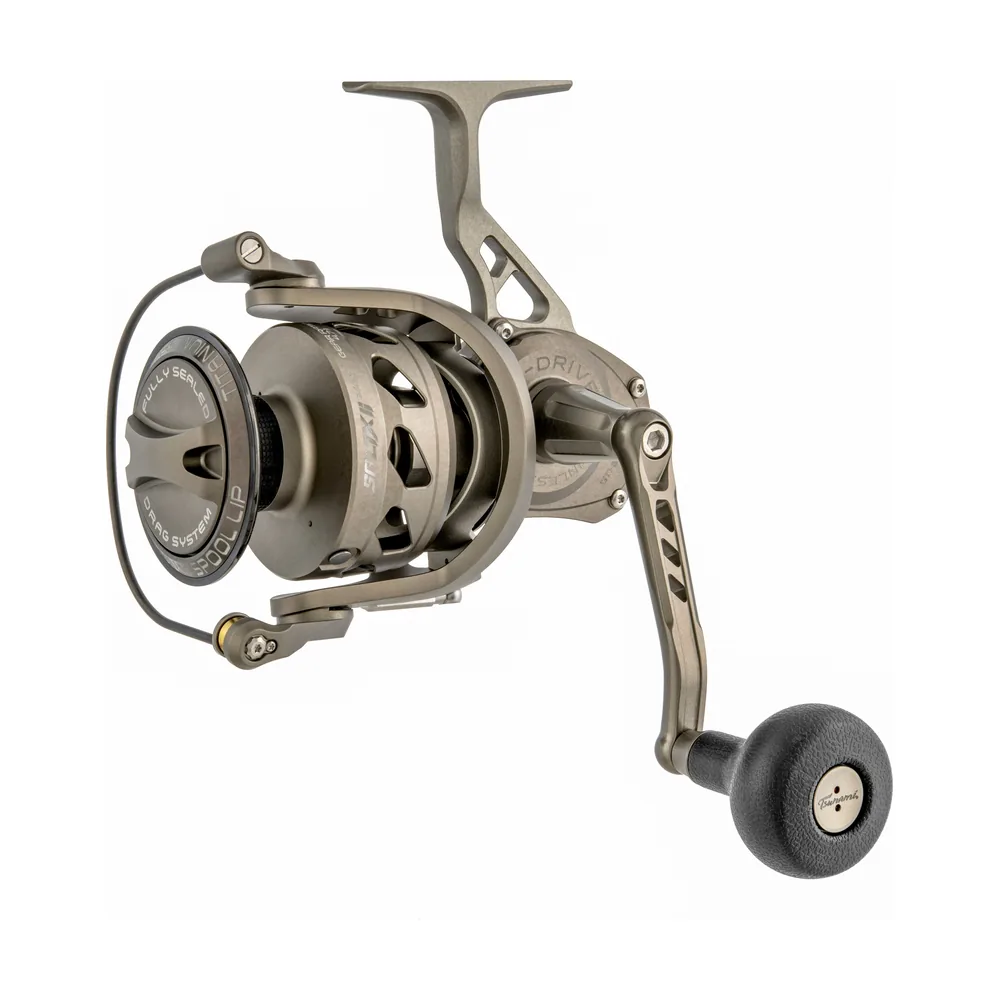
Buying role: Premium coated surf and saltwater version.
Read the full SaltX II ArmourTech review (1,344 words)
A premium version with a particular buying reason
SaltX II ArmourTech should be evaluated as a premium SaltX II version with an added coating proposition, not as an unrelated reel family. The official page describes a scratch-resistant, corrosion-resistant coating together with A6061 aluminum body and rotor construction, stainless gearing and an IPX8 system. Those details make it relevant to a buyer anticipating demanding saltwater exposure and repeated handling. The central question is whether that package addresses the angler’s actual conditions well enough to justify the local price difference from standard SaltX II or another equivalent saltwater configuration.
For an owner who frequently handles equipment around rocks, a boat or harsh coastal environments, surface protection can be a meaningful consideration. It is still not a promise that the finish cannot be damaged. This review does not supply an independent scratch test, quantified corrosion comparison or measured increase in service life. It retains the manufacturer’s coating proposition and explains where that proposition may matter. Someone whose ordinary sessions are sheltered and carefully managed may reasonably give more weight to outfit fit, service and cost than to an additional coating.
Body and rotor information is explicit
ArmourTech’s page specifically identifies A6061 aluminum for both body and rotor. That is useful when a buyer has a clear material preference or wants to compare the exact construction with Guard’s aluminum-body and nylon-rotor arrangement. The source also identifies titanium components including the spool lip, bail wire and main shaft. These are component facts, not a claim that the entire reel shares one material. Keeping the description precise prevents attractive features from migrating into other Tsunami models merely because the names or appearance are related.
The assembled outfit remains the real selection unit. A suitable reel must balance the rod, carry the necessary line and support the usual retrieve. Strong material descriptions do not establish that a particular size is comfortable for every angler or ideal for every lure. Inspect the configuration on the intended rod where possible. Consider how it will feel over a normal session rather than only during a short shop demonstration. This review does not report measured rigidity or internal tolerances, so practical fit and exact specifications should guide the decision.
S-Drive gearing and Hammer Drag
The official feature list identifies stainless steel S-Drive main and pinion gears and a sealed Hammer Drag system. Those are specific to the ArmourTech description and should be retained accurately. This review does not claim that the gearing produces a measured advantage over every brass or aluminum design. Nor does the Hammer Drag name establish independently verified startup behavior or thermal endurance. The features provide a design framework for comparison; the buyer still needs a compatible size and a pressure plan suited to the complete outfit.
The displayed 3000 example lists twenty pounds maximum drag. Treat that as a published ceiling. A rod, line, knots and hook arrangement can limit usable pressure well below it. Establish an appropriate working setting with the complete system and consider the angler’s position during the fight. A premium drag design cannot make a lightly rated rod suitable for heavy pressure or turn an awkward landing situation into a controlled one. The sensible purchasing question is whether the configuration supports the planned method, not whether the maximum number can be reached.
Protection without careless handling
ArmourTech’s page explicitly identifies an IPX8 sealed system, twenty seals and sealed anti-reverse, together with dual-sealed bearings. These are meaningful protective details, and the exact statement is stronger than a vague assertion that the reel is suitable for salt water. It should still be understood through the manufacturer’s operating and care guidance. This review does not invent universal immersion conditions or independently certify the rating. Keep external moving areas clear of contamination and respond to an unusual change in feel, sound or function after exposure.
The coating and seals address different concerns. A coating proposition relates to surface protection; a sealing proposition relates to protected interfaces and internals. Neither makes the other unnecessary, and neither prevents every form of impact or abrasion. An angler walking rocks should handle and secure the outfit sensibly. A boat owner should avoid allowing the reel to knock repeatedly against hard surfaces. Good handling preserves the value of the design rather than treating the design as a reason to ignore ordinary care.
Manual bail and an important compatibility limit
The manufacturer describes a manually operated bail with a sealed spring and explicitly states that ArmourTech is not compatible with the bail-less conversion kit. That compatibility limit deserves attention before purchase. A buyer planning a particular surf-fishing setup or accessory conversion should not assume that related SaltX naming guarantees interchangeability. Confirm the exact version and the intended accessory in writing. Purchasing a premium reel and then discovering that it cannot support a planned configuration is a preventable mismatch.
Manual bail operation also belongs in the handling assessment. Buyers accustomed to a different closure routine should confirm how the reel works and whether that suits their casting habits. The one-piece machined handle and round non-slip power knob are additional documented features, while left- or right-hand retrieve conversion is described on the source page. Check the included arrangement and conversion procedure before use. The presence of a comfortable-looking knob does not establish a measured grip advantage, but it gives the owner a specific part of the configuration to inspect.
The 3000 chart and the current size selection
The checked selector offers 3000, 4000 and 6000, with the displayed 3000 chart giving 5.2:1 gearing, thirty inches per turn, twenty pounds maximum drag and 7+1 bearings. Those numbers belong to that example. Obtain the selected size’s chart instead of assuming the 4000 or 6000 has the same ratio, recovery and output. The available range is particularly relevant when comparing ArmourTech with standard SaltX II, because a version that lacks the needed configuration cannot be made suitable by the attraction of its coating.
For a compact coastal or surf outfit, the buyer should prioritize the chosen line, lure and rod relationship. For an appropriately selected larger saltwater configuration, reserve and workload become more prominent. Neither role follows automatically from the version name. The source’s abbreviated capacity presentation is not used here as a universal number because the retrieved units and order were not consistently clear. Obtain a complete chart and consider the actual line diameter, fishing depth and practical reserve before committing to a spool fill.
Decide whether the upgrade addresses a real need
Compare ArmourTech and standard SaltX II using the same intended job and equivalent configurations where possible. Write down the feature that justifies the added cost: perhaps the explicit rotor construction, the coating proposition or another confirmed detail in the selected version. Then consider whether that feature matters often enough in normal use. If the argument depends mainly on appearance or an assumed lifespan advantage, the comparison needs more evidence. A buyer can appreciate the design without making a claim the available information does not support.
Local service and warranty terms can change the result. A frequently used premium outfit needs a realistic route for maintenance and an eligible purchase channel. Check stock, delivery and returns independently of generic website notification text. Availability can vary by size and region, and this guide does not promise immediate delivery. Retain the exact version and specification in the purchase record. Those practical checks are especially worthwhile when a premium purchase is intended to replace a trusted working outfit rather than simply add another reel to a collection.
Buying verdict
ArmourTech deserves a premium saltwater comparison for anglers with a defined reason to value its documented coating and construction package. The strongest purchase is one where the selected size fits the outfit, the exposure proposition matches the fishing and accessory compatibility is understood. The weakest is one based on an invented durability guarantee or an assumption that every SaltX component is interchangeable. Confirm the exact chart and service support, then judge the version against equivalent alternatives. This review supplies researched buying analysis without claiming personal corrosion testing or field-measured performance.
View official SaltX II ArmourTech specifications · Back to comparison
New design preview
Forged — announced design preview — detailed review
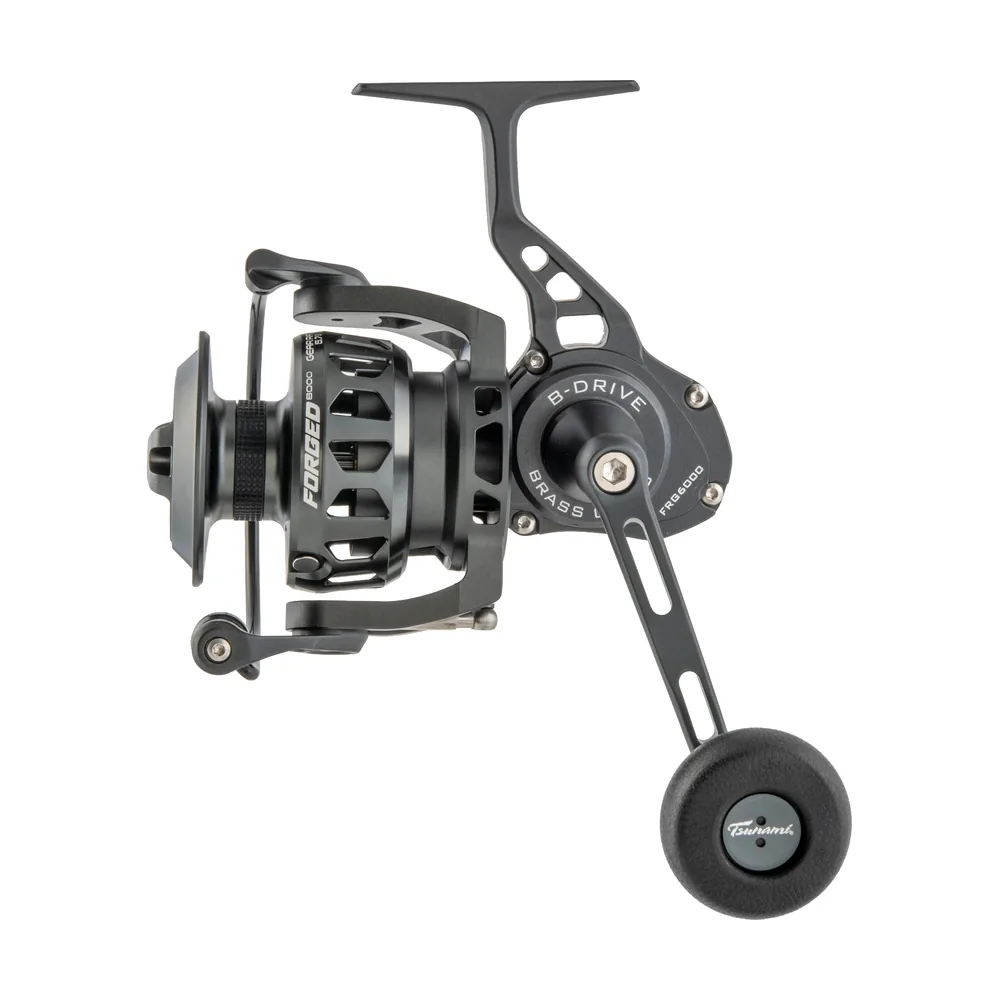
Buying role: Announced coastal, surf and nearshore comparison.
Read the full Forged — announced design preview review (1,334 words)
Read this as a preview of an announced design
Forged is included because Tsunami’s current official site promotes it as a new spinning reel and provides an announcement plus a product specification. The checked product listing shows Coming Soon, so this is an announced design preview rather than a claim of widespread availability or a completed field review. No exact launch date is asserted where the source did not clearly establish one. Buyers should confirm actual release, stock and final specifications before placing an order or replacing an existing working outfit on the assumption that delivery is imminent.
The announced proposition is interesting within the range: aluminum construction, brass B-Drive gearing, an IPX7 system and a sealed Hammer Drag, in 3500, 4500 and 6500 configurations. That puts Forged into a distinct coastal and saltwater comparison. It is not necessary to call it a replacement for every other Tsunami model to explain why it matters. A buyer may be interested in its exact combination of features, but the purchase should still be anchored to the rod, line, technique and local support available when the reel actually becomes obtainable.
The name does not establish the manufacturing process of every part
The official description explains aluminum construction using a mixture of machined and die-cast components. The model name Forged should therefore not be expanded into a claim that every component is physically forged. That distinction is important in a technically accurate review. A product name can express a design identity without describing every manufacturing operation. Buyers who care about a particular component’s process should ask for its exact specification rather than drawing a conclusion from the name alone.
Aluminum construction is useful information, but the preview does not provide independently measured body stiffness, production tolerances or long-term fatigue behavior. Those subjects require testing or additional engineering evidence. The practical pre-purchase assessment should focus on the final size, complete outfit fit and verified chart. A reel can have an attractive material package and still be the wrong configuration for a light lure session. Equally, a larger configuration may deserve consideration where the reserve and pressure plan call for a more substantial saltwater outfit.
Brass B-Drive gearing and retrieve choices
The official announcement identifies brass B-Drive main and pinion gearing. That separates the announced design from the stainless S-Drive proposition in Evict II and ArmourTech. This review does not rank their strength or lifespan from material names alone. Gearing operates within a complete supported mechanism, and the buyer’s method determines what retrieve is useful. The announcement gives 6.2:1 for the 3500 and 4500 and 5.7:1 for the 6500. Verify the final production chart for the exact size before using those figures in a purchase comparison.
For an active coastal lure outfit, the buyer should consider pickup alongside ratio. For a larger nearshore configuration, depth, reserve and repeated workload can change priorities. The size-specific ratio difference is therefore useful rather than a reason to call one variant universally better. The displayed 3500 chart gives thirty-six inches per turn, which should remain attached to that example. Do not assume the 4500 produces identical recovery simply because its announced ratio matches, or calculate the 6500’s recovery without a verified spool and chart specification.
IPX7 and the seal-count conflict
Forged’s announced protection includes an IPX7 system. The family feature description mentions sixteen seals, while the displayed 3500 chart gives fifteen. This guide preserves the discrepancy and does not invent an explanation. It could reflect variant differences or a page issue, but the checked material does not settle that question. Ask for confirmation of the final selected configuration if the detail matters. More importantly, assess the complete protection proposition and the supplied operating instructions instead of using a seal count as a numerical durability score.
An IPX7 description does not make the preview a report of independent immersion testing. This page does not assign universal depths, durations or permission for unrestricted underwater use. When the reel is released, obtain the actual manual and warranty conditions. Good saltwater ownership still involves keeping sand away from moving parts, avoiding forceful cleaning that conflicts with instructions and seeking service after a significant contamination event or change in operation. A protected design should support sensible fishing, not encourage unnecessary exposure to see what it can endure.
Hammer Drag and the 3500 example
The announced design identifies a sealed Hammer Drag system. The displayed 3500 specification gives a twenty-pound maximum. That provides a buying reference but not a measured startup curve, heat-endurance result or recommendation to use the full output with every rod. Determine working pressure from the complete outfit. A compact lure setup and a heavier nearshore outfit can have different requirements even if their reels share a named drag design. The correct setting needs to respect the rod, line, knots, hooks and the angler’s practical position.
This is particularly important for a new-product preview because attractive feature names can encourage assumptions before independent information exists. The review does not claim that Forged stops fish better than Shield II, that its drag remains unchanged after extended load or that the sealing eliminates service needs. It explains the documented design and the decisions that follow from it. Buyers requiring proven performance in a demanding specialist role may prefer to wait for reliable testing and established service information instead of treating an announcement as equivalent to a long-term review.
Handle, bearings and spool details
Forged’s source material identifies a one-piece aluminum handle, reversible retrieve, a non-slip knob, a braid-ready spool and 4+1 sealed bearings. These are useful details for a configuration check. Bearing count should not become a simple smoothness ranking against a reel with more bearings. The knob and handle should be assessed on the intended rod, while the spool requires an appropriate line-filling procedure. This preview does not claim a casting-distance measurement or a grip advantage under wet conditions that has not been tested.
The currently displayed 3500 example lists 6.2:1 gearing, thirty-six inches of pickup and twenty pounds maximum drag. These values can be compared with an exact-size competitor chart, subject to final confirmation when the product is available. The abbreviated capacity line is omitted because the extracted source did not consistently establish a clear unit-and-order presentation. Obtain the full chart, match the line diameter and leave appropriate reserve. A newly announced reel is not exempt from the same capacity planning required of an established model.
Where the three sizes might enter a shortlist
The 3500 and 4500 can be examined for appropriate coastal, surf and lure outfits, while the 6500 can be considered where a larger saltwater configuration is warranted. Those are starting points for comparison, not universal species or offshore recommendations. Define the actual session, then test whether the selected size carries the required line and fits the rod. A surf outfit, a boat-casting outfit and a nearshore bait outfit may reach different conclusions even when the same announced construction attracts the buyer initially.
Within Tsunami’s range, Forged can be compared with Shield II for a distinct protection and gearing package, with Evict II for technique-related selection, and with the SaltX versions where premium exposure design is the priority. The final local price and service route will help determine which comparison is most relevant. Until availability is confirmed, keep a working alternative in the plan. Do not schedule important fishing around an assumed release date or use generic notification text as a guarantee that a particular size can be delivered.
Preview verdict
Forged is a worthwhile announced addition to the shortlist because its documented combination is distinct and the official site provides concrete size examples. The appropriate conclusion is interest subject to verification, not a finished recommendation based on imagined catches or teardown results. Confirm release status, final chart, seal-count clarification, warranty and service support before purchase. Once those questions are resolved, compare the actual configuration with the intended outfit. This preview gives a researched framework for that future decision and keeps the limits of announcement-stage evidence visible.
View official Forged — announced design preview specifications · Back to comparison
Official sources and further reading
Each review links its official product source. Additional primary references: Current Tsunami spinning-reel collection · Official Forged announcement · Warranty and claims. Sources support design descriptions, not independently measured field performance. Specifications and availability can change.
Compare other manufacturers: Shimano · Daiwa · PENN · Okuma.