
Visser Spinning Reels: Inshore, Surf and Offshore Buying Guide
Review method: Researched editorial buying analysis using official descriptions and charts. No hands-on testing, personal catch reports or independently measured performance is claimed. The ten selections share three platforms; common platform information is repeated so each review can stand alone. Specifications, stock and service terms require exact-product confirmation. No Amazon affiliate links have been invented.
← Spinning Reels Directory · Series features · All model specifications · Company overview · Coastal reviews · Larger saltwater and surf reviews
Browse Visser series — features in separate columns
| Series | Primary role | Frame / architecture | Main gear / pinion | Drag | Bail / conversion | Protection | Other features |
|---|---|---|---|---|---|---|---|
| Gaaf | Focused inshore | One-piece billet-aluminum frame; integrated clutch housing | Aluminum-bronze main / hardened stainless pinion | Dual carbon-fiber system; output conflict | Wire bail; compatible conversion described, confirm kit | Sealed / submersible claim; specific test statements need confirmation | Threaded service cover; supplied service tool; slow oscillation |
| No. Series | Coastal through larger saltwater | Machined aluminum modular body | Bronze-alloy main / stainless pinion | Waterproof Pentium dual-stack carbon fiber | Bailed; conversion available, confirm compatibility and contents | Sealed / submersible manufacturer claim | Coated titanium spool lip; dual bail actuators; lube inspection cap |
| PierMaster | Surf / pier / jetty specialist | Machined aluminum modular body | Bronze-alloy main / stainless pinion | Waterproof carbon-fiber system | Dedicated bail-less rotor and manual pickup | Sealed / submersible manufacturer claim | Titanium line roller and spool lip; visible roller cutouts; bearing-copy conflict |
All twelve current displayed configurations
Values follow the current product-page charts, not older snippets. Weight is in ounces, maximum drag in pounds and recovery in inches per turn. The braid slash notation is reproduced as published; confirm intended lb/yd interpretation and actual line diameter before filling. These are manufacturer references, not measured spool-fill results.
| Configuration | Buying role | Ratio | Bearings | Weight (oz) | Published braid reference | Maximum drag (lb) | Recovery (in/turn) |
|---|---|---|---|---|---|---|---|
| Gaaf 2X | Coastal / inshore | 6.6:1 | 11+1 | 10.2 | 20/290 | 25* | 34 |
| No. 3 | Coastal / inshore | 6.6:1 | 14+1 | 10.8 | 20/290 | 27 | 36 |
| No. 4 | Coastal / inshore | 6.6:1 | 14+1 | 11.2 | 20/360 | 27 | 39 |
| No. 4X | Coastal crossover | 6.6:1 | 14+1 | 12.6 | 20/400 | 31 | 41 |
| No. 5 | Larger inshore / nearshore crossover | 5.8:1 | 14+1 | 16.4 | 30/290 | 35 | 38 |
| No. 6 | Defined larger saltwater / offshore comparison | 5.8:1 | 14+1 | 16.9 | 40/300 | 35 | 42 |
| No. 7 | Defined larger saltwater / offshore comparison | 5.8:1 | 14+1 | 17.5 | 60/260 | 44 | 45 |
| No. 8 | Largest current No. Series comparison | 5.8:1 | 14+1 | 17.8 | 80/270 | 44 | 48 |
| PierMaster PM 5 | Bail-less surf / pier / jetty | 5.8:1 | 15+1* | 15.9 | 30/290 | 35 | 38 |
| PierMaster PM 8 | Larger bail-less surf / pier / jetty | 5.8:1 | 15+1* | 17.3 | 80/270 | 44 | 48 |
| PierMaster PM 6 — table reference | Intermediate bail-less shore option | 5.8:1 | 15+1* | 16.4 | 40/300 | 35 | 42 |
| PierMaster PM 7 — table reference | Intermediate bail-less shore option | 5.8:1 | 15+1* | 17 | 60/260 | 44 | 45 |
Specification conflicts: Gaaf’s numerical panel gives 25 lb maximum while a feature paragraph gives 26 lb. PierMaster’s introductory description mentions 14 ARB bearings while its detailed description and charts give 15+1. The table follows the current numerical panels and marks these entries with an asterisk. Confirm the exact product. Older snippets also differ on some weights and capacities; their figures are not mixed into this edition.
Current 2025–2026 designs and ownership updates
Gaaf’s current one-piece architecture is discussed as a current design, without an unverified exact launch date. No. Series and PierMaster are current listings, not automatically new 2026 platforms. The official warranty has a dated 2026 update: effective 27 July 2026 for purchases on or after 1 January 2026. Consult the full policy for eligibility, registration, exclusions and older purchases.
Visser company and range overview
A specialist range with three current series
Visser Reels LLC offers a focused premium saltwater spinning range. The checked official collection presents Gaaf, the original No. Series and PierMaster as three series, with different operating arrangements and size selections. This page reviews ten selected configurations across those series and places all twelve currently displayed sizes in the comparison table. The reviews are therefore configuration reviews, not a claim that Visser has ten unrelated engineering platforms. This distinction makes the catalog easier to understand and prevents size or color variants from becoming an inflated list of supposedly different designs.
The principal buying question is whether the angler wants a compact current Gaaf configuration, the wider bailed No. Series range or a dedicated bail-less PierMaster. Gaaf 2X is the focused inshore comparison. No. Series spans compact coastal to larger saltwater configurations. PierMaster is explicitly positioned for surf, pier and jetty work, so it should not be renamed an offshore family simply to create a symmetrical directory. The larger saltwater group below includes offshore comparison candidates and shore specialists, with their roles kept visible in the table.
Start with the normal session
Inshore fishing can involve repeated lure casting, fishing bait beside hard structure, light jigging or working current from a small boat. Those methods can favor different reserve, pickup and handling priorities even when they target similar fish. Write down the ordinary rod, lure or rig, line class and fishing position before selecting a model. The reel should support that session first. It is usually less useful to choose around an exceptional fish that would require a different specialist outfit than to identify the difficult conditions that realistically occur during the normal fishing.
Offshore selection needs a similarly concrete description. Surface casting, deeper jigging and bait presentations do not place identical demands on a spinning outfit. Depth and current can consume a large part of the spool before a fish runs. A boat crew may be able to follow a fish, while a pier or rock angler may have no such option. The reel’s capacity and practical pressure plan must account for those conditions. A premium construction description cannot create line reserve or solve an unsuitable landing position.
Three platforms, twelve displayed configurations
The current Gaaf selector shows 2X. The No. Series chart shows 3, 4, 4X, 5, 6, 7 and 8. PierMaster shows PM 5, PM 6, PM 7 and PM 8. Historical official snippets and retailer pages sometimes show additional names or different figures, so this guide uses the live current product charts rather than blending them with an older catalog. Available colors and stock can change independently of those charts. Confirm the exact configuration and finish before ordering, and retain the supplier’s specification if clarification was needed.
The ten detailed selections are Gaaf 2X, all seven current No. Series sizes, PM 5 and PM 8. PM 6 and PM 7 remain in the full specification table as intermediate PierMaster choices. This gives the user a manageable set of detailed comparisons while preserving the complete displayed range. The first group contains five coastal-oriented candidates. The second contains five larger saltwater or surf candidates. These are editorial navigation groups, not manufacturer certifications that every configuration is appropriate for every inshore or offshore technique.
Construction facts need to stay attached to the series
Gaaf’s current description identifies a one-piece billet-aluminum frame with integrated clutch housing and a threaded service cover. The original No. and PierMaster descriptions emphasize modular machined-aluminum construction. The official collection differentiates their frame arrangements, so this page does not call every Visser an identical one-piece design. The family information is summarized once in the feature table and repeated where relevant in self-contained configuration reviews. Shared architecture does not erase differences in the sizes, operating routine or role of the selected reel.
The documented drive proposition uses a bronze-alloy main gear and stainless pinion. This provides a meaningful construction reference without establishing independently measured gear strength, deflection or lifespan. The body, rotor, shaft, gear support and assembly all contribute to a complete mechanism. A material label should not be turned into a numerical performance ranking without test evidence. This page makes no teardown or laboratory claims. It explains why the published design may matter to a buyer and then identifies what must be confirmed for the intended outfit.
Bailed, convertible and dedicated bail-less choices
Gaaf and No. Series are presented as bailed choices with supported conversion possibilities, while PierMaster is purpose-built around bail-less operation. The exact conversion kit, size compatibility and contents should be confirmed before purchase. A compatibility description does not necessarily mean that a kit is included in every delivered package. The owner should follow the documented procedure and avoid assuming that parts transfer between series or generations merely because the products share a brand. A future conversion is a purchase requirement that deserves a clear answer in advance.
A bail-less reel asks the angler to manage line pickup differently. Someone who already uses that routine may value a dedicated shore design, while someone who prefers a familiar bailed arrangement may find No. Series more suitable. Neither preference establishes a universal performance hierarchy. Arrange a demonstration if the operating method is unfamiliar. An expensive reel can still be the wrong purchase when the routine does not fit the owner’s technique, particularly in wind, moving water or a difficult fishing position.
Sealed and submersible are manufacturer claims
The current pages describe the reels as sealed and submersible. This guide reports that positioning without adding an IPX rating, universal depth or unlimited exposure time. Consult the exact manual and ask Visser about any unusual immersion on which the method depends. Gaaf’s page also contains an apparent editorial note asking for confirmation of particular vacuum-testing and handle-swap statements. Those more specific claims are therefore not treated here as settled Gaaf test evidence. Source quality matters even when the page is official, and unresolved wording should remain a question rather than becoming certainty.
No. Series and PierMaster have their own stated protection descriptions, but a sealed design still needs appropriate ownership. Impact, sand at external interfaces and normal wear do not disappear because the body is protected. Handle the outfit carefully, keep it away from abrasive ground where practical and follow the supplied care instructions. A change in function deserves attention. This review does not claim independent immersion results or promise that the equipment will never need servicing. Protection should help the owner fish sensible conditions with appropriate equipment.
Read the numerical table by configuration
Each row in the specification table belongs to one named size. Weight, ratio, pickup and maximum drag are retained in the units displayed on the current chart. Braid capacity appears in an abbreviated slash format, which is reproduced as a published reference rather than silently converted into a universal measured capacity. Confirm the chart’s intended pound-and-yard interpretation and the selected braid diameter before filling the spool. Lines with the same printed breaking strain can occupy different volumes, so a capacity label is not a guarantee for every braid.
Recovery per turn is particularly useful alongside gear ratio. Models can share a ratio and still have different pickup because spool dimensions participate in recovery. A faster ratio is not automatically superior for every presentation. Consider how slack develops, the lure or rig resistance and the angler’s normal handle movement. Likewise, the maximum drag figure is a ceiling rather than a recommended setting. The rod, knots, hooks and line determine a practical working pressure that can be much lower than the number on the chart.
Official discrepancies should be visible
Gaaf’s numerical panel states twenty-five pounds maximum drag while a later feature section says twenty-six. This guide uses the numerical panel in the table and flags the conflict for confirmation. PierMaster’s introductory copy mentions fourteen ARB bearings, while the detailed description and current model charts give fifteen plus a clutch-bearing notation. The table follows the current 15+1 chart, and the review explains the discrepancy. These are not reasons to invent an engineering explanation; the source does not settle whether the differences are revisions, copy errors or another issue.
Older official snippets also differ from the current No. Series and PierMaster charts on some weights and capacities. This page does not mix historical values into a current configuration. The checked date is 4 October 2026. A buyer comparing retailer stock should ask whether its specification matches the product actually offered. Keep the current chart, generation and exact model on the purchase record. Where a figure materially affects the decision, obtain written confirmation rather than choosing the larger or more attractive number.
What current 2025–2026 coverage establishes
Gaaf is the current one-piece-frame proposition in the checked catalog, and its documented architecture deserves attention alongside the established No. Series and PierMaster choices. The consulted material does not establish a clean exact launch timeline for every reel or change. This page therefore describes current designs and verified differences without inventing annual model labels. A recently uploaded photograph or refreshed website is not sufficient evidence that the engineering platform first launched on that date. Color availability is likewise not an annual performance upgrade.
A dated ownership change is clearer: the current warranty page is effective 27 July 2026 and states that it applies to purchases on or after 1 January 2026. It describes three-year reel coverage, registration requirements and original-purchaser limitations. Those are relevant buying details, but the live terms must be read for complete conditions and exclusions. For an older purchase, ask Visser which policy applies rather than automatically applying the current policy or an archived snippet. The source links at the end make that check straightforward.
Serviceability is part of the premium decision
Visser provides service information and manuals through its current service page. Manufacturer access to parts and appropriate service can be a significant part of the ownership proposition for a frequently used outfit. A design described as user-accessible does not mean unlimited disassembly is permitted or sensible. Follow the manual, use approved procedures and clarify any work outside those instructions. The warranty excludes certain damage and requires the applicable conditions to be met. The buyer should know how a service request is handled before relying on the reel for an important trip.
A used reel requires a separate assessment of condition, history and eligibility. Premium construction cannot reveal how the previous owner treated impacts, salt exposure or modifications. Obtain an inspection where appropriate and compare the complete cost with a new eligible purchase. This page does not predict an individual used reel’s remaining life from its model name. For a new reel, retain the receipt, complete the required registration and establish a practical service route. Those steps make a premium purchase more accountable than a decision based only on reputation.
Use this guide as a comparison framework
Read the coastal choices for compact outfit fit, the larger No. Series configurations for defined saltwater workloads and the PierMaster selections for deliberate bail-less shore use. Compare equivalent jobs with Shimano, Daiwa, PENN, Okuma, Tsunami and Van Staal elsewhere in this directory. There is no requirement that one brand win every role. The best choice has a documented feature package, suitable size and practical support at a price the owner can justify. A feature that does not address the normal session should carry less weight than one that solves a recurring problem.
The following reviews combine verified source facts with original editorial buying analysis. They do not claim personal catches, independent corrosion testing, measured casting distance or season-long reliability results. Common platform discussion appears in the relevant configuration reviews so that each can be read independently; it should not be mistaken for evidence of different internals in every size. No Amazon affiliate offers are invented. Use the tables to establish a shortlist, confirm the exact specification with the supplier and select the complete outfit deliberately.
Five coastal and inshore-oriented configurations
Gaaf 2X — detailed configuration review

Buying role: Coastal / inshore. See the exact numerical row above.
Read the full Gaaf 2X review (1,105 words)
A focused current inshore choice
Gaaf 2X deserves attention from an angler building a compact premium coastal outfit. Its current configuration is a distinct alternative to the original No. Series, with the one-piece-frame proposition and a focused size offering. The most useful reason to shortlist it is frequent inshore fishing where the complete design, handling and protection package address a real need. It should not be selected simply because the current catalog makes it look newer. A refreshed architecture matters when it improves the fit of the actual outfit or offers a feature the owner can use.
Think first about the normal rod and presentation. Repeated casting places more weight on comfortable handling than a setup that spends much of the session supported. The numerical table provides a precise configuration reference, but a short shop inspection should still assess grip, handle reach and balance on the intended rod. An attractive reel specification does not establish that every hand size or lure technique will prefer it. The owner should be able to explain what the configuration contributes beyond its appearance and current-series identity.
Gaaf against No. 3
No. 3 is the natural compact original-series comparison. The two share a similar published braid reference but have distinct current numerical and architecture descriptions. Use the table to compare them without claiming that one has independently proven greater casting distance, rigidity or reliability. The practical question is which assembled configuration better suits the rod and recurring exposure. A buyer who places substantial value on Gaaf’s frame and access proposition has a concrete reason to inspect it. Another buyer may reasonably choose the established original-series configuration if its fit and ownership terms are preferable.
The comparison should not turn into a bearing-count contest. A larger number does not establish a complete performance result, and the product descriptions do not provide a laboratory comparison here. Local service, exact package and availability can influence the decision just as strongly. If the chosen finish is unavailable, reassess whether waiting is necessary for a functional reason or mainly for appearance. Colors should not be presented as different mechanical models when the checked source does not establish a corresponding design change.
A light-lure session versus a structure session
Imagine the ordinary session involves casting plugs or metal along a coastal edge. Define the lure weight, rod range and line before assessing reserve. The reel needs to remain manageable during repeated use and recover line in a way that fits the presentation. Now change the method to bait or a bottom presentation near structure. The practical pressure plan and landing position may become more prominent. The same reel can enter both comparisons, but neither role is settled by a maximum drag figure alone.
If the more demanding scenario becomes routine, reconsider whether the compact configuration still supplies the needed margin. The answer may be a different size or a separate outfit rather than treating a premium compact reel as an answer to every coastal problem. This review does not claim personal catches or measured drag heating. It gives a framework for deciding when the current Gaaf configuration is a focused solution and when the buyer is asking it to cover conditions better addressed by another setup.
Configuration verdict
Gaaf 2X is most persuasive for a clearly defined compact inshore job with a buyer who values the current platform proposition. It is less persuasive where the decision depends on unresolved source claims or assumes it can substitute for a much larger saltwater outfit. Confirm the drag discrepancy, permitted exposure and any conversion requirement before purchase. Then compare the actual reel with No. 3 and equivalent coastal alternatives from other manufacturers. A precise fit and practical support make the premium decision more defensible.
Platform, protection and service access
Gaaf’s principal design distinction is its unified frame and service-access arrangement, summarized in the feature table. This is a reason to examine the assembled reel rather than assume it behaves like the original No. Series in every respect. A one-piece description does not independently quantify stiffness, manufacturing tolerances or wear after repeated use. The review makes no such measurements. A buyer should evaluate the actual configuration on the intended rod and decide whether the complete design proposition addresses the exposure and handling of the normal session.
The source describes protected construction but also contains unresolved wording about particular test and handle-swap claims. Those details require direct confirmation if the purchase depends on them. Do not use the website’s broad saltwater language to invent an IPX rating or universal immersion conditions. Likewise, the conflict between the numerical drag panel and a later feature section should be settled before a specification-sensitive purchase. The table retains the panel value and keeps the conflict visible. A small source discrepancy does not justify choosing whichever number makes the product appear stronger.
Service access is useful only within the correct procedure. Obtain the supplied tool and instructions, and clarify the permitted level of disassembly before opening the reel. An accessible cover is not permission to alter other assemblies or use an arbitrary lubricant. Check the current warranty and registration requirements and retain the receipt. A frequently used coastal outfit benefits from a realistic service route. Ownership support should therefore be compared alongside weight, pickup and local price rather than treated as an afterthought once the reel is already committed to use.
Exact-configuration purchase worksheet
For Gaaf 2X, write a short purchase brief for the intended coastal / inshore role. Name the actual rod, usual lure or rig, selected line and most realistic difficult condition. Then identify the specification that makes this configuration useful: reserve, pickup, handling or operating arrangement. This separates a practical requirement from a feature that simply looks attractive in a catalog. Compare the same job with the adjacent size and an equivalent competitor. Do not assume a model number maps directly to another manufacturer’s size, or treat shared platform language as proof that all configurations have identical capacity and handling.
Before paying, confirm the exact product and current specification with the supplier, including any source conflict identified above. Check availability for the selected finish rather than relying on a generic stock label. Clarify warranty eligibility, registration and the service route. Inspect the delivered handle, spool and operating arrangement before filling line, and retain the receipt and any written clarification. Prepare the complete outfit according to its instructions with an appropriate pressure setting. After the first sessions, reassess fit and reserve based on the actual method without claiming that a brief impression establishes long-term reliability. These checks make the researched comparison concrete and keep the decision tied to the equipment that will really be used.
View official Gaaf 2X series specifications · Back to model table
No. 3 — detailed configuration review

Buying role: Coastal / inshore. See the exact numerical row above.
Read the full No. 3 review (1,203 words)
The compact original-series starting point
No. 3 is the starting point in the current No. Series chart for an angler considering a compact bailed coastal outfit. It should be reviewed as that configuration, not as a universal premium saltwater answer. The table gives its exact figures and allows a useful comparison with Gaaf 2X and the adjacent No. 4. The purchase begins with the normal lure or bait, line diameter and rod. Once those requirements are clear, the compact size can be judged on whether it carries appropriate reserve without making the ordinary session unnecessarily cumbersome.
For repeated coastal lure casting, inspect the assembled balance and the comfortable handle position. A specification does not establish how the outfit fits a particular owner’s hand or retrieve routine. If the rod is already owned, use it as the reference during selection rather than buying the reel first and hoping the rest of the setup fits later. A premium compact purchase should refine a useful system. It should not consume so much of the budget that appropriate line, leaders or a compatible rod are compromised.
The difference from No. 4
No. 4 is the first adjacent comparison because its published capacity reference and pickup differ while the current ratio and maximum ceiling remain the same. That illustrates why model number and ratio alone are inadequate selection tools. The buyer should ask whether the additional reference reserve would address a recurring feature of the fishing. If the usual session does not need it and No. 3 balances the rod well, compactness may be the more useful priority. If reserve is already marginal, the next configuration deserves a serious look.
Do not invent a special internal construction advantage for either size. They share the original-series platform, and the current charts distinguish configuration rather than claiming unrelated engineering. Compare exact specifications, line diameter and fit. A coastal fishing position with little ability to follow a fish can alter the reserve requirement compared with a mobile boat. That change should be reflected in size selection. A larger maximum drag cannot replace missing line, and a premium platform cannot create a landing method the location does not offer.
A practical estuary comparison
Consider an angler who regularly casts moderate coastal lures along an estuary bank. Identify the normal cast and realistic run, then allow reserve for line removed after abrasion. No. 3 becomes a candidate if the selected braid fits that plan and the outfit is comfortable for the session. The purchase case is stronger when exposure and repeated use justify the premium ownership package. For occasional sheltered fishing, compare the cost with less expensive appropriate alternatives. A high-end construction can be attractive without being necessary for every owner.
Now consider fishing closer to pilings or sharp cover. The whole pressure plan changes, including leader, rod, knots and landing method. Do not rely on the chart’s drag ceiling to resolve those decisions. The same compact reel may remain appropriate, but the outfit needs a deliberate margin and the owner needs a workable fight plan. This review does not claim the configuration has been personally tested against particular fish or structure. It explains the questions that separate a sensible compact selection from an optimistic one.
Compare it with Gaaf deliberately
Gaaf introduces a different current architecture proposition, so the comparison should focus on the actual design and assembled fit. No. 3 should not be dismissed simply because another series is newer-looking, nor should it receive newer features by assumption. Examine both product descriptions and confirm service access and accessory needs for the exact reel. If the owner wants bail-less use, check the supported route rather than treating all compact Visser configurations as interchangeable. The correct model is the one that meets the intended routine without an unsupported conversion expectation.
Configuration verdict
No. 3 deserves the compact original-series shortlist for a bailed coastal outfit with appropriate reserve. It is less convincing when chosen to cover a much heavier method or when the purchase depends on an unverified equivalence with another manufacturer’s size numbers. Compare No. 4 and Gaaf using the normal rod and line, confirm the current chart and inspect the delivered package. The recommendation remains conditional on fit, ownership support and the actual fishing rather than a claim of independently measured superiority.
Shared No. Series architecture
This size shares the No. Series platform described in the feature table. Its selection should therefore turn on the configuration and fishing role rather than an assumption that every larger number introduces unrelated engineering. Shared construction does not make the sizes interchangeable. The rod, line reserve, retrieve and handling requirements still determine which model belongs in the outfit. This review uses official design information but does not claim independently measured body flex, internal tolerances or wear. A premium material package is a reason to compare carefully, not a substitute for exact fit.
No. Series provides a bailed proposition with a supported bail-less conversion option. Confirm the exact kit, compatibility and delivered contents before making conversion part of the purchase. A separate accessory description should not be assumed to mean the kit is included. Follow the approved instructions and obtain guidance before work beyond the documented procedure. The casting and line-pickup routine must suit the owner. Someone who clearly prefers a dedicated bail-less shore setup should also compare PierMaster rather than treating a conversion as automatically the best route.
The current source describes protected saltwater construction. This review does not enlarge that claim into unlimited immersion, a fabricated IPX rating or immunity from impact and wear. Obtain the manual and clarify exposure that matters to the method. A premium reel still deserves care and a practical service arrangement. Register an eligible purchase as required by the applicable warranty, retain the dated receipt and check the live terms. An older or used example requires its own condition and coverage assessment; the family specification cannot establish what a previous owner did to the reel.
Exact-configuration purchase worksheet
For No. 3, write a short purchase brief for the intended coastal / inshore role. Name the actual rod, usual lure or rig, selected line and most realistic difficult condition. Then identify the specification that makes this configuration useful: reserve, pickup, handling or operating arrangement. This separates a practical requirement from a feature that simply looks attractive in a catalog. Compare the same job with the adjacent size and an equivalent competitor. Do not assume a model number maps directly to another manufacturer’s size, or treat shared platform language as proof that all configurations have identical capacity and handling.
Before paying, confirm the exact product and current specification with the supplier, including any source conflict identified above. Check availability for the selected finish rather than relying on a generic stock label. Clarify warranty eligibility, registration and the service route. Inspect the delivered handle, spool and operating arrangement before filling line, and retain the receipt and any written clarification. Prepare the complete outfit according to its instructions with an appropriate pressure setting. After the first sessions, reassess fit and reserve based on the actual method without claiming that a brief impression establishes long-term reliability. These checks make the researched comparison concrete and keep the decision tied to the equipment that will really be used.
View official No. 3 series specifications · Back to model table
No. 4 — detailed configuration review
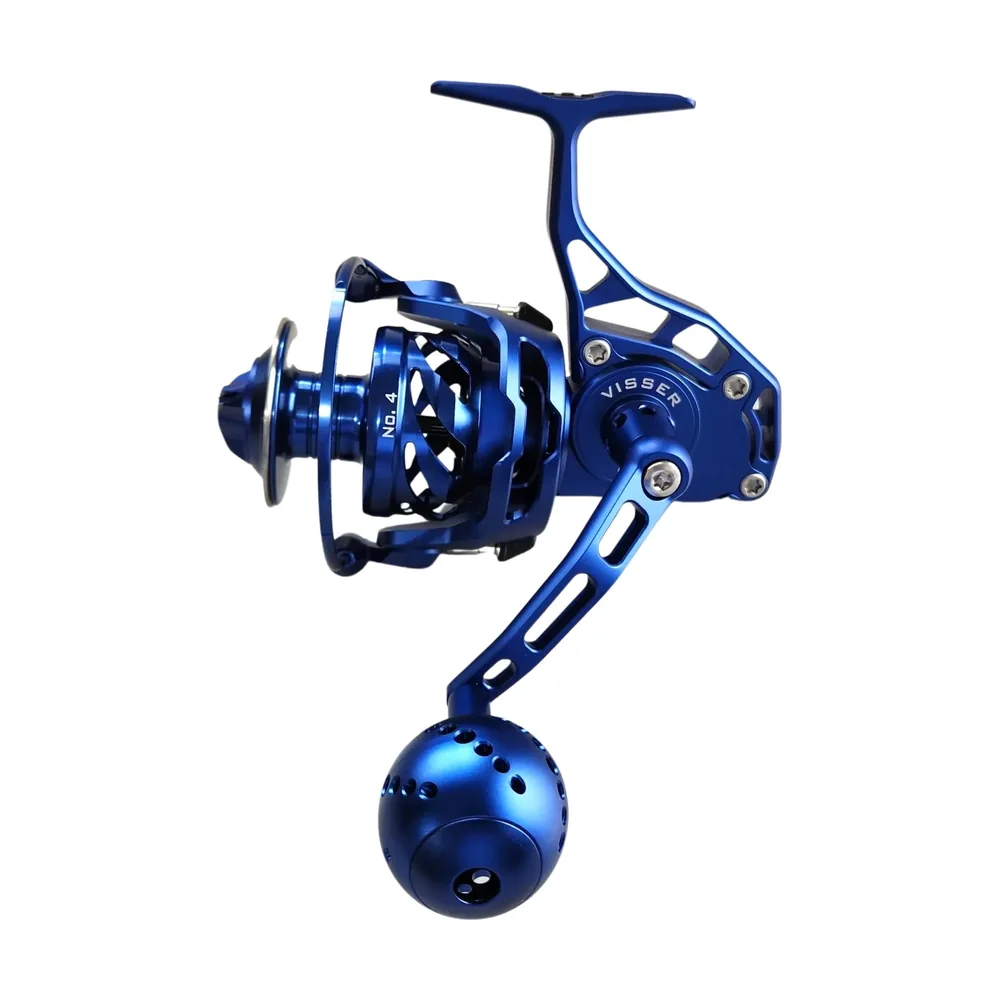
Buying role: Coastal / inshore. See the exact numerical row above.
Read the full No. 4 review (1,252 words)
Reserve without an automatic jump to a heavy outfit
No. 4 is a useful coastal comparison for someone who wants more published reserve than the compact No. 3 while remaining within the smaller original-series group. Its current chart makes that distinction clear without introducing a different ratio or maximum ceiling. The purchase should therefore focus on the capacity reference, pickup and complete outfit fit. A buyer should not assume a special strength upgrade merely because the number increases. Shared platform information explains the design; the configuration decides how that design fits the normal fishing.
This can be attractive when the coastal position leaves little ability to follow a fish or when the normal casts and occasional longer runs make a compact spool marginal. The answer still depends on actual braid diameter. Obtain the intended units for the published capacity reference and leave a practical margin. A reel filled with a different braid is not guaranteed to reproduce the reference exactly. If the reserve question is serious enough to determine the purchase, settle it before paying rather than relying on optimistic spool packing.
No. 4 versus No. 4X
The 4X provides the next comparison with changes in the current weight, pickup, reserve reference and maximum output. That is a real configuration difference, but it does not make 4X automatically preferable. An angler casting moderate coastal lures may find No. 4 better suited to the normal session if the additional size is unnecessary. Another angler may have a concrete reason to choose 4X because the usual position or line plan needs more margin. Evaluate both on the intended rod rather than judging their names in isolation.
The exact chart also illustrates that unchanged ratio does not mean unchanged pickup. Spool dimensions participate in recovery, so a technique-sensitive buyer should compare the actual figures. The presentation, current and normal handle movement matter alongside those figures. This review does not claim measured lure behavior or casting gains from the configuration difference. It explains how the documented specification can guide a practical choice without turning a larger size into a universal performance winner.
A coastal casting selection exercise
Suppose the normal fishing involves repeated casts from a beach, estuary edge or boat toward moving coastal water. Write down the lure range, intended braid and how far the line is normally out before a fish runs. No. 4 becomes a candidate when its reference reserve and handling fit those requirements. A buyer with an existing rod should inspect the balance directly. A buyer building the entire outfit should consider the combined cost, not spend the budget on a premium reel while leaving the rod and line choices unresolved.
Change the scenario to heavier rigs or a deeper presentation. The requirement may begin to favor a larger configuration, but that conclusion should come from reserve and workload rather than a fear that a compact reel is never strong enough. The rod, line, knots and landing method must be reassessed together. A maximum drag figure is a ceiling, not a command to increase pressure until the reel is working at the chart limit. This directory does not provide measured sustained-load results for deciding an extreme application.
Bailed ownership and optional conversion
No. 4 enters the comparison as a bailed original-series configuration. If that routine is preferred, judge its normal operation and included arrangement directly. If future bail-less use is intended, clarify the compatible parts and procedure with Visser before purchase. Do not assume a kit is included or that every original-series size uses the same conversion parts. The owner should have a clear answer on the actual model, not a general description from a different size or family.
An owner who knows the intended routine can make a more useful comparison with PierMaster than someone choosing only from visual resemblance. Dedicated shore use and a convertible coastal outfit are different purchasing propositions. No. 4 should be chosen because it fits the recurring job, not because it might be adapted indefinitely to cover every future idea. Clear scope protects the value of the purchase and avoids unsupported modifications after the outfit is already in service.
Configuration verdict
No. 4 is a logical coastal shortlist entry where the compact original-series platform fits and additional reserve over No. 3 addresses a real need. Compare it with 4X only after defining the outfit and technique. Obtain the current specification, confirm stock and ownership support and inspect the package. This is a researched recommendation framework rather than personal field evidence that No. 4 outperforms either adjacent size or every competitor in a similar price range.
Shared No. Series architecture
This size shares the No. Series platform described in the feature table. Its selection should therefore turn on the configuration and fishing role rather than an assumption that every larger number introduces unrelated engineering. Shared construction does not make the sizes interchangeable. The rod, line reserve, retrieve and handling requirements still determine which model belongs in the outfit. This review uses official design information but does not claim independently measured body flex, internal tolerances or wear. A premium material package is a reason to compare carefully, not a substitute for exact fit.
No. Series provides a bailed proposition with a supported bail-less conversion option. Confirm the exact kit, compatibility and delivered contents before making conversion part of the purchase. A separate accessory description should not be assumed to mean the kit is included. Follow the approved instructions and obtain guidance before work beyond the documented procedure. The casting and line-pickup routine must suit the owner. Someone who clearly prefers a dedicated bail-less shore setup should also compare PierMaster rather than treating a conversion as automatically the best route.
The current source describes protected saltwater construction. This review does not enlarge that claim into unlimited immersion, a fabricated IPX rating or immunity from impact and wear. Obtain the manual and clarify exposure that matters to the method. A premium reel still deserves care and a practical service arrangement. Register an eligible purchase as required by the applicable warranty, retain the dated receipt and check the live terms. An older or used example requires its own condition and coverage assessment; the family specification cannot establish what a previous owner did to the reel.
Exact-configuration purchase worksheet
For No. 4, write a short purchase brief for the intended coastal / inshore role. Name the actual rod, usual lure or rig, selected line and most realistic difficult condition. Then identify the specification that makes this configuration useful: reserve, pickup, handling or operating arrangement. This separates a practical requirement from a feature that simply looks attractive in a catalog. Compare the same job with the adjacent size and an equivalent competitor. Do not assume a model number maps directly to another manufacturer’s size, or treat shared platform language as proof that all configurations have identical capacity and handling.
Before paying, confirm the exact product and current specification with the supplier, including any source conflict identified above. Check availability for the selected finish rather than relying on a generic stock label. Clarify warranty eligibility, registration and the service route. Inspect the delivered handle, spool and operating arrangement before filling line, and retain the receipt and any written clarification. Prepare the complete outfit according to its instructions with an appropriate pressure setting. After the first sessions, reassess fit and reserve based on the actual method without claiming that a brief impression establishes long-term reliability. These checks make the researched comparison concrete and keep the decision tied to the equipment that will really be used.
View official No. 4 series specifications · Back to model table
No. 4X — detailed configuration review
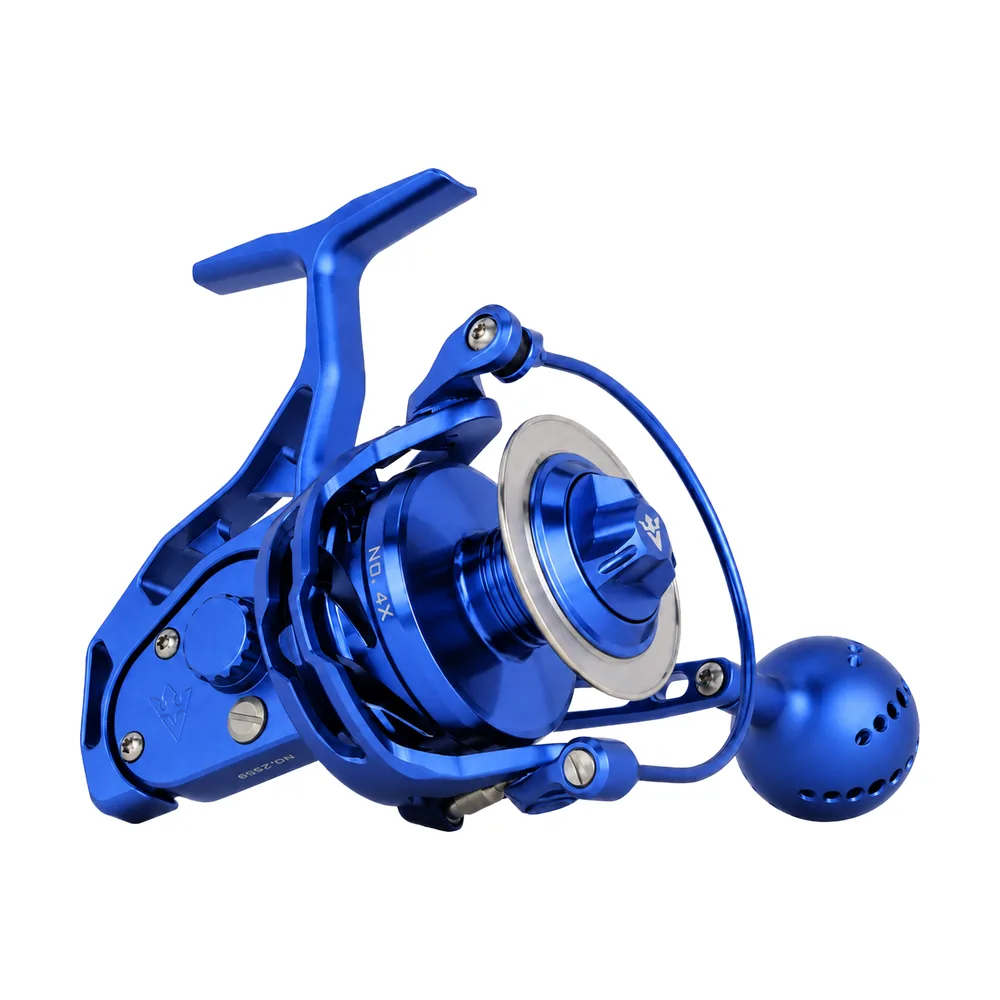
Buying role: Coastal crossover. See the exact numerical row above.
Read the full No. 4X review (1,262 words)
A coastal crossover with a distinct configuration
No. 4X deserves its own comparison because the current chart distinguishes it from No. 4 through several size-specific figures. It sits in a useful coastal crossover discussion: the buyer may want more margin than the smaller original-series configurations without immediately moving to the larger group. That role is an editorial buying interpretation, not a manufacturer certification that it covers every inshore and offshore task. Define the rod, line and normal method before deciding whether the configuration supplies a useful compromise or simply adds unnecessary bulk.
The purchase is most persuasive when the additional reference reserve addresses a recurring condition. A fishing position with little ability to follow a fish, repeated exposure to current or line removed after abrasion can make reserve valuable. A buyer who does not need that margin should compare the more compact choices carefully. The larger figure should earn its place in the outfit. It is not enough to choose 4X because the letter makes it sound more advanced or because the ceiling on the chart is larger.
Same ratio, different recovery
The smaller original-series configurations share a ratio but do not all share pickup. This makes the current table especially useful for a buyer whose presentation depends on recovering slack in a particular way. Read the exact row and compare it with the normal technique. Do not calculate practical lure behavior from ratio alone. Current, rod movement and lure resistance all participate in the session, and this guide does not provide a measured field comparison. The specification narrows the shortlist without replacing an understanding of the method.
No. 4X also needs to be compared with No. 5 for the next step in the lineup. That comparison introduces a different published ratio group and a more substantial handling proposition. It may change the preferred retrieve or reserve plan. The correct choice can differ for an angler repeatedly casting moderate lures and someone using larger rigs or deeper water. Those differences are a reason to keep the configuration review specific rather than assuming every increase in model number is the same kind of upgrade.
A shore-to-boat crossover exercise
Imagine the owner divides sessions between coastal shore casting and work from a small boat. Write down the ordinary presentation in each setting and identify which session consumes more line or requires more pressure. The landing position can change the margin even when the target fish is similar. No. 4X becomes a candidate if it supplies the required reserve and remains manageable for the repeated casting session. The compromise should be explicit. An outfit that is merely adequate for two incompatible extremes may be less useful than two focused setups.
If the boat session becomes a substantially deeper or heavier method, reassess the entire system. A premium crossover reel is not a reason to ignore depth, current or the rod’s limits. Obtain appropriate advice for a specialist workload and compare larger configurations with their full charts. This review does not claim measured drag endurance or a personal offshore record. It explains the boundary between a sensible coastal compromise and an attempt to make one setup cover conditions that demand a different equipment plan.
Outfit comfort and total budget
Mount the configuration on the intended rod where possible and assess the grip, handle reach and normal retrieve movement. A current weight figure helps compare candidates, but it does not establish how the setup will feel to every owner. The rod’s balance and the time spent casting matter. A small apparent increase can be worthwhile when it provides necessary reserve, while an unnecessary increase can be felt throughout an ordinary session. The review therefore favors useful margin over choosing the largest configuration automatically.
The total outfit cost should remain visible. Appropriate braid, leader and a compatible rod can influence practical usefulness more than a premium reel selected in isolation. An experienced owner with those components already in place may reasonably spend more to refine a frequently used setup. A new buyer may benefit from balancing the entire budget. Both can make a sound decision if the configuration addresses a clearly identified need rather than relying on the reputation of the platform to justify every expense.
Configuration verdict
No. 4X is a purposeful coastal crossover candidate when its reserve and handling fit the usual sessions. Compare No. 4 for compactness and No. 5 for the next larger role. Confirm the exact chart, accessory plans and service support before purchase. Its recommendation is conditional on the complete outfit and the buyer’s stated compromise, not a claim that it universally replaces either adjacent size or a dedicated heavy saltwater setup.
Shared No. Series architecture
This size shares the No. Series platform described in the feature table. Its selection should therefore turn on the configuration and fishing role rather than an assumption that every larger number introduces unrelated engineering. Shared construction does not make the sizes interchangeable. The rod, line reserve, retrieve and handling requirements still determine which model belongs in the outfit. This review uses official design information but does not claim independently measured body flex, internal tolerances or wear. A premium material package is a reason to compare carefully, not a substitute for exact fit.
No. Series provides a bailed proposition with a supported bail-less conversion option. Confirm the exact kit, compatibility and delivered contents before making conversion part of the purchase. A separate accessory description should not be assumed to mean the kit is included. Follow the approved instructions and obtain guidance before work beyond the documented procedure. The casting and line-pickup routine must suit the owner. Someone who clearly prefers a dedicated bail-less shore setup should also compare PierMaster rather than treating a conversion as automatically the best route.
The current source describes protected saltwater construction. This review does not enlarge that claim into unlimited immersion, a fabricated IPX rating or immunity from impact and wear. Obtain the manual and clarify exposure that matters to the method. A premium reel still deserves care and a practical service arrangement. Register an eligible purchase as required by the applicable warranty, retain the dated receipt and check the live terms. An older or used example requires its own condition and coverage assessment; the family specification cannot establish what a previous owner did to the reel.
Exact-configuration purchase worksheet
For No. 4X, write a short purchase brief for the intended coastal crossover role. Name the actual rod, usual lure or rig, selected line and most realistic difficult condition. Then identify the specification that makes this configuration useful: reserve, pickup, handling or operating arrangement. This separates a practical requirement from a feature that simply looks attractive in a catalog. Compare the same job with the adjacent size and an equivalent competitor. Do not assume a model number maps directly to another manufacturer’s size, or treat shared platform language as proof that all configurations have identical capacity and handling.
Before paying, confirm the exact product and current specification with the supplier, including any source conflict identified above. Check availability for the selected finish rather than relying on a generic stock label. Clarify warranty eligibility, registration and the service route. Inspect the delivered handle, spool and operating arrangement before filling line, and retain the receipt and any written clarification. Prepare the complete outfit according to its instructions with an appropriate pressure setting. After the first sessions, reassess fit and reserve based on the actual method without claiming that a brief impression establishes long-term reliability. These checks make the researched comparison concrete and keep the decision tied to the equipment that will really be used.
View official No. 4X series specifications · Back to model table
No. 5 — detailed configuration review
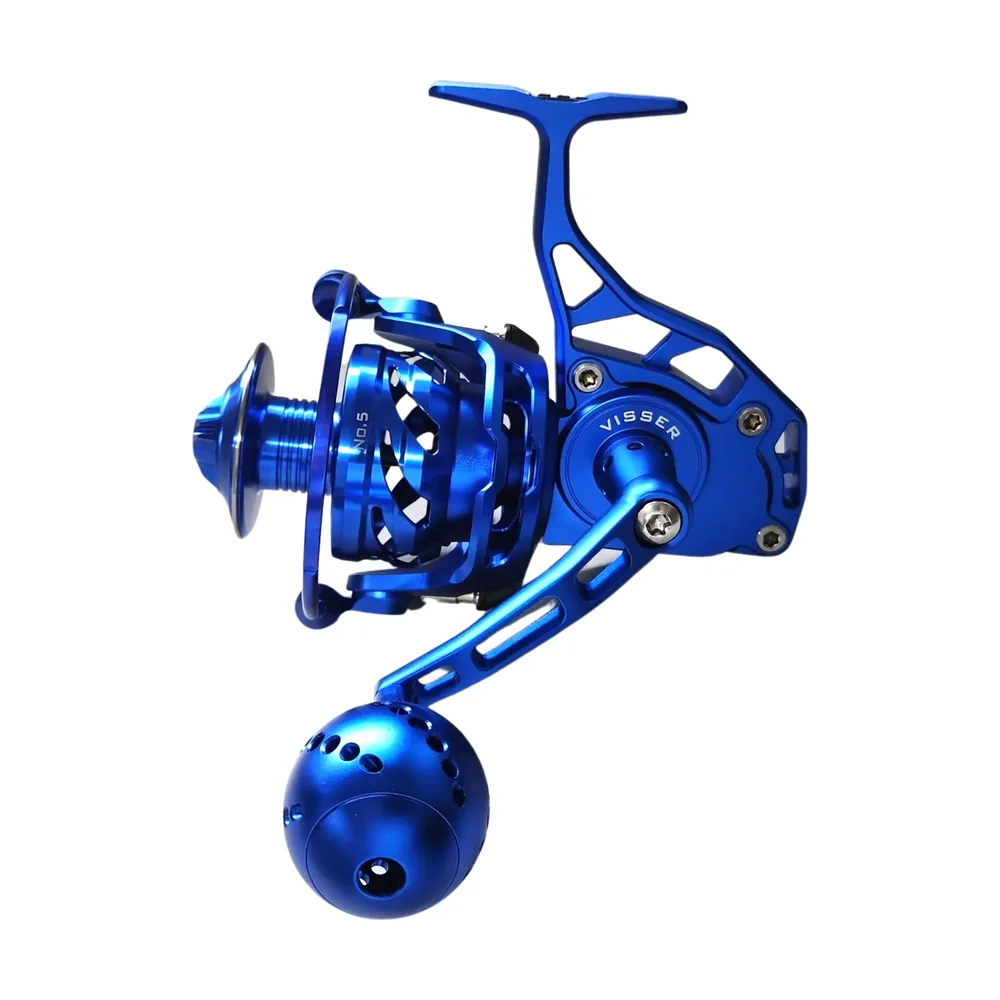
Buying role: Larger inshore / nearshore crossover. See the exact numerical row above.
Read the full No. 5 review (1,253 words)
The transition into a larger coastal outfit
No. 5 marks a useful transition in the current original-series chart and belongs in a larger inshore or nearshore comparison. The ratio group and configuration differ from the smaller coastal examples. It should not be selected simply because it appears to offer more of everything. The buyer needs a clear reason for the more substantial outfit: perhaps a larger presentation, a reserve requirement or a normal workload that makes the smaller configurations less appropriate. The reel must still fit the intended rod and the time spent actively casting or retrieving.
This is the fifth coastal-oriented selection in the page, but that navigation choice does not make it a light-lure reel or rule out other suitable saltwater roles. A family spans different applications through configuration. No. 5 can be worth examining for a crossover setup when the actual method supports it. An owner who mostly casts smaller presentations should compare 4X carefully before moving up. Additional reserve and output are valuable when needed, while unnecessary size can become a burden across every ordinary session.
Retrieve priorities change with the job
The current table provides ratio and pickup separately, which is important when comparing No. 5 with 4X. A lower ratio does not automatically mean an inferior reel, and pickup cannot be inferred from the ratio alone. The best configuration depends on how slack develops and how the normal handle movement fits the presentation. A controlled method and an active retrieve can lead to different preferences. This review does not claim a measured torque advantage or lure-response result from the ratio change.
Use the complete chart to compare candidates from other manufacturers serving the same role. Similar size labels do not guarantee equivalent reserve or handling, and a compact competitor should not be compared with a much larger No. 5 solely because both are called saltwater reels. Define line class, capacity and technique first. That produces an actual purchasing comparison rather than a list of premium names. The final result can change with local price and service even when the general construction proposition remains attractive.
A nearshore reserve exercise
Suppose the normal session places a lure, rig or bait in deeper current than the owner’s compact estuary fishing. Estimate the line already consumed before a fish runs, then add practical reserve and allowance for abrasion trimming. No. 5 becomes a candidate if its capacity reference and the selected braid diameter support that plan. Obtain the intended units and do not assume every line with the same printed breaking strain fills identically. The published reference helps selection but is not an independent spool-fill measurement for the owner’s braid.
If the requirement approaches the limit of the available reserve, compare No. 6 or another appropriate configuration rather than forcing the fill. An offshore or substantially heavier workload also needs guidance beyond the basic chart. The rod, leader, hooks and landing method must fit the pressure plan. Maximum drag is a ceiling; it cannot resolve missing reserve or make a lightly rated rod suitable for an aggressive fight. This review does not provide sustained-load testing for settling an extreme application.
No. 5 versus PierMaster PM 5
The corresponding PierMaster size is a useful operating-arrangement comparison for someone who mainly fishes from surf, piers or rocks. The decision should focus on the bailed original-series proposition versus the dedicated bail-less shore routine, not an assumption that the same number means identical internals or interchangeable components. Read both current rows and feature descriptions. If conversion is planned for No. 5, confirm the exact kit and package. If manual pickup is already preferred, a dedicated shore design deserves a direct comparison.
The owner’s routine matters in difficult conditions. A familiar operating arrangement can be more useful than an unfamiliar system selected because it looks specialized. Obtain a demonstration before committing to a change. The review does not claim a universal performance winner between the two versions. It asks which one supports the actual method, reserve and handling requirements with fewer unsupported assumptions. That is a more accountable basis for a premium purchase than choosing from photographs or product names alone.
Configuration verdict
No. 5 is a worthwhile larger coastal and nearshore candidate when the method justifies its configuration. Compare 4X if handling is the priority, No. 6 if reserve is the concern and PM 5 if shore-specific bail-less operation is central. Confirm specifications and support before purchase. The recommendation remains an editorial framework for a defined outfit, not personal evidence that No. 5 is an all-purpose answer to every coastal and offshore situation.
Shared No. Series architecture
This size shares the No. Series platform described in the feature table. Its selection should therefore turn on the configuration and fishing role rather than an assumption that every larger number introduces unrelated engineering. Shared construction does not make the sizes interchangeable. The rod, line reserve, retrieve and handling requirements still determine which model belongs in the outfit. This review uses official design information but does not claim independently measured body flex, internal tolerances or wear. A premium material package is a reason to compare carefully, not a substitute for exact fit.
No. Series provides a bailed proposition with a supported bail-less conversion option. Confirm the exact kit, compatibility and delivered contents before making conversion part of the purchase. A separate accessory description should not be assumed to mean the kit is included. Follow the approved instructions and obtain guidance before work beyond the documented procedure. The casting and line-pickup routine must suit the owner. Someone who clearly prefers a dedicated bail-less shore setup should also compare PierMaster rather than treating a conversion as automatically the best route.
The current source describes protected saltwater construction. This review does not enlarge that claim into unlimited immersion, a fabricated IPX rating or immunity from impact and wear. Obtain the manual and clarify exposure that matters to the method. A premium reel still deserves care and a practical service arrangement. Register an eligible purchase as required by the applicable warranty, retain the dated receipt and check the live terms. An older or used example requires its own condition and coverage assessment; the family specification cannot establish what a previous owner did to the reel.
Exact-configuration purchase worksheet
For No. 5, write a short purchase brief for the intended larger inshore / nearshore crossover role. Name the actual rod, usual lure or rig, selected line and most realistic difficult condition. Then identify the specification that makes this configuration useful: reserve, pickup, handling or operating arrangement. This separates a practical requirement from a feature that simply looks attractive in a catalog. Compare the same job with the adjacent size and an equivalent competitor. Do not assume a model number maps directly to another manufacturer’s size, or treat shared platform language as proof that all configurations have identical capacity and handling.
Before paying, confirm the exact product and current specification with the supplier, including any source conflict identified above. Check availability for the selected finish rather than relying on a generic stock label. Clarify warranty eligibility, registration and the service route. Inspect the delivered handle, spool and operating arrangement before filling line, and retain the receipt and any written clarification. Prepare the complete outfit according to its instructions with an appropriate pressure setting. After the first sessions, reassess fit and reserve based on the actual method without claiming that a brief impression establishes long-term reliability. These checks make the researched comparison concrete and keep the decision tied to the equipment that will really be used.
View official No. 5 series specifications · Back to model table
Five larger saltwater and dedicated surf configurations
The No. Series entries are candidates for defined saltwater or offshore comparisons; the PierMaster entries retain their surf, pier and jetty role. Exact technique, capacity and pressure determine suitability.
No. 6 — detailed configuration review
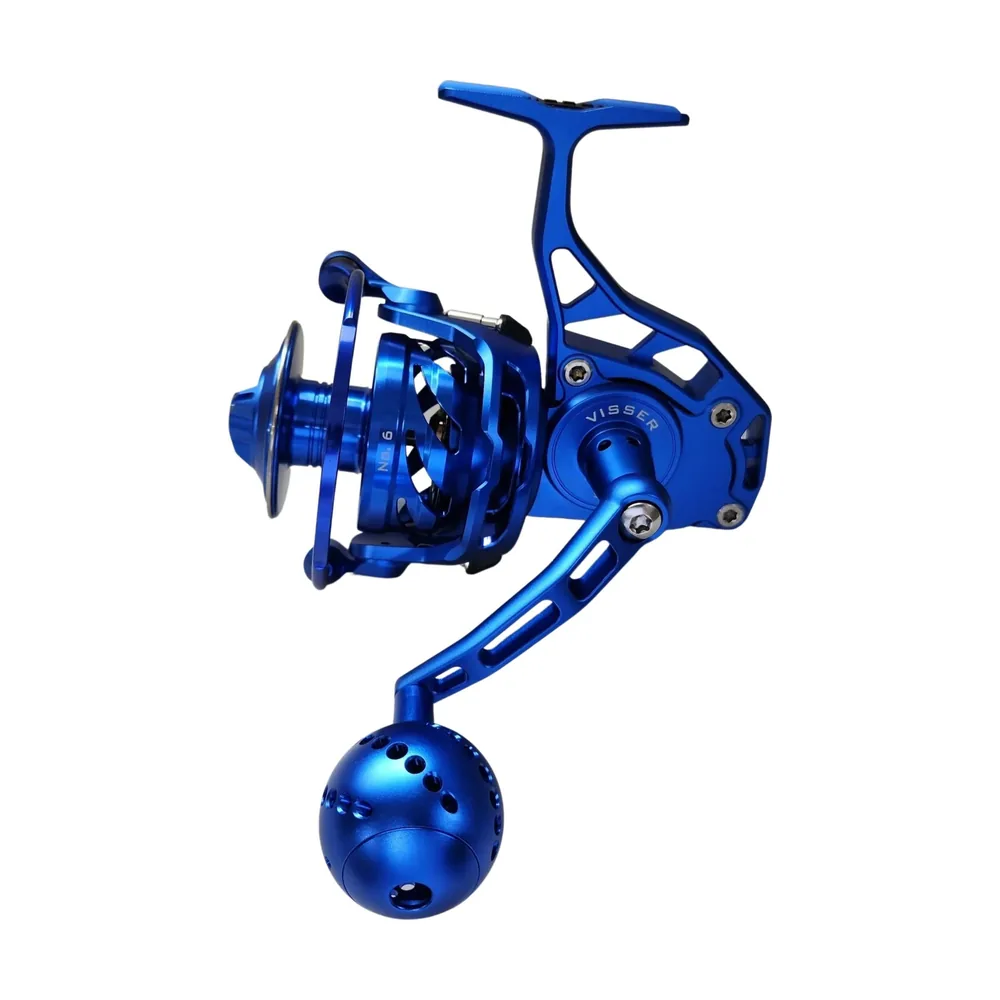
Buying role: Defined larger saltwater / offshore comparison. See the exact numerical row above.
Read the full No. 6 review (1,247 words)
A defined larger saltwater comparison
No. 6 belongs in the larger saltwater group because its current configuration can be examined where line reserve and a more substantial outfit are relevant. Offshore suitability must still be established for the exact technique. The word offshore covers surface casting, deeper presentations and very different workloads. This review does not label the model a universal bluewater solution. It asks the buyer to specify the depth, current, line, rod and normal method, then judge whether the current chart and practical support meet those requirements.
The first adjacent comparison is No. 5. The chart shows differences in reserve reference and pickup while the maximum ceiling remains the same. That makes capacity and retrieve a better explanation for choosing No. 6 than a claim of extra stopping output. Shared platform construction should remain shared; the guide does not invent stronger internals for this size. A premium purchase becomes more defensible when the owner can explain which configuration difference addresses the actual fishing rather than relying on a bigger model number.
Plan reserve before pressure
Estimate how much line the method uses before a fish runs. Current can increase the line angle and consumption, and abrasion trimming can reduce what remains over time. The capacity reference must be interpreted with the intended units and actual braid diameter. A line’s breaking-strain label is not enough to guarantee the published fill. No. 6 becomes a candidate when that reserve plan is realistic. If the ordinary method already consumes most of the available line, investigate a larger configuration rather than relying on optimistic packing.
The pressure plan follows the complete system. Maximum drag is a ceiling, not a universal working setting. The rod, knots, hooks and line can limit usable pressure much earlier. Consider the angler’s position and landing method as well. A boat may offer different options from a fixed shore position. The reel cannot create those options or compensate for an incompatible rod. This directory does not claim measured thermal endurance or a personal offshore catch record for proving a demanding specialist workload.
Pickup and repeated handling
The current ratio and pickup belong together in the technique comparison. A method involving slack recovery may prioritize pickup differently from a controlled deeper presentation. The angler’s normal handle movement, rod work and lure resistance all participate. A figure on the chart does not establish measured lure behavior in every current. Compare the actual configuration with equivalent alternatives serving the same job. A different series or manufacturer may provide a better exact-size combination even when the Visser platform’s construction is attractive.
For repeated casting, inspect outfit balance and grip on the intended rod. A larger saltwater candidate should remain practical for the session. For a bait or supported presentation, priorities can differ, but reserve and pressure still need to be defined. Avoid assuming that one configuration can cover those methods equally well without compromise. The best purchase supports the ordinary job and a sensible margin, not an unlimited collection of hypothetical uses. An owner fishing several incompatible methods may benefit from separate focused outfits.
No. 6 versus No. 7
No. 7 provides the next comparison where a different line reference and larger output ceiling may be relevant. Those differences need context rather than automatic preference. If No. 6 already supplies appropriate reserve and fits the rod, the next size should have a concrete reason to replace it on the shortlist. If the planned line class and fishing position require more margin, compare No. 7 directly with the full chart. The choice should not be settled by a maximum number detached from the pressure the complete outfit can actually use.
Stock and service can also change the decision. Confirm the exact configuration and finish, the return policy and a practical route for maintenance. A premium working outfit used regularly needs support that does not depend on vague future assurances. If the intended role is demanding enough that missing performance evidence matters, obtain reliable exact-model advice before purchase. This review provides researched specifications and original buying reasoning, not proof from a season of offshore testing.
Configuration verdict
No. 6 deserves a larger saltwater shortlist where the reserve, retrieve and rod fit are verified for a defined method. Compare No. 5 for a lighter crossover role and No. 7 when the line and pressure plan genuinely call for it. Its offshore recommendation remains conditional on full specifications and workload guidance. Do not treat protected construction or premium pricing as substitutes for the evidence needed to select a specialist outfit.
Shared No. Series architecture
This size shares the No. Series platform described in the feature table. Its selection should therefore turn on the configuration and fishing role rather than an assumption that every larger number introduces unrelated engineering. Shared construction does not make the sizes interchangeable. The rod, line reserve, retrieve and handling requirements still determine which model belongs in the outfit. This review uses official design information but does not claim independently measured body flex, internal tolerances or wear. A premium material package is a reason to compare carefully, not a substitute for exact fit.
No. Series provides a bailed proposition with a supported bail-less conversion option. Confirm the exact kit, compatibility and delivered contents before making conversion part of the purchase. A separate accessory description should not be assumed to mean the kit is included. Follow the approved instructions and obtain guidance before work beyond the documented procedure. The casting and line-pickup routine must suit the owner. Someone who clearly prefers a dedicated bail-less shore setup should also compare PierMaster rather than treating a conversion as automatically the best route.
The current source describes protected saltwater construction. This review does not enlarge that claim into unlimited immersion, a fabricated IPX rating or immunity from impact and wear. Obtain the manual and clarify exposure that matters to the method. A premium reel still deserves care and a practical service arrangement. Register an eligible purchase as required by the applicable warranty, retain the dated receipt and check the live terms. An older or used example requires its own condition and coverage assessment; the family specification cannot establish what a previous owner did to the reel.
Exact-configuration purchase worksheet
For No. 6, write a short purchase brief for the intended defined larger saltwater / offshore comparison role. Name the actual rod, usual lure or rig, selected line and most realistic difficult condition. Then identify the specification that makes this configuration useful: reserve, pickup, handling or operating arrangement. This separates a practical requirement from a feature that simply looks attractive in a catalog. Compare the same job with the adjacent size and an equivalent competitor. Do not assume a model number maps directly to another manufacturer’s size, or treat shared platform language as proof that all configurations have identical capacity and handling.
Before paying, confirm the exact product and current specification with the supplier, including any source conflict identified above. Check availability for the selected finish rather than relying on a generic stock label. Clarify warranty eligibility, registration and the service route. Inspect the delivered handle, spool and operating arrangement before filling line, and retain the receipt and any written clarification. Prepare the complete outfit according to its instructions with an appropriate pressure setting. After the first sessions, reassess fit and reserve based on the actual method without claiming that a brief impression establishes long-term reliability. These checks make the researched comparison concrete and keep the decision tied to the equipment that will really be used.
View official No. 6 series specifications · Back to model table
No. 7 — detailed configuration review
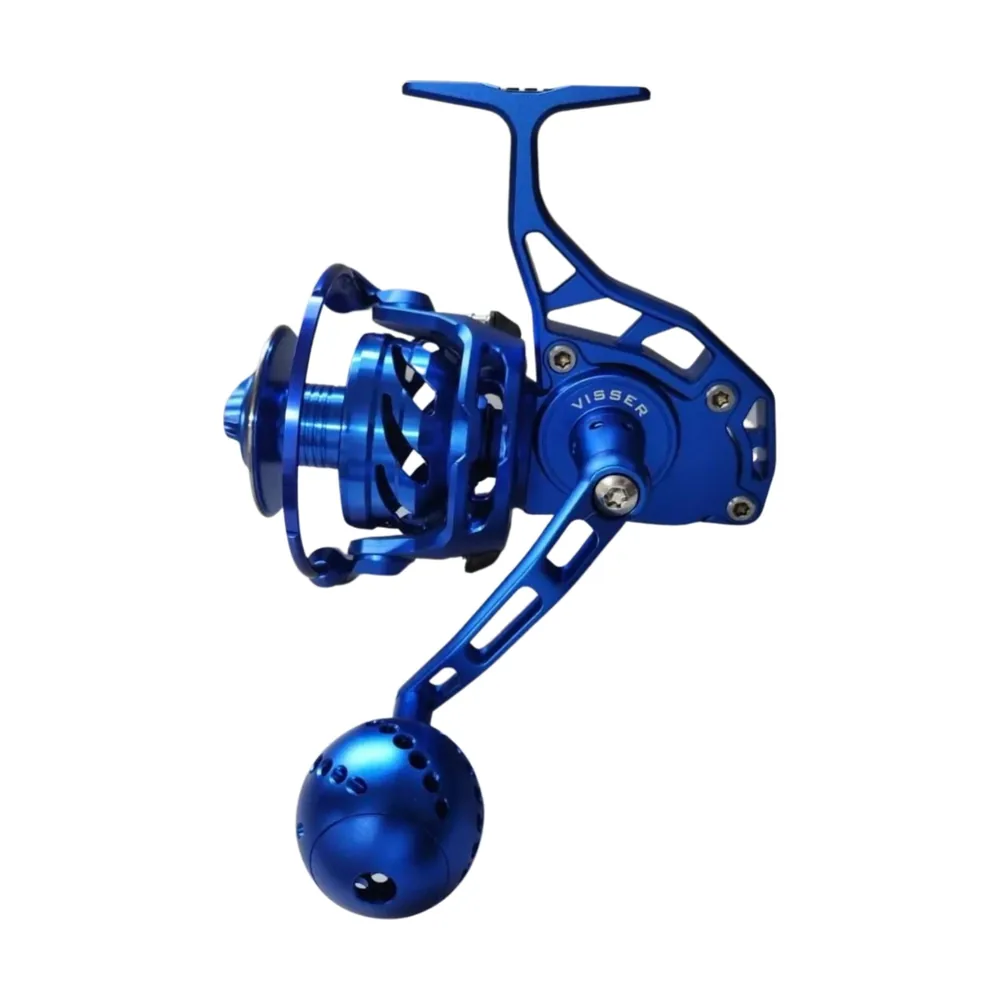
Buying role: Defined larger saltwater / offshore comparison. See the exact numerical row above.
Read the full No. 7 review (1,264 words)
A larger line-and-pressure planning decision
No. 7 is a larger original-series comparison with a current chart that changes the reserve reference, pickup and output ceiling relative to No. 6. That gives the buyer concrete reasons to investigate it, but those reasons must match the normal job. A substantial saltwater outfit should be selected around technique and line requirements rather than a wish to own the strongest-looking model. This review does not claim that No. 7 is suitable for every offshore species or method simply because its figures exceed smaller entries in parts of the table.
The strongest purchase case identifies a recurring reserve or pressure requirement that the smaller configuration does not meet comfortably. The weakest case chooses the larger model for reassurance without knowing the rod, braid diameter or depth. A premium design cannot resolve those unknowns. Write the intended outfit down first and compare the exact chart with it. If the configuration is excessive for the ordinary session, the extra bulk can be experienced repeatedly while the theoretical margin is rarely used. Useful reserve and comfortable handling need to be balanced deliberately.
Capacity references are line-specific
The current table uses a different braid reference for No. 7 than the adjacent smaller size. That should not be read as a simple statement that one spool holds fewer or more yards of every braid. The references use different line labels, and actual diameter participates in volume. Obtain the intended units and the selected line’s diameter, then estimate practical reserve. Do not convert the slash notation into an independent test result. A fishing plan should survive reasonable uncertainty in the fill rather than relying on the most optimistic interpretation.
For a deeper method, account for line consumed before a run begins. For casting, allow for the normal cast and a realistic fight from the actual position. A boat’s ability to follow a fish and a shore angler’s limited options can change the needed margin. Neither setting is solved by a premium badge. The capacity plan should also allow for line removed after abrasion. If the resulting reserve is marginal, reassess the configuration or method rather than trying to compensate by applying more pressure with the reel.
Maximum output is not the working setting
The larger ceiling in the current chart is relevant to a comparison, but usable pressure depends on the complete outfit. A rod or hook arrangement may limit the working setting well below it. Consider the angler’s stance and landing method and establish an appropriate pressure deliberately. This review does not claim a measured startup curve, heating result or endurance advantage over No. 6. Such evidence would require testing beyond the consulted product description. The figure narrows the shortlist without proving every demanding application.
An owner planning specialist heavy use should obtain exact-model guidance and the full specification. The current table should be part of that conversation, not its conclusion. Different offshore methods can favor different retrieve, reserve and handling combinations. No. 7 may be a useful candidate for one and an awkward compromise for another. The purpose of a configuration review is to make those questions visible rather than presenting an expensive general saltwater reel as a solution to every possible session.
No. 7 against No. 8
The largest current original-series configuration provides an adjacent comparison with further changes in the numerical row. Compare the actual line plan and pickup requirements rather than assuming No. 8 is always the safer purchase. If No. 7 meets the role with adequate margin and balances the rod, a larger choice needs another reason. If the intended reserve and line class point toward the larger configuration, examine it directly. Shared platform architecture means the distinction is primarily configuration, not an invented engineering overhaul with every model number.
Handling also needs attention. Repeated lure casting can make balance and grip important over an entire session, while a different presentation may place more weight on reserve. Mount the selected reel on the intended rod if possible. A brief hand-held impression without the rod may miss the outfit relationship. This review does not assign a universal comfort ranking from weight alone. It encourages a practical assessment tied to the actual session and the owner’s method.
Configuration verdict
No. 7 is a purposeful larger saltwater candidate where the complete line and pressure plan justify it. Compare No. 6 and No. 8 using exact charts, not increasingly impressive names. Obtain workload guidance where specialist use requires more evidence, confirm ownership support and retain the specification with the purchase. The recommendation is conditional on the method and outfit, with no claim of personal offshore testing or independently measured superiority.
Shared No. Series architecture
This size shares the No. Series platform described in the feature table. Its selection should therefore turn on the configuration and fishing role rather than an assumption that every larger number introduces unrelated engineering. Shared construction does not make the sizes interchangeable. The rod, line reserve, retrieve and handling requirements still determine which model belongs in the outfit. This review uses official design information but does not claim independently measured body flex, internal tolerances or wear. A premium material package is a reason to compare carefully, not a substitute for exact fit.
No. Series provides a bailed proposition with a supported bail-less conversion option. Confirm the exact kit, compatibility and delivered contents before making conversion part of the purchase. A separate accessory description should not be assumed to mean the kit is included. Follow the approved instructions and obtain guidance before work beyond the documented procedure. The casting and line-pickup routine must suit the owner. Someone who clearly prefers a dedicated bail-less shore setup should also compare PierMaster rather than treating a conversion as automatically the best route.
The current source describes protected saltwater construction. This review does not enlarge that claim into unlimited immersion, a fabricated IPX rating or immunity from impact and wear. Obtain the manual and clarify exposure that matters to the method. A premium reel still deserves care and a practical service arrangement. Register an eligible purchase as required by the applicable warranty, retain the dated receipt and check the live terms. An older or used example requires its own condition and coverage assessment; the family specification cannot establish what a previous owner did to the reel.
Exact-configuration purchase worksheet
For No. 7, write a short purchase brief for the intended defined larger saltwater / offshore comparison role. Name the actual rod, usual lure or rig, selected line and most realistic difficult condition. Then identify the specification that makes this configuration useful: reserve, pickup, handling or operating arrangement. This separates a practical requirement from a feature that simply looks attractive in a catalog. Compare the same job with the adjacent size and an equivalent competitor. Do not assume a model number maps directly to another manufacturer’s size, or treat shared platform language as proof that all configurations have identical capacity and handling.
Before paying, confirm the exact product and current specification with the supplier, including any source conflict identified above. Check availability for the selected finish rather than relying on a generic stock label. Clarify warranty eligibility, registration and the service route. Inspect the delivered handle, spool and operating arrangement before filling line, and retain the receipt and any written clarification. Prepare the complete outfit according to its instructions with an appropriate pressure setting. After the first sessions, reassess fit and reserve based on the actual method without claiming that a brief impression establishes long-term reliability. These checks make the researched comparison concrete and keep the decision tied to the equipment that will really be used.
View official No. 7 series specifications · Back to model table
No. 8 — detailed configuration review
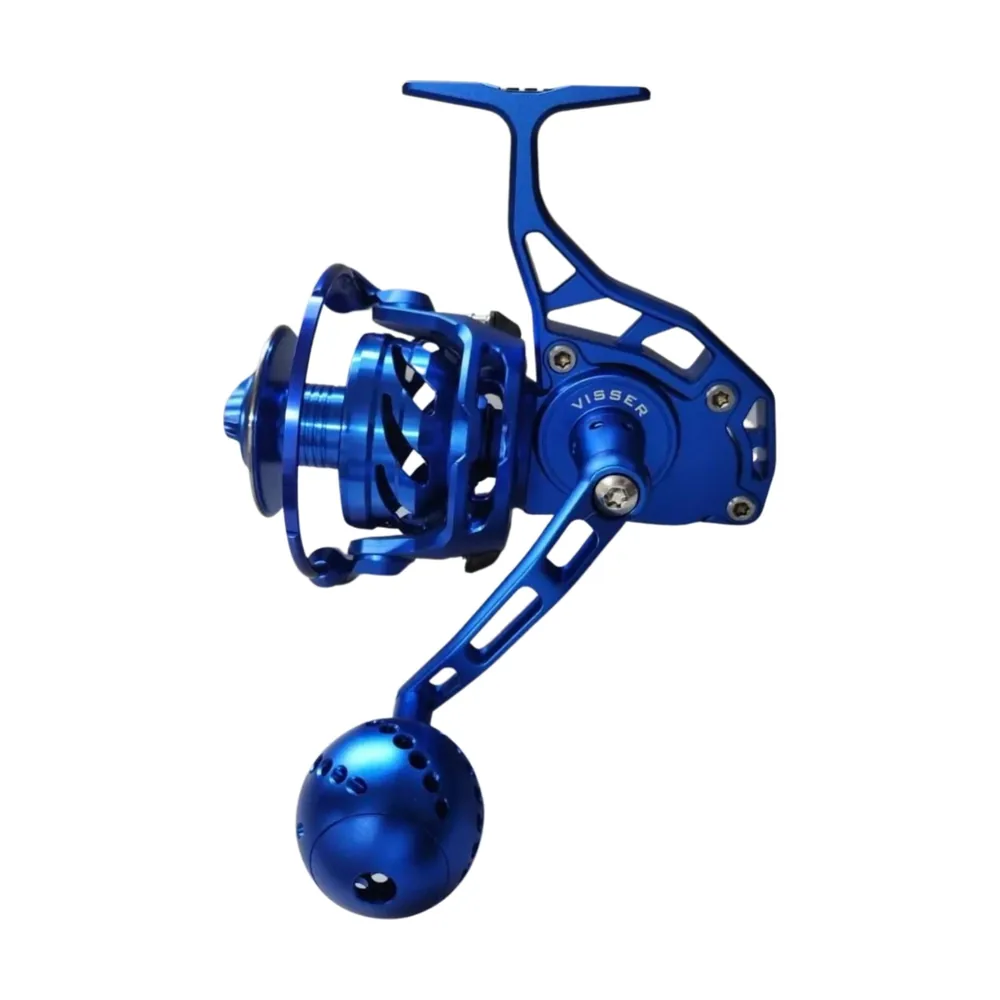
Buying role: Largest current No. Series comparison. See the exact numerical row above.
Read the full No. 8 review (1,287 words)
The largest current original-series comparison
No. 8 is the largest configuration displayed in the current No. Series chart. That status makes it relevant where a substantial saltwater outfit is genuinely needed, but it does not create a universal recommendation for offshore fishing. The buyer must define technique, depth, current, line and the pressure plan. A large premium reel can be a sensible tool in a suitable system or unnecessary bulk in another. The configuration should earn its place by addressing the ordinary method and realistic difficult conditions rather than simply occupying the top of the size list.
The table gives the current weight, pickup, reserve reference and maximum ceiling. Do not replace them with historical retailer values without checking whether the offered product matches the current specification. Older official snippets differ on some figures, which makes exact-stock confirmation worthwhile. A current chart and a discounted older listing are not automatically the same configuration. Obtain the supplier’s code and specification and clarify any material difference before paying. This review does not invent an explanation for every historical mismatch.
Reserve must be calculated for the method
The largest reference does not guarantee that every chosen braid produces the same fill. Obtain the intended units and the actual diameter, then estimate reserve after depth, current and abrasion allowance. A large spool still needs planning. For a deep presentation, much of the line may already be out when a fish runs. For surface casting, the normal cast and the fight from the actual position create a different reserve question. A boat with room to maneuver has different options from a fixed shore location.
If the intended method requires even more reserve or a different mechanism, consider a more purpose-specific outfit rather than asking the largest current No. Series to cover every extreme. The fact that it is the biggest available in one family is not evidence that it meets every specialist workload. Obtain reliable exact-model advice where the decision depends on sustained pressure or endurance that this directory does not measure. Premium construction and a large maximum figure help define a shortlist but do not replace the evidence needed for a demanding use case.
Pickup and the normal retrieve
The current pickup reference is relevant to an angler comparing recovery requirements. It should be assessed with the ratio and the normal presentation rather than treated as a universal improvement over smaller configurations. The lure or rig, current and rod movement all influence practical use. This review does not claim a measured casting gain or lure-response advantage. A faster recovery can be useful when the session needs it, while another method may favor a different balance of retrieve and handling. Compare equivalent jobs across manufacturers using exact charts.
The maximum drag remains a ceiling. The rod, line, knots and hooks determine usable pressure, and the owner’s position and landing method must support it. A large reel cannot make an inappropriate rod suitable for an aggressive fight or guarantee that a fish can be controlled beside sharp structure. Establish the complete outfit deliberately. This guide does not report measured drag heating or startup behavior. If those results are necessary to justify the purchase, seek reliable evidence before treating the published ceiling as sufficient proof.
No. 8 versus PierMaster PM 8
PM 8 is the dedicated bail-less shore comparison at the corresponding named size. The decision should turn on operating routine and role as well as the exact numerical rows. Do not assume identical parts or universal interchangeability because both names end in eight. The original-series configuration is the bailed proposition with a supported conversion option; PierMaster is explicitly positioned around surf, pier and jetty use. A buyer who mainly fishes those locations and already prefers manual line pickup has a clear reason to inspect the dedicated design.
For boat or other saltwater sessions, evaluate No. 8 in the intended arrangement and obtain any conversion guidance before making it part of the purchase. The owner’s routine should be consistent under the actual conditions. An unfamiliar specialized system is not automatically better because it looks purposeful. A configuration that cannot meet a basic operating preference may be the wrong premium purchase despite attractive construction. Clarify the delivered package and approved accessories rather than attempting to resolve a mismatch through unsupported modification later.
Configuration verdict
No. 8 belongs on a larger saltwater shortlist when the capacity, pickup and complete outfit justify the largest current original-series configuration. Compare No. 7 for the adjacent role and PM 8 for dedicated shore operation. Verify the offered stock against the current chart and obtain practical service support. The recommendation is conditional on a defined method, not an assertion that the largest reel is automatically the best or that it has been independently tested for every offshore workload.
Shared No. Series architecture
This size shares the No. Series platform described in the feature table. Its selection should therefore turn on the configuration and fishing role rather than an assumption that every larger number introduces unrelated engineering. Shared construction does not make the sizes interchangeable. The rod, line reserve, retrieve and handling requirements still determine which model belongs in the outfit. This review uses official design information but does not claim independently measured body flex, internal tolerances or wear. A premium material package is a reason to compare carefully, not a substitute for exact fit.
No. Series provides a bailed proposition with a supported bail-less conversion option. Confirm the exact kit, compatibility and delivered contents before making conversion part of the purchase. A separate accessory description should not be assumed to mean the kit is included. Follow the approved instructions and obtain guidance before work beyond the documented procedure. The casting and line-pickup routine must suit the owner. Someone who clearly prefers a dedicated bail-less shore setup should also compare PierMaster rather than treating a conversion as automatically the best route.
The current source describes protected saltwater construction. This review does not enlarge that claim into unlimited immersion, a fabricated IPX rating or immunity from impact and wear. Obtain the manual and clarify exposure that matters to the method. A premium reel still deserves care and a practical service arrangement. Register an eligible purchase as required by the applicable warranty, retain the dated receipt and check the live terms. An older or used example requires its own condition and coverage assessment; the family specification cannot establish what a previous owner did to the reel.
Exact-configuration purchase worksheet
For No. 8, write a short purchase brief for the intended largest current no. series comparison role. Name the actual rod, usual lure or rig, selected line and most realistic difficult condition. Then identify the specification that makes this configuration useful: reserve, pickup, handling or operating arrangement. This separates a practical requirement from a feature that simply looks attractive in a catalog. Compare the same job with the adjacent size and an equivalent competitor. Do not assume a model number maps directly to another manufacturer’s size, or treat shared platform language as proof that all configurations have identical capacity and handling.
Before paying, confirm the exact product and current specification with the supplier, including any source conflict identified above. Check availability for the selected finish rather than relying on a generic stock label. Clarify warranty eligibility, registration and the service route. Inspect the delivered handle, spool and operating arrangement before filling line, and retain the receipt and any written clarification. Prepare the complete outfit according to its instructions with an appropriate pressure setting. After the first sessions, reassess fit and reserve based on the actual method without claiming that a brief impression establishes long-term reliability. These checks make the researched comparison concrete and keep the decision tied to the equipment that will really be used.
View official No. 8 series specifications · Back to model table
PierMaster PM 5 — detailed configuration review
Buying role: Bail-less surf / pier / jetty. See the exact numerical row above.
Read the full PierMaster PM 5 review (1,268 words)
A deliberate entry into dedicated bail-less shore use
PierMaster PM 5 is the smallest configuration displayed in the current PierMaster chart and is a useful starting point for a dedicated bail-less surf, pier or jetty outfit. Its role should remain shore-specific in this directory even though it appears in the larger saltwater comparison group. The purchase begins with the operating routine and the normal presentation. A buyer who already fishes manual pickup may have a concrete reason to shortlist it; a buyer new to that routine should obtain a demonstration before making it the foundation of an expensive setup.
The exact table provides the configuration reference, while the platform section explains shared construction. PM 5 should not be chosen simply because dedicated shore equipment sounds more robust than a general bailed reel. The actual reserve, rod balance and technique must fit. A specialized design is useful when the owner regularly encounters the conditions it addresses. It can be unnecessary when the normal session is sheltered and the operating preference remains bailed. Define the fishing rather than allowing the specialized name to define it after purchase.
PM 5 against No. 5
The corresponding original-series configuration gives the buyer a meaningful operation-based comparison. Read the exact rows rather than assuming identical numbers or interchangeable components. No. 5 provides the bailed proposition and a supported conversion route, while PM 5 is the dedicated bail-less option. The correct choice depends on what the owner wants to do repeatedly, not on a universal rule that a specialized rotor always produces better fishing. Package contents, compatibility and approved procedures need confirmation if conversion is part of the alternative purchase.
For an angler dividing sessions between boat and shore, a bailed configuration may support an established routine while a dedicated shore setup may justify a separate outfit. One reel does not need to be forced into every use. For an angler spending most sessions on surf, piers or rocks and already comfortable with manual pickup, the dedicated proposition becomes clearer. This review does not claim personal comparative catches or casting distances. It explains why the choice can differ between owners without inventing a performance hierarchy.
Reserve from a fixed fishing position
Shore fishing often leaves fewer options to follow a running fish. Estimate the normal line out, realistic run and allowance for abrasion trimming, using the actual braid diameter. The published capacity reference is a starting point and needs its intended units confirmed. If the ordinary session leaves little reserve, compare PM 6 or another appropriate configuration before choosing PM 5. Applying more pressure is not a reliable substitute for missing line, and a premium protected design cannot create reserve that was never on the spool.
The landing method also belongs in the plan. The outfit should not depend on lifting a fish with the reel or using excessive pressure to compensate for a difficult position. Rod, line, knots and hooks determine a sensible working setting. The chart’s maximum is a ceiling, not an instruction to use it routinely. This directory does not report measured startup friction or heat endurance. A specialist shore purchase requiring those results should obtain reliable exact-model advice rather than treating the numerical panel as a complete performance test.
Repeated casting and line pickup
The normal session may involve many casts and retrieves. Inspect the outfit’s balance, grip and line-pickup routine with the intended rod. An apparent reduction in hardware does not mean the owner has no operational responsibilities. Consistent manual pickup and sensible slack management remain important. A configuration that feels attractive briefly without a rod may behave differently as a complete outfit over a long session. This review therefore places practical fit alongside the specification rather than ranking comfort from a single weight figure.
External moving areas should be checked according to the manual, especially after exposure or a change in function. A dedicated shore reel still benefits from sensible handling around sand and rocks. The protected construction is a relevant reason to compare it, not a guarantee of immunity from impact, wear or contamination at every interface. Obtain the actual care instructions and permitted service procedure. If a problem develops, respond to the symptom rather than relying on the product’s specialized identity as proof that nothing requires attention.
Configuration verdict
PM 5 is a focused shore candidate for an owner who deliberately wants bail-less operation and has verified enough reserve for the normal position. Compare No. 5 for the operating alternative and PM 6 for additional margin. Confirm the bearing discrepancy, current chart, package and service route before purchase. The recommendation is a researched framework for a dedicated outfit, not evidence from personal surf tests or a promise of increased casting distance.
PierMaster’s dedicated shore proposition
PierMaster is explicitly positioned for surf, pier and jetty fishing and is built around bail-less operation. This configuration should be selected for that role rather than called a universal offshore reel because it appears among larger saltwater examples. The operating routine is a real purchase decision. An angler familiar with bailed tackle should obtain a demonstration before relying on manual line pickup during a difficult session. Neither arrangement is universally better. The right one supports consistent use in the owner’s actual conditions and with the intended rod and presentation.
The platform’s construction is summarized in the feature table. Its descriptive bearing count conflicts with the current detailed chart, so this guide follows the chart and flags the difference. Do not infer an engineering explanation the source does not provide. Ask for confirmation if the count affects the decision. More importantly, bearing count is not a complete smoothness or durability ranking. Support, placement, exposure and condition also matter. This review does not present a teardown or independently measured endurance results from repeated surf use.
A protected design still requires sensible ownership. Inspect the line-pickup path and external moving areas, follow the manual and obtain appropriate service after a significant incident or functional change. No universal immersion conditions or IPX certification are added here. Confirm the exact size, package, retrieve arrangement and permitted service procedures. Check the applicable warranty and complete required registration. A premium shore outfit needs practical support as well as a specification that looks attractive in a table. Keep that support in the purchase comparison before scheduling the reel for an important trip.
Exact-configuration purchase worksheet
For PierMaster PM 5, write a short purchase brief for the intended bail-less surf / pier / jetty role. Name the actual rod, usual lure or rig, selected line and most realistic difficult condition. Then identify the specification that makes this configuration useful: reserve, pickup, handling or operating arrangement. This separates a practical requirement from a feature that simply looks attractive in a catalog. Compare the same job with the adjacent size and an equivalent competitor. Do not assume a model number maps directly to another manufacturer’s size, or treat shared platform language as proof that all configurations have identical capacity and handling.
Before paying, confirm the exact product and current specification with the supplier, including any source conflict identified above. Check availability for the selected finish rather than relying on a generic stock label. Clarify warranty eligibility, registration and the service route. Inspect the delivered handle, spool and operating arrangement before filling line, and retain the receipt and any written clarification. Prepare the complete outfit according to its instructions with an appropriate pressure setting. After the first sessions, reassess fit and reserve based on the actual method without claiming that a brief impression establishes long-term reliability. These checks make the researched comparison concrete and keep the decision tied to the equipment that will really be used.
View official PierMaster PM 5 series specifications · Back to model table
PierMaster PM 8 — detailed configuration review
Buying role: Larger bail-less surf / pier / jetty. See the exact numerical row above.
Read the full PierMaster PM 8 review (1,250 words)
A larger dedicated shore configuration
PierMaster PM 8 is the largest configuration displayed in the current PierMaster chart and belongs in a demanding shore comparison. The family is positioned for surf, pier and jetty work, so the size should not be relabeled a universal offshore option merely to fill a directory group. The buyer needs a clear reserve and operating requirement. A large dedicated bail-less reel can be a sensible tool where the method justifies it or unnecessary bulk where a smaller configuration already meets the role comfortably.
The table provides the current configuration figures and allows comparison with PM 7 and No. 8. Verify the current values against the actual stock offered, because historical snippets differ on some weights and line references. Do not assume an archived number describes every current product. Keep the exact specification and any seller clarification with the order. This review does not invent a hidden engineering revision to explain a mismatch; it treats the mismatch as something to resolve before a specification-sensitive purchase.
Capacity from surf, rocks or a pier
A fixed position can create a serious reserve requirement because the angler may not be able to follow a running fish. Estimate line consumed by the normal cast, current and realistic run, then allow for abrasion trimming. The published reference needs clear units and the actual braid diameter before it becomes a fill plan. A larger spool is valuable when it addresses those conditions. It should not become a reason to ignore line selection or assume that every braid with a similar breaking-strain label occupies the same volume.
If the ordinary position demands more reserve or pressure than the outfit can practically provide, reassess the method and landing plan. Premium construction cannot create safe footing, extend landing access or make an unsuitable rod appropriate. Maximum drag is a ceiling, while working pressure belongs to the complete rod, line, knots and hook system. This review does not supply a measured endurance result for deciding extreme applications. Obtain reliable exact-model guidance when a specialist requirement depends on information the current chart does not settle.
PM 8 versus PM 7
PM 7 supplies the adjacent current PierMaster comparison. Read the exact rows and identify what the larger configuration adds to the actual plan. If the smaller option already provides adequate reserve and fits the rod, a move up needs a concrete reason. If the intended line and position require more margin, PM 8 deserves closer examination. The dedicated platform remains shared; a larger model number is not proof of an unrelated internal design or independently measured strength advantage.
Handling matters during repeated distance-oriented casting and retrieve work. Mount the actual reel on the intended rod where possible and assess the grip and balance used in a normal session. A numerical weight difference does not establish a universal comfort ranking, but it makes the outfit comparison more precise. A large shore configuration should serve the session rather than merely look reassuring. The owner should be able to state which recurring condition justifies the reserve and how the complete setup remains manageable.
PM 8 versus No. 8
The corresponding original-series size is the operating-arrangement comparison. No. 8 provides a bailed proposition with supported conversion possibilities, while PM 8 is dedicated bail-less shore equipment. Do not assume parts are interchangeable or a kit is included in an alternative package. Confirm the exact arrangements before purchase. An owner who already prefers manual pickup and spends most sessions on surf, piers or rocks has a clear reason to inspect PierMaster. Another owner may reasonably prioritize a familiar bailed routine for a different set of sessions.
An unfamiliar operating system is not automatically a performance upgrade. Obtain instruction or a demonstration and evaluate the routine in the planned conditions. The review does not claim personally measured casting gains or a universal advantage from removing bail hardware. It explains the specialized design proposition and where it can matter. The choice should leave the owner with a setup that can be used consistently, rather than a premium configuration requiring unsupported adaptations or a change in technique the buyer did not anticipate.
Configuration verdict
PM 8 deserves a larger dedicated shore shortlist when its reserve, pickup and outfit fit address a defined position and the owner wants bail-less operation. Compare PM 7 for the adjacent size and No. 8 for the operating alternative. Verify the current chart, bearing conflict and support arrangements, then choose the complete system deliberately. This is a researched buying assessment, not a personal surf catch report or an independent test of every extreme shore workload.
PierMaster’s dedicated shore proposition
PierMaster is explicitly positioned for surf, pier and jetty fishing and is built around bail-less operation. This configuration should be selected for that role rather than called a universal offshore reel because it appears among larger saltwater examples. The operating routine is a real purchase decision. An angler familiar with bailed tackle should obtain a demonstration before relying on manual line pickup during a difficult session. Neither arrangement is universally better. The right one supports consistent use in the owner’s actual conditions and with the intended rod and presentation.
The platform’s construction is summarized in the feature table. Its descriptive bearing count conflicts with the current detailed chart, so this guide follows the chart and flags the difference. Do not infer an engineering explanation the source does not provide. Ask for confirmation if the count affects the decision. More importantly, bearing count is not a complete smoothness or durability ranking. Support, placement, exposure and condition also matter. This review does not present a teardown or independently measured endurance results from repeated surf use.
A protected design still requires sensible ownership. Inspect the line-pickup path and external moving areas, follow the manual and obtain appropriate service after a significant incident or functional change. No universal immersion conditions or IPX certification are added here. Confirm the exact size, package, retrieve arrangement and permitted service procedures. Check the applicable warranty and complete required registration. A premium shore outfit needs practical support as well as a specification that looks attractive in a table. Keep that support in the purchase comparison before scheduling the reel for an important trip.
Exact-configuration purchase worksheet
For PierMaster PM 8, write a short purchase brief for the intended larger bail-less surf / pier / jetty role. Name the actual rod, usual lure or rig, selected line and most realistic difficult condition. Then identify the specification that makes this configuration useful: reserve, pickup, handling or operating arrangement. This separates a practical requirement from a feature that simply looks attractive in a catalog. Compare the same job with the adjacent size and an equivalent competitor. Do not assume a model number maps directly to another manufacturer’s size, or treat shared platform language as proof that all configurations have identical capacity and handling.
Before paying, confirm the exact product and current specification with the supplier, including any source conflict identified above. Check availability for the selected finish rather than relying on a generic stock label. Clarify warranty eligibility, registration and the service route. Inspect the delivered handle, spool and operating arrangement before filling line, and retain the receipt and any written clarification. Prepare the complete outfit according to its instructions with an appropriate pressure setting. After the first sessions, reassess fit and reserve based on the actual method without claiming that a brief impression establishes long-term reliability. These checks make the researched comparison concrete and keep the decision tied to the equipment that will really be used.
View official PierMaster PM 8 series specifications · Back to model table
Official sources and ownership information
Current reel collection · Gaaf current product and chart · No. Series current product and chart · PierMaster current product and chart · Service, manuals and diagrams · Current limited warranty. The current warranty describes three-year reel coverage for the original purchaser, requires registration and includes exclusions. Serviceability does not authorize disassembly beyond documented procedures. Read the live terms and instructions for the exact purchase.
Compare manufacturers: Shimano · Daiwa · PENN · Okuma · Tsunami · Van Staal.