
Abu Garcia Spinning Reels: Inshore, Lightweight and Heavier-Use Buying Guide
Review method: Researched editorial analysis using official product sources, not personal field testing. Suitability advice is editorial interpretation of documented features. Seven Japanese choices explicitly state saltwater/freshwater compatibility; US Revo coastal use requires exact-model confirmation. No IPX rating, Amazon offer or independent performance result is invented. Shared setup and ownership guidance is repeated in each full review so it can be read independently.
← Spinning Reels Directory · Feature table · Exact-size examples · 2025–2026 updates · Company and range overview · Inshore comparisons · Heavier-use / offshore limits · US Revo reviews
Affiliate disclosure: As an Amazon Associate, I earn from qualifying purchases.
Browse Abu Garcia spinning reels — features in separate columns
| Model / family | Market and buying role | Construction | Gearing | Drag | Bearings | Line / operating features | Exposure guidance | Generation / distinction |
|---|---|---|---|---|---|---|---|---|
| ZENON CX SP | Japan: premium light inshore / finesse; left retrieve only | Magnesium body; FCC forged-carbon rotor and handle | AM gear system | Carbon Matrix | 10+1; HPCR / selected Salt Shield bearings | Manual bail; Rocket line management; 3VA knob | FW/SW; no verified IPX rating | September 2026; dealer-exclusive Japan; 2500SH 118 g |
| REVO MGX GANMA | Japan: lightweight inshore / freshwater crossover | Magnesium / MagAlloy body; C6 carbon rotor; carbon handle | AM / COG gearing | Two-way Carbon Matrix; washer-order configuration | 10+1 | V-Rotor; V-Spool; Rocket line management | SW/FW; no verified IPX rating | 2026; 2500SH 165 g versus 180 g MGX THETA example |
| RAYREX SP | Japan: lighter general coastal / inshore value comparison | C6 carbon body; DuraCarbon handle; V-Rotor | Exact gear material: confirm | Two-way Carbon Matrix | 8+1 | V-Spool; Rocket line management; reversible handle | SW/FW; no verified IPX rating | Current listing marked New; 2500SH 196 g; date not assigned |
| Roxani SP | Japan: metal-body coastal / inshore crossover | One-piece DuraMetal body; V-Rotor; DuraCarbon handle | Larger-gear current-generation design; exact alloy: confirm | Two-way Carbon Matrix | 6+1; selected Salt Shield bearing | Friction-free shaft support; sinker keeper; updated clip | FW/SW; no verified IPX rating | 2024 renewal versus 2018; manufacturer average 14 g reduction |
| MAX SX SP | Japan: accessible inshore / general-purpose; spare spool | Graphite body in manufacturer comparison; aluminum spool / handle | Exact gear package: confirm | Felt in manufacturer comparison; exact-size setup: confirm | 6+1 | V-Rotor; V-Spool; Rocket management; screw-in handle | SW/FW; no verified IPX rating | Spare aluminum spool; reversible retrieve |
| MAX X SP | Japan: accessible general coastal / freshwater; supplied nylon | Aluminum spool; other exact body / rotor materials: confirm | Exact gear package: confirm | Exact drag material / maximum: confirm | 4+1 | Rocket management; screw-in handle; reversible retrieve | SW/FW; no verified IPX rating | Supplied nylon line; open-face spinning model |
| BEAST SP | Japan: heavier coastal / boat-work comparison; offshore conditional | DuraMetal frame; V-Rotor; aluminum handle; stainless shaft | Large-diameter GenIII Duragear | Power Stack Carbon Matrix | 7+1; 3 Salt Shield + 4 HPCR ball bearings | V-Spool; Rocket management; standard / high-ratio choices | FW/SW; no verified IPX rating | 3000–5000 configurations; 5000H max 11.8 kg; not universal offshore |
| Revo X Spinning | US: general lure / freshwater; coastal approval to confirm | A-SYM body design; V-Rotor; machined aluminum spool / handle | AMG2 | Carbon Matrix | 6 HPCR + 1 roller | Rocket line management / lip; slow oscillation | HPCR bearings; exact saltwater permission to confirm | 10 / 20 / 30 / 40; 6.2:1; 11 lb max; reversible |
| Revo SX Spinning | US: refined general lure / freshwater; coastal approval to confirm | A-SYM body design; V-Rotor; machined braid-ready aluminum spool | AMG2 | Carbon Matrix | 8 HPCR + 1 roller | V-Spool; Rocket management / lip; slow oscillation | HPCR bearings; exact saltwater permission to confirm | 10 / 20 / 30 / 40; 6.2:1; 11 lb max; reversible |
| Revo Rocket Spinning | US: fast line pickup / lure work; coastal approval to confirm | A-SYM body design; V-Rotor; machined aluminum spool / handle | AMG2; 7.6:1 | Carbon Matrix | 9 HPCR + 1 roller | Rocket management / lip; slow oscillation | HPCR bearings; exact saltwater permission to confirm | 20 / 30 / 40; up to 47 in pickup on 40; reversible |
Verified exact-size examples — units kept separate
These are selected reference configurations, not complete family charts. Maximum drag is not a working-pressure recommendation. A dash means no verified value is supplied here. Consult the linked official source for all sizes and current stock. PE numbers are line-size references, not pound ratings.
Japanese examples: metric weights, pressure, pickup and length
| Family / size | Product code | Weight (g) | Ratio | Max drag (kg) | Bearings (ball + roller) | Pickup (cm/turn) | PE size / length (m) | Retrieve |
|---|---|---|---|---|---|---|---|---|
| ZENON CX 2500SH | 1663913 | 118 | 6.2:1 | 5 | 10+1 | 84 | 0.8 / 150 | Left only |
| MGX GANMA 2500SH | 1656652 | 165 | 6.2:1 | 5 | 10+1 | 87 | 0.8 / 150 | Reversible |
| RAYREX 2500SH | 1652525 | 196 | 6.2:1 | 3.2 | 8+1 | 83 | 0.8 / 150 | Reversible |
| BEAST 3000S | — | 260 | 5.2:1 | 6.4 | 7+1 | 75 | 1.2 / 150 | Confirm exact model |
| BEAST 4000H | — | — | 6.2:1 | 10 | 7+1 | 96 | 2 / 220 | Confirm exact model |
| BEAST 5000H | — | — | 6.2:1 | 11.8 | 7+1 | 100 | 3 / 160 | Confirm exact model |
US Revo examples: pound-rated line capacities in yards
| US family / size | Ratio | Max drag (lb) | Bearings (ball + roller) | Mono capacity (yd/lb) | Braid capacity (yd/lb) | Retrieve |
|---|---|---|---|---|---|---|
| REVO3 X SP20 | 6.2:1 | 11 | 6+1 | 170/6; 120/8; 100/10 | 175/8 | Right / left |
| REVO3 SX SP20 | 6.2:1 | 11 | 8+1 | 170/6; 120/8; 100/10 | 175/8 | Right / left |
| REVO3 SX SP40 | 6.2:1 | 11 | 8+1 | 240/8; 190/10; 135/12 | 190/14 | Right / left |
| REVO3 ROCKET SP20 | 7.6:1 | 11 | 9+1 | 170/6; 120/8; 100/10 | 175/8 | Right / left |
| REVO3 ROCKET SP30 | 7.6:1 | — | 9+1 | 225/6; 175/8; 140/10 | 180/10 | Right / left |
| REVO3 ROCKET SP40 | 7.6:1 | 11 | 9+1 | 240/8; 190/10; 135/12 | 190/14 | Right / left |
Documented 2025–2026 updates and current generations
2026: MGX GANMA is identified as 2026 in the official comparison. ZENON CX SP is announced for September 2026 in Japan. Current, without an invented date: RAYREX is marked New; Roxani is the documented 2024 renewal; the other entries are current product-page comparisons. No separate 2025 improvement is asserted without a documented model change. Availability and regional launch schedules should be confirmed with the supplier.
Abu Garcia company and spinning-range overview
Abu Garcia through the lens of a spinning-reel buyer
Abu Garcia’s spinning range is best understood as several choices for different methods and markets. The Japanese catalog provides lightweight coastal-capable reels, accessible general-purpose options and a heavier BEAST SP platform. The US Revo models provide another useful comparison for lure anglers. A shared brand name does not make every reel interchangeable, and a shared family name does not establish identical regional specifications. This directory follows the actual product page for each choice rather than combining attractive details from several versions into a fictional global model.
The ten families selected here offer a practical cross-section, not a claim to reproduce every current and historical Abu Garcia product worldwide. Seven are described using official Japanese specifications and three using US specifications. That distinction matters for ordering, line capacities, handle arrangements and service. Regional availability also matters: a reel visible on a Japanese page may require an import purchase elsewhere. A directory entry is a researched buying guide, not confirmation that every configuration is currently in stock in every country.
Start with a presentation, then choose a family
Define the intended fishing in plain terms before choosing a tier. Repeated light-lure casting asks different questions from retrieving larger presentations in current. A sheltered estuary outfit needs a different capacity plan from deeper boat work. The reel should fit the rod, normal line, lure range and landing position. A catalog maximum is less helpful than knowing whether the exact configuration supports an ordinary session and leaves a sensible margin for the difficult conditions that occur regularly.
For light coastal work, the Japanese ZENON CX SP, MGX GANMA and RAYREX SP are useful comparisons with different construction and ownership propositions. Roxani SP adds another metal-body option. MAX SX SP and MAX X SP provide accessible choices where the complete outfit budget matters. BEAST SP addresses a heavier use case. US Revo X, SX and Rocket should be evaluated through their actual regional documentation; their bearing descriptions alone do not establish a blanket saltwater-use permission.
What changed in 2025–2026
Two current Japanese products have specifically documented 2026 information. Abu Garcia’s MGX GANMA comparison identifies the new model as 2026 and compares its 2500SH with the 2020 MGX THETA. ZENON CX SP is announced for September 2026 and is described as a Japanese dealer-exclusive product. These are concrete current-generation references. They do not prove that all stores already have stock, that every older model is discontinued, or that a model marketed in another region has received the same changes.
RAYREX SP is marked New in the current Japanese listing, but this page does not invent an exact launch year for it. The renewed Roxani SP is explicitly compared with the 2018 version as a 2024 generation. It remains relevant to a current shortlist without becoming a supposed 2026 launch. The US Revo models are current listings checked for this guide; an unsupported new-for-2026 label is not added. A useful update section should identify verified changes rather than attach the current calendar year to every product.
Read the Japanese and US tables separately
Japanese model examples retain grams, kilograms, centimeters and meters. PE numbers are Japanese line-size references, not a direct conversion into pounds of breaking strain. US Revo capacities remain yards paired with pound ratings. Those systems are deliberately shown in separate tables. Comparing the two requires attention to the actual line diameter and length, not treating a PE number as a pound value. Even lines bearing the same nominal strength can have different diameters and therefore different practical spool fills.
Capacity should include line already consumed by depth, current and casting distance, together with reserve for a run and for trimming damaged line. Do not plan the outfit around the assumption that every meter printed in a catalog remains available throughout a season. A shallow spool may be efficient for fine line yet unsuitable for a larger reserve requirement. Backing and fill level also affect the setup. Retain the model code and the actual line information when discussing the purchase with a supplier.
Saltwater compatibility is an important boundary
The Japanese products selected here explicitly state freshwater and saltwater compatibility. That is useful manufacturer guidance, but it does not establish an IPX rating, permission for prolonged immersion or freedom from maintenance. Salt Shield and HPCR bearing descriptions refer to particular components and should not be expanded into an all-body sealing claim. This guide does not assign an IPX value to any Abu Garcia reel reviewed here because the consulted product descriptions do not establish one.
The US Revo pages describe corrosion-resistant bearings and other construction details, but the retrieved descriptions do not settle the same explicit saltwater-use guidance. Their coastal classification is therefore conditional on checking the exact model’s instructions or obtaining manufacturer confirmation. An angler seeking a clearly documented coastal shortlist can begin with the Japanese SW/FW models. This distinction helps a purchase decision without implying that the US reels necessarily cannot be used in saltwater. It keeps the recommendation within the available evidence.
Why this is not a five-inshore, five-offshore list
Abu Garcia has many relevant spinning choices, but the selected range does not support five separate dedicated heavy-offshore recommendations. BEAST SP is the clearest heavier-use comparison among these entries. Some larger configurations in other families may fit particular coastal or boat methods, but a bigger spool and an impressive drag maximum are insufficient evidence for sustained heavy offshore work. The reviews keep heavier applications conditional on the exact model, capacity and workload instead of manufacturing a balanced category split.
Offshore is also too broad to be a single technical requirement. Surface lure fishing, lighter boat presentations and demanding deep-water work can require very different outfits. An owner planning a specialist task should obtain exact-size advice and reliable performance evidence beyond a short product description. This directory does not report measured drag heating, personal offshore catches or endurance testing. Where the planned method demands evidence not available here, the purchase needs that evidence before a confident recommendation can be made.
Construction and weight need context
The Japanese selection includes magnesium, C6 carbon, DuraMetal and other documented construction propositions. These are design distinctions rather than a complete independent ranking of rigidity or longevity. A body material does not automatically establish rotor material, and an aluminum spool does not make the whole reel aluminum. The comparison table preserves those boundaries. A lighter outfit can be attractive for repeated casting, but how it balances on the intended rod matters more than winning a weight comparison in isolation.
ZENON CX SP has an especially important operational distinction: it is left-retrieve only and cannot be converted to right retrieve. Buyers who turn the handle with their right hand must resolve that before becoming invested in its low weight. A stated mass should also remain attached to its exact size. The weight of a 2500SH does not describe the entire family. For the rest of the selection, confirm the actual handle arrangement and box contents rather than assuming all Abu Garcia spinning reels work identically.
Drag descriptions and the two-way system
Carbon Matrix is a named drag technology, not a set of independently measured startup or thermal results supplied by this directory. The Japanese MGX GANMA and RAYREX descriptions explain their two-way drag through changing the assembly order of the washers. Roxani also lists a two-way Carbon Matrix arrangement. This should not be mistaken for a rear free-liner control or an adjustment to perform casually while fighting a fish. Follow the exact manual and use authorized support when a configuration change needs assistance.
Maximum drag is a ceiling, not a recommended setting for every rod and line. Choose working pressure with the rod, knots, hooks, line and landing position in mind. A finer presentation can require modest pressure despite a much higher published maximum. Conversely, a difficult environment may require a more appropriate complete outfit rather than simply tightening the drag. No maximum in these tables guarantees control over a particular fish. The equipment and fishing situation must be assessed together.
Retrieve speed and line management
The US Rocket’s fast retrieve is a distinct selection reason, while other Revo models offer a different comparison. Ratio alone is not the complete picture because spool dimensions also affect line recovered per turn. Published recovery figures describe their stated conditions and change in practical use as the amount of line on the spool changes. Choose speed for the normal presentation and slack-management routine. A faster reel is not inherently better for every moving lure or for prolonged retrieval against resistance.
Rocket line-management features, V-Rotor and V-Spool appear in several documented packages. They should stay attached to the models that actually list them. An appealing brand technology is not permission to copy a premium specification into a budget reel. Good line preparation remains important regardless of technology: select suitable line, avoid an unsuitable fill level and monitor damaged sections. This review does not invent percentage casting improvements or guarantee that any line-management system eliminates tangles in all conditions.
Value includes service and a complete outfit
Compare the delivered cost of an import with local alternatives, including shipping, duties where applicable, returns and service arrangements. Ask whether the local service provider supports the exact Japanese code. A cheaper price can become less attractive when a small part or warranty claim requires an inconvenient return. Equally, an import can be a reasonable choice when its specific features solve a real need and the owner understands support. Keep the seller’s written description, proof of purchase and manufacturer model information.
The reel is only part of the budget. Appropriate line, leader, rod and practical landing equipment can have greater immediate value than moving to a higher reel tier. MAX SX SP’s spare-spool proposition and MAX X SP’s supplied nylon line address different ownership needs; neither should be dismissed merely because premium models exist. A premium lightweight reel makes more sense when the supporting outfit is already suitable. Choose an improvement that will be used, rather than buying a tier mainly because it is newer or more expensive.
How to use the detailed reviews
Use the feature table to narrow the range, then read the relevant full reviews and exact-code examples. The reviews are original editorial buying analysis based on official design information. They are not hands-on field reports. Each explains a purchasing proposition, method fit, comparisons and ownership considerations. Shared setup guidance appears in each review so readers opening only one family still receive the important capacity and pressure context. The common guidance is identified as such rather than presented as a new model-specific performance discovery.
Finally, distinguish open-face spinning reels from other mechanisms. Revo Inshore low-profile reels are baitcasters; the name does not make them an inshore spinning entry. Abumatic closed-face products are also excluded from these ten open-face reviews. A region’s store navigation may group products broadly, but the mechanism determines the directory classification. Keep the exact code, mechanism and generation together when searching retailers. That simple discipline prevents many misleading comparisons and makes the shortlist easier to review later.
Japanese inshore, finesse and general coastal comparisons
These six families explicitly list freshwater/saltwater compatibility. Exact size, line reserve and workload determine the recommendation. Compatibility does not establish immersion protection.
ZENON CX SP — detailed review
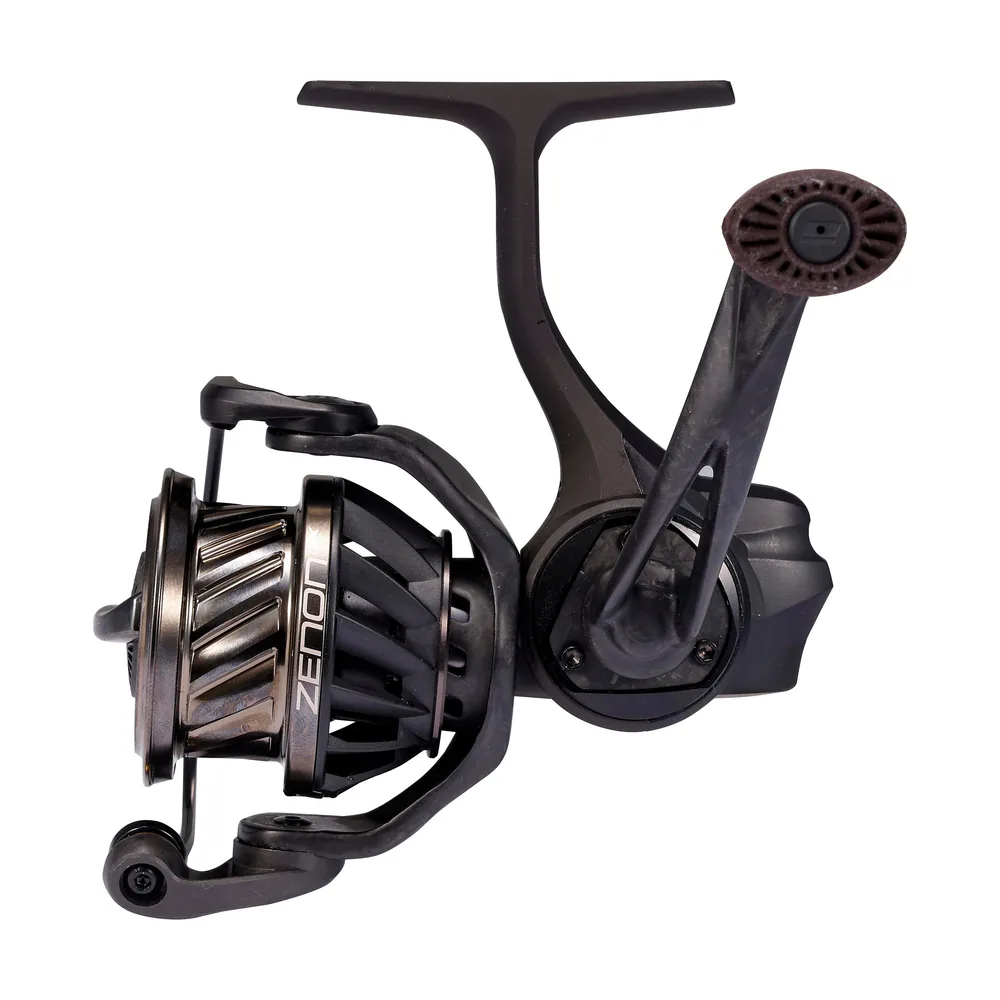
Buying role: Japan: premium light inshore / finesse; left retrieve only.
Read the full ZENON CX SP review (1,309 words)
A specialist lightweight proposition
ZENON CX SP is the most distinctive lightweight choice in this selection because its purchasing argument includes a real operating restriction. The Japanese announcement specifies September 2026, dealer-exclusive distribution and left retrieve only. The 2500SH is listed at 118 grams, with a magnesium body and forged-carbon rotor and handle. These facts identify a focused product rather than a universal premium replacement. The buyer should resolve handle preference and sourcing before deciding whether the unusually low listed mass is useful in the intended outfit.
The official package includes Carbon Matrix drag, an AM gear system, a manual bail arrangement and a 3VA knob. Saltwater and freshwater compatibility is stated. The numerical example table retains the exact 2500SH information instead of using its mass to describe every size. No independent sensitivity advantage or strength percentage is added here. A light specification is a compelling shortlist reason for some anglers, but the final assessment requires the assembled rod and the owner’s presentation routine.
Where the concept makes sense
A buyer repeatedly working small coastal presentations can reasonably examine whether reducing reel mass improves comfort on an already light rod. That is a question about the complete outfit, not an automatic promise that the lightest reel detects more bites. The angler’s grip, rod length, balance and technique all affect the experience. Mounting the exact configuration on the intended rod is more informative than comparing reel weights without that context. An outfit that feels unusually light in isolation can still have an inconvenient balance for one owner.
This is especially relevant when the existing rod and line are already appropriate and the reel purchase is intended to refine a frequently used setup. If the whole outfit is being assembled from scratch, allocate the budget across the components. A premium reel does not compensate for an unsuitable lure range or line choice. The CX proposition is strongest when its specific priorities match a known method. It is weaker when the purchase is primarily an attempt to own the newest launch without a defined use.
Handle and bail habits are decisive
The inability to convert to right retrieve is not a minor accessory issue. Someone who normally retrieves right-handed should not assume this can be solved later with a replacement handle. The official restriction needs to be treated as part of the product definition. Try the required routine before ordering if it differs from the established habit. A specification advantage can lose practical value when the owner has to fight an uncomfortable operating pattern throughout every session.
The manual bail return also deserves attention. Learn the intended sequence and the exact manual’s instructions instead of assuming the same automatic return behavior as another reel. A deliberate handling routine can suit an experienced angler, but familiarity should be established before fishing. Consider how the setup will be used when changing presentations or handling line in wind. The review does not claim that a manual bail guarantees fewer line problems; technique and preparation still matter.
Compare with MGX GANMA before importing
MGX GANMA offers another documented 2026 lightweight Japanese comparison. The buyer should evaluate its actual package and handling against the CX, with equal attention to line capacity, rod fit and delivered cost. The existence of a lighter premium choice does not make the other option obsolete. One owner may value the CX’s focused design, while another may obtain more practical value from a less restrictive setup and simpler support. The choice should address a repeated need rather than a single headline figure.
Dealer-exclusive Japanese positioning also makes supplier verification important. Obtain the exact code, delivery expectations, return policy and service routing. A listing for another ZENON generation does not become this product because the photo looks similar. For coastal use, retain the distinction between stated saltwater compatibility and unverified whole-body protection. This review does not describe the CX as a dedicated heavy-offshore reel or infer an immersion rating from its protected bearing descriptions.
Buying verdict
ZENON CX SP deserves a focused premium shortlist for a left-retrieve angler refining a light coastal or freshwater presentation outfit. Its appeal depends on using the actual operating arrangement and selecting sufficient line reserve. Compare the full delivered cost with MGX GANMA and supported local alternatives. The reviewed evidence establishes design and generation facts; it does not establish measured casting gains, independent sensitivity results or a personal long-term durability record.
Outfit planning and ownership — shared guidance
Before ordering this family, write down the rod, normal presentation, line diameter, fishing depth and landing position. This converts an attractive catalog entry into a defined equipment decision. Consider the ordinary session and a sensible margin for recurring difficult conditions. An exceptional target that would need a specialist outfit should not dictate every general-purpose purchase, but conditions encountered routinely should not be ignored. The correct configuration needs to support the actual method before a technology name becomes a reason to spend more.
Treat published capacity as a reference for the specified line, not a guaranteed fill with every product carrying a similar strength label. Account for depth and current, line already cast out, expected reserve and material lost through abrasion trimming. PE size, diameter and pound rating are different kinds of information. Retain the units used by the regional chart and check the line you will actually buy. A capacity problem is better solved by a suitable spool or outfit than by relying on optimistic packing.
Set working drag for the complete system. The rod, line, knots, hooks and angler’s position constrain usable pressure. A catalog maximum is not a universal operating instruction and cannot establish performance through a long fight. Begin with a deliberate setting appropriate to the method and verify it using a suitable procedure. If the method requires evidence about sustained pressure or thermal behavior, seek reliable exact-model testing or specialist guidance. This review supplies no measured drag endurance or personal catch record.
When the reel arrives, verify the code, retrieve arrangement and supplied accessories against the order. Mount it on the intended rod and check the grip and balance under the seller’s return conditions. A comfortable unloaded handle movement does not reproduce retrieving a lure in current or fighting a fish, but the assembled outfit can reveal obvious ergonomic problems. Confirm that the intended line and leader arrangement is compatible with the setup. Resolve a wrong configuration before treating it as a fishing-performance problem.
Read the exact manual for setup and care. Where the product is approved for saltwater, that permission still requires attention to recommended cleaning and handling. Do not invent a pressure-washing, soaking or disassembly routine from a generic internet tip. Sand, impacts and contaminated line can affect external interfaces even when bearings have a protective description. If the reel is submerged or develops abnormal operation, follow manufacturer or authorized-service advice for that model. A corrosion-resistant component is not a reason to disregard ownership instructions.
For an imported reel, confirm warranty routing, spare-part availability and the cost of returning it before payment. Keep the invoice, exact code and seller’s generation description. A Japanese product name resembling a US model does not establish parts interchangeability or local service coverage. Obtain compatibility confirmation for spare spools and handles; visual similarity alone is insufficient. The complete delivered cost should be compared with a supported local alternative of an appropriate size, rather than with an unrelated discounted reel.
Reassess the setup after actual use with attention to line wear, reserve and handling comfort. Change one relevant element at a time so the effect is understandable. A line-preparation problem should not automatically prompt a premium reel purchase, and an unsuitable rod cannot be corrected by a high drag number. The practical objective is an outfit that fits the owner’s recurring fishing and is straightforward to maintain. These principles support the model-specific analysis above without implying independent performance measurements for this reel.
Official ZENON CX SP features, sizes and manual references · Back to comparison
REVO MGX GANMA — detailed review
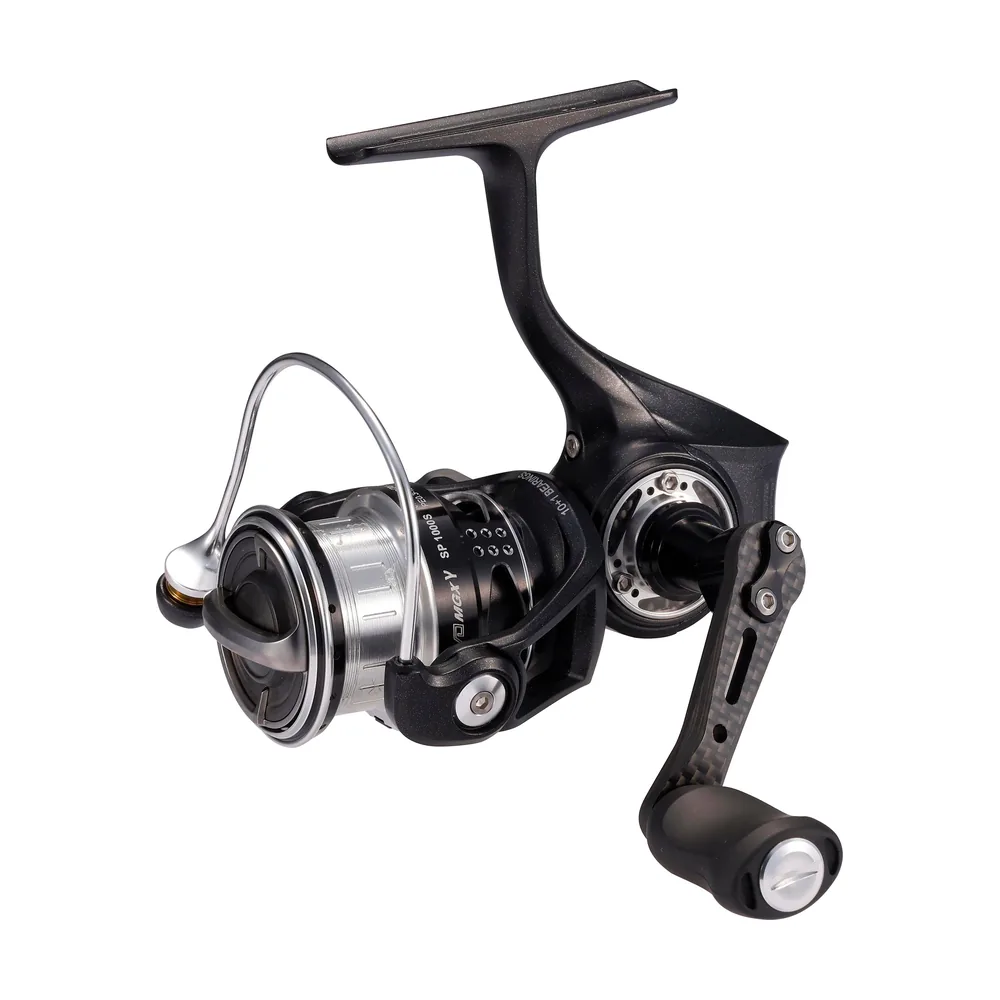
Buying role: Japan: lightweight inshore / freshwater crossover.
Read the full REVO MGX GANMA review (1,299 words)
A documented 2026 Revo update
REVO MGX GANMA is a useful current-generation choice because the Japanese manufacturer supplies a specific comparison rather than merely a New label. Its table identifies 2026 and lists the 2500SH at 165 grams against 180 grams for the 2020 MGX THETA. That is a fifteen-gram difference for the compared size. It should not be enlarged into an all-size reduction or a measured fatigue result. The official spelling GANMA is retained so buyers can find the correct regional product.
The package combines a magnesium-body proposition with a C6 carbon rotor and a two-way Carbon Matrix drag. Freshwater and saltwater compatibility is explicit. The representative 2500SH has a 6.2:1 ratio, five-kilogram maximum drag and 87-centimeter listed pickup. Its PE reference is 0.8 with 150 meters. These are exact-size facts, not a claim that every family member has the same reserve or operating pressure. The numbers establish a starting point for a lightweight presentation comparison.
A practical light-coastal role
MGX GANMA is worth comparing when the owner wants a refined casting outfit for repeated coastal lure work without moving automatically to the lightest and most specialized option. The relevant question is whether the selected size provides adequate line and comfortable handling on the existing rod. Fine-line methods can make a compact configuration attractive, but the fishing position and current determine the required reserve. A sheltered boat session and shore fishing beside structure can produce different answers even when the lure is similar.
Assess the outfit with a normal session in mind. The reel needs to manage the intended presentation, not simply look impressive beside an older model’s weight. If the existing outfit is already comfortable, identify which specific problem the upgrade is expected to solve. If there is no clear problem, the new generation may be interesting without being necessary. This approach gives the manufacturer’s improvement a practical meaning while avoiding an unsupported promise that a lighter reel transforms every angler’s results.
Understand the drag configuration
The two-way description refers to changing the order in which drag washers are assembled to obtain Light or Tough settings. It is not a second rear control for feeding line to a fish, and it is not a setting to improvise during a fight. Consult the exact manual and use appropriate service assistance where necessary. A buyer who prefers never to alter the internal arrangement should ask which configuration is supplied and whether it suits the intended line and method.
The feature should be judged through a real need. A finesse-oriented owner may have different priorities from someone using stronger line for a more resistant presentation. The terminology does not remove the need to choose appropriate working pressure. No startup-friction measurements or sustained-load tests are supplied here. The recommendation is based on documented flexibility and original buying reasoning. It does not turn the manufacturer’s drag name into independent proof of superiority over every alternative.
GANMA versus CX and RAYREX
ZENON CX SP addresses the especially low-mass premium buyer and adds its left-only retrieve restriction. RAYREX SP offers another lightweight Japanese proposition with a different construction package. Compare equivalent methods and actual configurations rather than assuming the three form a universal performance ranking. Delivered price and support can change the preferred choice. An owner may reasonably choose the option that fits the rod and is straightforward to maintain, even when another model has a more striking listed weight.
An import decision needs exact-model discipline. Do not substitute an older MGX THETA listing because the seller uses MGX loosely. Obtain the full product name, code and accessories, then check local service arrangements. Saltwater compatibility is useful, but this guide does not derive an IPX rating or unrestricted immersion permission from it. If the normal method involves heavy splash, contamination or more demanding loads, clarify care and suitability with the manufacturer before committing to this lightweight role.
Buying verdict
MGX GANMA is a strong comparison candidate for someone seeking a documented 2026 Japanese update for light coastal and freshwater presentations. Its appeal lies in the specific current package and exact-size fit, not the assumption that every MGX model is the same. Compare CX for the specialist low-mass role and RAYREX where budget and construction favor that alternative. Heavy offshore endorsement requires evidence beyond the listed five-kilogram drag example and is not made here.
Outfit planning and ownership — shared guidance
Before ordering this family, write down the rod, normal presentation, line diameter, fishing depth and landing position. This converts an attractive catalog entry into a defined equipment decision. Consider the ordinary session and a sensible margin for recurring difficult conditions. An exceptional target that would need a specialist outfit should not dictate every general-purpose purchase, but conditions encountered routinely should not be ignored. The correct configuration needs to support the actual method before a technology name becomes a reason to spend more.
Treat published capacity as a reference for the specified line, not a guaranteed fill with every product carrying a similar strength label. Account for depth and current, line already cast out, expected reserve and material lost through abrasion trimming. PE size, diameter and pound rating are different kinds of information. Retain the units used by the regional chart and check the line you will actually buy. A capacity problem is better solved by a suitable spool or outfit than by relying on optimistic packing.
Set working drag for the complete system. The rod, line, knots, hooks and angler’s position constrain usable pressure. A catalog maximum is not a universal operating instruction and cannot establish performance through a long fight. Begin with a deliberate setting appropriate to the method and verify it using a suitable procedure. If the method requires evidence about sustained pressure or thermal behavior, seek reliable exact-model testing or specialist guidance. This review supplies no measured drag endurance or personal catch record.
When the reel arrives, verify the code, retrieve arrangement and supplied accessories against the order. Mount it on the intended rod and check the grip and balance under the seller’s return conditions. A comfortable unloaded handle movement does not reproduce retrieving a lure in current or fighting a fish, but the assembled outfit can reveal obvious ergonomic problems. Confirm that the intended line and leader arrangement is compatible with the setup. Resolve a wrong configuration before treating it as a fishing-performance problem.
Read the exact manual for setup and care. Where the product is approved for saltwater, that permission still requires attention to recommended cleaning and handling. Do not invent a pressure-washing, soaking or disassembly routine from a generic internet tip. Sand, impacts and contaminated line can affect external interfaces even when bearings have a protective description. If the reel is submerged or develops abnormal operation, follow manufacturer or authorized-service advice for that model. A corrosion-resistant component is not a reason to disregard ownership instructions.
For an imported reel, confirm warranty routing, spare-part availability and the cost of returning it before payment. Keep the invoice, exact code and seller’s generation description. A Japanese product name resembling a US model does not establish parts interchangeability or local service coverage. Obtain compatibility confirmation for spare spools and handles; visual similarity alone is insufficient. The complete delivered cost should be compared with a supported local alternative of an appropriate size, rather than with an unrelated discounted reel.
Reassess the setup after actual use with attention to line wear, reserve and handling comfort. Change one relevant element at a time so the effect is understandable. A line-preparation problem should not automatically prompt a premium reel purchase, and an unsuitable rod cannot be corrected by a high drag number. The practical objective is an outfit that fits the owner’s recurring fishing and is straightforward to maintain. These principles support the model-specific analysis above without implying independent performance measurements for this reel.
Official REVO MGX GANMA features, sizes and manual references · Back to comparison
RAYREX SP — detailed review
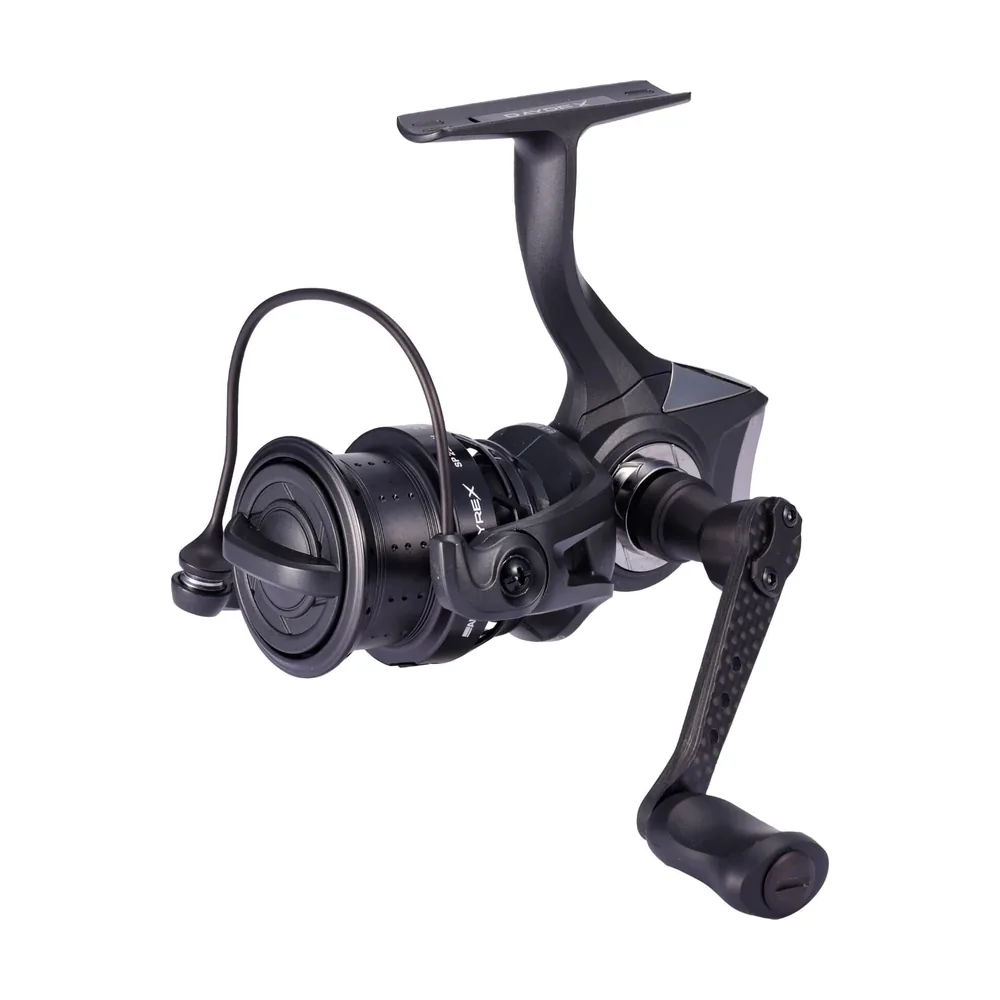
Buying role: Japan: lighter general coastal / inshore value comparison.
Read the full RAYREX SP review (1,305 words)
A lightweight middle-ground comparison
RAYREX SP is attractive as a defined alternative between the premium lightweight Japanese models and more accessible general-purpose options. Its official description lists a C6 carbon body, DuraCarbon handle, V-Rotor, V-Spool and a two-way Carbon Matrix drag. The 2500SH is listed at 196 grams, with eight ball bearings and one roller bearing. Saltwater and freshwater compatibility is stated. The current listing marks it New, but an exact 2025 or 2026 launch date is not asserted here.
The manufacturer’s 2500SH example provides a 6.2:1 ratio, 3.2-kilogram maximum drag, 83-centimeter listed pickup and PE 0.8 capacity of 150 meters. These facts make it possible to compare a concrete configuration rather than rely on a broad lightweight label. They are not a measured operating report. The owner should first decide whether that line reserve and overall size fit the rod and position, then evaluate the additional features in relation to the delivered price.
Why it belongs on an inshore shortlist
An angler assembling a frequently used coastal lure outfit may want a lighter construction proposition without buying primarily for a flagship badge. RAYREX gives that buyer a meaningful comparison. The benefit to investigate is practical handling over an ordinary session, not a guaranteed increase in catch rate. A reel that balances well on one rod can feel less suitable on another. The selected configuration should be assessed with the actual grip, lure routine and line, especially when the method involves frequent casting and line pickup.
This role also depends on the coast being fished. Fine-line work in relatively open water differs from retrieving beside abrasive cover or fishing where a hooked fish cannot be followed. The same capacity and drag example can be comfortable in one situation and inadequate in another. Do not make the whole family an offshore recommendation from a larger model’s specifications. Define the expected reserve and pressure requirement, then select a size or a different outfit that meets it.
Two-way drag without confusion
The official two-way system changes the washer assembly order to create Light and Tough configurations. That is an ownership and setup feature, not a conventional free-liner mechanism. Confirm the supplied setting and consult the correct instructions before changing anything. If the owner is uncertain, authorized assistance is preferable to assuming that washers may be rearranged in any order. The useful purchasing question is whether the documented configuration options address the intended method and whether the owner wants that setup flexibility.
The 3.2-kilogram maximum in the 2500SH example is also a limit rather than a mandatory working pressure. Fine line and smaller hooks may call for a lower deliberate setting. A higher maximum on another size should not be borrowed into this one. The review does not present measured smoothness, fade or heat-management results. It explains the documented design and how to make a sensible purchase decision. The whole outfit remains more important than chasing one drag figure.
Compare the actual step above MAX SX
MAX SX SP offers a different value proposition, including a supplied spare aluminum spool. RAYREX’s listed construction and drag package may appeal more to an owner prioritizing a lighter primary outfit. A spare spool may appeal more to an owner who frequently changes line between two methods. Compare those practical needs rather than assuming the more advanced material description always delivers better value. A feature earns its premium when it will be used in normal fishing.
MGX GANMA is another relevant comparison where the owner is considering a higher tier. Retain equivalent line requirements and rod fit while comparing. Budget saved by choosing RAYREX might support better suited line or a more appropriate rod, while a well-established outfit may justify refinement through another reel. Import service and return conditions belong in that calculation. Availability in the Japanese catalog does not establish support for the exact code in the buyer’s home market.
Buying verdict
RAYREX SP deserves attention for a coastal or freshwater lure angler seeking a documented lightweight package with an explicit saltwater-use statement. Choose it because the selected size, configuration and delivered cost fit the recurring method. Compare MAX SX for spare-spool value and MGX GANMA for a different premium construction proposition. This is an editorial shortlist recommendation, with no claim that the reel was personally field tested or that a New label establishes a particular global launch year.
Outfit planning and ownership — shared guidance
Before ordering this family, write down the rod, normal presentation, line diameter, fishing depth and landing position. This converts an attractive catalog entry into a defined equipment decision. Consider the ordinary session and a sensible margin for recurring difficult conditions. An exceptional target that would need a specialist outfit should not dictate every general-purpose purchase, but conditions encountered routinely should not be ignored. The correct configuration needs to support the actual method before a technology name becomes a reason to spend more.
Treat published capacity as a reference for the specified line, not a guaranteed fill with every product carrying a similar strength label. Account for depth and current, line already cast out, expected reserve and material lost through abrasion trimming. PE size, diameter and pound rating are different kinds of information. Retain the units used by the regional chart and check the line you will actually buy. A capacity problem is better solved by a suitable spool or outfit than by relying on optimistic packing.
Set working drag for the complete system. The rod, line, knots, hooks and angler’s position constrain usable pressure. A catalog maximum is not a universal operating instruction and cannot establish performance through a long fight. Begin with a deliberate setting appropriate to the method and verify it using a suitable procedure. If the method requires evidence about sustained pressure or thermal behavior, seek reliable exact-model testing or specialist guidance. This review supplies no measured drag endurance or personal catch record.
When the reel arrives, verify the code, retrieve arrangement and supplied accessories against the order. Mount it on the intended rod and check the grip and balance under the seller’s return conditions. A comfortable unloaded handle movement does not reproduce retrieving a lure in current or fighting a fish, but the assembled outfit can reveal obvious ergonomic problems. Confirm that the intended line and leader arrangement is compatible with the setup. Resolve a wrong configuration before treating it as a fishing-performance problem.
Read the exact manual for setup and care. Where the product is approved for saltwater, that permission still requires attention to recommended cleaning and handling. Do not invent a pressure-washing, soaking or disassembly routine from a generic internet tip. Sand, impacts and contaminated line can affect external interfaces even when bearings have a protective description. If the reel is submerged or develops abnormal operation, follow manufacturer or authorized-service advice for that model. A corrosion-resistant component is not a reason to disregard ownership instructions.
For an imported reel, confirm warranty routing, spare-part availability and the cost of returning it before payment. Keep the invoice, exact code and seller’s generation description. A Japanese product name resembling a US model does not establish parts interchangeability or local service coverage. Obtain compatibility confirmation for spare spools and handles; visual similarity alone is insufficient. The complete delivered cost should be compared with a supported local alternative of an appropriate size, rather than with an unrelated discounted reel.
Reassess the setup after actual use with attention to line wear, reserve and handling comfort. Change one relevant element at a time so the effect is understandable. A line-preparation problem should not automatically prompt a premium reel purchase, and an unsuitable rod cannot be corrected by a high drag number. The practical objective is an outfit that fits the owner’s recurring fishing and is straightforward to maintain. These principles support the model-specific analysis above without implying independent performance measurements for this reel.
Official RAYREX SP features, sizes and manual references · Back to comparison
Roxani SP — detailed review
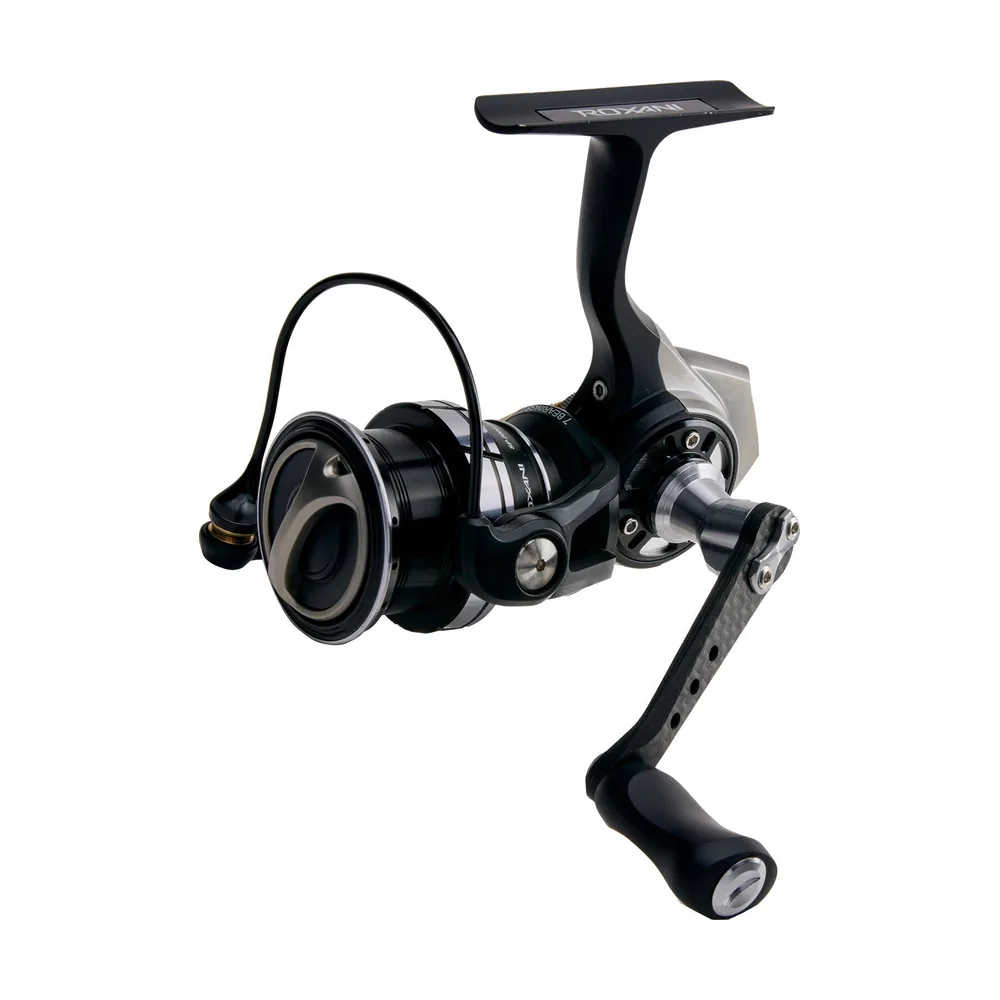
Buying role: Japan: metal-body coastal / inshore crossover.
Read the full Roxani SP review (1,285 words)
An established current-generation alternative
Roxani SP is useful precisely because it does not need to be a 2026 launch to belong in a current buying guide. The official Japanese comparison identifies a 2024 renewal against the 2018 model and reports an average fourteen-gram weight reduction. The design lists a one-piece DuraMetal body, V-Rotor, DuraCarbon handle and two-way Carbon Matrix drag. Saltwater and freshwater compatibility is explicit. The average reduction describes the manufacturer’s comparison, not a claim that every configuration lost exactly fourteen grams.
The current package also lists a friction-free main-shaft support arrangement, sinker keeper and an updated line clip. These are concrete ownership details rather than independent performance results. The official bearing description is six ball bearings plus a roller, with selected Salt Shield protection. No whole-body IPX rating is established here. A buyer should identify the renewed generation before comparing a retailer’s offer, since an older Roxani listing can use familiar branding without containing the reviewed construction package.
Why choose a metal-body comparison
Roxani provides a meaningful alternative for an owner who wants to evaluate a metal-body proposition alongside the C6-based RAYREX. A stated material is useful design information, but it does not supply measured deflection or guarantee longer life under every load. Consider the assembled reel, exact size and normal workload. The owner’s preference may reasonably favor one construction approach, provided the choice is connected to handling, budget and appropriate capacity rather than an assumed universal material hierarchy.
For repeated coastal presentations, the correct configuration must still fit the rod and line. A heavier outfit that balances well may be more comfortable for one owner than a lighter reel that leaves the rod feeling awkward. Conversely, a light presentation method may favor reducing overall mass. Those questions can be examined by mounting the exact reel on the intended rod under the seller’s return conditions. Catalog materials cannot replace that simple ergonomic assessment.
Small ownership details can matter
The sinker keeper and updated clip should be evaluated according to the actual routine. Someone changing presentations or managing a particular rig may value them, while another owner may rarely use them. Check how they are intended to function in the manual and avoid assuming the clip is suitable for any line or for holding a fish under pressure. Accessory features can make ownership more convenient, but they should not distract from capacity, line preparation and a suitable pressure plan.
The friction-free shaft description also needs restraint. It identifies a manufacturer design proposition; it is not this directory’s measurement of startup effort or retrieval under load. When handling the reel, distinguish free rotation from the normal resistance of the intended presentation. If the fishing demands reliable behavior under sustained resistance, obtain appropriate exact-model advice. An unloaded shop impression is useful for grip and obvious problems but cannot reproduce a long session in current.
Two-way drag and generation checks
Roxani lists a two-way Carbon Matrix drag. Obtain the actual instructions and configuration information for the supplied code instead of borrowing a procedure from another Abu Garcia family. Related technology names do not establish identical washer details or service steps. An owner interested in a particular setup should ask the seller which configuration arrives in the box and whether authorized support is available locally. Treat internal changes as model-specific work rather than a casual universal tuning trick.
The generation check is equally important when the price looks especially attractive. Request the exact code and current product description. A reduction in price may simply reflect older stock, which can still be a valid purchase if evaluated accurately. What matters is avoiding a comparison between a current description and a different generation in the cart. Retain the same discipline for spare spools and handles; similar appearance does not establish interchangeability across generations or markets.
Buying verdict
Roxani SP is a sensible current coastal and freshwater comparison for an owner who values its documented metal-body package and practical accessories. Compare RAYREX when a different lightweight construction is attractive, and BEAST SP where the normal method calls for a heavier-use proposition. Choose the renewed generation deliberately and verify support. Its 2024 origin is a clear catalog fact, not a reason to invent a 2026 improvement or to dismiss an otherwise suitable current outfit.
Outfit planning and ownership — shared guidance
Before ordering this family, write down the rod, normal presentation, line diameter, fishing depth and landing position. This converts an attractive catalog entry into a defined equipment decision. Consider the ordinary session and a sensible margin for recurring difficult conditions. An exceptional target that would need a specialist outfit should not dictate every general-purpose purchase, but conditions encountered routinely should not be ignored. The correct configuration needs to support the actual method before a technology name becomes a reason to spend more.
Treat published capacity as a reference for the specified line, not a guaranteed fill with every product carrying a similar strength label. Account for depth and current, line already cast out, expected reserve and material lost through abrasion trimming. PE size, diameter and pound rating are different kinds of information. Retain the units used by the regional chart and check the line you will actually buy. A capacity problem is better solved by a suitable spool or outfit than by relying on optimistic packing.
Set working drag for the complete system. The rod, line, knots, hooks and angler’s position constrain usable pressure. A catalog maximum is not a universal operating instruction and cannot establish performance through a long fight. Begin with a deliberate setting appropriate to the method and verify it using a suitable procedure. If the method requires evidence about sustained pressure or thermal behavior, seek reliable exact-model testing or specialist guidance. This review supplies no measured drag endurance or personal catch record.
When the reel arrives, verify the code, retrieve arrangement and supplied accessories against the order. Mount it on the intended rod and check the grip and balance under the seller’s return conditions. A comfortable unloaded handle movement does not reproduce retrieving a lure in current or fighting a fish, but the assembled outfit can reveal obvious ergonomic problems. Confirm that the intended line and leader arrangement is compatible with the setup. Resolve a wrong configuration before treating it as a fishing-performance problem.
Read the exact manual for setup and care. Where the product is approved for saltwater, that permission still requires attention to recommended cleaning and handling. Do not invent a pressure-washing, soaking or disassembly routine from a generic internet tip. Sand, impacts and contaminated line can affect external interfaces even when bearings have a protective description. If the reel is submerged or develops abnormal operation, follow manufacturer or authorized-service advice for that model. A corrosion-resistant component is not a reason to disregard ownership instructions.
For an imported reel, confirm warranty routing, spare-part availability and the cost of returning it before payment. Keep the invoice, exact code and seller’s generation description. A Japanese product name resembling a US model does not establish parts interchangeability or local service coverage. Obtain compatibility confirmation for spare spools and handles; visual similarity alone is insufficient. The complete delivered cost should be compared with a supported local alternative of an appropriate size, rather than with an unrelated discounted reel.
Reassess the setup after actual use with attention to line wear, reserve and handling comfort. Change one relevant element at a time so the effect is understandable. A line-preparation problem should not automatically prompt a premium reel purchase, and an unsuitable rod cannot be corrected by a high drag number. The practical objective is an outfit that fits the owner’s recurring fishing and is straightforward to maintain. These principles support the model-specific analysis above without implying independent performance measurements for this reel.
Official Roxani SP features, sizes and manual references · Back to comparison
MAX SX SP — detailed review
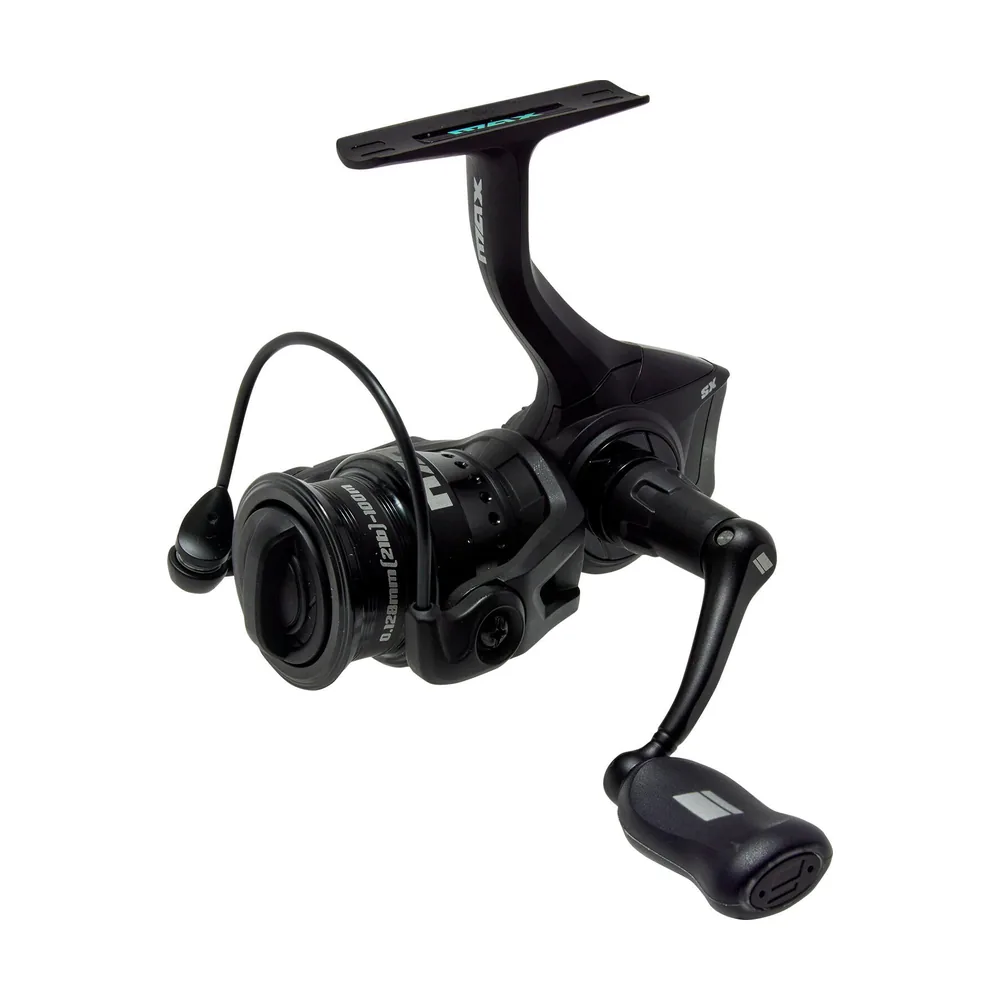
Buying role: Japan: accessible inshore / general-purpose; spare spool.
Read the full MAX SX SP review (1,299 words)
Value built around a usable accessory
MAX SX SP deserves a separate review because its official Japanese package includes a spare aluminum spool. That is a practical selection reason for someone moving between two suitable line arrangements, not simply an extra bearing count. The manufacturer lists a compact asymmetric design, V-Rotor, V-Spool, screw-in aluminum handle and six ball bearings plus one roller bearing. Freshwater and saltwater compatibility is stated. The comparison with RAYREX identifies a graphite-body and felt-drag proposition for this accessible model.
The accessory has to fit a real routine. An owner using two line types or two appropriate strengths may value the ability to prepare both without stripping and replacing line each time. Another angler who always fishes the same setup may gain less. Ask what is actually supplied in the exact box and confirm the spool compatibility before purchase. The Japanese MAX SX SP description should not automatically be applied to a US product with a similar MAX name.
A complete-outfit approach to inshore value
For a budget-conscious coastal purchase, the useful comparison is the whole outfit rather than reel price alone. A less expensive reel can allow appropriate line, leader and a rod suited to the normal presentation. That can be a more purposeful allocation than spending heavily on a reel while using an unsuitable supporting setup. MAX SX’s role is strongest when its selected capacity and handling meet an ordinary method without relying on a premium feature the owner does not need.
Accessible pricing does not eliminate the need for exact-size selection. Small presentations, bait work and larger lures can require different capacity and pressure plans. The same family may contain several configurations, but the brand badge is not a guarantee that every one fits every coastal task. Identify the line diameter, reserve and retrieve needed, then obtain the exact chart for the code being offered. This review deliberately does not copy an uncertain larger-size ratio into a verified numerical table.
Making a spare spool useful
Prepare each spool for a defined job and keep a record of the line and backing used. A spool loaded for one method should not be chosen at random merely because it is already full. Capacity and working pressure need to remain appropriate after a change. Consult the manual for handling and installation, and keep parts clean during the change. A spare is useful when it makes a planned transition straightforward; it is not a replacement for understanding the setup.
Do not assume that changing spools makes a light rod suitable for a heavier workload. The rod, hooks, leader and landing position still belong to the pressure plan. If the two methods are too different, a separate outfit may be more appropriate. The accessory’s value should be assessed honestly within the same compatible range of fishing. This keeps an attractive box feature connected to a real benefit rather than turning it into an imaginary all-purpose conversion system.
MAX SX versus MAX X and RAYREX
MAX X SP offers a supplied-nylon-line proposition, while MAX SX provides the documented spare aluminum spool. Those suit different buyers. Someone learning basic setup may appreciate ready-supplied line, while an owner who already chooses their own line may value a second spool more. Compare exact size and delivered price before treating either as the universal better buy. An accessible outfit should be easy to understand and maintain, with a configuration that matches the method rather than the longest feature list.
RAYREX adds a different body and handle package and a two-way carbon drag proposition. The buyer should ask whether those changes address an actual need. A frequently used outfit may justify refinement, while occasional general-purpose fishing may favor a simpler purchase and budget for supporting equipment. The decision should not depend on unverified performance rankings inferred from bearing counts. No measured casting, drag-smoothness or durability advantage is supplied by this review.
Buying verdict
MAX SX SP is worth considering for an accessible coastal or freshwater outfit where its compatible sizes and spare-spool package support two real line arrangements. Confirm the Japanese code, accessories and local service before importing. Its saltwater statement does not establish whole-body sealing or a dedicated heavy-offshore role. The recommendation is about practical value and exact-method fit; it does not claim personal long-term testing or transfer specifications from a similarly named regional reel.
Outfit planning and ownership — shared guidance
Before ordering this family, write down the rod, normal presentation, line diameter, fishing depth and landing position. This converts an attractive catalog entry into a defined equipment decision. Consider the ordinary session and a sensible margin for recurring difficult conditions. An exceptional target that would need a specialist outfit should not dictate every general-purpose purchase, but conditions encountered routinely should not be ignored. The correct configuration needs to support the actual method before a technology name becomes a reason to spend more.
Treat published capacity as a reference for the specified line, not a guaranteed fill with every product carrying a similar strength label. Account for depth and current, line already cast out, expected reserve and material lost through abrasion trimming. PE size, diameter and pound rating are different kinds of information. Retain the units used by the regional chart and check the line you will actually buy. A capacity problem is better solved by a suitable spool or outfit than by relying on optimistic packing.
Set working drag for the complete system. The rod, line, knots, hooks and angler’s position constrain usable pressure. A catalog maximum is not a universal operating instruction and cannot establish performance through a long fight. Begin with a deliberate setting appropriate to the method and verify it using a suitable procedure. If the method requires evidence about sustained pressure or thermal behavior, seek reliable exact-model testing or specialist guidance. This review supplies no measured drag endurance or personal catch record.
When the reel arrives, verify the code, retrieve arrangement and supplied accessories against the order. Mount it on the intended rod and check the grip and balance under the seller’s return conditions. A comfortable unloaded handle movement does not reproduce retrieving a lure in current or fighting a fish, but the assembled outfit can reveal obvious ergonomic problems. Confirm that the intended line and leader arrangement is compatible with the setup. Resolve a wrong configuration before treating it as a fishing-performance problem.
Read the exact manual for setup and care. Where the product is approved for saltwater, that permission still requires attention to recommended cleaning and handling. Do not invent a pressure-washing, soaking or disassembly routine from a generic internet tip. Sand, impacts and contaminated line can affect external interfaces even when bearings have a protective description. If the reel is submerged or develops abnormal operation, follow manufacturer or authorized-service advice for that model. A corrosion-resistant component is not a reason to disregard ownership instructions.
For an imported reel, confirm warranty routing, spare-part availability and the cost of returning it before payment. Keep the invoice, exact code and seller’s generation description. A Japanese product name resembling a US model does not establish parts interchangeability or local service coverage. Obtain compatibility confirmation for spare spools and handles; visual similarity alone is insufficient. The complete delivered cost should be compared with a supported local alternative of an appropriate size, rather than with an unrelated discounted reel.
Reassess the setup after actual use with attention to line wear, reserve and handling comfort. Change one relevant element at a time so the effect is understandable. A line-preparation problem should not automatically prompt a premium reel purchase, and an unsuitable rod cannot be corrected by a high drag number. The practical objective is an outfit that fits the owner’s recurring fishing and is straightforward to maintain. These principles support the model-specific analysis above without implying independent performance measurements for this reel.
Official MAX SX SP features, sizes and manual references · Back to comparison
MAX X SP — detailed review
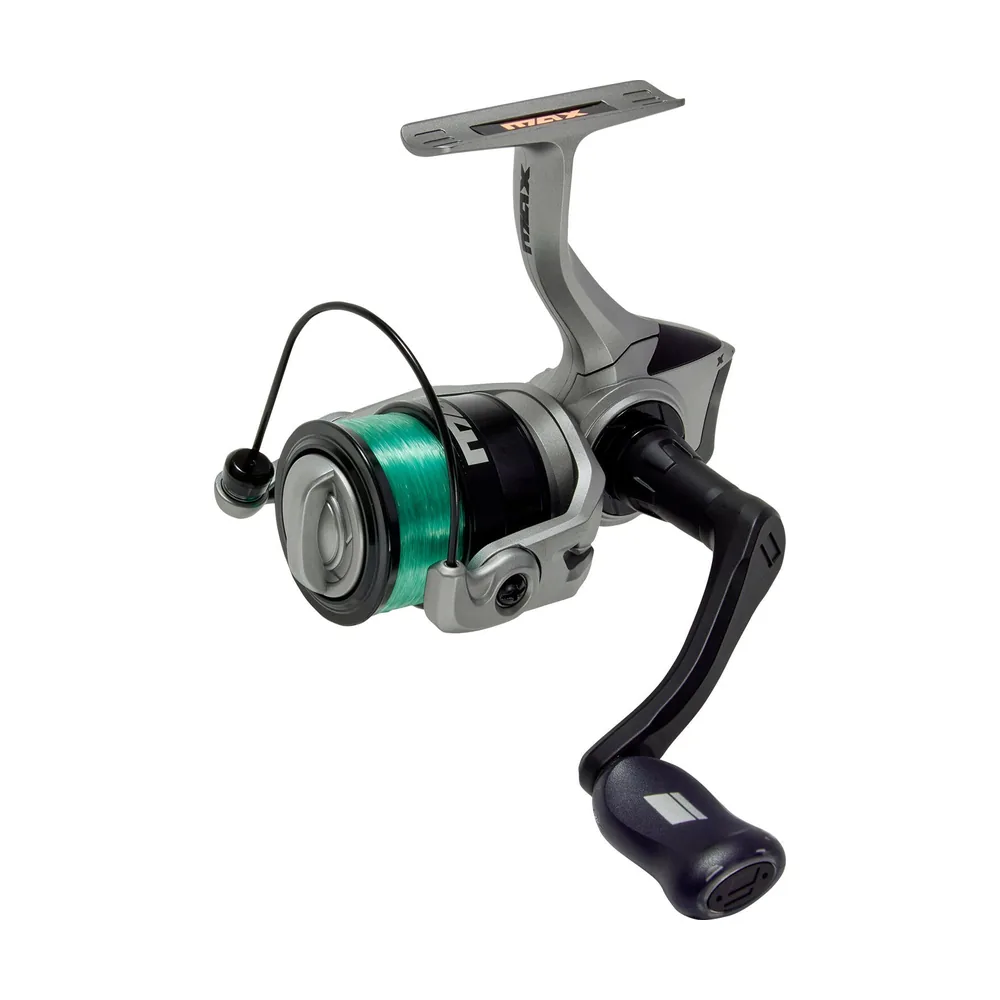
Buying role: Japan: accessible general coastal / freshwater; supplied nylon.
Read the full MAX X SP review (1,305 words)
A simple entry point with supplied line
MAX X SP is an open-face Japanese spinning choice supplied with nylon line. The official package lists four ball bearings plus one roller bearing, an aluminum spool, screw-in handle, Rocket line management and reversible retrieve. Saltwater and freshwater compatibility is stated. These facts make it a distinct accessible option without borrowing the spare spool or the complete feature package of MAX SX. The supplied line is an ownership convenience, not evidence that every box has the ideal line for every intended method.
A buyer should identify the exact configuration, the line supplied and whether that line fits the intended presentation. The product name must include SP when there is a risk of confusion with other MAX mechanisms. MAX X EZCAST, for example, is a different mechanism and should not be substituted because a retailer search returns a familiar name. This guide reviews the open-face spinning product from the Japanese source. It does not assume identical specifications for similarly named stock in another country.
Where accessible tackle can be appropriate
An angler learning a manageable coastal or freshwater method may benefit from a straightforward outfit that does not demand a premium reel budget. The meaningful target is suitable tackle for the actual rod, line and presentation. A simple setup that is understood can be more useful than a sophisticated reel bought before the owner knows what needs improving. Define the ordinary fishing and appropriate reserve, then choose a configuration that allows the angler to concentrate on handling and preparation.
The accessible role should not become an excuse to ignore technique demands. Abrasive cover, stronger current or a difficult landing position can change the outfit requirements. If the method genuinely calls for a different capacity or construction proposition, selecting a more appropriate reel is sensible. The distinction is based on the task, not on an assumption that all budget reels are unsuitable or that all premium reels are necessary. This review provides no independent longevity ranking against more expensive Abu Garcia choices.
Inspect the supplied nylon deliberately
Check the supplied line’s stated strength, condition and suitability for the method before fishing. Ready-supplied line saves one preparation step, but the owner still needs to understand knots, line wear and the chosen pressure. If another line is required, plan that replacement into the complete cost rather than considering the original fill an automatic saving. A preloaded spool should be evaluated as part of setup, with the same care given to any line installed separately.
The line arrangement also affects how the outfit should be taught or shared. Explain the normal retrieve routine, drag setting and how to identify damaged sections. A first-time owner benefits from a clear method and a limited number of variables. Changing rod, lure, line and drag all at once makes it difficult to identify a problem. The goal is to build a predictable, suitable outfit rather than assume the factory fill removes the need for preparation.
Compare value with the spare-spool option
MAX SX SP is relevant when the owner wants to prepare two different compatible line setups. The second spool can be more useful than supplied nylon for someone who already has a preferred line. MAX X can make more sense when the chosen supplied-line configuration is suitable and simplicity is the priority. Compare what will actually be used after purchase. A box containing more equipment is not automatically a better value if those items do not support the fishing routine.
For a more established lure outfit, RAYREX or Roxani may offer features the owner can evaluate against a defined need. Avoid upgrading solely from a bearing-count comparison; count does not independently measure overall smoothness or endurance. First identify whether the recurring problem is capacity, rod fit, line preparation or the reel itself. Money spent on the relevant problem has a clearer purpose than moving through price tiers without diagnosing what the outfit needs.
Buying verdict
MAX X SP is an accessible Japanese spinning candidate for a clearly defined general-purpose coastal or freshwater setup, particularly where its actual supplied nylon is useful. Verify the model, line and service arrangements. It is not promoted here for dedicated heavy-offshore work, nor described as fully waterproof from its saltwater-use statement. Its strongest argument is a suitable, understandable complete outfit at an appropriate total cost, with normal preparation and ownership care still required.
Outfit planning and ownership — shared guidance
Before ordering this family, write down the rod, normal presentation, line diameter, fishing depth and landing position. This converts an attractive catalog entry into a defined equipment decision. Consider the ordinary session and a sensible margin for recurring difficult conditions. An exceptional target that would need a specialist outfit should not dictate every general-purpose purchase, but conditions encountered routinely should not be ignored. The correct configuration needs to support the actual method before a technology name becomes a reason to spend more.
Treat published capacity as a reference for the specified line, not a guaranteed fill with every product carrying a similar strength label. Account for depth and current, line already cast out, expected reserve and material lost through abrasion trimming. PE size, diameter and pound rating are different kinds of information. Retain the units used by the regional chart and check the line you will actually buy. A capacity problem is better solved by a suitable spool or outfit than by relying on optimistic packing.
Set working drag for the complete system. The rod, line, knots, hooks and angler’s position constrain usable pressure. A catalog maximum is not a universal operating instruction and cannot establish performance through a long fight. Begin with a deliberate setting appropriate to the method and verify it using a suitable procedure. If the method requires evidence about sustained pressure or thermal behavior, seek reliable exact-model testing or specialist guidance. This review supplies no measured drag endurance or personal catch record.
When the reel arrives, verify the code, retrieve arrangement and supplied accessories against the order. Mount it on the intended rod and check the grip and balance under the seller’s return conditions. A comfortable unloaded handle movement does not reproduce retrieving a lure in current or fighting a fish, but the assembled outfit can reveal obvious ergonomic problems. Confirm that the intended line and leader arrangement is compatible with the setup. Resolve a wrong configuration before treating it as a fishing-performance problem.
Read the exact manual for setup and care. Where the product is approved for saltwater, that permission still requires attention to recommended cleaning and handling. Do not invent a pressure-washing, soaking or disassembly routine from a generic internet tip. Sand, impacts and contaminated line can affect external interfaces even when bearings have a protective description. If the reel is submerged or develops abnormal operation, follow manufacturer or authorized-service advice for that model. A corrosion-resistant component is not a reason to disregard ownership instructions.
For an imported reel, confirm warranty routing, spare-part availability and the cost of returning it before payment. Keep the invoice, exact code and seller’s generation description. A Japanese product name resembling a US model does not establish parts interchangeability or local service coverage. Obtain compatibility confirmation for spare spools and handles; visual similarity alone is insufficient. The complete delivered cost should be compared with a supported local alternative of an appropriate size, rather than with an unrelated discounted reel.
Reassess the setup after actual use with attention to line wear, reserve and handling comfort. Change one relevant element at a time so the effect is understandable. A line-preparation problem should not automatically prompt a premium reel purchase, and an unsuitable rod cannot be corrected by a high drag number. The practical objective is an outfit that fits the owner’s recurring fishing and is straightforward to maintain. These principles support the model-specific analysis above without implying independent performance measurements for this reel.
Official MAX X SP features, sizes and manual references · Back to comparison
Heavier coastal and boat applications — offshore limits
BEAST SP provides a heavier-use comparison. Dedicated heavy-offshore suitability needs exact-model capacity, exposure and sustained-load evidence; five separate offshore recommendations are not manufactured from this selection.
BEAST SP — detailed review
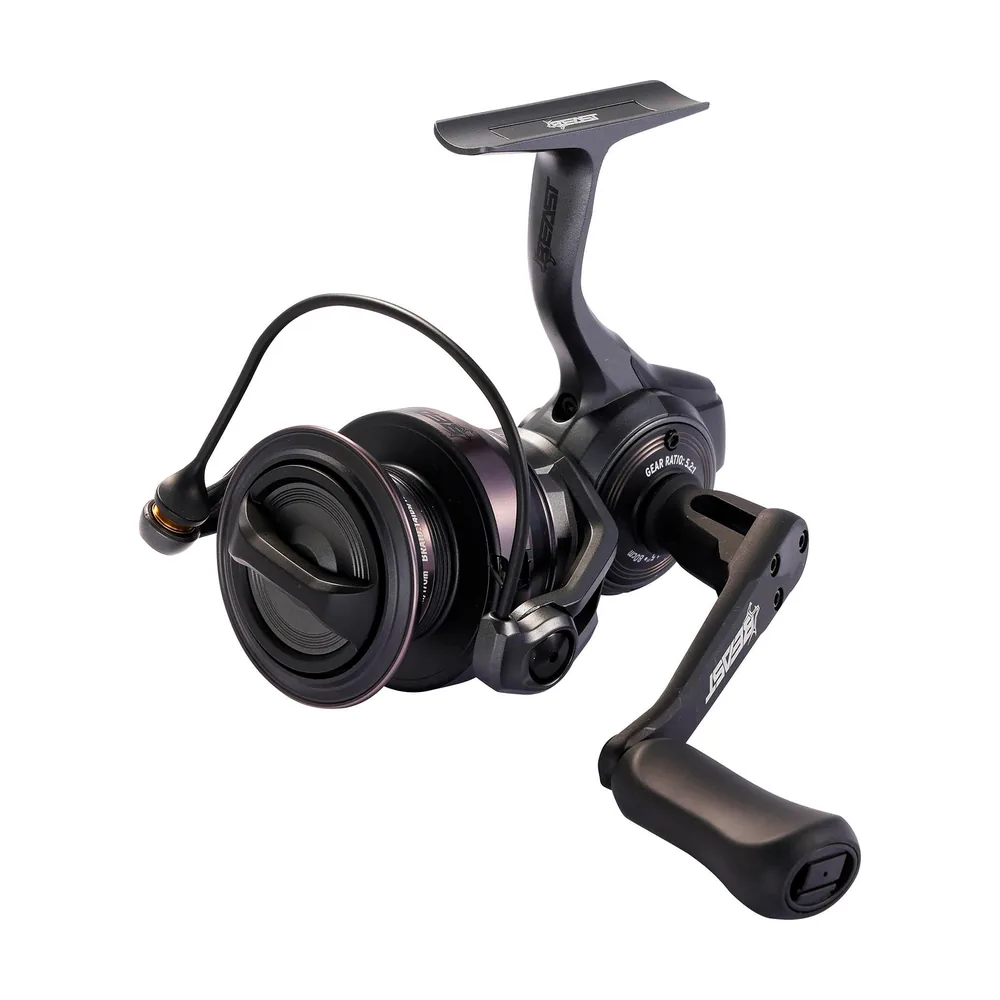
Buying role: Japan: heavier coastal / boat-work comparison; offshore conditional.
Read the full BEAST SP review (1,292 words)
The heavier-use comparison in this selection
BEAST SP is the clearest heavier-use proposition among the ten reviewed Abu Garcia families. The Japanese description identifies a DuraMetal frame, large-diameter GenIII Duragear system and Power Stack Carbon Matrix drag. It also lists a stainless main shaft, aluminum handle and V-Rotor and V-Spool arrangements. Freshwater and saltwater compatibility is explicit. The bearing package totals seven ball bearings plus one roller, with three Salt Shield and four HPCR ball bearings. Those component facts do not establish an independently verified whole-body sealing rating.
The family includes standard and higher-ratio configurations. In the verified examples, 4000H is listed at 6.2:1 with a ten-kilogram maximum and PE 2 capacity of 220 meters. The 5000H example lists an 11.8-kilogram maximum and PE 3 capacity of 160 meters. These figures should be assessed as exact-size references. A stronger line size can consume spool volume quickly, so a larger model name does not automatically provide more meters of the selected line.
Define what heavier fishing means
A buyer moving beyond light coastal presentations should describe the actual workload before choosing BEAST. Larger lure casting, retrieving a resistant presentation and deeper boat work are distinct tasks. They may favor different ratios, capacities and supporting rods. A family described for heavier duty is a useful starting point, but the exact method still determines whether a configuration is appropriate. Consider how much line is ordinarily outside the spool and what reserve remains before a fish takes line.
For a shore-based owner, the landing position and nearby structure can increase the need for a deliberate pressure plan. A boat-based owner may have different movement options, but depth and current can consume reserve. Neither case is solved by reading only the largest drag number. The rod, knots, hooks and landing method need to support the pressure that can actually be used. A reel’s ceiling cannot make the surrounding equipment or fishing position suitable for an aggressive approach.
Standard and high-ratio decisions
Choose between the available retrieve propositions by considering the ordinary presentation. Faster pickup can help with slack or repositioning, while another method may favor a different normal handle rhythm. Ratio is not the full story; examine the exact listed recovery and spool dimensions. Compare corresponding configurations and resist scaling one size’s pickup into another. The numerical examples here provide verified reference points rather than a promise of identical recovery throughout a retrieve as the spool fill changes.
The word BEAST should not replace that analysis. A reel with a forceful name still needs a defined role. If the ordinary fishing is light and repetitive, carrying a heavier-use outfit may be unnecessary. If the ordinary task genuinely demands more capacity or a different construction proposition, a light premium reel may be the wrong comparison. Select for the recurring job, allowing an appropriate margin without designing every outfit around a hypothetical exceptional fish.
The offshore recommendation boundary
BEAST can enter a discussion of particular heavier saltwater and boat applications, but this directory does not present it as a universal dedicated heavy-offshore replacement. The consulted specifications do not provide independent sustained-load or drag-heating measurements. A specialist plan requiring that evidence should obtain exact-model advice and reliable testing before purchase. The absence of those results should remain visible, especially when a retailer uses a high drag maximum to imply unrestricted performance under demanding conditions.
Protection also needs precise language. Saltwater compatibility and protected bearing descriptions are useful, yet they do not give this review an IPX value or a permission for repeated submersion. Ask about the expected exposure and recommended care for the exact method. Compare dedicated saltwater alternatives where protection and specialist workload are central to the purchase. A confident shortlist should be built from the evidence required by the actual conditions, not from the most dramatic family name.
Buying verdict
BEAST SP is the principal Abu Garcia comparison here for an owner with a defined heavier coastal or boat-work requirement. Choose the exact size and retrieve deliberately, leaving appropriate reserve with the actual line. Verify support and workload advice before a specialist offshore purchase. The recommendation remains a researched assessment of design facts and method fit; it does not claim personal large-fish catches, independent endurance testing or a body protection rating that the source did not establish.
Outfit planning and ownership — shared guidance
Before ordering this family, write down the rod, normal presentation, line diameter, fishing depth and landing position. This converts an attractive catalog entry into a defined equipment decision. Consider the ordinary session and a sensible margin for recurring difficult conditions. An exceptional target that would need a specialist outfit should not dictate every general-purpose purchase, but conditions encountered routinely should not be ignored. The correct configuration needs to support the actual method before a technology name becomes a reason to spend more.
Treat published capacity as a reference for the specified line, not a guaranteed fill with every product carrying a similar strength label. Account for depth and current, line already cast out, expected reserve and material lost through abrasion trimming. PE size, diameter and pound rating are different kinds of information. Retain the units used by the regional chart and check the line you will actually buy. A capacity problem is better solved by a suitable spool or outfit than by relying on optimistic packing.
Set working drag for the complete system. The rod, line, knots, hooks and angler’s position constrain usable pressure. A catalog maximum is not a universal operating instruction and cannot establish performance through a long fight. Begin with a deliberate setting appropriate to the method and verify it using a suitable procedure. If the method requires evidence about sustained pressure or thermal behavior, seek reliable exact-model testing or specialist guidance. This review supplies no measured drag endurance or personal catch record.
When the reel arrives, verify the code, retrieve arrangement and supplied accessories against the order. Mount it on the intended rod and check the grip and balance under the seller’s return conditions. A comfortable unloaded handle movement does not reproduce retrieving a lure in current or fighting a fish, but the assembled outfit can reveal obvious ergonomic problems. Confirm that the intended line and leader arrangement is compatible with the setup. Resolve a wrong configuration before treating it as a fishing-performance problem.
Read the exact manual for setup and care. Where the product is approved for saltwater, that permission still requires attention to recommended cleaning and handling. Do not invent a pressure-washing, soaking or disassembly routine from a generic internet tip. Sand, impacts and contaminated line can affect external interfaces even when bearings have a protective description. If the reel is submerged or develops abnormal operation, follow manufacturer or authorized-service advice for that model. A corrosion-resistant component is not a reason to disregard ownership instructions.
For an imported reel, confirm warranty routing, spare-part availability and the cost of returning it before payment. Keep the invoice, exact code and seller’s generation description. A Japanese product name resembling a US model does not establish parts interchangeability or local service coverage. Obtain compatibility confirmation for spare spools and handles; visual similarity alone is insufficient. The complete delivered cost should be compared with a supported local alternative of an appropriate size, rather than with an unrelated discounted reel.
Reassess the setup after actual use with attention to line wear, reserve and handling comfort. Change one relevant element at a time so the effect is understandable. A line-preparation problem should not automatically prompt a premium reel purchase, and an unsuitable rod cannot be corrected by a high drag number. The practical objective is an outfit that fits the owner’s recurring fishing and is straightforward to maintain. These principles support the model-specific analysis above without implying independent performance measurements for this reel.
Official BEAST SP features, sizes and manual references · Back to comparison
US Revo lure-work comparisons — coastal approval to verify
These US pages provide detailed lure-reel features but do not establish explicit SW/FW permission in the consulted descriptions. Obtain the exact model’s saltwater guidance before a coastal recommendation.
Revo X Spinning — detailed review
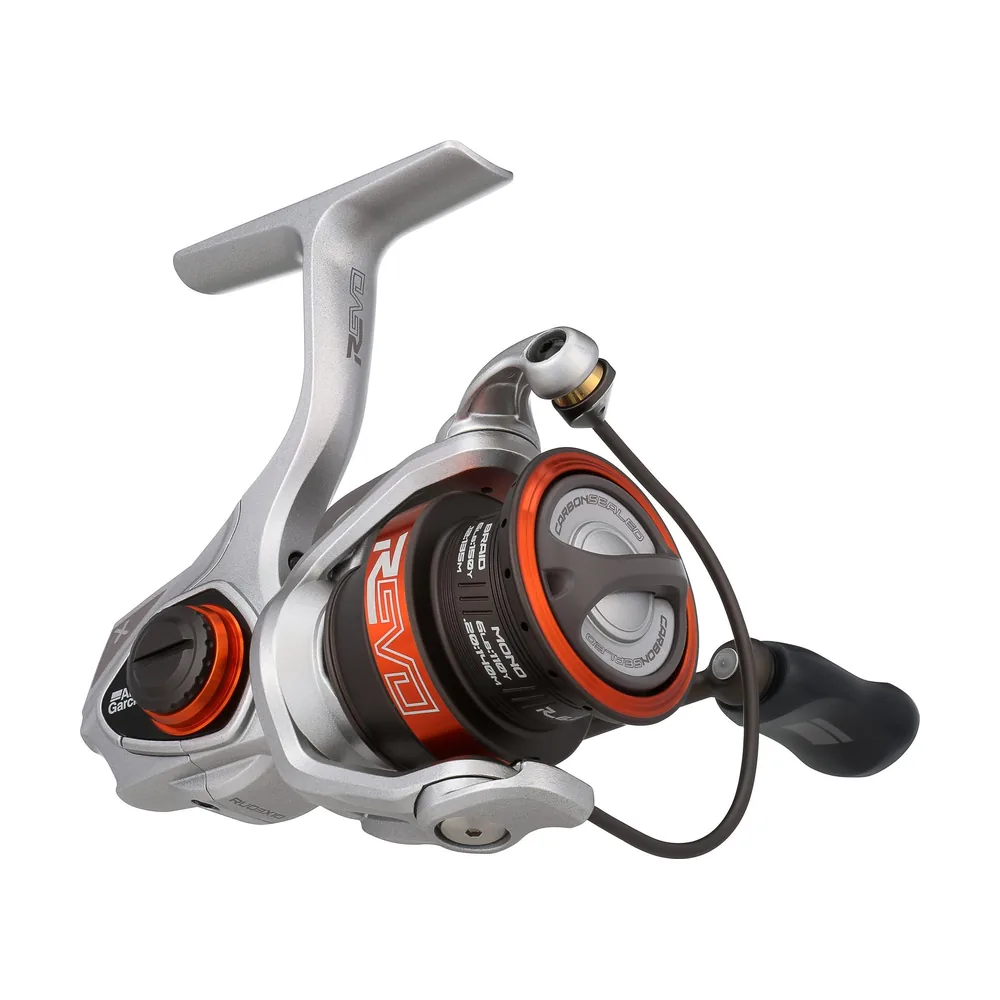
Buying role: US: general lure / freshwater; coastal approval to confirm.
Read the full Revo X Spinning review (1,303 words)
The US Revo value comparison
Revo X Spinning provides a useful US-market comparison for an angler seeking the Revo design proposition without choosing primarily for the upper tier. The current official package lists an A-SYM body design, V-Rotor, AMG2 gearing, machined aluminum spool, Carbon Matrix drag and six HPCR ball bearings plus one roller. Slow oscillation and Rocket line-management features are also listed. The page’s total bearing count of seven is therefore consistent with the six-plus-one description; these are different ways of counting the same package.
The verified US chart lists sizes 10, 20, 30 and 40 with a 6.2:1 ratio and eleven-pound maximum drag. Retrieve is right or left. Capacities are retained in yards and pound ratings in the separate US table. This guide does not supply missing weights from another source or borrow V-Spool terminology from Revo SX when the consulted X feature list does not explicitly list it. Product distinctions should remain accurate even when a shared family resemblance makes copying details tempting.
Choose it for a defined lure outfit
For a general freshwater lure owner, Revo X is an appropriate shortlist comparison when its exact size and documented package fit the rod, line and normal presentations. The relevant decision is whether the outfit supplies sufficient capacity and comfortable handling at the delivered cost. A higher-tier sibling is not automatically necessary. Conversely, choosing the lower-priced model does not relieve the buyer of deciding what line and reserve are required. Value is strongest when the configuration satisfies a known method.
Compare the actual lure routine rather than the reel by itself. Some methods emphasize repeated line pickup and frequent casting, while others involve a more measured retrieve. The selected rod must suit those presentations, and the reel should balance the outfit sensibly. A 6.2:1 ratio does not mean all sizes have identical line recovery. The spool’s dimensions and fill are part of the practical result. Where a precise pickup requirement matters, obtain the complete exact-size specification before purchase.
Coastal use needs a separate confirmation
HPCR bearings are a corrosion-resistance component description. They should not become a blanket statement that every current US Revo X configuration has the same explicit saltwater approval as the Japanese SW/FW products. The retrieved US description does not establish that permission or an IPX rating. A buyer seeking coastal use should obtain the current manual or written manufacturer guidance for the exact code. This is an evidence boundary, not a claim that the reel necessarily cannot be used in saltwater.
If immediate documented coastal compatibility is a priority, the Japanese choices reviewed above provide explicit manufacturer statements, although import support introduces another ownership question. Compare the complete situation: use permission, service, delivery and exact-method suitability. A domestic seller’s convenient stock can be valuable, but it does not settle an unanswered exposure question. Clarify that question before treating a freshwater-oriented shortlist as a fully established coastal recommendation.
Revo X against SX and Rocket
SX lists a different bearing package and explicitly includes V-Spool in the consulted description. Rocket’s main purchase distinction is its faster retrieve. Those are useful reasons to compare, but none independently proves a universal performance ranking. An owner who wants the normal Revo lure proposition at an appropriate cost may find X the purposeful choice. An owner with a specific need for a different package should evaluate whether the sibling’s additional features address that need in the selected size.
Bearing count alone is particularly weak as a final selection rule. The placement, support and complete mechanism matter, and this review supplies no laboratory comparison of loaded behavior or endurance. Do not use the count to promise smoothness for a certain number of seasons. Inspect the actual reel and obtain exact-model support information. If budget is limited, the line and rod need to remain suitable after the reel is bought; a tier upgrade should not undermine the rest of the outfit.
Buying verdict
Revo X Spinning is a clear US-market general-lure comparison for a buyer whose chosen configuration fits the recurring freshwater method. Compare SX for its documented feature differences and Rocket where faster pickup solves a real problem. Confirm exact saltwater guidance before coastal use, and do not apply a Japanese product’s approval to this one by association. The review establishes no hands-on casting gain, independent durability advantage or specialist heavy-offshore endorsement.
Outfit planning and ownership — shared guidance
Before ordering this family, write down the rod, normal presentation, line diameter, fishing depth and landing position. This converts an attractive catalog entry into a defined equipment decision. Consider the ordinary session and a sensible margin for recurring difficult conditions. An exceptional target that would need a specialist outfit should not dictate every general-purpose purchase, but conditions encountered routinely should not be ignored. The correct configuration needs to support the actual method before a technology name becomes a reason to spend more.
Treat published capacity as a reference for the specified line, not a guaranteed fill with every product carrying a similar strength label. Account for depth and current, line already cast out, expected reserve and material lost through abrasion trimming. PE size, diameter and pound rating are different kinds of information. Retain the units used by the regional chart and check the line you will actually buy. A capacity problem is better solved by a suitable spool or outfit than by relying on optimistic packing.
Set working drag for the complete system. The rod, line, knots, hooks and angler’s position constrain usable pressure. A catalog maximum is not a universal operating instruction and cannot establish performance through a long fight. Begin with a deliberate setting appropriate to the method and verify it using a suitable procedure. If the method requires evidence about sustained pressure or thermal behavior, seek reliable exact-model testing or specialist guidance. This review supplies no measured drag endurance or personal catch record.
When the reel arrives, verify the code, retrieve arrangement and supplied accessories against the order. Mount it on the intended rod and check the grip and balance under the seller’s return conditions. A comfortable unloaded handle movement does not reproduce retrieving a lure in current or fighting a fish, but the assembled outfit can reveal obvious ergonomic problems. Confirm that the intended line and leader arrangement is compatible with the setup. Resolve a wrong configuration before treating it as a fishing-performance problem.
Read the exact manual for setup and care. Where the product is approved for saltwater, that permission still requires attention to recommended cleaning and handling. Do not invent a pressure-washing, soaking or disassembly routine from a generic internet tip. Sand, impacts and contaminated line can affect external interfaces even when bearings have a protective description. If the reel is submerged or develops abnormal operation, follow manufacturer or authorized-service advice for that model. A corrosion-resistant component is not a reason to disregard ownership instructions.
For an imported reel, confirm warranty routing, spare-part availability and the cost of returning it before payment. Keep the invoice, exact code and seller’s generation description. A Japanese product name resembling a US model does not establish parts interchangeability or local service coverage. Obtain compatibility confirmation for spare spools and handles; visual similarity alone is insufficient. The complete delivered cost should be compared with a supported local alternative of an appropriate size, rather than with an unrelated discounted reel.
Reassess the setup after actual use with attention to line wear, reserve and handling comfort. Change one relevant element at a time so the effect is understandable. A line-preparation problem should not automatically prompt a premium reel purchase, and an unsuitable rod cannot be corrected by a high drag number. The practical objective is an outfit that fits the owner’s recurring fishing and is straightforward to maintain. These principles support the model-specific analysis above without implying independent performance measurements for this reel.
Official Revo X Spinning features, sizes and manual references · Back to comparison
Revo SX Spinning — detailed review
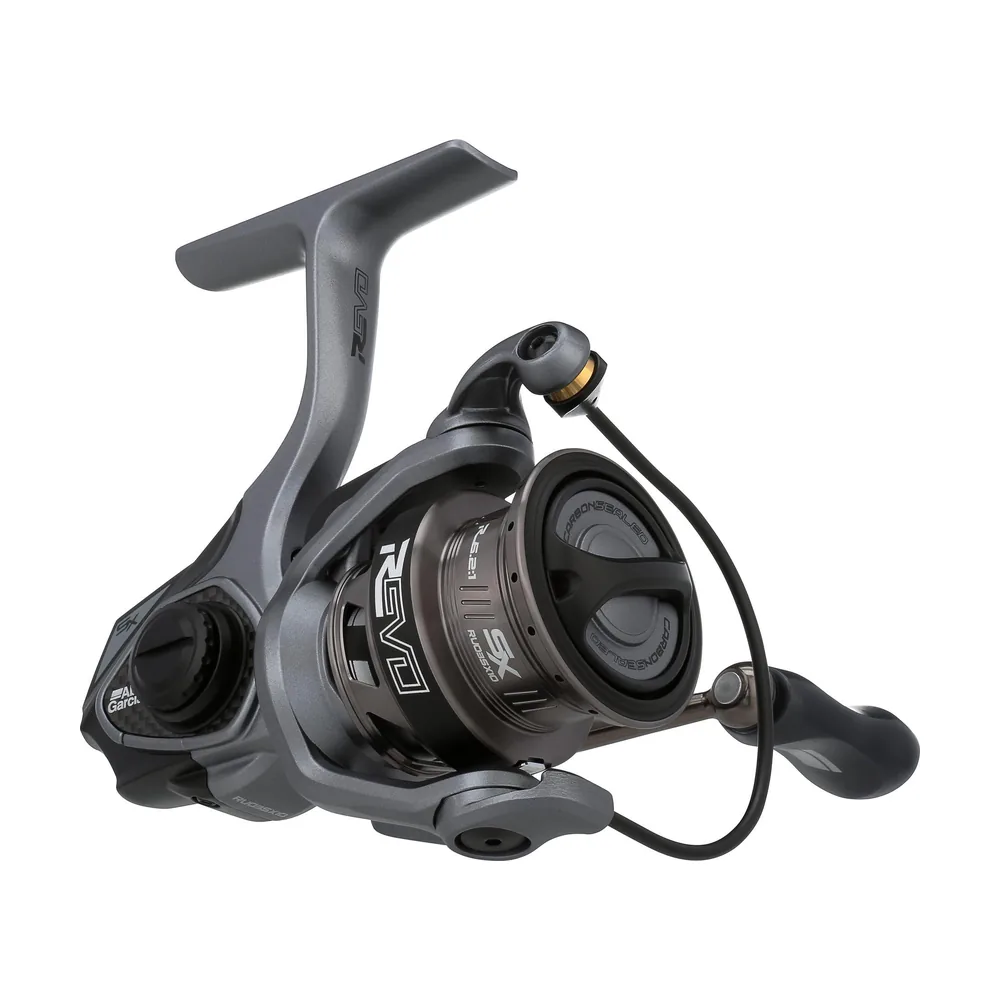
Buying role: US: refined general lure / freshwater; coastal approval to confirm.
Read the full Revo SX Spinning review (1,301 words)
A Revo feature step to assess deliberately
Revo SX Spinning is a current US-market comparison for an angler considering a more developed Revo feature package. The official description lists eight HPCR ball bearings plus one roller, V-Rotor, V-Spool, AMG2 gearing, Carbon Matrix drag and a machined braid-ready aluminum spool. A-SYM body design and slow oscillation are also part of the stated package. The listed total of nine bearings is consistent with eight plus one; it should not be mistakenly presented as nine ball bearings plus a further roller.
The US chart lists 10, 20, 30 and 40 configurations with 6.2:1 ratio, eleven-pound maximum drag and right-or-left retrieve. The table here preserves US capacity units. It does not claim a particular complete body material where the consulted description does not settle it. A-SYM describes a design approach, not permission to call every component aluminum. The verified facts give a concrete comparison with X, while missing information remains a question for the actual offered model.
When refinement has a practical purpose
SX can make sense for an owner who already has a suitable rod and line and is refining a frequently used lure outfit. The useful assessment is the chosen configuration’s handling and capacity, together with the specific documented differences from X. A higher tier is easier to justify when it addresses a recurring need. It is less persuasive when the angler expects the badge or a bearing count to correct an unrelated problem with line preparation, an unsuitable rod or an unrealistic reserve plan.
Take the normal presentation seriously. Repeated casting, picking up slack and retrieving through different resistance levels affect what the owner wants from the outfit. Handle shape and grip can also influence comfort. Mount the exact reel on the rod before treating the overall setup as settled. An unloaded handle check may reveal obvious issues, but it is not an independent demonstration of performance against lure resistance. This review does not claim a measured advantage from shop handling or invented water tests.
Braid-ready does not settle the line plan
The braid-ready spool is a useful product description, but the owner still needs to select suitable line and fill it according to the instructions. A spool reference does not guarantee the published capacity with every braid sold under the same strength label. Diameter, backing and usable reserve matter. The selected leader and knot arrangement should also fit the method and rod. A premium spool feature is most useful when the rest of the line system is prepared correctly.
V-Spool and the Rocket features should be treated as documented design elements rather than quantified casting results. No percentage improvement or tangle-free guarantee is supplied here. An owner who regularly encounters line problems should examine fill, line condition and the handling routine before attributing everything to the reel tier. The model’s package may be appealing, but an accurate review should distinguish manufacturer technology from independent results that have not been obtained.
Compare regional choices without mixing them
Revo SX is not automatically interchangeable with Japanese Roxani or MGX GANMA. Their names, regional specifications and support routes need to remain separate. A buyer comparing them should retain each chart’s units and the exact product identity. Similar compact-design language does not establish common parts or identical exposure permission. For coastal use, the retrieved US SX description leaves exact saltwater guidance to be confirmed, while the reviewed Japanese products explicitly state SW/FW compatibility.
Within the US comparison, X is worth evaluating where its package and cost fit the method, while Rocket is relevant when faster pickup is the main need. Do not choose SX simply because it sits between recognizable names. Identify the feature or handling reason, compare the actual delivered price and keep the supporting outfit appropriate. Local service can be a material advantage over an import, provided the exact model is suitable for the planned environment.
Buying verdict
Revo SX Spinning belongs on a US general-lure shortlist when the selected size and documented spool and bearing package address a real ownership need. It is a feature comparison rather than an independent performance winner. Confirm saltwater-use guidance before a coastal recommendation and retain the correct generation and code when shopping. The published maximum does not establish a heavy-offshore role, and no personal catch history or laboratory durability result is asserted in this review.
Outfit planning and ownership — shared guidance
Before ordering this family, write down the rod, normal presentation, line diameter, fishing depth and landing position. This converts an attractive catalog entry into a defined equipment decision. Consider the ordinary session and a sensible margin for recurring difficult conditions. An exceptional target that would need a specialist outfit should not dictate every general-purpose purchase, but conditions encountered routinely should not be ignored. The correct configuration needs to support the actual method before a technology name becomes a reason to spend more.
Treat published capacity as a reference for the specified line, not a guaranteed fill with every product carrying a similar strength label. Account for depth and current, line already cast out, expected reserve and material lost through abrasion trimming. PE size, diameter and pound rating are different kinds of information. Retain the units used by the regional chart and check the line you will actually buy. A capacity problem is better solved by a suitable spool or outfit than by relying on optimistic packing.
Set working drag for the complete system. The rod, line, knots, hooks and angler’s position constrain usable pressure. A catalog maximum is not a universal operating instruction and cannot establish performance through a long fight. Begin with a deliberate setting appropriate to the method and verify it using a suitable procedure. If the method requires evidence about sustained pressure or thermal behavior, seek reliable exact-model testing or specialist guidance. This review supplies no measured drag endurance or personal catch record.
When the reel arrives, verify the code, retrieve arrangement and supplied accessories against the order. Mount it on the intended rod and check the grip and balance under the seller’s return conditions. A comfortable unloaded handle movement does not reproduce retrieving a lure in current or fighting a fish, but the assembled outfit can reveal obvious ergonomic problems. Confirm that the intended line and leader arrangement is compatible with the setup. Resolve a wrong configuration before treating it as a fishing-performance problem.
Read the exact manual for setup and care. Where the product is approved for saltwater, that permission still requires attention to recommended cleaning and handling. Do not invent a pressure-washing, soaking or disassembly routine from a generic internet tip. Sand, impacts and contaminated line can affect external interfaces even when bearings have a protective description. If the reel is submerged or develops abnormal operation, follow manufacturer or authorized-service advice for that model. A corrosion-resistant component is not a reason to disregard ownership instructions.
For an imported reel, confirm warranty routing, spare-part availability and the cost of returning it before payment. Keep the invoice, exact code and seller’s generation description. A Japanese product name resembling a US model does not establish parts interchangeability or local service coverage. Obtain compatibility confirmation for spare spools and handles; visual similarity alone is insufficient. The complete delivered cost should be compared with a supported local alternative of an appropriate size, rather than with an unrelated discounted reel.
Reassess the setup after actual use with attention to line wear, reserve and handling comfort. Change one relevant element at a time so the effect is understandable. A line-preparation problem should not automatically prompt a premium reel purchase, and an unsuitable rod cannot be corrected by a high drag number. The practical objective is an outfit that fits the owner’s recurring fishing and is straightforward to maintain. These principles support the model-specific analysis above without implying independent performance measurements for this reel.
Official Revo SX Spinning features, sizes and manual references · Back to comparison
Revo Rocket Spinning — detailed review
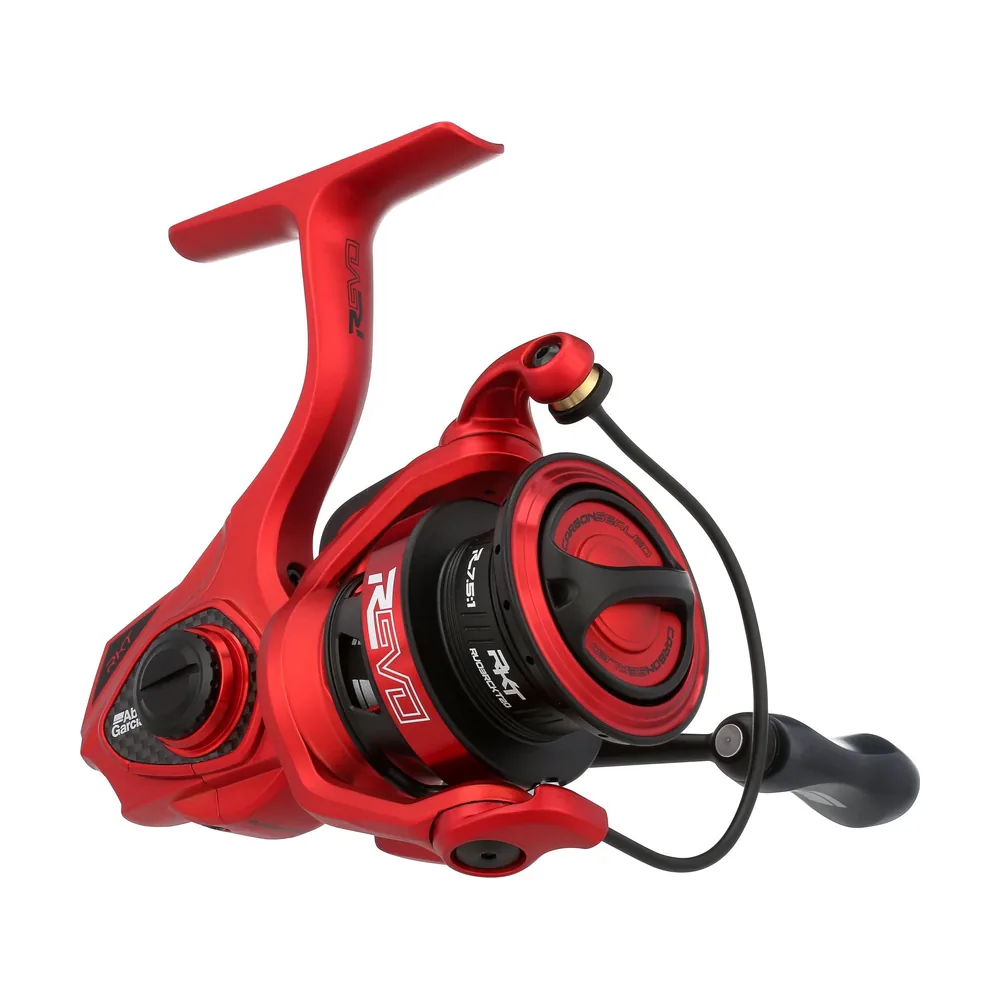
Buying role: US: fast line pickup / lure work; coastal approval to confirm.
Read the full Revo Rocket Spinning review (1,297 words)
Buy the faster retrieve for a reason
Revo Rocket Spinning has the clearest speed-focused purchasing proposition among the reviewed US Revo choices. Its official description lists a 7.6:1 ratio and up to forty-seven inches of line recovery for the 40 size. The bearing package is nine HPCR ball bearings plus one roller. AMG2 gearing, Carbon Matrix drag, V-Rotor, A-SYM body design and Rocket line-management features are documented. Those facts establish a fast-pickup comparison; they do not make the reel universally better for every presentation.
The current US range reviewed includes 20, 30 and 40 configurations. In the retrieved numerical chart, the 20 and 40 have verified eleven-pound maximum-drag entries, while the 30 entry did not expose a verified maximum. The missing value remains visible in the table rather than being filled from a sibling. A thorough comparison should preserve that uncertainty. The forty-seven-inch description belongs to the stated 40-size example and should not be assigned to the entire family.
Where fast pickup can be useful
A faster retrieve can deserve attention when the recurring method involves recovering slack or repositioning line promptly. The angler should identify that need before paying for the speed-focused model. Think about the normal lure movement and how much handle rotation is comfortable. A presentation that needs a measured retrieve can be managed by the angler, but the chosen reel should support the normal rhythm rather than demand constant compensation for a specification selected without a method in mind.
Fast line pickup also cannot replace the rod action or line choice. If the setup is poorly matched to the lure, a higher ratio will not repair it. Consider how the complete outfit is used through a session, including the periods of repeated casting and those of retrieving against resistance. The practical experience depends on more than speed. This directory does not provide measured cranking effort or a loaded efficiency comparison with the slower Revo models.
Pickup is not fixed in every condition
Ratio is a mechanical relationship, while line recovered per turn also depends on the amount of line on the spool. A published maximum pickup should therefore remain an exact reference rather than an assumption that the reel always retrieves that length. Long casts, depth and changing spool fill affect the practical amount. Where a technique is sensitive to retrieve pace, the owner should learn the actual outfit rather than trying to reproduce a catalog figure by counting handle turns alone.
This distinction also helps when comparing sizes. A buyer should not select the larger Rocket solely to obtain the headline pickup if the resulting reel is unsuitable for the rod and line. Capacity, handling and the ordinary presentation still govern the choice. Obtain the complete exact-size chart for all relevant configurations and compare the actual requirements. A modest-size reel with appropriate reserve may be preferable to an unnecessarily large one chosen mainly for a striking recovery number.
Rocket against SX and X
SX and X offer different Revo comparisons with a slower listed ratio. An owner satisfied with that retrieve should not assume Rocket is a necessary upgrade. Another owner with a recurring slack-recovery need may find the speed proposition worth investigating. This is a method-based choice rather than a universal ranking. The complete cost should still allow appropriate line and rod selection, and the exact product’s handling should be assessed under the seller’s return conditions.
The Japanese REVO SP Rocket name should not be treated as proof that every regional specification and part is identical to this US model. Likewise, a low-profile Revo Inshore listing is a baitcaster, not this open-face reel. Keep mechanism, code and market attached to the purchase. For coastal use, obtain explicit guidance for the exact US Rocket; HPCR bearings do not establish a complete saltwater or immersion permission. The reviewed Japanese SW/FW models provide a separate documented coastal comparison.
Buying verdict
Revo Rocket Spinning is a purposeful US lure-work candidate where its faster pickup addresses a clearly identified routine. Select the size for line reserve and rod fit, and verify any missing exact-model figures before ordering. Compare SX and X when a different retrieve and package meet the method at a more suitable cost. This review does not claim independent speed testing, measured effort under load, blanket saltwater approval or a dedicated heavy-offshore recommendation.
Outfit planning and ownership — shared guidance
Before ordering this family, write down the rod, normal presentation, line diameter, fishing depth and landing position. This converts an attractive catalog entry into a defined equipment decision. Consider the ordinary session and a sensible margin for recurring difficult conditions. An exceptional target that would need a specialist outfit should not dictate every general-purpose purchase, but conditions encountered routinely should not be ignored. The correct configuration needs to support the actual method before a technology name becomes a reason to spend more.
Treat published capacity as a reference for the specified line, not a guaranteed fill with every product carrying a similar strength label. Account for depth and current, line already cast out, expected reserve and material lost through abrasion trimming. PE size, diameter and pound rating are different kinds of information. Retain the units used by the regional chart and check the line you will actually buy. A capacity problem is better solved by a suitable spool or outfit than by relying on optimistic packing.
Set working drag for the complete system. The rod, line, knots, hooks and angler’s position constrain usable pressure. A catalog maximum is not a universal operating instruction and cannot establish performance through a long fight. Begin with a deliberate setting appropriate to the method and verify it using a suitable procedure. If the method requires evidence about sustained pressure or thermal behavior, seek reliable exact-model testing or specialist guidance. This review supplies no measured drag endurance or personal catch record.
When the reel arrives, verify the code, retrieve arrangement and supplied accessories against the order. Mount it on the intended rod and check the grip and balance under the seller’s return conditions. A comfortable unloaded handle movement does not reproduce retrieving a lure in current or fighting a fish, but the assembled outfit can reveal obvious ergonomic problems. Confirm that the intended line and leader arrangement is compatible with the setup. Resolve a wrong configuration before treating it as a fishing-performance problem.
Read the exact manual for setup and care. Where the product is approved for saltwater, that permission still requires attention to recommended cleaning and handling. Do not invent a pressure-washing, soaking or disassembly routine from a generic internet tip. Sand, impacts and contaminated line can affect external interfaces even when bearings have a protective description. If the reel is submerged or develops abnormal operation, follow manufacturer or authorized-service advice for that model. A corrosion-resistant component is not a reason to disregard ownership instructions.
For an imported reel, confirm warranty routing, spare-part availability and the cost of returning it before payment. Keep the invoice, exact code and seller’s generation description. A Japanese product name resembling a US model does not establish parts interchangeability or local service coverage. Obtain compatibility confirmation for spare spools and handles; visual similarity alone is insufficient. The complete delivered cost should be compared with a supported local alternative of an appropriate size, rather than with an unrelated discounted reel.
Reassess the setup after actual use with attention to line wear, reserve and handling comfort. Change one relevant element at a time so the effect is understandable. A line-preparation problem should not automatically prompt a premium reel purchase, and an unsuitable rod cannot be corrected by a high drag number. The practical objective is an outfit that fits the owner’s recurring fishing and is straightforward to maintain. These principles support the model-specific analysis above without implying independent performance measurements for this reel.
Official Revo Rocket Spinning features, sizes and manual references · Back to comparison
Official product sources
The ten linked official product pages support the documented design and numerical facts. Interpretive recommendations and ownership comparisons are the directory’s editorial analysis. Read current manuals, warranty conditions and exact-size charts before purchasing; confirm regional service for imports. No external store availability or affiliate relationship is implied by these source links.
- ZENON CX SP — official Japan source
- REVO MGX GANMA — official Japan source
- RAYREX SP — official Japan source
- Roxani SP — official Japan source
- MAX SX SP — official Japan source
- MAX X SP — official Japan source
- BEAST SP — official Japan source
- Revo X Spinning — official US source
- Revo SX Spinning — official US source
- Revo Rocket Spinning — official US source
Compare manufacturers: Shimano · Daiwa · PENN · Okuma · Tsunami · Van Staal · Visser · Quantum.
Back to Spinning Reels Directory
All Abu Garcia Amazon buying options
Browse every linked model and size below.