
Mitchell Spinning Reels: Inshore, Surf and Freshwater Buying Guide
Review method: Researched editorial buying analysis using official sources, not hands-on field testing. No invented IPX rating, affiliate offer or annual redesign. Four coastal/shore comparisons are separated from six general/freshwater families. Construction and bearing conflicts in official copy are flagged; shared setup guidance appears in each full review so it can be read independently.
← Spinning Reels Directory · Feature table · Numerical examples · 2025–2026 status · Company overview · Inshore and surf reviews · General spinning reviews
Affiliate disclosure: As an Amazon Associate, I earn from qualifying purchases.
Browse Mitchell spinning reels — features in separate columns
| Family | Buying role | Construction | Gearing | Drag | Bearings | Operating / line features | Exposure guidance | Variants / limits |
|---|---|---|---|---|---|---|---|---|
| MX2 SW | Saltwater: accessible inshore / exact-size shore comparison | Graphite body / rotor; aluminum handle | Exact gear material: confirm | Felt | 5+1 stainless bearings | Rigid bail; line-roller bearing | Explicit saltwater positioning; no verified IPX | 2000–7000; exact size defines role |
| MX3 SW | Saltwater: inshore and larger shore-size comparison | Graphite body / rotor; CNC aluminum handle | Exact gear material: confirm | Felt | 6+1 stainless bearings | Rigid bail; stainless line-roller bearing | Explicit saltwater positioning; no verified IPX | 2000–7000; smaller and larger roles differ |
| MX Surf | Saltwater shore: surfcasting; not a general offshore classification | Graphite body / rotor; aluminum handle | Exact gear material: confirm | Felt | 9+1 | Extra graphite spool; manufacturer notes PENN grease | Surfcasting positioning; no verified IPX | 7000 / 8000; distinct ratios and capacities |
| MX PRO LC SW Front Drag | Saltwater listing: long-cast / larger shore; construction confirmation needed | Body / rotor conflict: aluminum in prose, graphite in list; confirm | Exact gear material: confirm | Quick front drag | 6+1 stainless bearings | Long-stroke aluminum spool; line guard; CNC handle; slow oscillation | SW listing; no verified IPX | 6000 / 8000; LC described as long cast; no verified line counter |
| MX1 PRO FD | General / freshwater: accessible all-rounder; coastal approval to confirm | Graphite body / rotor; aluminum handle / spool | Exact gear package: confirm | Front drag; washer material: confirm | Conflict: feature list 2+1, chart 4; confirm | EVA knob; line clip; anti-reverse on/off | No explicit saltwater approval established here | 1000–6000; distinguish from MX1 and MX1 FS |
| MX2 PRO | General / freshwater: value lure reel; HS variants within family | Graphite body / rotor; double-anodized aluminum spool; die-cast handle | Standard chart 5.2:1; HS chart required | Rubber-sealed felt drag | 4+1 | Semi-slow oscillation; flat TPE knob; thick bail | Drag sealing only; saltwater approval to confirm | 1000–4000 standard; HS separate configuration |
| MX3 PRO | Freshwater: broader feature tier; standard / HS choice | Graphite body / rotor; double-anodized aluminum spool; die-cast handle | Standard chart 5.2:1; HS chart required | Rubber-sealed felt drag | 7+1 | Semi-slow oscillation; flat TPE knob; thick bail | Freshwater positioning; no whole-body IPX established | 1000–4000 standard; HS discussed within family |
| MX4 PRO | Freshwater: higher PRO feature tier; standard / HS choice | Graphite body / rotor; double-anodized aluminum spool; CNC screw-in handle | Standard chart 5.2:1; HS chart required | Rubber-sealed felt drag | 8+1 | Semi-slow oscillation; flat TPE knob; thick bail | Drag-specific sealing; saltwater approval to confirm | 1000–4000 standard; compare actual handle package |
| 300 PRO | General / freshwater: modern heritage model; spare-spool comparison | Bail-Halo rotor design; machined aluminum handle / spools; body material: confirm | 5.8:1 | Carbon-hybrid multi-disc | 9+1 | Shallow braid spool; aluminum spare; EVA knob; low-profile drag knob | Exact saltwater permission: confirm; no verified IPX | Current 2000 / 4000 chart; not a vintage 300 specification |
| Avocet RZT | General / freshwater: exact front / rear drag version matters | Halo rotor; anodized aluminum spool; EVA knob; body material: confirm | Dual-supported pinion; exact gear alloy: confirm | Greased felt multi-disc; Rapid Drag rear version only | 7+1 | Instant anti-reverse; actual drag version must be identified | Exact saltwater permission: confirm; no verified IPX | Current chart 1000 / 2000 / 4000; broad prose covers more versions |
Verified exact-code numerical examples
Capacity pairs are reproduced exactly from the official mono column. Its heading says m/kg, but decimal values appear to represent line diameter in millimeters rather than kilograms. That diameter interpretation is an editorial reading of the data: confirm the units before purchase. Uncertain braid entries, weights and recovery figures are omitted. Maximum drag is a ceiling, not a recommended fishing setting. Bearing splits follow the feature lists; MX1 PRO is explicitly unresolved.
| Family / size | SKU | Ratio | Max drag (kg) | Bearings (ball + roller) | Source mono-capacity pairs (units: confirm) | Retrieve |
|---|---|---|---|---|---|---|
| MX2 SW 4000 | 1580063 | 5.2:1 | 5 | 5+1 | 240/0.28; 190/0.31; 125/0.36 | Confirm |
| MX3 SW 3000 | 1580067 | 5.2:1 | 5 | 6+1 | 145/0.28; 125/0.31; 100/0.36 | Confirm |
| MX3 SW 7000 | 1580070 | 4.8:1 | 6 | 6+1 | 350/0.28; 280/0.31; 200/0.36 | Confirm |
| MX Surf 7000 | 1580059 | 4.8:1 | 6 | 9+1 | 440/0.30 | Right / left |
| MX Surf 8000 | 1580060 | 4.3:1 | 7 | 9+1 | 380/0.35 | Right / left |
| MX PRO LC SW 6000 | 1654003 | 4.4:1 | 12 | 6+1 | 370/0.28; 280/0.33; 200/0.38 | Right / left |
| MX PRO LC SW 8000 | 1654004 | 4.4:1 | 12 | 6+1 | 480/0.28; 360/0.33; 280/0.38 | Right / left |
| MX1 PRO FD 2500 | 1654313 | 5.2:1 | 4.5 | List 2+1 / chart 4: confirm | 205/0.23; 120/0.30; 90/0.35 | Right / left |
| MX2 PRO 2500 | 1619213 | 5.2:1 | 7.5 | 4+1 | 125/0.25 | Right / left |
| MX3 PRO 2500 | 1619222 | 5.2:1 | 7.5 | 7+1 | 125/0.25 | Right / left |
| MX4 PRO 3000 | 1619233 | 5.2:1 | 8 | 8+1 | 110/0.28 | Right / left |
| 300 PRO 2000 | 1428058 | 5.8:1 | 6.4 | 9+1 | 150/0.18 | Confirm |
| 300 PRO 4000 | 1428057 | 5.8:1 | 6.4 | 9+1 | 200/0.20 | Confirm |
| Avocet RZT 2000 | 1394674 | 5.4:1 | 4.5 | 7+1 | 220/0.20 | Confirm exact version |
Current 2025–2026 status and specification differences
The ten families are current official EU catalog comparisons checked in October 2026. A precise 2025–2026 launch or improvement date was not established for these entries. Current copyright dates and undated New wording are not treated as release dates. MX PRO LC SW material, MX1 PRO bearing count, PRO headline/chart ratios and capacity-unit labels need exact-product confirmation. Hi-Speed variants require their own chart; a sealed drag is not a whole-body IPX claim.
Mitchell company and range overview
A historic name with a practical current range
Mitchell’s official history traces the business through Carpano & Pons and the development of an open-faced reel in the late 1930s. It records the adoption of the 300 number in 1957 and the brand’s acquisition by Pure Fishing in 2000. That history explains why the 300 name remains familiar, but the modern 300 PRO should be evaluated as its own product. A vintage reel, a current store listing and a collectible restoration are different purchasing propositions. Specifications and parts should never be transferred between them merely because the number is recognizable.
The current European catalog is the primary reference for this directory page. It contains general spinning reels, explicit saltwater models and larger casting-oriented options. The ten selected families represent useful current comparisons, not every product sold worldwide or every model in Mitchell’s history. A manufacturer’s European catalog listing also does not guarantee local stock elsewhere. Buyers should retain the exact product code, generation and market when comparing offers, especially when an older MX name appears in a retailer’s search results.
What the ten choices cover
MX2 SW and MX3 SW provide explicitly saltwater-oriented comparisons, with smaller sizes for lighter coastal methods and larger configurations for particular shore applications. MX Surf provides a separate surfcasting proposition. The SW version of MX PRO LC adds a long-stroke-spool and quick-drag comparison, although its official material descriptions conflict and require confirmation. These four families form the coastal and shore-focused part of the page. They are not reclassified as four interchangeable offshore workhorses merely because they have large available sizes.
MX1 PRO FD, MX2 PRO, MX3 PRO and MX4 PRO provide general spinning comparisons at different feature levels. Standard and Hi-Speed PRO variants are discussed within their families rather than counted as entirely unrelated reels. The modern 300 PRO adds a different spool and carbon-hybrid-drag proposition. Avocet RZT brings its own pinion-support and drag-version considerations. These entries belong in the main Spinning Reels directory, with their environmental recommendations kept separate from the explicitly saltwater models.
Choose a method before a badge
Write down the normal presentation, rod, line, fishing depth and landing position. Light coastal lure work, bait fishing from the shore and longer-range surfcasting do not ask identical questions of a reel. A compact outfit can be pleasant for repeated casting yet have insufficient reserve for another method. A large spool can supply useful line but make an otherwise light outfit cumbersome. The buying decision should fit an ordinary session and allow a sensible margin for difficult conditions that occur regularly.
Avoid choosing primarily for a hypothetical exceptional fish that would require a different specialist outfit. Equally, do not underprepare for the current, structure or distance encountered routinely. Where the angler can stand and how the fish will be landed matter alongside the capacity chart. A higher maximum drag cannot create a safe landing position or turn a lightly rated rod into a heavy-pressure outfit. The reel, rod, line, hooks and practical fishing situation need to support the same plan.
Inshore, surf and offshore are distinct roles
The explicitly saltwater MX2 SW and MX3 SW are useful starting points for a coastal comparison. Their size range allows different methods to be considered, but the whole family should not receive one universal recommendation. The smaller configurations deserve assessment for line and lure requirements, while larger ones need a different capacity and handling analysis. MX Surf is specifically a surfcasting product. Its catalog role should not be converted into a light offshore jigging endorsement simply because it can hold substantial line.
The reviewed current material does not establish five distinct dedicated heavy-offshore choices. Offshore can mean lighter boat presentations, surface casting or sustained deep-water work with very different loads. A specialist purchase may need reliable exact-model testing and manufacturer advice beyond the basic specifications. This directory does not provide measured drag heating, long-duration load tests or personal offshore catches. It keeps those limits visible instead of manufacturing a five-inshore and five-offshore split that the available evidence cannot support.
Protection must be described precisely
Several PRO descriptions list rubber-sealed felt drag washers or a sealed drag system. That is a drag-specific construction statement; it does not establish sealing for the complete body, roller or every other interface. Likewise, stainless bearings are a component description rather than an IPX rating. The consulted product pages do not supply a verified whole-body IPX classification for these entries. This guide therefore reports the documented features and requests exact-model exposure guidance where the planned conditions make it important.
Saltwater positioning also does not remove the need for the actual manual’s care instructions. Handling around sand, abrasive line, impacts and repeated spray can affect an outfit in different ways. Follow the manufacturer’s cleaning routine rather than assuming that a protected drag permits pressure washing or deliberate soaking. A freshwater-oriented product should not receive a coastal approval by association with an SW sibling. Resolve permission and recommended care for the actual code before relying on the reel in that environment.
Graphite and aluminum descriptions
The SW models and several general PRO reels explicitly list graphite bodies and rotors. Their aluminum handles and spools should remain separate material facts. An aluminum spool does not make a reel all-metal, and a familiar family name does not establish common internals across versions. Construction information is useful for describing the package, but it does not independently rank rigidity or lifetime. Those would require measurements and appropriate use evidence that this directory has not obtained.
MX PRO LC SW needs additional care because the official descriptive paragraph identifies aluminum body and rotor while the feature list identifies graphite. The page leaves that disagreement unresolved and recommends written confirmation for the exact SKU. Choosing whichever material sounds more attractive would create a misleading specification. The uncertainty does not prevent a useful discussion of the verified spool and drag propositions, but it affects how confidently the reel can be compared on construction before a purchase.
Bearing counts and retrieve descriptions
Most feature lists express bearings as ball bearings plus a roller, while the site’s comparison column often shows a combined count under a ball-bearing heading. This page uses the explicit split where the descriptions are consistent. MX1 PRO FD is an exception: its feature list says two plus one, while the comparison table shows four. Both are noted rather than silently reconciled. An owner for whom that detail matters should obtain confirmation of the actual supplied product.
The general PRO descriptions also mention standard and higher ratios, but some standard exact-SKU charts show a different standard ratio from the headline feature text. The numerical examples here retain the chart’s 5.2:1 value for the selected codes rather than changing it to match generic copy. Hi-Speed stock needs its own chart. Ratio alone does not settle line recovered per turn, because spool size and fill affect pickup. Do not infer recovery or weight from another size when the source does not supply it.
Capacity tables require clear units
The official European chart headings sometimes label capacity as meters and kilograms, yet the displayed pairs use decimal values characteristic of line diameter. The table here reproduces selected pairs exactly and identifies the apparent diameter interpretation as something to confirm, rather than presenting the decimal as a line-strength rating. No uncertain braid entries are copied into the comparison. Obtain the exact current capacity statement with units from the supplier when the purchase depends on a precise reserve calculation.
Capacity must allow for line already outside the spool through casting, depth and current, together with reserve for a run and material lost by trimming abrasion. Different lines sharing a nominal strength can have different diameters. A shallow spool can be useful for a fine-line arrangement but unsuitable for a larger reserve requirement. The supplied line, backing and fill level should be planned deliberately. A practical spool decision is more useful than comparing model numbers as if every brand uses the same sizing scale.
Drag systems and operating habits
The selection includes felt-drag descriptions, the 300 PRO’s carbon-hybrid arrangement and the MX PRO LC quick-drag proposition. These are distinct features, not independent laboratory smoothness rankings. A quick adjustment range may suit a deliberate routine, but the owner must understand the response before fishing. Avocet’s Rapid Drag feature is described for rear-drag versions; it should not be assigned to every front-drag configuration. Keep the actual version and control arrangement attached to the order.
Maximum drag is a ceiling rather than a suggested setting. The complete line and rod system determines appropriate working pressure. A large published maximum cannot guarantee control over a particular fish, and a manufacturer’s smoothness language does not establish measured startup friction or thermal endurance. The buyer can reasonably value a design without inventing those results. Where sustained pressure is central to the planned fishing, obtain the evidence needed for that method before turning a shortlist into a confident purchase.
Current 2025–2026 information
The current official lineup was checked on 4 October 2026. The retrieved pages do not establish a dated 2025–2026 improvement for every selected family, so current listings are not labeled new launches without evidence. Names such as PRO, the presence of a current copyright year and a product-page description saying new are insufficient to assign a precise introduction date. The update section records current feature distinctions while leaving unverified launch dates unassigned. This protects the directory from turning older but relevant products into fictional annual updates.
Retailers can continue to carry earlier MX families and different regional configurations. That does not automatically mean those products are discontinued worldwide or unsuitable purchases, but they require their own specifications. The reviews here follow the selected current EU entries. Vintage 300, older 498 saltwater references and historical MX6 or MX9 descriptions are not inserted to create an apparently larger contemporary offshore range. A clear current scope is more useful than a long list that blends unrelated generations.
Ownership and overall value
Compare the complete delivered cost with appropriate local alternatives, including returns, service and any import requirements. Ask whether a service provider supports the exact regional code and whether spare spools or handles are compatible. Visual resemblance is insufficient evidence. Keep the invoice and the seller’s generation description. A modest saving can lose value if a simple service issue requires an inconvenient international return, while a well-supported import can be sensible when its specific features meet a real need.
Budget should also cover suitable line, leader, rod and practical landing equipment. A reel-tier upgrade is most useful when it addresses a defined recurring problem. If the problem is an unsuitable line fill or rod, a more expensive reel may not solve it. Read the feature table, choose the relevant full reviews and verify the exact offered configuration. The analysis is researched editorial guidance rather than a field-test report. Shared outfit and care guidance is explicitly repeated so each review remains understandable when read independently.
Inshore, saltwater shore and surfcasting comparisons
These four families have saltwater or surf positioning. Larger sizes are not automatically dedicated offshore reels; the exact task and required evidence determine suitability.
MX2 SW — detailed review
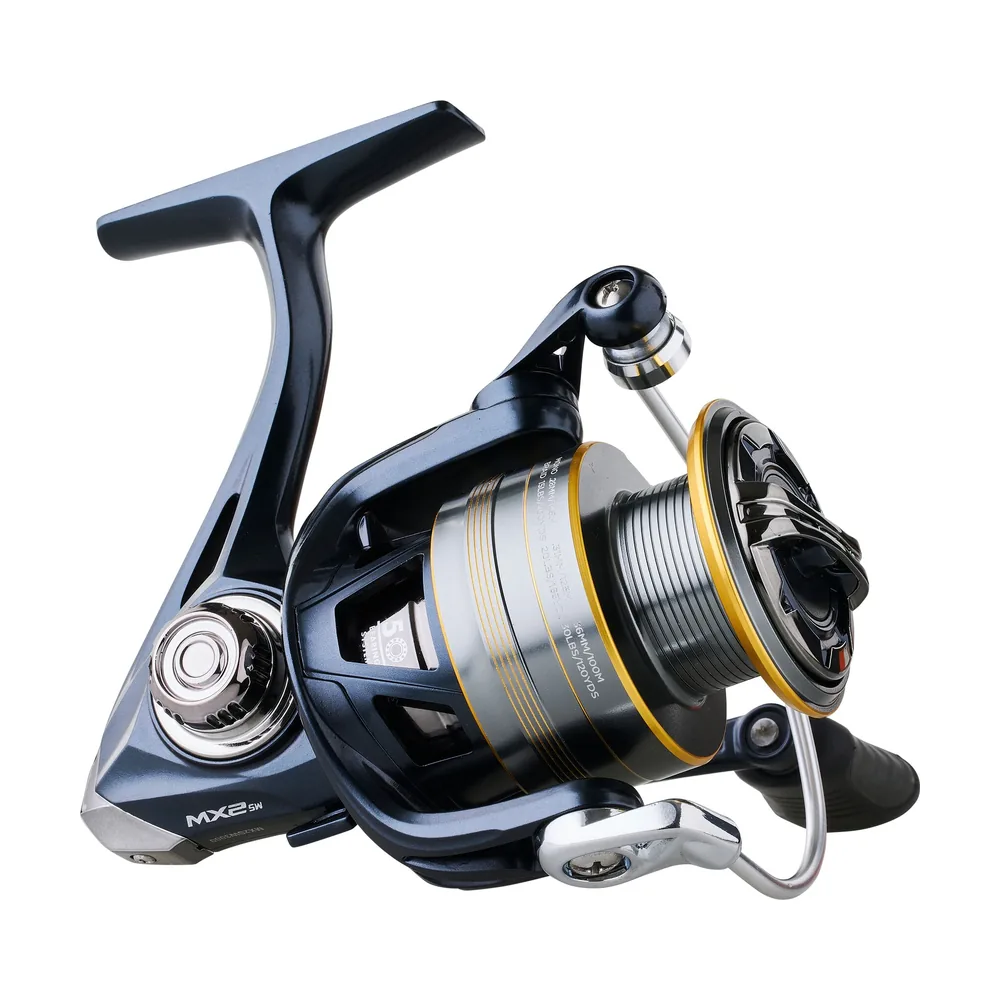
Buying role: Saltwater: accessible inshore / exact-size shore comparison.
Read the full MX2 SW review (1,267 words)
An accessible saltwater starting point
MX2 SW is a useful first Mitchell comparison because the official description explicitly positions it as a saltwater spinning reel. It lists a graphite body and rotor, aluminum handle, felt drag and five stainless ball bearings plus one roller. The range covers 2000, 3000, 4000, 6000 and 7000 configurations. Those facts establish a coastal shortlist, with the actual size deciding whether the reel suits lighter presentations or a more substantial shore outfit. The listing does not establish a whole-body IPX rating.
For the verified 4000 example, the chart lists a 5.2:1 ratio and five-kilogram maximum drag. The capacity pairs are reproduced in the numerical table with the site's ambiguous units identified. A buyer should obtain a clear line-diameter and length statement for the exact order before calculating reserve. The example is not a recommendation to fish at maximum pressure. It is a concrete reference for comparing the reel with a rod, line and method already defined.
Small coastal presentations and larger shore roles
The smaller sizes deserve attention where a manageable lure outfit and adequate fine-line reserve are priorities. Think about the amount of casting and the way the rod is held through a session. A reel that feels comfortable on one rod may be less suitable on another. The configuration should be evaluated as part of the complete outfit, with grip and balance considered alongside capacity. No measured casting improvement or fatigue reduction is supplied by this review.
The larger configurations require a different analysis. They can enter a discussion of particular shore methods, but a larger number does not automatically provide specialist offshore suitability. Consider current, casting distance, the angler's ability to move and the landing position. If those conditions consume most of the available reserve or demand evidence about sustained load, a different outfit may be necessary. The correct question is whether the exact model supports the normal task with a sensible margin.
MX2 SW versus MX3 SW
MX3 SW lists another bearing package and a CNC-machined-handle proposition. These provide reasons to compare equivalent sizes, but bearing count alone does not independently establish better durability or loaded smoothness. The buyer should identify whether the actual feature and price differences matter to normal use. If MX2 meets the required capacity and feels appropriate, money retained for suitable line and a matching rod may provide more practical value than a tier change without a defined purpose.
Do not treat the similarly numbered general MX2 PRO as the same product. Its feature package and environmental documentation are separate. A retailer title that omits SW deserves clarification before ordering. Keep the exact code and source description attached to the purchase, especially where the offer may be older regional stock. Saltwater positioning is a meaningful distinction, and it should not disappear when comparing the cheapest listing returned by a broad product search.
Ownership expectations
The component descriptions should remain precise. Stainless bearings do not supply an immersion rating, and the graphite construction does not make every exposure harmless. Follow the actual manual and ask about care for the expected conditions. Repeated spray, sand and impacts create different ownership concerns. The review does not promise a specific service life, identify every internal seal or turn the manufacturer's durability language into an independently measured ranking.
For a buyer outside the EU market, support can influence the decision as much as a modest price difference. Verify service routing, available parts and returns. Mount the offered configuration on the intended rod where possible and check accessories before using it. A current official listing is not stock confirmation from an individual supplier. Resolve delivery and product identity before regarding the reel as a complete solution for the next session.
Buying verdict
MX2 SW is a purposeful accessible coastal comparison when the selected size fits the rod, line and actual shore method. Compare MX3 SW for its documented package differences and MX Surf where the method is specifically surfcasting. Its recommendation is conditional on an appropriate complete outfit and normal care. It is not presented as independently tested, fully waterproof or a universal substitute for dedicated heavy-offshore equipment.
Outfit planning and ownership — shared guidance
Before ordering this family, write down the rod, normal presentation, line diameter, fishing depth and landing position. This converts an attractive catalog entry into a defined equipment decision. Consider the ordinary session and a sensible margin for recurring difficult conditions. An exceptional target that would need a specialist outfit should not dictate every general-purpose purchase, but conditions encountered routinely should not be ignored. The correct configuration needs to support the actual method before a technology name becomes a reason to spend more.
Treat published capacity as a reference for the specified line, not a guaranteed fill with every product carrying a similar strength label. Account for depth and current, line already cast out, expected reserve and material lost through abrasion trimming. Line diameter, nominal strength and actual spool capacity are different kinds of information. Retain the units used by the regional chart and check the line you will actually buy. A capacity problem is better solved by a suitable spool or outfit than by relying on optimistic packing.
Set working drag for the complete system. The rod, line, knots, hooks and angler’s position constrain usable pressure. A catalog maximum is not a universal operating instruction and cannot establish performance through a long fight. Begin with a deliberate setting appropriate to the method and verify it using a suitable procedure. If the method requires evidence about sustained pressure or thermal behavior, seek reliable exact-model testing or specialist guidance. This review supplies no measured drag endurance or personal catch record.
When the reel arrives, verify the code, retrieve arrangement and supplied accessories against the order. Mount it on the intended rod and check the grip and balance under the seller’s return conditions. A comfortable unloaded handle movement does not reproduce retrieving a lure in current or fighting a fish, but the assembled outfit can reveal obvious ergonomic problems. Confirm that the intended line and leader arrangement is compatible with the setup. Resolve a wrong configuration before treating it as a fishing-performance problem.
Read the exact manual for setup and care. Where the product is approved for saltwater, that permission still requires attention to recommended cleaning and handling. Do not invent a pressure-washing, soaking or disassembly routine from a generic internet tip. Sand, impacts and contaminated line can affect external interfaces even when bearings have a protective description. If the reel is submerged or develops abnormal operation, follow manufacturer or authorized-service advice for that model. A corrosion-resistant component is not a reason to disregard ownership instructions.
For an imported reel, confirm warranty routing, spare-part availability and the cost of returning it before payment. Keep the invoice, exact code and seller’s generation description. A similar product name across generations or markets does not establish parts interchangeability or local service coverage. Obtain compatibility confirmation for spare spools and handles; visual similarity alone is insufficient. The complete delivered cost should be compared with a supported local alternative of an appropriate size, rather than with an unrelated discounted reel.
Reassess the setup after actual use with attention to line wear, reserve and handling comfort. Change one relevant element at a time so the effect is understandable. A line-preparation problem should not automatically prompt a premium reel purchase, and an unsuitable rod cannot be corrected by a high drag number. The practical objective is an outfit that fits the owner’s recurring fishing and is straightforward to maintain. These principles support the model-specific analysis above without implying independent performance measurements for this reel.
Official Mitchell MX2 SW features and model chart · Back to comparison
MX3 SW — detailed review
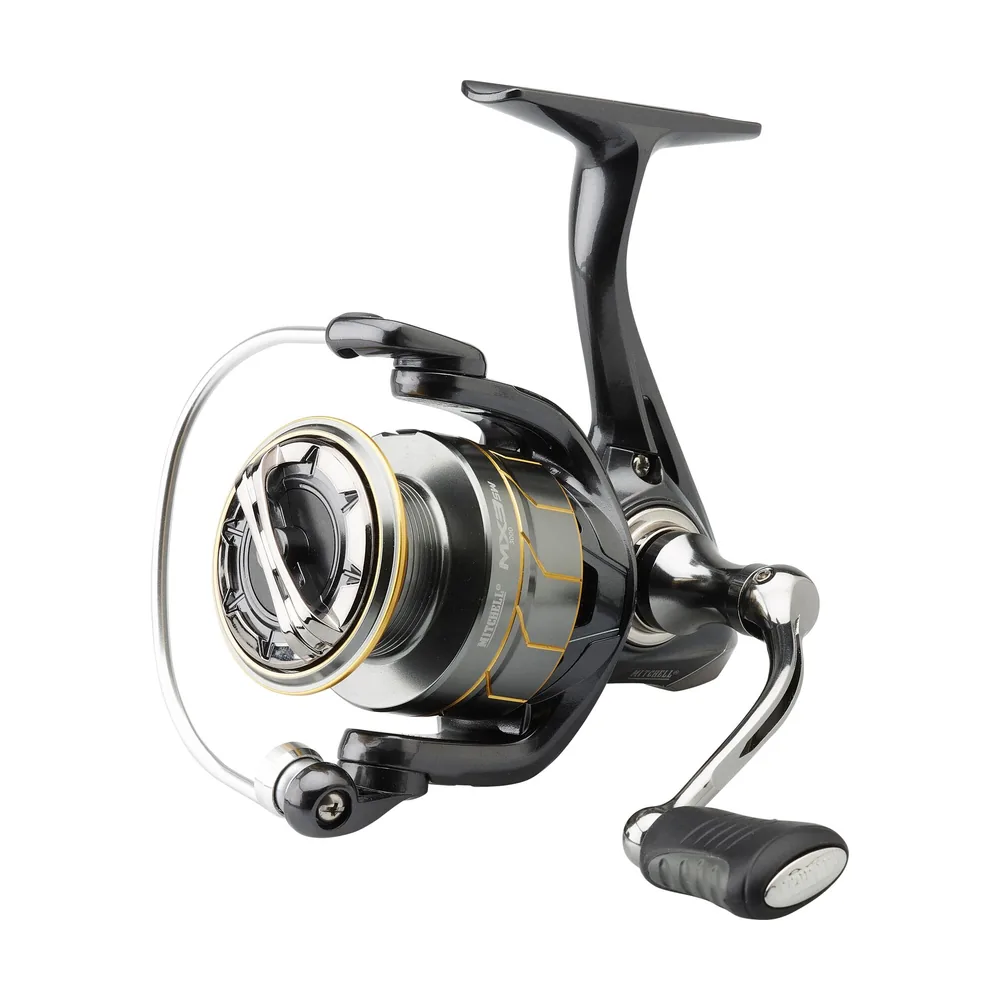
Buying role: Saltwater: inshore and larger shore-size comparison.
Read the full MX3 SW review (1,270 words)
A defined saltwater step within the range
MX3 SW offers a current Mitchell saltwater comparison with a graphite body and rotor, CNC-machined aluminum handle and felt drag. Its feature list specifies six stainless ball bearings plus a roller and a rigid bail. The family covers five sizes from 2000 through 7000. These are documented design facts rather than a personal report of a season's use. The manufacturer positions the smaller end for lighter coastal methods and the larger end for shore applications; each still needs an exact-method assessment.
The verified 3000 example lists a 5.2:1 ratio and five-kilogram maximum. The 7000 example lists a 4.8:1 ratio and six-kilogram maximum. Those references demonstrate why one family cannot be represented by a single headline ratio or pressure number. Capacity also needs its own units confirmed because the site heading and decimal format do not agree clearly. No missing weight or recovery figure is supplied by copying another Mitchell product.
An inshore outfit should be assessed as a system
For repeated coastal lure work, start with the normal rod, presentation and selected line. The reel's grip and balance need to fit how the owner actually casts and retrieves. A graphite-body proposition is useful construction information, but it does not supply a measured endurance comparison with a metal-bodied competitor. The practical choice is the assembled outfit at a realistic delivered price, not a universal ranking inferred from the word graphite or a count of bearings.
The fishing position may be decisive. Open-water fishing where movement is possible differs from a shore position beside abrasive cover. Line outside the spool through casting and current should be counted before reserve for a fish is considered. If the planned method leaves little margin, selecting a different size or another outfit is more sensible than assuming the reel's maximum will compensate. Capacity, working pressure and the supporting rod should point toward the same role.
What the step above MX2 SW should earn
MX2 SW provides a closely related accessible saltwater comparison. MX3's documented handle and bearing package are reasons to investigate the actual price difference, not independent proof of superiority in every condition. An owner using the outfit frequently may value the offered package and handling, while occasional fishing may favor the lower total cost. Evaluate equivalent sizes and the actual product in the box. The highest number in a feature column should not decide the whole purchase.
Money also needs to support line and rod suitability. A reel upgrade that forces a compromise elsewhere may not improve the outfit. Identify what MX3 is expected to do better for the owner's routine and compare that reason against the cost. If the requirement is simply explicit coastal positioning and adequate reserve, both SW choices deserve examination. This review provides no loaded smoothness measurement or durability test that would settle the comparison for every angler.
Larger sizes do not imply every offshore role
A larger MX3 SW can enter a shore or particular boat-work discussion, but the chart alone does not establish sustained heavy-offshore performance. Obtain exact-model guidance where the method demands thermal or endurance evidence. A drag ceiling cannot establish how the reel behaves throughout a prolonged difficult fight. The recommendation should fit the actual ordinary load, with margin, rather than rely on the most demanding fish mentioned in promotional copy.
Saltwater positioning should remain separate from body sealing. The consulted description supplies no IPX classification, immersion conditions or exemption from recommended cleaning. Confirm the manual for the exact code and expected exposure. The angler can reasonably value the coastal design while continuing to handle it deliberately around sand and spray. Do not infer that a stainless line-roller bearing makes every other internal interface equally protected.
Buying verdict
MX3 SW is a useful current coastal shortlist entry when its exact size and package match the intended lure or shore method. Compare MX2 SW for accessible value and MX Surf for a defined surfcasting role. The recommendation is researched buying analysis, without invented catches, performance percentages or a guaranteed service life. A specialist offshore plan requires more evidence than a family name, size and maximum-drag figure.
Outfit planning and ownership — shared guidance
Before ordering this family, write down the rod, normal presentation, line diameter, fishing depth and landing position. This converts an attractive catalog entry into a defined equipment decision. Consider the ordinary session and a sensible margin for recurring difficult conditions. An exceptional target that would need a specialist outfit should not dictate every general-purpose purchase, but conditions encountered routinely should not be ignored. The correct configuration needs to support the actual method before a technology name becomes a reason to spend more.
Treat published capacity as a reference for the specified line, not a guaranteed fill with every product carrying a similar strength label. Account for depth and current, line already cast out, expected reserve and material lost through abrasion trimming. Line diameter, nominal strength and actual spool capacity are different kinds of information. Retain the units used by the regional chart and check the line you will actually buy. A capacity problem is better solved by a suitable spool or outfit than by relying on optimistic packing.
Set working drag for the complete system. The rod, line, knots, hooks and angler’s position constrain usable pressure. A catalog maximum is not a universal operating instruction and cannot establish performance through a long fight. Begin with a deliberate setting appropriate to the method and verify it using a suitable procedure. If the method requires evidence about sustained pressure or thermal behavior, seek reliable exact-model testing or specialist guidance. This review supplies no measured drag endurance or personal catch record.
When the reel arrives, verify the code, retrieve arrangement and supplied accessories against the order. Mount it on the intended rod and check the grip and balance under the seller’s return conditions. A comfortable unloaded handle movement does not reproduce retrieving a lure in current or fighting a fish, but the assembled outfit can reveal obvious ergonomic problems. Confirm that the intended line and leader arrangement is compatible with the setup. Resolve a wrong configuration before treating it as a fishing-performance problem.
Read the exact manual for setup and care. Where the product is approved for saltwater, that permission still requires attention to recommended cleaning and handling. Do not invent a pressure-washing, soaking or disassembly routine from a generic internet tip. Sand, impacts and contaminated line can affect external interfaces even when bearings have a protective description. If the reel is submerged or develops abnormal operation, follow manufacturer or authorized-service advice for that model. A corrosion-resistant component is not a reason to disregard ownership instructions.
For an imported reel, confirm warranty routing, spare-part availability and the cost of returning it before payment. Keep the invoice, exact code and seller’s generation description. A similar product name across generations or markets does not establish parts interchangeability or local service coverage. Obtain compatibility confirmation for spare spools and handles; visual similarity alone is insufficient. The complete delivered cost should be compared with a supported local alternative of an appropriate size, rather than with an unrelated discounted reel.
Reassess the setup after actual use with attention to line wear, reserve and handling comfort. Change one relevant element at a time so the effect is understandable. A line-preparation problem should not automatically prompt a premium reel purchase, and an unsuitable rod cannot be corrected by a high drag number. The practical objective is an outfit that fits the owner’s recurring fishing and is straightforward to maintain. These principles support the model-specific analysis above without implying independent performance measurements for this reel.
Official Mitchell MX3 SW features and model chart · Back to comparison
MX Surf — detailed review
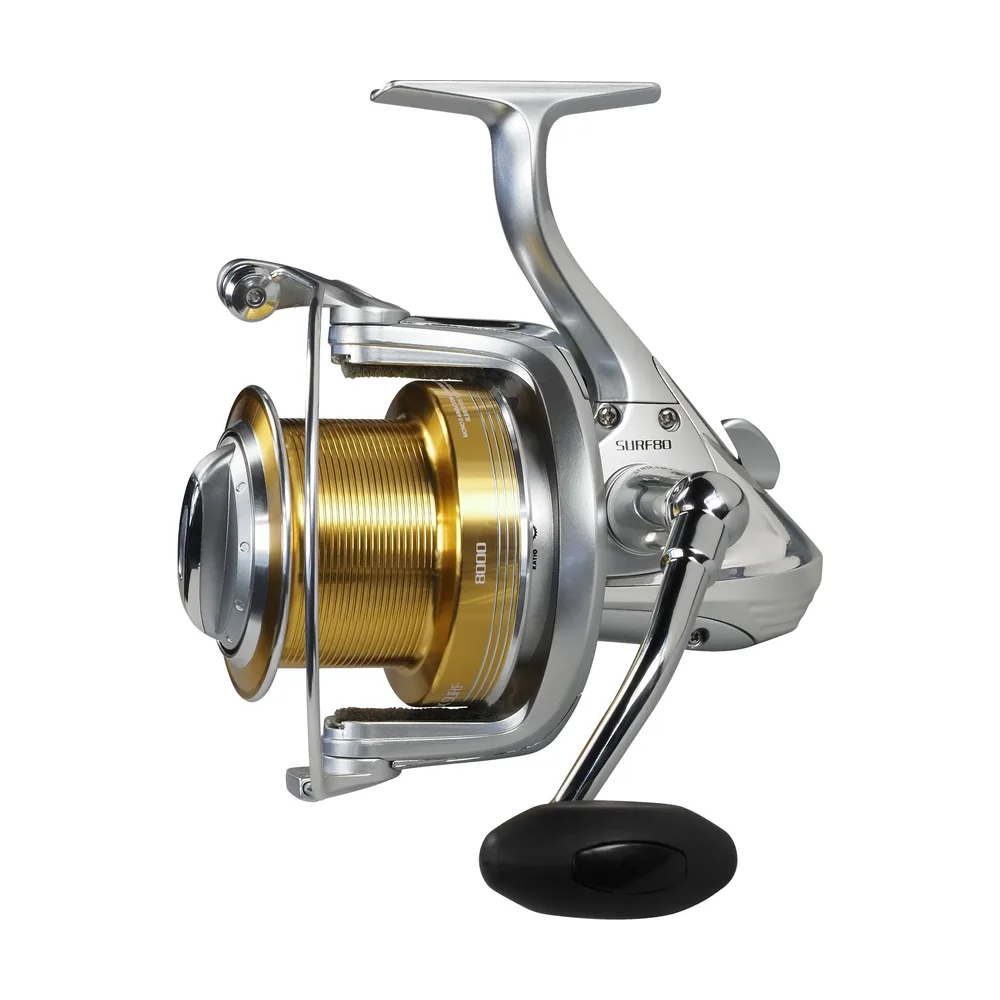
Buying role: Saltwater shore: surfcasting; not a general offshore classification.
Read the full MX Surf review (1,264 words)
A surfcasting proposition with a clear role
MX Surf belongs in a shore-focused comparison because Mitchell explicitly describes it as a surfcasting range. The official package lists graphite body and rotor, an aluminum handle, felt drag and nine ball bearings plus one roller. An extra graphite spool is included in the description. The manufacturer also notes PENN grease, which is a lubrication detail rather than a sealing certification. This product should be evaluated for its stated casting role instead of being recast as a lightweight offshore lure reel.
The current chart shows 7000 and 8000 configurations. The 7000 is listed at 4.8:1 with six-kilogram maximum drag, while the 8000 is listed at 4.3:1 with seven-kilogram maximum. The different line-capacity pairs remain attached to each code in the table. A larger size number does not mean more meters with a thicker line reference. Obtain explicit capacity units for the offered reel before comparing the reserve with another brand.
Define the shore session before choosing a spool
Surfcasting can involve very different distances, rigs and currents. Record the ordinary setup, including the rod and line, rather than choosing from a large spool alone. A buyer should allow for line used in the cast and current before counting available reserve. The selected spool needs to support the normal method and a sensible margin. Optimistic packing is a weak substitute for an appropriate configuration, particularly after abrasion trimming has reduced usable line.
The angler's position also matters. A reel does not solve a difficult landing route or turn an unsuitable rod into a safe high-pressure outfit. Consider how the setup will be held, transported and rested through a session. If it will be frequently handled rather than left supported, the exact balance and grip still deserve attention. This guide does not provide a measured casting-distance comparison or claim that the described grease creates a particular advantage in harsh weather.
Assess the spare spool as a practical feature
An extra spool can be useful when the owner prepares two compatible line arrangements for different shore conditions. Keep a record of each line and its intended role. A supplied spare does not automatically make the same rod suitable for two very different workloads. The whole pressure and presentation plan should remain appropriate after a change. Confirm the actual box contents and the spare's fit for the exact current code before assuming that every seller's offer includes it.
The material description of the extra spool also needs accuracy. It is identified as graphite and should not become an aluminum spare in a copied retailer comparison. A buyer who requires a particular spool material should ask about compatible options rather than infer them from the main product name. Spare-spool value depends on normal use, not simply on the presence of an accessory that will never leave the box.
Surf versus SW general spinning
MX2 SW and MX3 SW span smaller coastal configurations as well as larger ones. They are useful alternatives where the intended outfit is more general-purpose. MX Surf deserves focus where the shore-casting role is already defined. Do not choose the larger surf reel for an otherwise light lure setup merely because capacity appears generous. The supporting rod, retrieve routine and ordinary line requirement should determine whether this specialized proposition is helpful.
The MX PRO LC SW offers another larger-casting comparison, with its own spool and quick-drag proposition and unresolved material wording. Compare the specific operating needs and require confirmed construction where it matters. Neither family should acquire an offshore endurance endorsement from a big drag number. If the planned work requires such evidence, seek reliable exact-model guidance before purchase. This review supplies no independent sustained-load results.
Buying verdict
MX Surf is a purposeful Mitchell choice to investigate for a defined surfcasting outfit with sufficient line reserve and appropriate rod fit. Choose between the two charted configurations deliberately and verify the accessory package. Its documented shore role, bearings and lubrication detail do not establish unlimited immersion protection or a universal offshore application. The recommendation is original editorial analysis using official facts, not a fabricated shore-testing report.
Outfit planning and ownership — shared guidance
Before ordering this family, write down the rod, normal presentation, line diameter, fishing depth and landing position. This converts an attractive catalog entry into a defined equipment decision. Consider the ordinary session and a sensible margin for recurring difficult conditions. An exceptional target that would need a specialist outfit should not dictate every general-purpose purchase, but conditions encountered routinely should not be ignored. The correct configuration needs to support the actual method before a technology name becomes a reason to spend more.
Treat published capacity as a reference for the specified line, not a guaranteed fill with every product carrying a similar strength label. Account for depth and current, line already cast out, expected reserve and material lost through abrasion trimming. Line diameter, nominal strength and actual spool capacity are different kinds of information. Retain the units used by the regional chart and check the line you will actually buy. A capacity problem is better solved by a suitable spool or outfit than by relying on optimistic packing.
Set working drag for the complete system. The rod, line, knots, hooks and angler’s position constrain usable pressure. A catalog maximum is not a universal operating instruction and cannot establish performance through a long fight. Begin with a deliberate setting appropriate to the method and verify it using a suitable procedure. If the method requires evidence about sustained pressure or thermal behavior, seek reliable exact-model testing or specialist guidance. This review supplies no measured drag endurance or personal catch record.
When the reel arrives, verify the code, retrieve arrangement and supplied accessories against the order. Mount it on the intended rod and check the grip and balance under the seller’s return conditions. A comfortable unloaded handle movement does not reproduce retrieving a lure in current or fighting a fish, but the assembled outfit can reveal obvious ergonomic problems. Confirm that the intended line and leader arrangement is compatible with the setup. Resolve a wrong configuration before treating it as a fishing-performance problem.
Read the exact manual for setup and care. Where the product is approved for saltwater, that permission still requires attention to recommended cleaning and handling. Do not invent a pressure-washing, soaking or disassembly routine from a generic internet tip. Sand, impacts and contaminated line can affect external interfaces even when bearings have a protective description. If the reel is submerged or develops abnormal operation, follow manufacturer or authorized-service advice for that model. A corrosion-resistant component is not a reason to disregard ownership instructions.
For an imported reel, confirm warranty routing, spare-part availability and the cost of returning it before payment. Keep the invoice, exact code and seller’s generation description. A similar product name across generations or markets does not establish parts interchangeability or local service coverage. Obtain compatibility confirmation for spare spools and handles; visual similarity alone is insufficient. The complete delivered cost should be compared with a supported local alternative of an appropriate size, rather than with an unrelated discounted reel.
Reassess the setup after actual use with attention to line wear, reserve and handling comfort. Change one relevant element at a time so the effect is understandable. A line-preparation problem should not automatically prompt a premium reel purchase, and an unsuitable rod cannot be corrected by a high drag number. The practical objective is an outfit that fits the owner’s recurring fishing and is straightforward to maintain. These principles support the model-specific analysis above without implying independent performance measurements for this reel.
Official Mitchell MX Surf features and model chart · Back to comparison
MX PRO LC SW Front Drag — detailed review
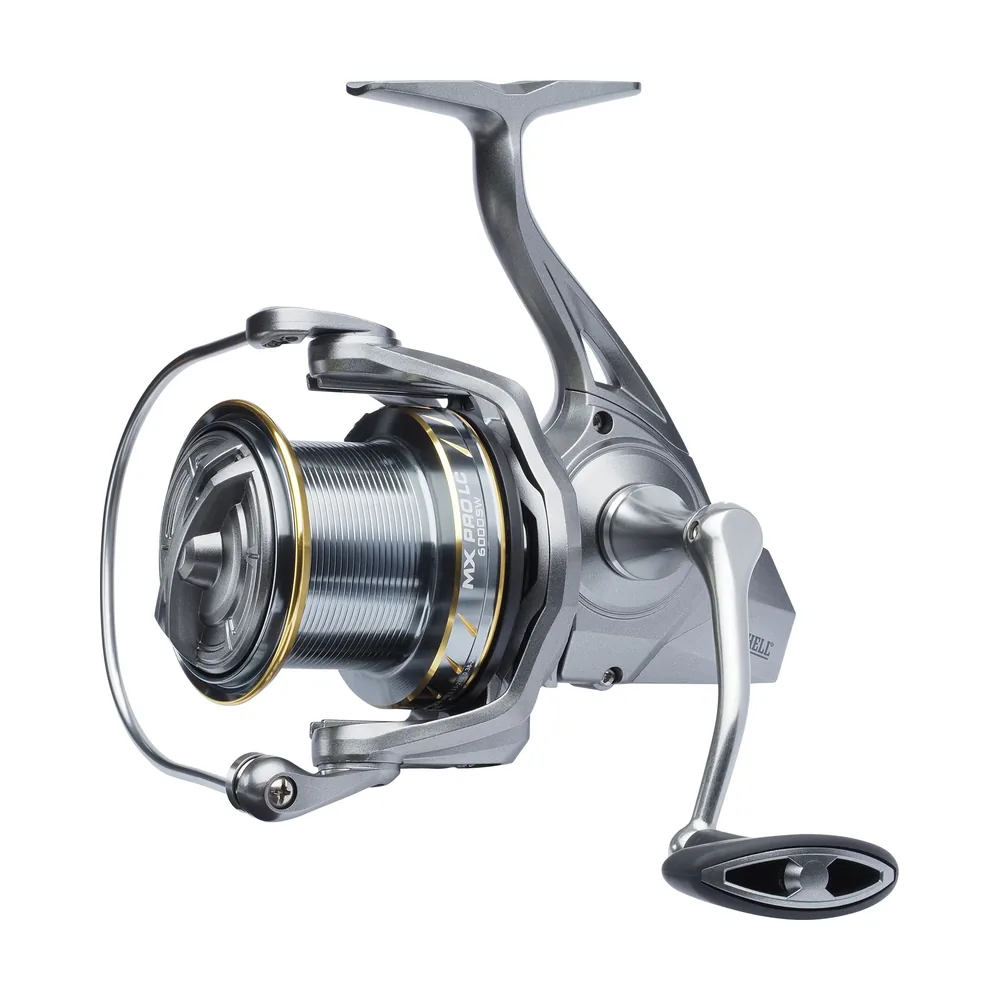
Buying role: Saltwater listing: long-cast / larger shore; construction confirmation needed.
Read the full MX PRO LC SW Front Drag review (1,269 words)
A long-cast concept with important source limits
The official store title calls this MX PRO Line Counter SW Front Drag, but the product description expands LC as long cast. It lists a long-stroke aluminum spool with line guard, quick drag, slow oscillation and a CNC aluminum handle. No verified line-counter mechanism is established by that description, so the title is not used to promise one here. The review identifies the exact linked product and explains its documented casting proposition while keeping the ambiguous naming visible.
The material wording is also inconsistent. The descriptive paragraph says aluminum body and rotor, while the feature list says graphite body and rotor. That disagreement remains unresolved. Obtain written confirmation for the actual SKU before making a construction-sensitive purchase. The charted 6000 and 8000 examples both list 4.4:1 ratio and twelve-kilogram maximum drag, with different capacity pairs. These figures do not resolve the material conflict or establish independent performance through a sustained heavy load.
What a long-stroke spool should address
A buyer investigating a larger casting outfit should connect the spool proposition to an actual shore method. Define normal casting distance, line, rig and current, then evaluate usable reserve. The design description is a reason to investigate, not a measured promise of longer casts. Independent distance gains would require controlled testing that this directory has not performed. The complete rod, line preparation and angler's casting routine remain part of the outcome.
The reel should also fit how the outfit is handled. A configuration suitable for one supported shore setup can be less comfortable for repeated active work on another rod. The numerical chart does not provide every ergonomic answer. Mount the exact reel on the intended rod when possible and assess grip and balance under the seller's return conditions. Confirm the product identity before treating its weight or material as settled, especially given the official disagreement.
Quick drag is an operating choice
The manufacturer's quick-drag description concerns a short adjustment range from open to closed. That feature should be learned deliberately and assessed against the owner's normal routine. A buyer comfortable with gradual adjustment should consider whether a different response is welcome. The exact manual should guide setup. A quick-drag proposition is not a free-liner control, an automatic hook-setting mechanism or an instruction to make a large pressure change while handling a difficult fish.
Published maximum drag also needs context. Twelve kilograms is a ceiling in the selected chart, not a working setting for every line and rod. The pressure plan must account for knots, hooks and the landing position. A larger maximum does not demonstrate measured startup behavior or sustained thermal endurance. If the method requires those results, obtain reliable exact-model advice and testing. The review does not invent them to compensate for a short manufacturer feature list.
Resolve identity before comparing alternatives
The current collection also contains a non-SW LC entry and separate spare spools. These should not be counted as additional full reels in this review or used to fill missing specifications. Obtain the complete name, code and box contents from the supplier. A spare-spool listing can appear in a broad search with similar branding, while the non-SW version may have different details. The exact linked SW product must remain the target of confirmation.
MX Surf offers a clearly described surfcasting comparison with its own accessory and ratio package. Compare the ordinary method, capacity and delivered cost, then identify whether the LC spool and quick-drag proposition solve a real need. Material-sensitive buyers should wait for confirmation before ranking the LC reel against competitors. This is a case where an honest information gap belongs in a useful buying guide rather than being replaced by the most attractive available wording.
Buying verdict
MX PRO LC SW is a conditional shortlist entry for a defined larger shore-casting method where the verified spool and drag propositions are relevant. Confirm body and rotor material, product naming, exposure guidance and exact configuration before purchase. No actual line counter, immersion rating or dedicated heavy-offshore endurance is promised here. The review's value is to identify the questions needed to make the current official listing concrete and assessable.
Outfit planning and ownership — shared guidance
Before ordering this family, write down the rod, normal presentation, line diameter, fishing depth and landing position. This converts an attractive catalog entry into a defined equipment decision. Consider the ordinary session and a sensible margin for recurring difficult conditions. An exceptional target that would need a specialist outfit should not dictate every general-purpose purchase, but conditions encountered routinely should not be ignored. The correct configuration needs to support the actual method before a technology name becomes a reason to spend more.
Treat published capacity as a reference for the specified line, not a guaranteed fill with every product carrying a similar strength label. Account for depth and current, line already cast out, expected reserve and material lost through abrasion trimming. Line diameter, nominal strength and actual spool capacity are different kinds of information. Retain the units used by the regional chart and check the line you will actually buy. A capacity problem is better solved by a suitable spool or outfit than by relying on optimistic packing.
Set working drag for the complete system. The rod, line, knots, hooks and angler’s position constrain usable pressure. A catalog maximum is not a universal operating instruction and cannot establish performance through a long fight. Begin with a deliberate setting appropriate to the method and verify it using a suitable procedure. If the method requires evidence about sustained pressure or thermal behavior, seek reliable exact-model testing or specialist guidance. This review supplies no measured drag endurance or personal catch record.
When the reel arrives, verify the code, retrieve arrangement and supplied accessories against the order. Mount it on the intended rod and check the grip and balance under the seller’s return conditions. A comfortable unloaded handle movement does not reproduce retrieving a lure in current or fighting a fish, but the assembled outfit can reveal obvious ergonomic problems. Confirm that the intended line and leader arrangement is compatible with the setup. Resolve a wrong configuration before treating it as a fishing-performance problem.
Read the exact manual for setup and care. Where the product is approved for saltwater, that permission still requires attention to recommended cleaning and handling. Do not invent a pressure-washing, soaking or disassembly routine from a generic internet tip. Sand, impacts and contaminated line can affect external interfaces even when bearings have a protective description. If the reel is submerged or develops abnormal operation, follow manufacturer or authorized-service advice for that model. A corrosion-resistant component is not a reason to disregard ownership instructions.
For an imported reel, confirm warranty routing, spare-part availability and the cost of returning it before payment. Keep the invoice, exact code and seller’s generation description. A similar product name across generations or markets does not establish parts interchangeability or local service coverage. Obtain compatibility confirmation for spare spools and handles; visual similarity alone is insufficient. The complete delivered cost should be compared with a supported local alternative of an appropriate size, rather than with an unrelated discounted reel.
Reassess the setup after actual use with attention to line wear, reserve and handling comfort. Change one relevant element at a time so the effect is understandable. A line-preparation problem should not automatically prompt a premium reel purchase, and an unsuitable rod cannot be corrected by a high drag number. The practical objective is an outfit that fits the owner’s recurring fishing and is straightforward to maintain. These principles support the model-specific analysis above without implying independent performance measurements for this reel.
Official Mitchell MX PRO LC SW Front Drag features and model chart · Back to comparison
Freshwater and general spinning comparisons
These six families add general lure and ownership choices. Obtain exact-model permission before extending their recommendations to saltwater. Standard and Hi-Speed models are variants, not additional independent families.
MX1 PRO FD — detailed review
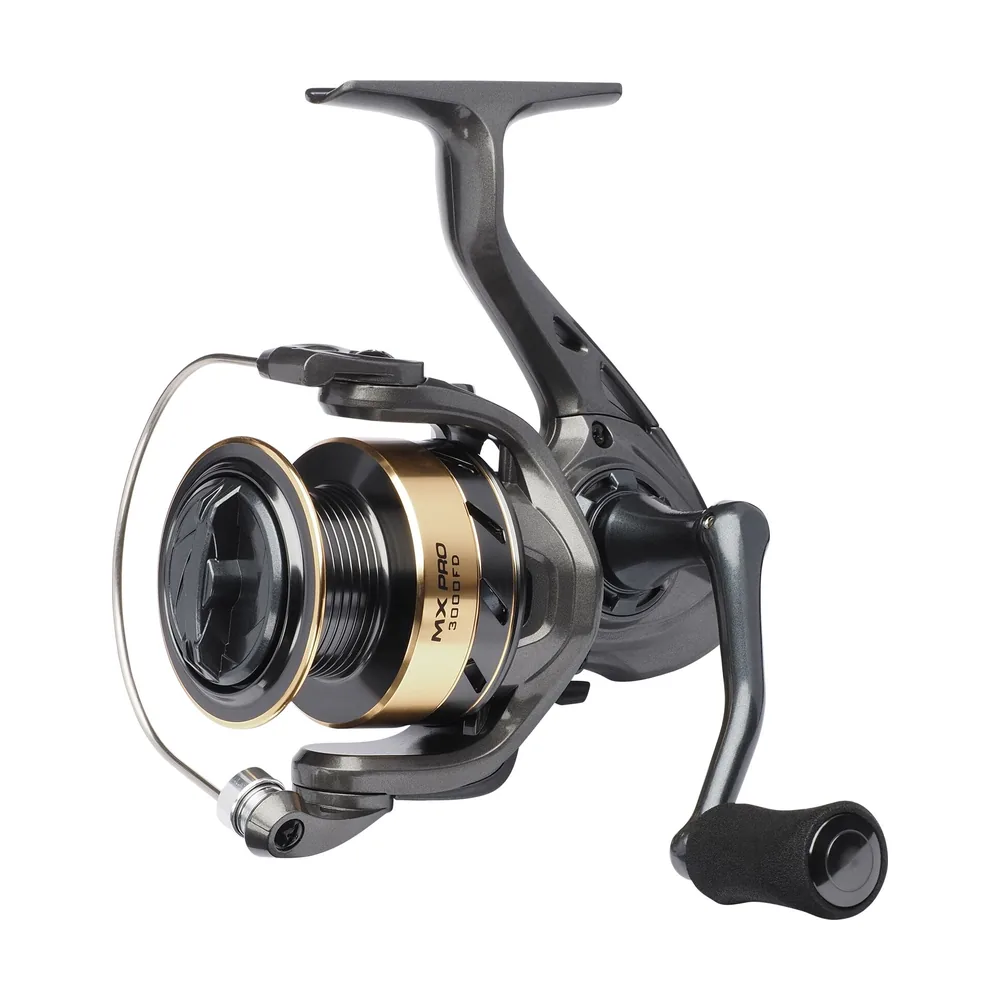
Buying role: General / freshwater: accessible all-rounder; coastal approval to confirm.
Read the full MX1 PRO FD review (1,278 words)
An accessible general-purpose proposition
MX1 PRO FD is described by Mitchell as a versatile all-round spinning reel. Its official feature package lists graphite body and rotor, aluminum handle arm and spool, EVA knob, line clip and an anti-reverse on/off lever. The current range spans six listed sizes from 1000 through 6000. These facts provide an accessible general-purpose comparison, but the product should not inherit coastal permission from the separate SW families. The consulted description does not establish a whole-body protection rating or an explicit saltwater-use statement.
The bearing information needs confirmation: the feature list says two plus one, while the numerical chart shows four. This guide reports both instead of inventing a reconciliation. The verified 2500 chart example lists 5.2:1 ratio and 4.5-kilogram maximum drag. That number is not a universal operating setting. Obtain exact configuration and capacity units before ordering, particularly where a fine-line method or specific reserve requirement makes the details important.
Value begins with a suitable outfit
An accessible reel can be purposeful when the buyer is learning a defined method or wants a straightforward occasional-use setup. The primary question is whether the exact size fits the rod, line and presentation. A higher-priced reel is not automatically required to make that outfit useful. Conversely, an inexpensive purchase is poor value when the capacity or handling is wrong. Establish the ordinary fishing before comparing feature tiers and leave the budget needed for appropriate supporting components.
A new owner benefits from a clear operating routine and a limited set of variables. Learn line preparation, working drag and the intended presentation before changing several components at once. A reel-tier upgrade cannot automatically solve an unsuitable rod or line fill. The selected configuration should allow predictable setup and comfortable handling. This review does not claim that the reel has been personally tested, supplies a measured smoothness advantage or guarantees a specified service life.
Practical controls should be understood
The anti-reverse lever is an operating detail, not an invitation to apply a universal routine copied from another reel. Consult the actual instructions and understand how the selected control arrangement affects handling. A buyer accustomed to a different reel should inspect the layout before treating the purchase as settled. The EVA knob and handle arrangement should also be assessed with the intended grip. Small ergonomic differences can matter through repeated use even when the catalog counts look similar.
The line clip deserves the same deliberate treatment. Learn its intended use and avoid assuming it can hold any line under any load. Accessories and controls support a method only when they are used correctly. The chart's maximum should remain part of the complete pressure plan, with rod, knots and hooks taken into account. A larger size's published ceiling must not be transferred into the smaller model or used to justify an unsuitable setup.
Compare the correct PRO generation
MX1, MX1 PRO FD and MX1 FS are separate current names. The FS mechanism and a pre-spooled offer should not be assumed to match this front-drag reel. Request the exact code and features from the seller. A broad MX1 search can return a superficially similar product with different controls and box contents. The bearing disagreement makes exact-product confirmation particularly useful before any buyer treats that count as a reason to choose one offer over another.
MX2 PRO provides another general spinning comparison with its own drag and oscillation descriptions. Decide whether those documented additions address a recurring need and whether the actual price difference is worthwhile. If coastal use is the objective, start with explicit SW choices or obtain written approval for this exact model. An all-round marketing description is not enough to settle exposure conditions. Service and returns should also fit the owner's market and expected use.
Buying verdict
MX1 PRO FD is a useful accessible general or freshwater shortlist candidate when its chosen size and basic operating package match a defined method. Confirm the conflicting bearing count if it affects the purchase. Compare MX2 PRO for the next documented package and MX2 SW for explicit coastal positioning. The recommendation is about practical suitability and complete cost, without an invented launch date, independent endurance result or unsupported offshore role.
Outfit planning and ownership — shared guidance
Before ordering this family, write down the rod, normal presentation, line diameter, fishing depth and landing position. This converts an attractive catalog entry into a defined equipment decision. Consider the ordinary session and a sensible margin for recurring difficult conditions. An exceptional target that would need a specialist outfit should not dictate every general-purpose purchase, but conditions encountered routinely should not be ignored. The correct configuration needs to support the actual method before a technology name becomes a reason to spend more.
Treat published capacity as a reference for the specified line, not a guaranteed fill with every product carrying a similar strength label. Account for depth and current, line already cast out, expected reserve and material lost through abrasion trimming. Line diameter, nominal strength and actual spool capacity are different kinds of information. Retain the units used by the regional chart and check the line you will actually buy. A capacity problem is better solved by a suitable spool or outfit than by relying on optimistic packing.
Set working drag for the complete system. The rod, line, knots, hooks and angler’s position constrain usable pressure. A catalog maximum is not a universal operating instruction and cannot establish performance through a long fight. Begin with a deliberate setting appropriate to the method and verify it using a suitable procedure. If the method requires evidence about sustained pressure or thermal behavior, seek reliable exact-model testing or specialist guidance. This review supplies no measured drag endurance or personal catch record.
When the reel arrives, verify the code, retrieve arrangement and supplied accessories against the order. Mount it on the intended rod and check the grip and balance under the seller’s return conditions. A comfortable unloaded handle movement does not reproduce retrieving a lure in current or fighting a fish, but the assembled outfit can reveal obvious ergonomic problems. Confirm that the intended line and leader arrangement is compatible with the setup. Resolve a wrong configuration before treating it as a fishing-performance problem.
Read the exact manual for setup and care. Where the product is approved for saltwater, that permission still requires attention to recommended cleaning and handling. Do not invent a pressure-washing, soaking or disassembly routine from a generic internet tip. Sand, impacts and contaminated line can affect external interfaces even when bearings have a protective description. If the reel is submerged or develops abnormal operation, follow manufacturer or authorized-service advice for that model. A corrosion-resistant component is not a reason to disregard ownership instructions.
For an imported reel, confirm warranty routing, spare-part availability and the cost of returning it before payment. Keep the invoice, exact code and seller’s generation description. A similar product name across generations or markets does not establish parts interchangeability or local service coverage. Obtain compatibility confirmation for spare spools and handles; visual similarity alone is insufficient. The complete delivered cost should be compared with a supported local alternative of an appropriate size, rather than with an unrelated discounted reel.
Reassess the setup after actual use with attention to line wear, reserve and handling comfort. Change one relevant element at a time so the effect is understandable. A line-preparation problem should not automatically prompt a premium reel purchase, and an unsuitable rod cannot be corrected by a high drag number. The practical objective is an outfit that fits the owner’s recurring fishing and is straightforward to maintain. These principles support the model-specific analysis above without implying independent performance measurements for this reel.
Official Mitchell MX1 PRO FD features and model chart · Back to comparison
MX2 PRO — detailed review
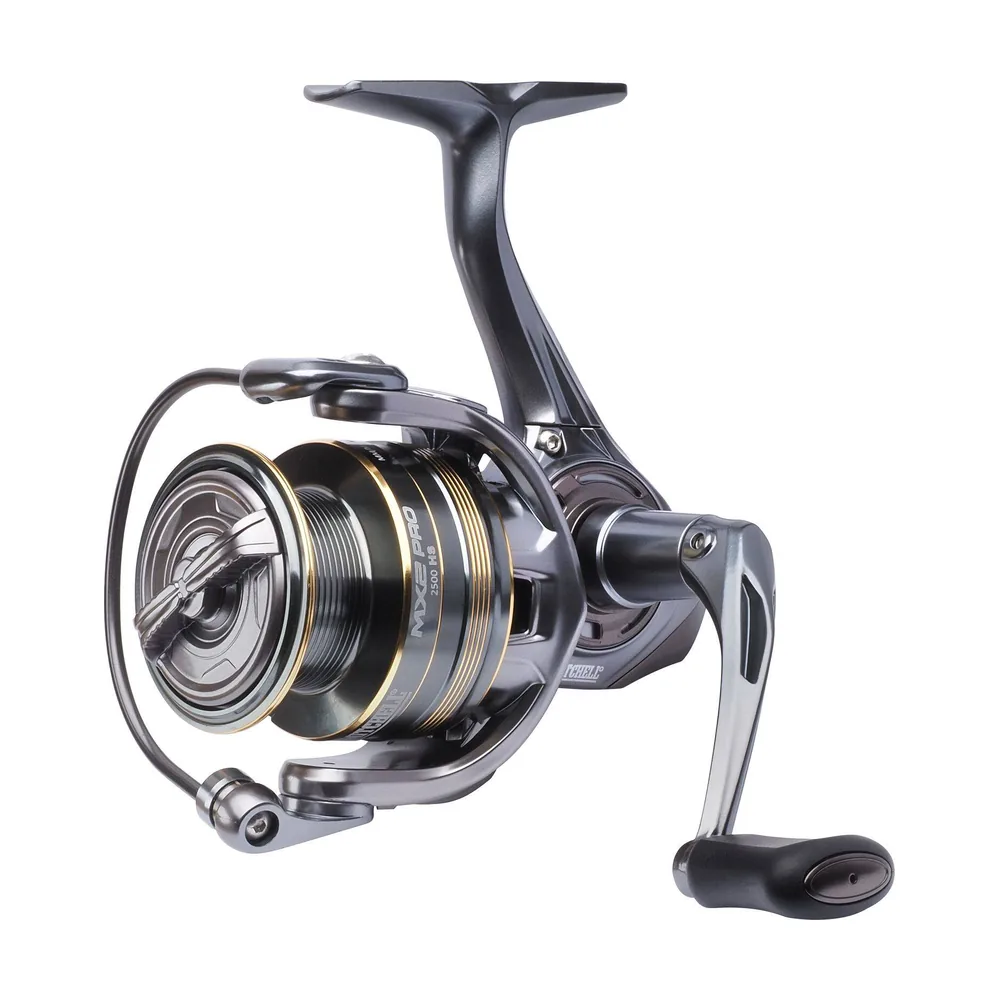
Buying role: General / freshwater: value lure reel; HS variants within family.
Read the full MX2 PRO review (1,259 words)
A defined step in general spinning features
MX2 PRO provides a Mitchell general spinning comparison with a graphite body and rotor, double-anodized aluminum spool, die-cast aluminum handle and flat TPE knob. Its official list specifies four ball bearings plus a roller, semi-slow oscillation and a rubber-sealed felt drag. Those features identify the current product package; they do not supply a whole-body protection rating. Saltwater permission is not established by the consulted general description, so a coastal buyer should confirm it or compare the separate MX2 SW.
The generic feature text mentions standard and higher ratios, while the selected standard chart shows 5.2:1. The verified 2500 example has a 7.5-kilogram maximum. This page retains the exact chart information and treats Hi-Speed stock as a separate configuration within the same family. Do not change the ratio to match copied headline text or use a high-speed listing to describe a standard order. Obtain the code and corresponding chart together.
An outfit for recurring lure work
A general freshwater lure angler should assess MX2 PRO through the normal rod, line and presentations. The intended reserve and handling requirements come before the tier number. A compact configuration may fit frequent casting, but it must retain adequate line for the normal fishing position. A larger reel may supply more useful volume yet feel unnecessary on a light rod. Mounting the exact configuration is more informative than assuming the best fit from the product name.
The value argument is strongest when the owner's needs are clear. If the reel's documented package meets the recurring method, the remaining budget can support suitable line and rod choice. If a known problem requires another package, compare the step upward deliberately. A purchase made solely to obtain a larger bearing count may fail to solve the actual issue. This review supplies no independent measurement linking the count to smoothness or longevity.
What drag sealing does and does not establish
The rubber-sealed felt description belongs to the drag system. It should not become a claim that the body, line roller and every moving interface share equivalent protection. An owner considering spray or salt exposure needs exact-model guidance for those conditions. No IPX designation is assigned here. A factual feature can be appreciated without expanding it into an unverified waterproofing promise or an assumption that normal cleaning and careful handling are unnecessary.
The felt package is also not an independently measured performance ranking. A published maximum does not quantify startup friction, loaded consistency or thermal behavior. Working pressure needs to fit the complete system. If a method depends on sustained pressure beyond a simple catalog reference, obtain reliable exact-model evidence. The general lure role should not turn into heavy-offshore endorsement merely because one size has a relatively high maximum.
Standard versus Hi-Speed selection
Choose the retrieve proposition for a recurring reason. Faster pickup can be relevant when recovering slack, while another method may favor a more measured handle routine. Ratio must be assessed alongside actual line recovery and spool dimensions. Where recovery is not supplied here, ask the manufacturer rather than infer it from a sibling. The correct high-speed configuration still needs appropriate line volume and rod fit; speed is one selection factor rather than the entire decision.
MX3 PRO adds another bearing package, and MX4 PRO lists a CNC screw-in handle. Compare the actual differences in equivalent sizes and decide whether they address normal use. A more expensive tier can be justified by a real preference or recurring need, but the supporting outfit should remain suitable after purchase. Local service and return conditions can be more useful than a small online price saving when an owner plans to use the reel regularly.
Buying verdict
MX2 PRO is a purposeful general freshwater comparison for a buyer seeking the documented PRO package at an appropriate complete cost. Identify standard or Hi-Speed stock by its exact code and chart. Confirm coastal permission before extending the recommendation to saltwater. This review does not claim personal field experience, measured casting improvement, verified annual updates or a universal durability advantage over other Mitchell tiers.
Outfit planning and ownership — shared guidance
Before ordering this family, write down the rod, normal presentation, line diameter, fishing depth and landing position. This converts an attractive catalog entry into a defined equipment decision. Consider the ordinary session and a sensible margin for recurring difficult conditions. An exceptional target that would need a specialist outfit should not dictate every general-purpose purchase, but conditions encountered routinely should not be ignored. The correct configuration needs to support the actual method before a technology name becomes a reason to spend more.
Treat published capacity as a reference for the specified line, not a guaranteed fill with every product carrying a similar strength label. Account for depth and current, line already cast out, expected reserve and material lost through abrasion trimming. Line diameter, nominal strength and actual spool capacity are different kinds of information. Retain the units used by the regional chart and check the line you will actually buy. A capacity problem is better solved by a suitable spool or outfit than by relying on optimistic packing.
Set working drag for the complete system. The rod, line, knots, hooks and angler’s position constrain usable pressure. A catalog maximum is not a universal operating instruction and cannot establish performance through a long fight. Begin with a deliberate setting appropriate to the method and verify it using a suitable procedure. If the method requires evidence about sustained pressure or thermal behavior, seek reliable exact-model testing or specialist guidance. This review supplies no measured drag endurance or personal catch record.
When the reel arrives, verify the code, retrieve arrangement and supplied accessories against the order. Mount it on the intended rod and check the grip and balance under the seller’s return conditions. A comfortable unloaded handle movement does not reproduce retrieving a lure in current or fighting a fish, but the assembled outfit can reveal obvious ergonomic problems. Confirm that the intended line and leader arrangement is compatible with the setup. Resolve a wrong configuration before treating it as a fishing-performance problem.
Read the exact manual for setup and care. Where the product is approved for saltwater, that permission still requires attention to recommended cleaning and handling. Do not invent a pressure-washing, soaking or disassembly routine from a generic internet tip. Sand, impacts and contaminated line can affect external interfaces even when bearings have a protective description. If the reel is submerged or develops abnormal operation, follow manufacturer or authorized-service advice for that model. A corrosion-resistant component is not a reason to disregard ownership instructions.
For an imported reel, confirm warranty routing, spare-part availability and the cost of returning it before payment. Keep the invoice, exact code and seller’s generation description. A similar product name across generations or markets does not establish parts interchangeability or local service coverage. Obtain compatibility confirmation for spare spools and handles; visual similarity alone is insufficient. The complete delivered cost should be compared with a supported local alternative of an appropriate size, rather than with an unrelated discounted reel.
Reassess the setup after actual use with attention to line wear, reserve and handling comfort. Change one relevant element at a time so the effect is understandable. A line-preparation problem should not automatically prompt a premium reel purchase, and an unsuitable rod cannot be corrected by a high drag number. The practical objective is an outfit that fits the owner’s recurring fishing and is straightforward to maintain. These principles support the model-specific analysis above without implying independent performance measurements for this reel.
Official Mitchell MX2 PRO features and model chart · Back to comparison
MX3 PRO — detailed review
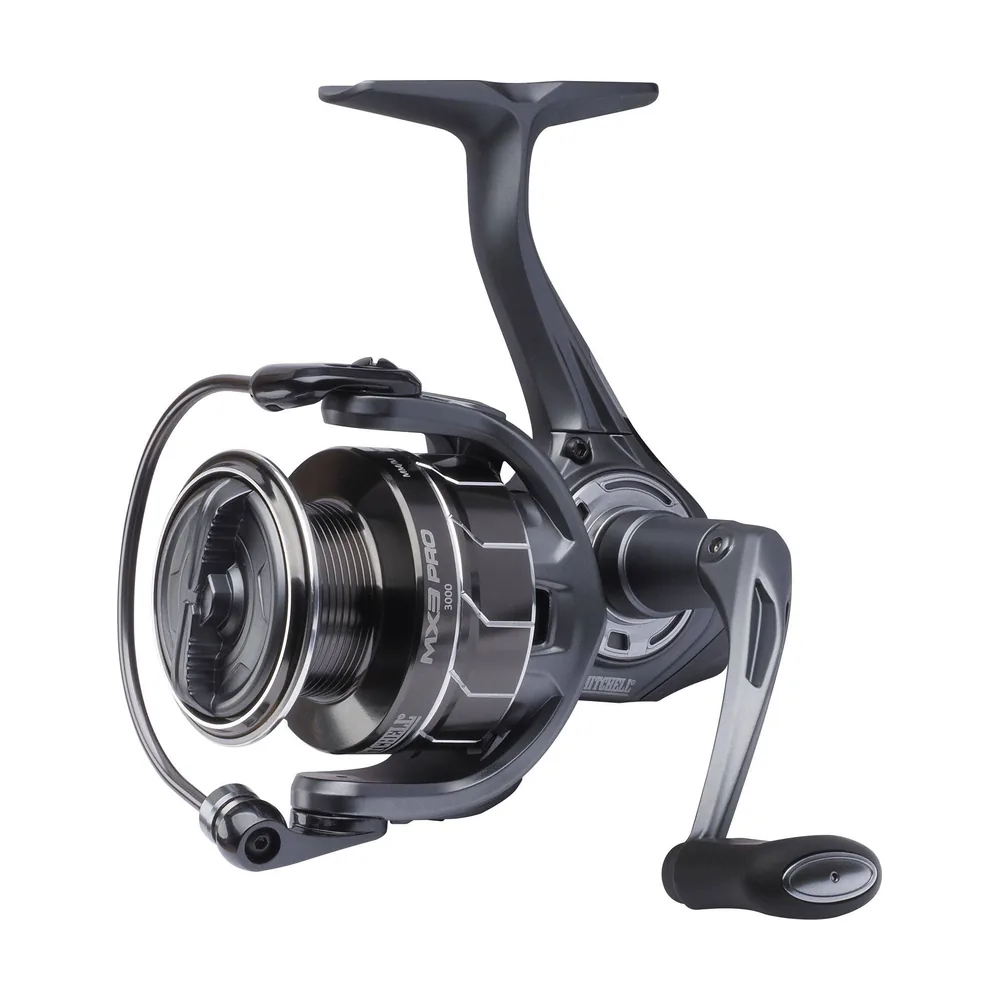
Buying role: Freshwater: broader feature tier; standard / HS choice.
Read the full MX3 PRO review (1,263 words)
A freshwater tier with a clear feature package
MX3 PRO is explicitly described around modern freshwater methods in the official European material. It lists a graphite body and rotor, seven ball bearings plus a roller, semi-slow oscillation, aluminum spool and die-cast handle. The drag is a rubber-sealed felt arrangement, with a flat TPE knob and thick bail included in the package. These facts provide a practical general spinning comparison. They do not establish coastal permission or independently measured performance relative to MX2 or MX4.
The selected 2500 standard chart lists 5.2:1 ratio and 7.5-kilogram maximum. As with other PRO entries, generic feature wording mentions a different standard ratio and a higher-speed option. The exact charted code is therefore the reference used here. Hi-Speed variants need their own current specifications. The family name alone should not be enough to choose an order, and capacities from ambiguous braid columns are not imported into this guide as verified measurements.
When the middle tier is purposeful
An established freshwater angler may appreciate a feature package that fits regular lure work without choosing mainly for a flagship name. MX3 should be assessed through the actual rod and line, with capacity and grip considered first. The tier's appeal depends on the exact configuration addressing a normal method. If the owner already has a suitable outfit, identify the improvement expected from this purchase. A new reel is easier to justify when it solves a specific recurring issue.
If the setup is new, spread the budget deliberately. Appropriate rod action and line selection remain important, and a reel cannot correct a presentation system that is fundamentally unsuitable. A slightly less expensive reel with the right supporting components may be more purposeful than a higher tier paired with compromises elsewhere. Conversely, a frequently used outfit can justify refinement where handling and features make sense. The decision should follow the use rather than a universal price ranking.
Bearing counts are descriptive, not a test result
The seven-plus-one package differentiates MX3 from the four-plus-one description of MX2. That is a concrete catalog distinction, but it does not independently measure loaded behavior, durability or comfort. Bearing placement and the complete mechanism matter. This review does not supply an internal laboratory comparison or claim that the count guarantees smoothness for a specified number of seasons. Handle the actual reel where possible and assess whether its overall package feels appropriate on the intended rod.
The same restraint applies to manufacturer line-lay and casting language. Semi-slow oscillation identifies the design proposition, not a quantified distance advantage supplied by this directory. Suitable fill, line condition and the handling routine remain relevant. A recurring line problem should be diagnosed before assuming the next tier will eliminate it. Changing several variables at once can make the source of improvement or difficulty hard to understand.
Choose speed and environment separately
A Hi-Speed version can be investigated where faster pickup addresses the normal slack-management routine. It should not automatically replace the standard configuration for every presentation. Obtain the actual recovery and capacity data if those values affect the method. A fast ratio does not settle ergonomic fit, and an appropriate line reserve remains necessary. Retain exact version information when comparing offers because retailers can use broad family descriptions for several configurations.
Environmental use is another separate question. The official freshwater positioning and drag-specific sealing should not be combined into a blanket saltwater endorsement. MX3 SW is a different documented coastal product. If the owner wants one outfit for both environments, obtain explicit guidance for the offered code before deciding. A convenient retailer listing or familiar family number cannot supply that permission. Service support and the correct manual should accompany the exact purchase.
Buying verdict
MX3 PRO belongs on a regular freshwater lure shortlist when its selected size, controls and price fit a defined method. Compare MX2 PRO for value and MX4 PRO for its documented handle and bearing differences. Consider MX3 SW separately for explicit saltwater positioning. The recommendation remains editorial buying analysis, without invented hands-on results, an unsupported 2026 launch label or a heavy-offshore role inferred from maximum drag.
Outfit planning and ownership — shared guidance
Before ordering this family, write down the rod, normal presentation, line diameter, fishing depth and landing position. This converts an attractive catalog entry into a defined equipment decision. Consider the ordinary session and a sensible margin for recurring difficult conditions. An exceptional target that would need a specialist outfit should not dictate every general-purpose purchase, but conditions encountered routinely should not be ignored. The correct configuration needs to support the actual method before a technology name becomes a reason to spend more.
Treat published capacity as a reference for the specified line, not a guaranteed fill with every product carrying a similar strength label. Account for depth and current, line already cast out, expected reserve and material lost through abrasion trimming. Line diameter, nominal strength and actual spool capacity are different kinds of information. Retain the units used by the regional chart and check the line you will actually buy. A capacity problem is better solved by a suitable spool or outfit than by relying on optimistic packing.
Set working drag for the complete system. The rod, line, knots, hooks and angler’s position constrain usable pressure. A catalog maximum is not a universal operating instruction and cannot establish performance through a long fight. Begin with a deliberate setting appropriate to the method and verify it using a suitable procedure. If the method requires evidence about sustained pressure or thermal behavior, seek reliable exact-model testing or specialist guidance. This review supplies no measured drag endurance or personal catch record.
When the reel arrives, verify the code, retrieve arrangement and supplied accessories against the order. Mount it on the intended rod and check the grip and balance under the seller’s return conditions. A comfortable unloaded handle movement does not reproduce retrieving a lure in current or fighting a fish, but the assembled outfit can reveal obvious ergonomic problems. Confirm that the intended line and leader arrangement is compatible with the setup. Resolve a wrong configuration before treating it as a fishing-performance problem.
Read the exact manual for setup and care. Where the product is approved for saltwater, that permission still requires attention to recommended cleaning and handling. Do not invent a pressure-washing, soaking or disassembly routine from a generic internet tip. Sand, impacts and contaminated line can affect external interfaces even when bearings have a protective description. If the reel is submerged or develops abnormal operation, follow manufacturer or authorized-service advice for that model. A corrosion-resistant component is not a reason to disregard ownership instructions.
For an imported reel, confirm warranty routing, spare-part availability and the cost of returning it before payment. Keep the invoice, exact code and seller’s generation description. A similar product name across generations or markets does not establish parts interchangeability or local service coverage. Obtain compatibility confirmation for spare spools and handles; visual similarity alone is insufficient. The complete delivered cost should be compared with a supported local alternative of an appropriate size, rather than with an unrelated discounted reel.
Reassess the setup after actual use with attention to line wear, reserve and handling comfort. Change one relevant element at a time so the effect is understandable. A line-preparation problem should not automatically prompt a premium reel purchase, and an unsuitable rod cannot be corrected by a high drag number. The practical objective is an outfit that fits the owner’s recurring fishing and is straightforward to maintain. These principles support the model-specific analysis above without implying independent performance measurements for this reel.
Official Mitchell MX3 PRO features and model chart · Back to comparison
MX4 PRO — detailed review
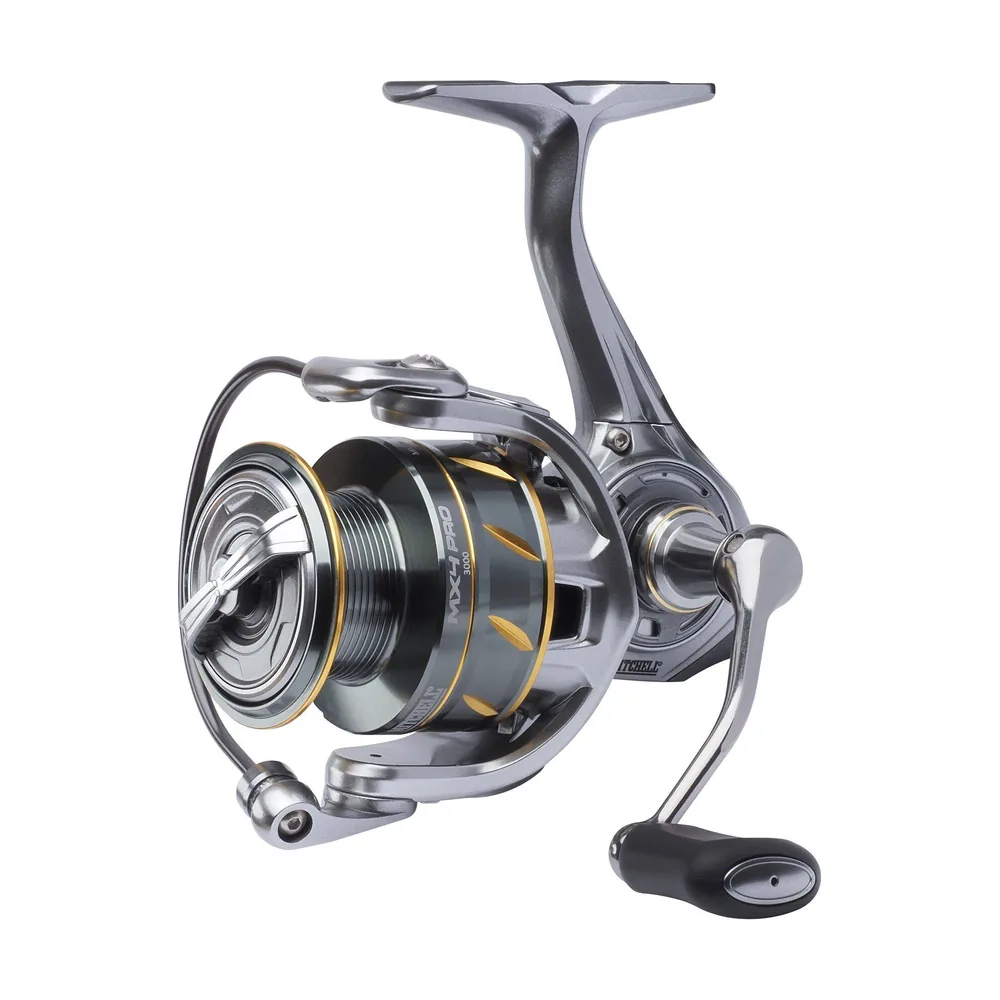
Buying role: Freshwater: higher PRO feature tier; standard / HS choice.
Read the full MX4 PRO review (1,269 words)
A higher PRO package with specific distinctions
MX4 PRO is a current European general spinning comparison with a graphite body and rotor, eight ball bearings plus a roller and a CNC screw-in aluminum handle. The official list also includes a double-anodized aluminum spool, semi-slow oscillation, flat TPE knob and rubber-sealed felt drag. These details distinguish the documented package from MX3 PRO, particularly in the handle description and bearing count. They should remain design facts rather than an independent ranking of loaded performance or life expectancy.
The standard 3000 example is charted at 5.2:1 and eight-kilogram maximum drag. Its precise reference is retained despite generic feature text describing a different standard ratio. Higher-speed versions need their own chart and should be selected by code. This guide does not invent weight or recovery values where the consulted source does not supply them. A good feature tier cannot replace the exact size information needed for a defined outfit.
Evaluate the handle on the intended rod
The screw-in CNC handle is a tangible comparison point. An owner should assess the actual grip and operating arrangement rather than assign a universal comfort advantage from the machining description. Mount the selected reel on the intended rod where possible. Consider hand position, normal retrieve routine and the amount of repeated casting. An unloaded check can reveal obvious ergonomic problems, but it cannot reproduce retrieval through a resistant presentation or a prolonged fight.
Someone refining an already suitable freshwater outfit may reasonably prioritize those handling details. A buyer building everything from scratch should first protect the budget for rod and line fit. The best reel tier is less useful when the lure range or reserve plan is wrong. Identify the ordinary use and any recurring difficulty the purchase is intended to resolve. A documented handle difference is a purposeful reason to compare; simply choosing the highest numbered available tier is less informative.
Do not confuse drag sealing with body protection
The sealed felt description applies to the drag arrangement. It does not supply a whole-body IPX rating or permission for repeated saltwater immersion. The consulted general page leaves explicit coastal guidance to be confirmed. An owner whose normal fishing involves spray or salt should obtain exact-model advice rather than transfer the SW family's environmental positioning. Product similarities and a high drag maximum are insufficient evidence for a demanding exposure recommendation.
No independent startup, heat or endurance measurements are supplied here. Felt is a documented material, not an automatic weakness or a guarantee of smoothness under every condition. The appropriate working pressure depends on the rod, line, hooks and landing position. Where the task requires sustained-load evidence, a basic chart is only the beginning of the decision. The reel should remain within a researched general-use shortlist until the required specialist information is obtained.
Compare MX3, Hi-Speed and 300 PRO deliberately
MX3 offers another general PRO package at a potentially different delivered cost. Compare equivalent configurations, then decide whether the MX4 handle and bearing distinctions matter to normal use. A price premium earns its place through a defined preference or recurring need. Retain the budget required for supporting tackle and service. Bearing count alone is not a controlled test and should not be used to predict how many years one model will last compared with another.
The 300 PRO provides a different drag and spare-spool proposition, while a Hi-Speed MX4 configuration addresses another retrieve requirement. These are parallel selection reasons rather than a single universal ladder. A faster reel may fit slack recovery, and a spare spool may fit planned line changes. Choose the feature that will actually be used. Verify the exact version and box contents before treating retailer wording as interchangeable with the current official entry.
Buying verdict
MX4 PRO is a useful regular freshwater comparison when its documented handle package and exact size fit the owner's outfit. Compare MX3 for the neighboring tier and 300 PRO for a different spool and drag proposition. Confirm environmental permission before coastal use and identify Hi-Speed versions independently. The guide makes no personal testing claim, no measured casting advantage and no unsupported annual redesign or dedicated heavy-offshore recommendation.
Outfit planning and ownership — shared guidance
Before ordering this family, write down the rod, normal presentation, line diameter, fishing depth and landing position. This converts an attractive catalog entry into a defined equipment decision. Consider the ordinary session and a sensible margin for recurring difficult conditions. An exceptional target that would need a specialist outfit should not dictate every general-purpose purchase, but conditions encountered routinely should not be ignored. The correct configuration needs to support the actual method before a technology name becomes a reason to spend more.
Treat published capacity as a reference for the specified line, not a guaranteed fill with every product carrying a similar strength label. Account for depth and current, line already cast out, expected reserve and material lost through abrasion trimming. Line diameter, nominal strength and actual spool capacity are different kinds of information. Retain the units used by the regional chart and check the line you will actually buy. A capacity problem is better solved by a suitable spool or outfit than by relying on optimistic packing.
Set working drag for the complete system. The rod, line, knots, hooks and angler’s position constrain usable pressure. A catalog maximum is not a universal operating instruction and cannot establish performance through a long fight. Begin with a deliberate setting appropriate to the method and verify it using a suitable procedure. If the method requires evidence about sustained pressure or thermal behavior, seek reliable exact-model testing or specialist guidance. This review supplies no measured drag endurance or personal catch record.
When the reel arrives, verify the code, retrieve arrangement and supplied accessories against the order. Mount it on the intended rod and check the grip and balance under the seller’s return conditions. A comfortable unloaded handle movement does not reproduce retrieving a lure in current or fighting a fish, but the assembled outfit can reveal obvious ergonomic problems. Confirm that the intended line and leader arrangement is compatible with the setup. Resolve a wrong configuration before treating it as a fishing-performance problem.
Read the exact manual for setup and care. Where the product is approved for saltwater, that permission still requires attention to recommended cleaning and handling. Do not invent a pressure-washing, soaking or disassembly routine from a generic internet tip. Sand, impacts and contaminated line can affect external interfaces even when bearings have a protective description. If the reel is submerged or develops abnormal operation, follow manufacturer or authorized-service advice for that model. A corrosion-resistant component is not a reason to disregard ownership instructions.
For an imported reel, confirm warranty routing, spare-part availability and the cost of returning it before payment. Keep the invoice, exact code and seller’s generation description. A similar product name across generations or markets does not establish parts interchangeability or local service coverage. Obtain compatibility confirmation for spare spools and handles; visual similarity alone is insufficient. The complete delivered cost should be compared with a supported local alternative of an appropriate size, rather than with an unrelated discounted reel.
Reassess the setup after actual use with attention to line wear, reserve and handling comfort. Change one relevant element at a time so the effect is understandable. A line-preparation problem should not automatically prompt a premium reel purchase, and an unsuitable rod cannot be corrected by a high drag number. The practical objective is an outfit that fits the owner’s recurring fishing and is straightforward to maintain. These principles support the model-specific analysis above without implying independent performance measurements for this reel.
Official Mitchell MX4 PRO features and model chart · Back to comparison
300 PRO — detailed review
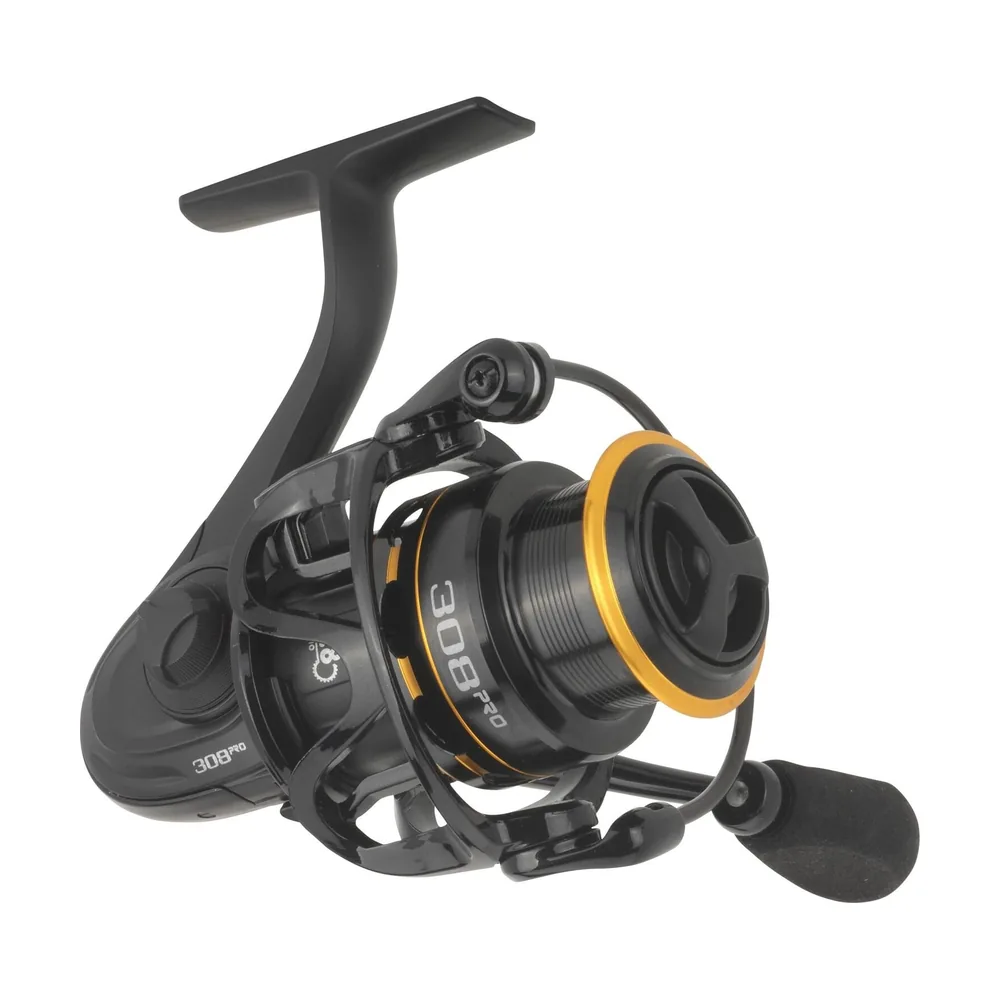
Buying role: General / freshwater: modern heritage model; spare-spool comparison.
Read the full 300 PRO review (1,253 words)
Review the modern product behind the familiar name
300 PRO deserves a separate comparison because its documented package differs from the general MX PRO felt-drag proposition. The current European page lists a 5.8:1 ratio, carbon-hybrid multi-disc drag, Bail-Halo rotor design and nine ball bearings plus one roller. It also describes a shallow aluminum main spool for braid and an aluminum spare, with an EVA knob and low-profile drag control. The body material is not inferred from the aluminum accessory descriptions. The reviewed product is the current 300 PRO, not a vintage 300.
The retrieved chart lists 2000 and 4000 examples with 6.4-kilogram maximum drag. Those exact configurations should guide the comparison rather than an older size description. The manufacturer's heat and impact-load language is not repeated as independently established performance. No sustained-temperature test or startup measurement has been obtained by this directory. The design proposition can be useful without adding evidence that is not available.
Heritage can begin a shortlist but should not finish it
A familiar name can make a product worth examining, particularly for an owner with an interest in Mitchell history. The purchase still needs an appropriate rod, capacity and presentation routine. Nostalgia does not establish exact parts interchangeability or a common mechanism with an older reel. The modern configuration should be assessed on its own specification and service arrangements. A current listing and a restored collectible solve different ownership needs even when both carry the 300 number.
An owner seeking regular freshwater lure work should identify the selected line and reserve before choosing a spool. A shallow main spool can be useful when the intended arrangement fits it, but it is not automatically appropriate for larger reserve demands. The listed capacity needs clear units and the actual line diameter. Confirm the current code and box contents before buying from a seller whose description may combine several generations or markets.
Make the spare spool part of a real plan
The spare-spool proposition is useful when the owner prepares two compatible line arrangements for recurring methods. Keep a record of what is loaded on each and why. A change should remain within the rod and presentation range the outfit supports. Different line alone does not turn the same rod into a specialist heavy-pressure setup. The accessory is strongest as a planned convenience, not an imagined conversion between unrelated kinds of fishing.
Confirm spare compatibility and inclusion for the actual offer. A retailer may sell a regional package or older stock with different contents. The word PRO and a familiar photograph do not settle that detail. If a specific accessory is the reason to choose the reel, ask for written confirmation before ordering. Avoid using visual resemblance as evidence that a spare bought for another generation will fit this one.
Carbon hybrid is a design distinction
The carbon-hybrid drag gives a concrete comparison with the felt descriptions of MX2, MX3 and MX4 PRO. It does not independently establish a universal winner for every presentation. Working pressure still needs to suit the complete system, and maximum drag remains a ceiling. A buyer can reasonably prefer the package while recognizing that this review supplies no controlled smoothness, heating or service-life comparison with another Mitchell model.
For environmental use, obtain exact-model guidance. The general 300 PRO description should not acquire the SW family's coastal positioning merely because the brand has a long saltwater history. Nor should a vintage reel's use establish permission for the current product. Identify normal spray, salt and contamination conditions, then consult the actual manual. The recommendation remains a general or freshwater comparison until any additional environment requirement is established for the offered code.
Buying verdict
300 PRO is a purposeful modern-heritage comparison where the selected size, carbon-hybrid drag and verified spare-spool package address actual ownership needs. Compare MX4 PRO for a different general feature proposition and explicit SW models for a documented coastal starting point. The current product deserves its own evaluation, without vintage specifications, invented field-test results or an unsupported claim that a new-for-2026 redesign has occurred.
Outfit planning and ownership — shared guidance
Before ordering this family, write down the rod, normal presentation, line diameter, fishing depth and landing position. This converts an attractive catalog entry into a defined equipment decision. Consider the ordinary session and a sensible margin for recurring difficult conditions. An exceptional target that would need a specialist outfit should not dictate every general-purpose purchase, but conditions encountered routinely should not be ignored. The correct configuration needs to support the actual method before a technology name becomes a reason to spend more.
Treat published capacity as a reference for the specified line, not a guaranteed fill with every product carrying a similar strength label. Account for depth and current, line already cast out, expected reserve and material lost through abrasion trimming. Line diameter, nominal strength and actual spool capacity are different kinds of information. Retain the units used by the regional chart and check the line you will actually buy. A capacity problem is better solved by a suitable spool or outfit than by relying on optimistic packing.
Set working drag for the complete system. The rod, line, knots, hooks and angler’s position constrain usable pressure. A catalog maximum is not a universal operating instruction and cannot establish performance through a long fight. Begin with a deliberate setting appropriate to the method and verify it using a suitable procedure. If the method requires evidence about sustained pressure or thermal behavior, seek reliable exact-model testing or specialist guidance. This review supplies no measured drag endurance or personal catch record.
When the reel arrives, verify the code, retrieve arrangement and supplied accessories against the order. Mount it on the intended rod and check the grip and balance under the seller’s return conditions. A comfortable unloaded handle movement does not reproduce retrieving a lure in current or fighting a fish, but the assembled outfit can reveal obvious ergonomic problems. Confirm that the intended line and leader arrangement is compatible with the setup. Resolve a wrong configuration before treating it as a fishing-performance problem.
Read the exact manual for setup and care. Where the product is approved for saltwater, that permission still requires attention to recommended cleaning and handling. Do not invent a pressure-washing, soaking or disassembly routine from a generic internet tip. Sand, impacts and contaminated line can affect external interfaces even when bearings have a protective description. If the reel is submerged or develops abnormal operation, follow manufacturer or authorized-service advice for that model. A corrosion-resistant component is not a reason to disregard ownership instructions.
For an imported reel, confirm warranty routing, spare-part availability and the cost of returning it before payment. Keep the invoice, exact code and seller’s generation description. A similar product name across generations or markets does not establish parts interchangeability or local service coverage. Obtain compatibility confirmation for spare spools and handles; visual similarity alone is insufficient. The complete delivered cost should be compared with a supported local alternative of an appropriate size, rather than with an unrelated discounted reel.
Reassess the setup after actual use with attention to line wear, reserve and handling comfort. Change one relevant element at a time so the effect is understandable. A line-preparation problem should not automatically prompt a premium reel purchase, and an unsuitable rod cannot be corrected by a high drag number. The practical objective is an outfit that fits the owner’s recurring fishing and is straightforward to maintain. These principles support the model-specific analysis above without implying independent performance measurements for this reel.
Official Mitchell 300 PRO features and model chart · Back to comparison
Avocet RZT — detailed review
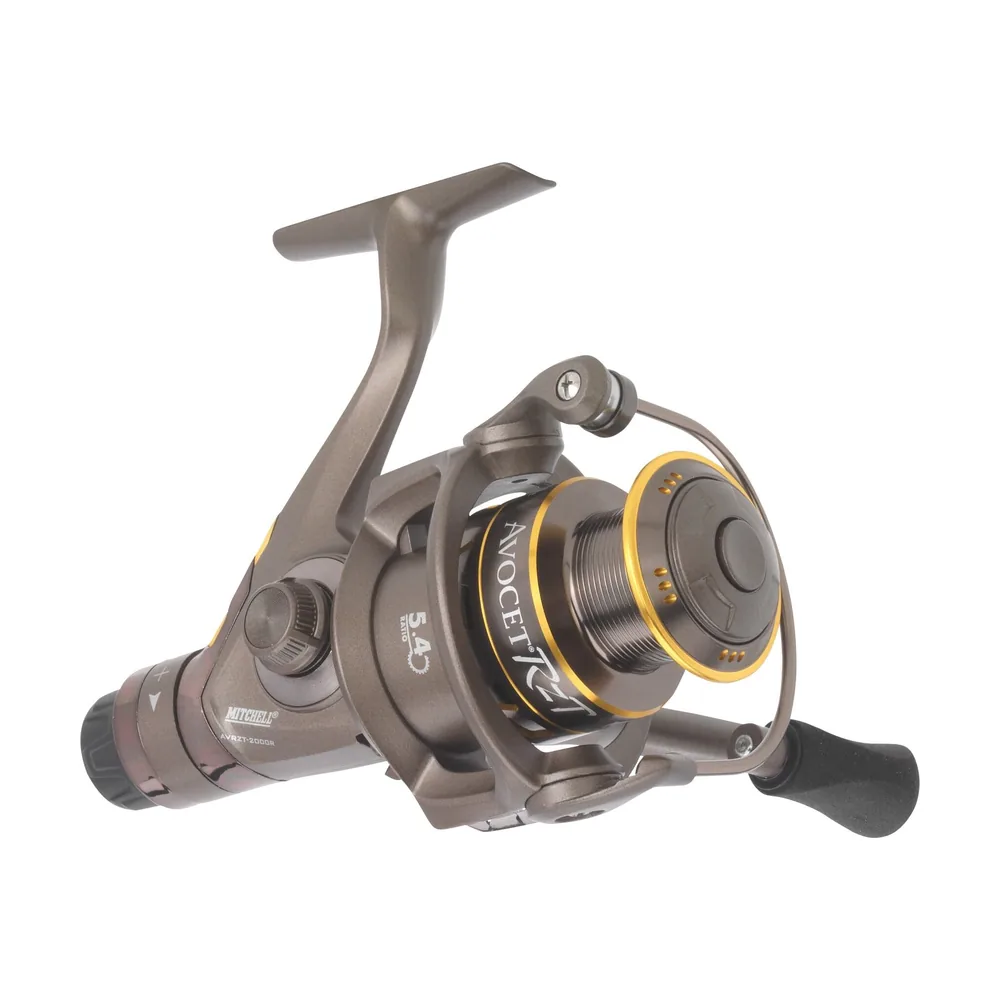
Buying role: General / freshwater: exact front / rear drag version matters.
Read the full Avocet RZT review (1,246 words)
A general reel with a version-specific control feature
Avocet RZT is a current Mitchell general spinning comparison with a Halo rotor, seven ball bearings plus a roller, anodized aluminum spool, EVA knob and greased-felt multi-disc drag. The official description identifies dual-supported pinion gearing. It also describes Rapid Drag specifically for rear-drag versions. That distinction is essential: the feature should not be assigned automatically to every front-drag configuration or to the three codes exposed in the current chart without verifying the actual version.
The consulted chart lists 1000, 2000 and 4000 examples, with a 4.5-kilogram maximum for each. The listed ratio is 5.4:1 on the two smaller examples and 5.2:1 on the 4000. The broader descriptive text mentions a wider range, so this guide keeps current exact-code examples separate from family-level wording. It does not invent missing present-day stock or assume every described version is available from the same seller.
Choose the control arrangement before the accessory appeal
An owner accustomed to a particular drag position should confirm that the offered reel has the desired control layout. Front and rear versions can lead to different operating habits, even when the product name looks similar in a search result. Inspect the exact model and manual before making a purchase primarily for Rapid Drag. A version-specific feature is useful only when it is actually present and appropriate to the owner's routine.
The choice also needs a normal fishing method. A general freshwater presentation outfit may favor familiarity and straightforward setup over another control feature. Another owner may have a defined reason to evaluate the rear-version adjustment proposition. Neither requires a universal ranking. The reel should balance on the intended rod and hold suitable line reserve. An appealing mechanism description cannot correct an outfit chosen without attention to presentation and capacity.
Supported gearing is not an endurance measurement
Dual pinion support is a documented design fact, but the manufacturer's associated comfort language is not this directory's independent measurement. The review supplies no loaded cranking comparison, fatigue study or specified life expectancy. A buyer can investigate the proposition through the actual outfit and reliable exact-model advice. The complete mechanism, usage and care influence ownership; one supported component does not settle every question about durability.
The same restraint applies to the Halo rotor description. It should remain attached to the correct product without a measured strength gain added here. Aluminum spool material does not establish the complete body construction. Where those details affect a purchase, obtain explicit specifications rather than assume them from a family resemblance. An accurate guide is more helpful when it preserves real information gaps than when it fills them with premium-sounding features.
Avocet versus the PRO comparisons
MX2 and MX3 PRO offer another general spinning route with their documented oscillation and sealed-felt-drag propositions. MX4 adds a different handle package, while 300 PRO introduces a carbon-hybrid and spare-spool comparison. Evaluate these against the actual method rather than placing all names on one simple hierarchy. The Avocet control-version question may matter more to one owner than a different handle or drag-material label. The complete delivered cost and service also belong in the decision.
For coastal use, confirm permission for the exact Avocet code. A general all-round description does not establish the same explicit saltwater positioning as MX2 SW or MX3 SW. If the intended outfit will regularly encounter salt and spray, that question should be resolved before the purchase. The review does not assign a whole-body IPX rating or infer immunity from contamination through a particular gear or bearing description.
Buying verdict
Avocet RZT is worth comparing for a defined general freshwater outfit when its actual size and control version fit the owner's habits. Identify front or rear drag and verify any Rapid Drag feature before ordering. Compare the PRO families where their packages address a clearer need, and explicit SW choices for a coastal starting point. No personal field experience, controlled performance result, unsupported current launch date or specialist offshore endurance is claimed here.
Outfit planning and ownership — shared guidance
Before ordering this family, write down the rod, normal presentation, line diameter, fishing depth and landing position. This converts an attractive catalog entry into a defined equipment decision. Consider the ordinary session and a sensible margin for recurring difficult conditions. An exceptional target that would need a specialist outfit should not dictate every general-purpose purchase, but conditions encountered routinely should not be ignored. The correct configuration needs to support the actual method before a technology name becomes a reason to spend more.
Treat published capacity as a reference for the specified line, not a guaranteed fill with every product carrying a similar strength label. Account for depth and current, line already cast out, expected reserve and material lost through abrasion trimming. Line diameter, nominal strength and actual spool capacity are different kinds of information. Retain the units used by the regional chart and check the line you will actually buy. A capacity problem is better solved by a suitable spool or outfit than by relying on optimistic packing.
Set working drag for the complete system. The rod, line, knots, hooks and angler’s position constrain usable pressure. A catalog maximum is not a universal operating instruction and cannot establish performance through a long fight. Begin with a deliberate setting appropriate to the method and verify it using a suitable procedure. If the method requires evidence about sustained pressure or thermal behavior, seek reliable exact-model testing or specialist guidance. This review supplies no measured drag endurance or personal catch record.
When the reel arrives, verify the code, retrieve arrangement and supplied accessories against the order. Mount it on the intended rod and check the grip and balance under the seller’s return conditions. A comfortable unloaded handle movement does not reproduce retrieving a lure in current or fighting a fish, but the assembled outfit can reveal obvious ergonomic problems. Confirm that the intended line and leader arrangement is compatible with the setup. Resolve a wrong configuration before treating it as a fishing-performance problem.
Read the exact manual for setup and care. Where the product is approved for saltwater, that permission still requires attention to recommended cleaning and handling. Do not invent a pressure-washing, soaking or disassembly routine from a generic internet tip. Sand, impacts and contaminated line can affect external interfaces even when bearings have a protective description. If the reel is submerged or develops abnormal operation, follow manufacturer or authorized-service advice for that model. A corrosion-resistant component is not a reason to disregard ownership instructions.
For an imported reel, confirm warranty routing, spare-part availability and the cost of returning it before payment. Keep the invoice, exact code and seller’s generation description. A similar product name across generations or markets does not establish parts interchangeability or local service coverage. Obtain compatibility confirmation for spare spools and handles; visual similarity alone is insufficient. The complete delivered cost should be compared with a supported local alternative of an appropriate size, rather than with an unrelated discounted reel.
Reassess the setup after actual use with attention to line wear, reserve and handling comfort. Change one relevant element at a time so the effect is understandable. A line-preparation problem should not automatically prompt a premium reel purchase, and an unsuitable rod cannot be corrected by a high drag number. The practical objective is an outfit that fits the owner’s recurring fishing and is straightforward to maintain. These principles support the model-specific analysis above without implying independent performance measurements for this reel.
Official Mitchell Avocet RZT features and model chart · Back to comparison
Official sources and ownership references
Product facts and numerical examples are supported by the linked official pages. Recommendations are the directory’s editorial interpretation. Source inconsistencies are disclosed rather than replaced with retailer estimates. Current stock, box contents, exposure guidance and regional service should be confirmed before purchase.
- MX2 SW — official product source
- MX3 SW — official product source
- MX Surf — official product source
- MX PRO LC SW Front Drag — official product source
- MX1 PRO FD — official product source
- MX2 PRO — official product source
- MX3 PRO — official product source
- MX4 PRO — official product source
- 300 PRO — official product source
- Avocet RZT — official product source
- Current official reel collection
- Official Mitchell history
- Warranty information
Compare manufacturers: Shimano · Daiwa · PENN · Okuma · Tsunami · Van Staal · Visser · Quantum · Abu Garcia.
Back to Spinning Reels Directory
All Mitchell Amazon buying options
Browse every linked model and size below.